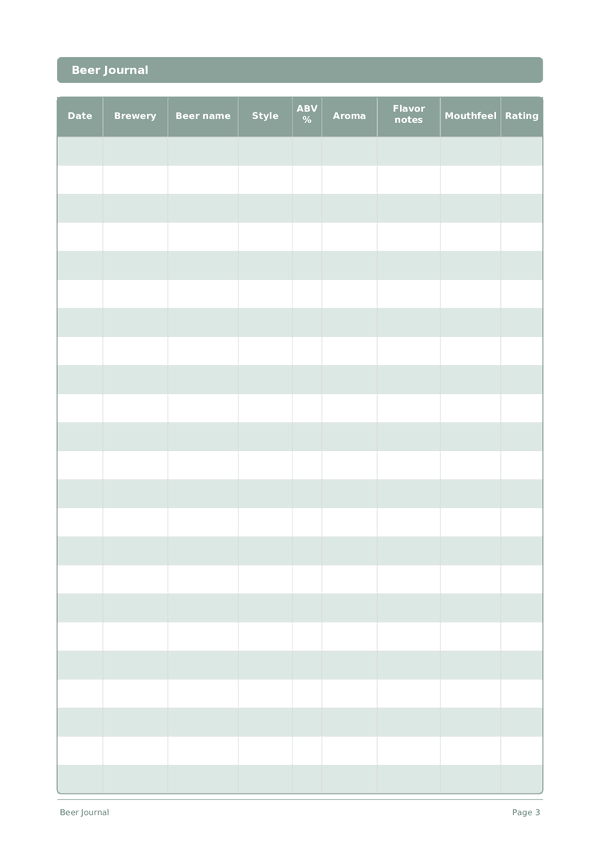
Printable Beer Journal
Track and rate every craft beer you try
A structured tasting log to record every craft beer you encounter — brewery, beer name, style, ABV, aroma, flavor notes, mouthfeel, and your personal rating. Build a personal database of beers you love, discover patterns in your taste preferences, and always remember what you ordered at that amazing taproom.
Customize fields
Toggle fields on or off. Click the pencil to rename, or add your own fields.
Benefits
How to Use
What is this journal?
A beer journal is a tasting log for documenting your explorations of craft beer and beyond. By recording brewery, style, ABV, and detailed notes on aroma, flavor, and mouthfeel, you develop your palate and build a personal reference that guides you toward the styles and breweries you love most.
This journal is for beer enthusiasts who want to be more intentional about their tasting — from craft beer newcomers exploring IPA styles to experienced tasters pursuing rare barrel-aged stouts. It is also valuable for homebrewers who want to study what makes their favorite commercial beers exceptional.
Beer appreciation, like wine, deepens through deliberate tasting and recording. The Cicerone certification program emphasizes that writing tasting notes is the single most effective way to train your palate. By tracking aroma, flavor, and mouthfeel separately, you learn to isolate and identify the individual components that make a beer memorable or forgettable.
Filled example
Here's what a typical entry looks like when filled in:
| Date | Brewery | Beer name | Style | ABV % | Aroma | Flavor notes | Mouthfeel | Rating |
|---|---|---|---|---|---|---|---|---|
| 2025-03-04 | Tree House Brewing | Julius | New England IPA | 6.8 | Tropical fruit explosion — mango, passion fruit, tangerine peel. Slight pine resin. | Juicy mango and peach dominate. Soft citrus bitterness that does not linger. Slight dank hop character in the background. Finishes clean and fruity. | Pillowy soft, medium body, moderate carbonation, creamy | 9 |
| 2025-03-04 | Weihenstephan | Hefe Weissbier | Hefeweizen | 5.4 | Classic banana and clove. Fresh bread dough. Hint of vanilla. | Banana bread with clove spice. Light wheat sweetness. Refreshing and balanced with a clean, dry finish. Effervescent. | Light-medium body, high carbonation, refreshing, slightly creamy from the wheat | 8 |
| 2025-03-04 | Founders Brewing | KBS (Kentucky Breakfast Stout) | Imperial Stout (Bourbon Barrel-Aged) | 12.2 | Rich dark chocolate, espresso, bourbon vanilla, oak, faint maple sweetness. | Decadent — dark chocolate truffle, espresso, caramel, bourbon warmth. Roasted malt backbone. Dried fruit in the background. Long, warming finish. | Full, viscous, low carbonation, warming alcohol, velvety | 9 |
How to fill in each field
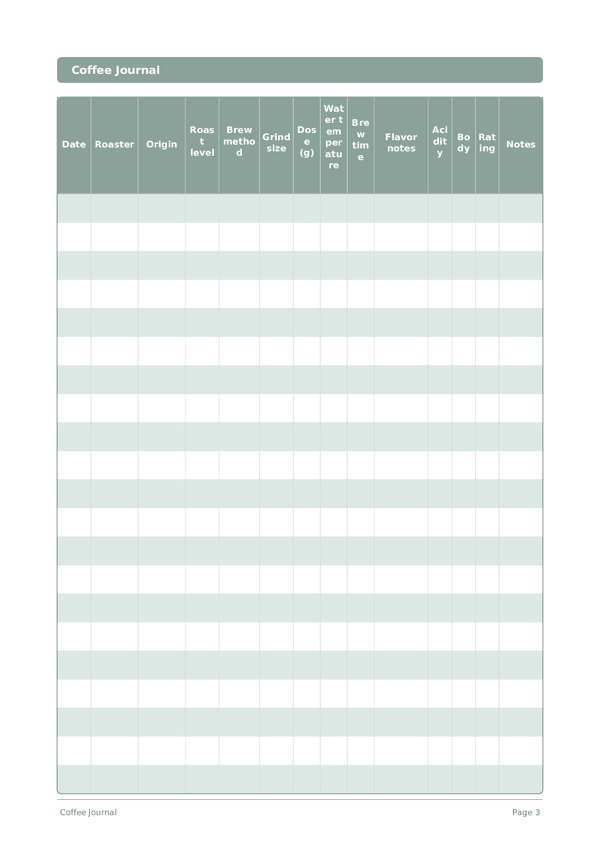
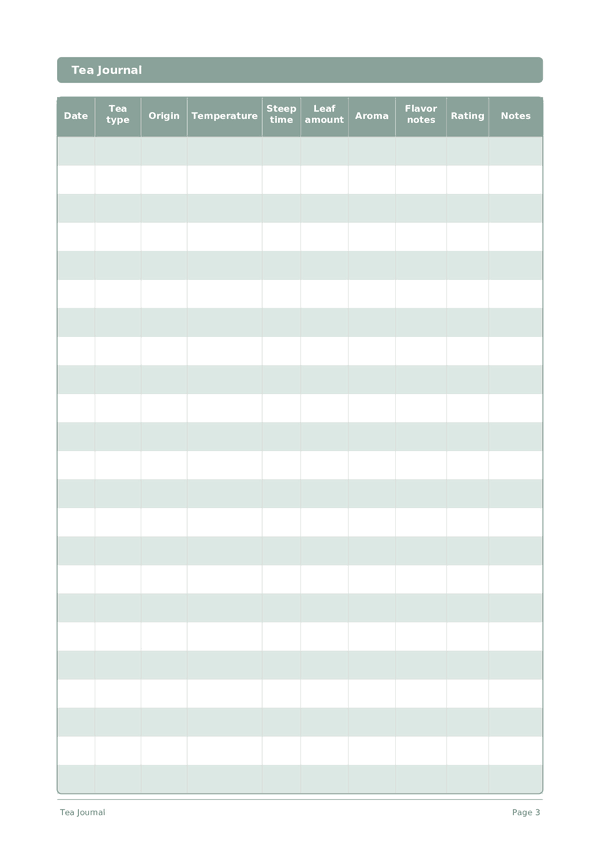
Each page is a table with columns. Fill in one row per entry. Here's what each column is for:
Date
Write today's date. This anchors your entry in time and helps when reviewing entries later.
Brewery
Beer name
Style
ABV %
Aroma
Flavor notes
Mouthfeel
Rating
Overall rating of the experience
Tips for success
When and how often to write
Log each new beer you try — the table format makes it fast enough to fill in at the bar or brewery. For homebrewers, log every batch with detailed recipe parameters. Aim for 2-4 entries per week if you are actively exploring styles. During brewery visits or festivals, jot quick ratings and expand notes afterward. Monthly, review your entries to map which styles, regions, and breweries consistently score highest on your personal scale.