Printable Blood Pressure Journal
Monitor blood pressure for heart health
Record systolic, diastolic, and pulse readings with timestamps. Essential for managing hypertension and providing your doctor with accurate blood pressure trends.
Customize fields
Toggle fields on or off. Click the pencil to rename, or add your own fields.
Benefits
How to Use
What is this journal?
A blood pressure journal is a structured daily log designed for anyone who needs to monitor their cardiovascular health. Whether you have been diagnosed with hypertension, are managing pre-hypertension, or simply want to track your readings for wellness purposes, this journal provides a clear, organized way to record every measurement alongside context such as time of day, medications taken, and any symptoms you experience.
Consistent blood pressure tracking is one of the most effective tools for managing heart health. By recording your systolic and diastolic values, pulse rate, and the circumstances around each reading, you create a detailed dataset that reveals patterns your doctor can use to adjust treatment. Many patients discover that certain times of day, activities, or foods correlate with elevated readings — insights that are invisible without a written record.
This journal is especially valuable for those preparing for medical appointments. Instead of relying on a single office reading, you can present weeks of data that paint a complete picture of your cardiovascular health, leading to more informed and personalized care.
Filled example
Here's what a typical entry looks like when filled in:
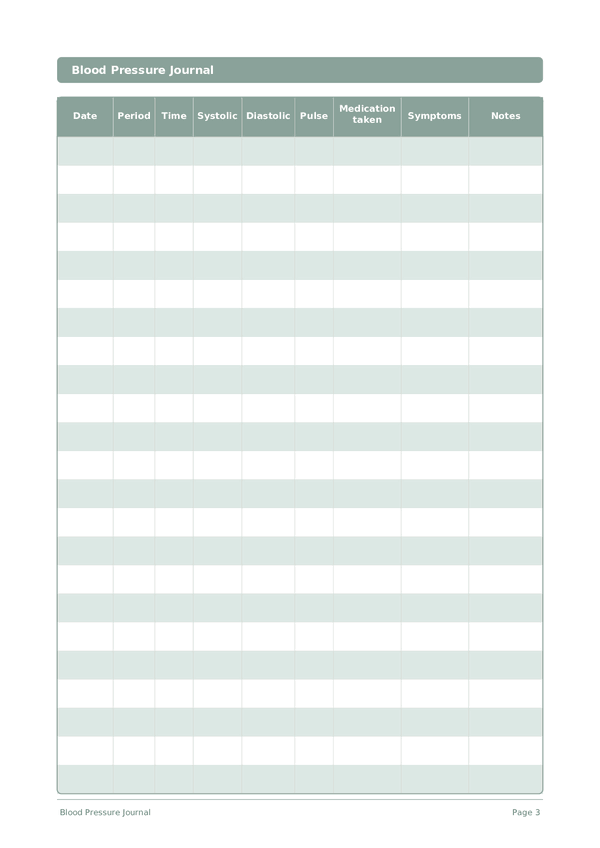
| Date | Period | Time | Systolic | Diastolic | Pulse | Medication taken | Symptoms | Notes |
|---|---|---|---|---|---|---|---|---|
| 2026-03-01 | Morning | 07:15 | 128 | 82 | 72 | Lisinopril 10mg | None | Measured after 5 min rest |
| 2026-03-01 | Evening | 20:30 | 135 | 87 | 78 | Lisinopril 10mg | Mild headache | Stressful day at work |
| 2026-03-02 | Morning | 07:20 | 124 | 80 | 70 | Lisinopril 10mg | None | Slept well, 7.5 hours |
| 2026-03-02 | Evening | 21:00 | 130 | 84 | 74 | Lisinopril 10mg | None | 30 min walk after dinner |
| 2026-03-03 | Morning | 06:50 | 122 | 78 | 68 | Lisinopril 10mg | None | Calm morning, yoga session |
How to fill in each field
Each page is a table with columns. Fill in one row per entry. Here's what each column is for:
Date
Write today's date. This anchors your entry in time and helps when reviewing entries later.
Period
Time
Record the time of the measurement or event. Consistent timing makes data comparable and reveals time-of-day patterns.
Systolic
Record the top number of your blood pressure reading (systolic). This measures pressure when your heart beats.
Diastolic
Record the bottom number of your blood pressure reading (diastolic). This measures pressure when your heart rests between beats.
Pulse
Record your heart rate in beats per minute. Resting pulse trends reveal cardiovascular fitness changes over time.
Medication taken
Did you take your medication today? Note what, when, and any doses missed
Symptoms
List symptoms you experienced today. Be specific about type, location, and severity. Patterns in symptoms often point to triggers or treatment needs.
Notes
Add any additional context or thoughts. This catch-all column is for anything that doesn't fit elsewhere but might be useful later.
Tips for success
When and how often to write
Measure twice daily: once in the morning before taking medications (this is your «true baseline»), and once in the evening. Take two consecutive readings each time, 1–2 minutes apart, and record both. Before medical appointments, have at least 2 weeks of consistent data to show your doctor. Weekly, review your averages to spot upward or downward trends. If your home readings consistently differ from clinic readings by more than 10 mmHg, discuss «masked hypertension» or «white-coat hypertension» with your provider.
Frequently Asked Questions
What blood pressure readings are considered normal versus high?
Per AHA/ACC (2017, Hypertension, 71(6)): Normal <120/80 mmHg; Elevated 120–129/<80; Stage 1 hypertension 130–139/80–89; Stage 2 ≥140/90. Hypertensive crisis >180/120 requires immediate medical attention. Record both systolic and diastolic in their respective columns. NHS UK uses slightly higher thresholds; follow your physician's targets, which may differ for diabetes, kidney disease, or age.
Why take two readings 1–2 minutes apart?
AHA (2019, Hypertension, 73(5)) and ESC guidelines recommend averaging 2 readings because the first is often elevated from brief sympathetic activation. Sit quietly 5 minutes before measuring. Record the average of both readings, or note both and average them later. Single readings overestimate hypertension prevalence by 10–15%, leading to overdiagnosis and unnecessary medication.
What's the correct measurement technique?
AHA technique: sit with back supported, feet flat, arm resting at heart level, cuff on bare upper arm sized correctly (bladder covers 80% of arm circumference). No talking, caffeine, exercise, or smoking 30 minutes prior. Empty bladder first. The period and time columns let you keep consistent morning and evening timing — usually within an hour of waking and before bed.
Why record morning and evening readings?
Per Hypertension (2018, 71(5)) and ACC guidelines, blood pressure follows a circadian pattern — morning surge and evening dip. Patients without nocturnal dipping (non-dippers) have higher cardiovascular risk. Morning readings before medication assess overnight control; evening readings show daytime effects. The period column captures this — your cardiologist needs both to evaluate medication timing and dosing.
How long should I track before sharing with my doctor?
AHA and NICE recommend at least 7 consecutive days of twice-daily readings to establish a reliable baseline; 14 days improves accuracy. Discard the first day's readings, which are often elevated. Calculate the average of remaining days. The journal's 15-row pages support 7+ days easily. Bring to every cardiology appointment — home readings often differ meaningfully from office measurements (white coat effect).
What is white coat hypertension and how does this journal help?
Per AHA, white coat hypertension affects 15–30% of patients — elevated office readings but normal home readings. Without home monitoring, this leads to unnecessary medication. Conversely, masked hypertension (normal office, elevated home) is missed without tracking. Home journal data over 7+ days, paired with periodic ambulatory monitoring per ACC guidelines, separates these patterns and informs accurate diagnosis.
What readings warrant urgent medical attention?
AHA hypertensive crisis criteria: systolic ≥180 or diastolic ≥120 mmHg. With symptoms (chest pain, shortness of breath, vision changes, severe headache, neurological symptoms), this is a hypertensive emergency requiring immediate ER evaluation. Without symptoms (hypertensive urgency), wait 5 minutes, re-measure; if still elevated, contact your physician same-day. Document symptoms in the symptoms column.
How do I track medication effects on blood pressure?
Per Mayo Clinic, log medication name, dose, and timing in the medication taken column. Antihypertensives typically reach steady state in 2–4 weeks. Compare 14-day averages before and after medication starts or dose changes. The pulse column also matters — beta-blockers reduce both BP and heart rate; ACE inhibitors mainly affect BP. Share trends with your cardiologist for dose optimization.
You Might Also Like
Scroll to zoom, drag to move