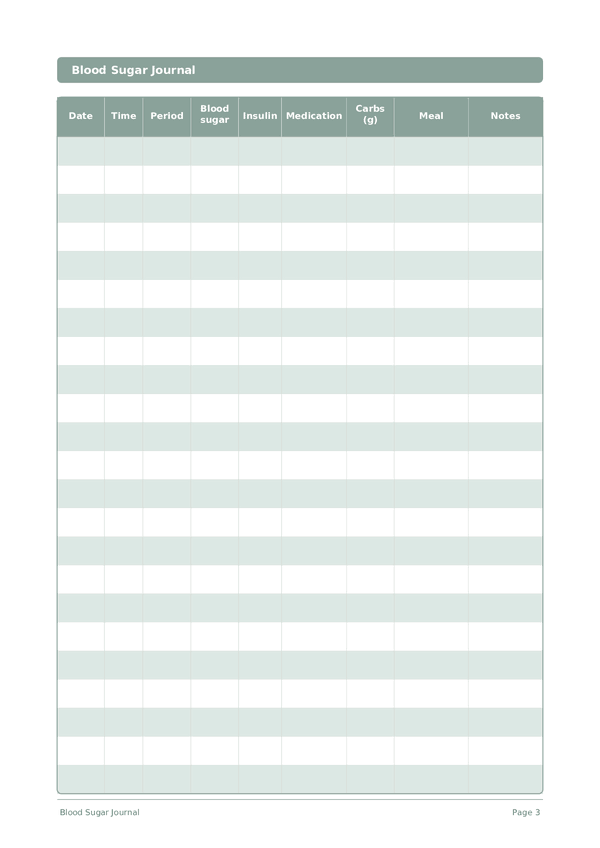
Printable Blood Sugar Journal
Manage diabetes with precise glucose tracking
Log blood sugar levels, insulin doses, meals, and notes to maintain tight glucose control. An essential tool for diabetics and pre-diabetics managing their condition.
Customize fields
Toggle fields on or off. Click the pencil to rename, or add your own fields.
Benefits
How to Use
What is this journal?
A blood sugar journal is an essential tool for anyone managing diabetes or pre-diabetes. By recording your glucose levels throughout the day alongside insulin doses, carbohydrate intake, meals, and medications, you build a comprehensive picture of how your body responds to food, activity, and treatment. This journal is designed to make daily tracking simple and consistent.
Understanding blood sugar patterns is the foundation of effective diabetes management. A written log allows you and your healthcare team to identify trends — such as post-meal spikes, dawn phenomenon, or the impact of exercise — that fingerstick readings alone cannot reveal. With consistent entries, you gain the ability to make proactive adjustments to diet, medication timing, and lifestyle habits.
Whether you are newly diagnosed and learning how your body reacts, or a long-term diabetic fine-tuning your regimen, this journal transforms scattered data into actionable knowledge. Bring it to your endocrinologist appointments and watch the quality of your consultations improve dramatically.
Filled example
Here's what a typical entry looks like when filled in:
| Date | Time | Period | Blood sugar | Insulin | Medication | Carbs (g) | Meal | Notes |
|---|---|---|---|---|---|---|---|---|
| 2026-03-01 | 07:00 | Fasting | 105 | 8 | Metformin 500mg | 0 | — | Fasting reading upon waking |
| 2026-03-01 | 09:30 | After breakfast | 148 | 0 | — | 45 | Oatmeal with berries | Slightly higher than target |
| 2026-03-01 | 12:00 | Before lunch | 112 | 6 | — | 0 | — | Returned to normal range |
| 2026-03-01 | 14:30 | After lunch | 156 | 0 | Metformin 500mg | 55 | Grilled chicken sandwich | Need to reduce bread portion |
| 2026-03-01 | 22:00 | Bedtime | 118 | 10 | — | 30 | Light salad | Good evening number |
How to fill in each field
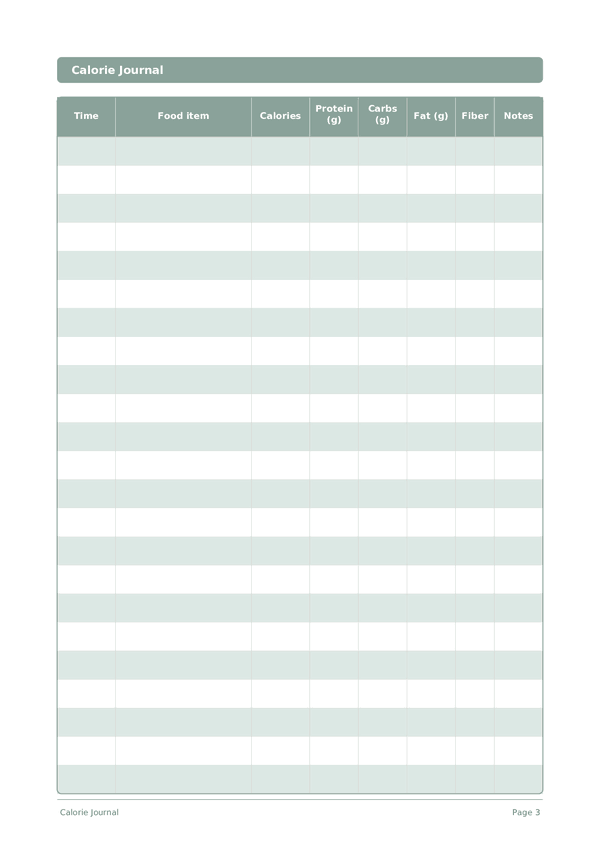
Each page is a table with columns. Fill in one row per entry. Here's what each column is for:
Date
Write today's date. This anchors your entry in time and helps when reviewing entries later.
Time
Record the time of the measurement or event. Consistent timing makes data comparable and reveals time-of-day patterns.
Period
Blood sugar
Record your blood sugar reading. Tracking alongside meals and activity reveals what raises or lowers your levels.
Insulin
Record insulin units administered. Accurate insulin tracking is essential for managing blood sugar and adjusting dosages.
Medication
Record medications taken, including name and dosage. Consistent tracking helps you and your doctor evaluate treatment effectiveness.
Carbs (g)
Meal
Describe the meal associated with this entry. Context around meals (before, after, what you ate) helps identify correlations with your readings.
Notes
Add any additional context or thoughts. This catch-all column is for anything that doesn't fit elsewhere but might be useful later.
Tips for success
When and how often to write
Test and log at the times your doctor recommends — typically fasting (morning before eating), before meals, and 2 hours after meals. Record every reading with time, meal context, and any relevant notes (exercise, stress, illness). Weekly, review your patterns: Which meals cause the biggest spikes? Which time of day are readings highest? Monthly, calculate your average fasting and post-meal values to share with your healthcare team. Consistent logging is what transforms raw numbers into actionable treatment guidance.