Printable Business Journal
Daily business planning and progress journal
Keep your business on track with daily goal-setting, metric tracking, and strategic reflection. Capture decisions, ideas, and lessons to accelerate growth.
Customize fields
Toggle fields on or off. Click the pencil to rename, or add your own fields.
What is this journal?
A Business Journal is a daily reflection framework for business owners and managers who want to run their operations with intention rather than reaction. Each entry captures your top priorities, key metrics, accomplishments, challenges, decisions made, new ideas, and lessons learned. It transforms scattered thoughts into a structured record that drives better decision-making day after day.
In the chaos of running a business, it is easy to lose sight of what actually moves the needle. A daily business journal forces you to pause, assess, and plan deliberately. Over time, the accumulated entries reveal patterns — which strategies consistently produce results, which challenges recur, and which decisions paid off or backfired.
Fill in your priorities and metrics each morning before diving into work. At the end of the day, spend ten minutes recording what you accomplished, the decisions you made, and the most important lesson you are taking forward. This evening review is where the real value lives: it turns experience into insight.
Filled example
Here's what a typical entry looks like when filled in:
How to fill in each field
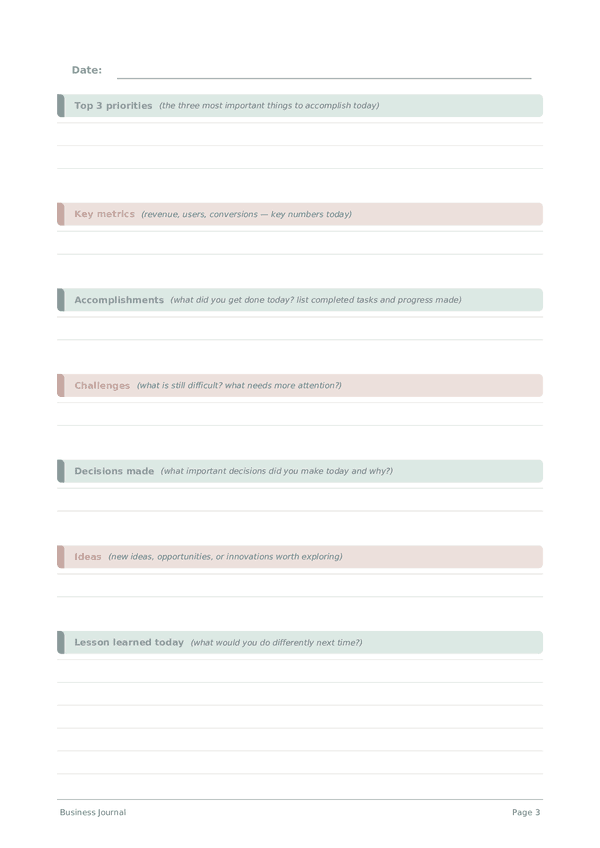
Each day you'll find several labeled sections with lines for writing. Here's what each section is for:
Top 3 priorities
The three most important things to accomplish today
Key metrics
Revenue, users, conversions — key numbers today
Accomplishments
What did you get done today? List completed tasks and progress made
Challenges
What is still difficult? What needs more attention?
Decisions made
What important decisions did you make today and why?
Ideas
Capture your ideas before they disappear. No idea is too small or silly. Some of the best breakthroughs start as rough, half-formed thoughts.
Lesson learned today
Capture one insight from today's experience. Over time, these lessons become a personal wisdom library.
Tips for success
When and how often to write
Write every business day for 15 minutes, ideally at the end of the day when you can reflect on what actually happened. Cover your key metric, decisions made, customer insights, and one priority for tomorrow. Skip weekends unless a significant event occurs. Weekly, dedicate 30 minutes to reviewing the week: what moved the needle, what was wasted effort, and what patterns are emerging. Monthly, reread the full month and extract the three biggest lessons to carry forward.