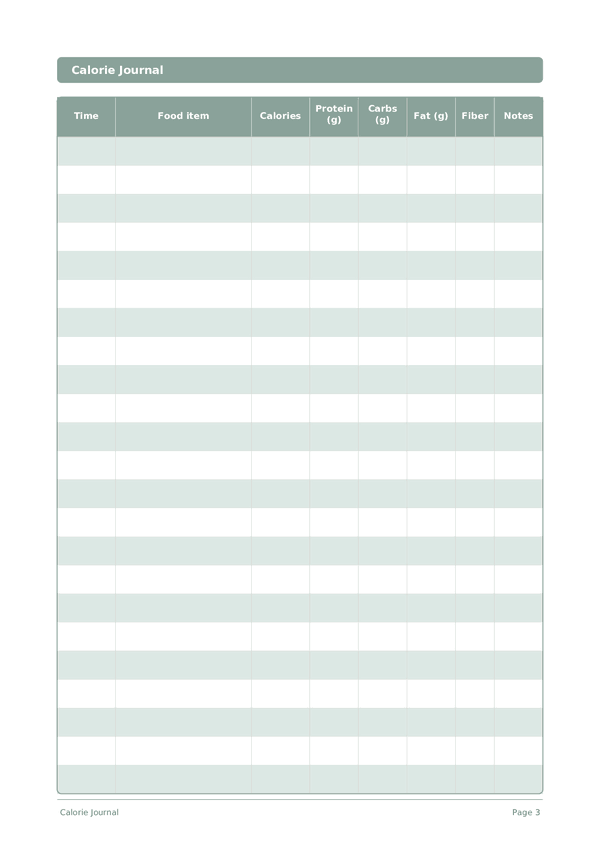
Printable Calorie Journal
Track calories and macros every meal
A structured table log for recording every meal with full macro breakdown — calories, protein, carbs, fat, and fiber. Build awareness of your eating patterns and reach your nutrition goals with data-driven consistency.
Customize fields
Toggle fields on or off. Click the pencil to rename, or add your own fields.
Benefits
How to Use
What is this journal?
A calorie journal is a detailed nutritional log where you track not just the calories in every food item you consume, but also the macronutrient breakdown — protein, carbohydrates, fat, and fiber. This level of detail transforms vague dietary intentions into precise, actionable data that supports specific fitness, health, or body composition goals.
This journal is ideal for people who are serious about understanding their nutrition on a granular level: athletes optimizing performance, individuals following structured meal plans, anyone tracking macros for weight loss or muscle gain, or people managing conditions like diabetes where carbohydrate awareness is essential. It is also an excellent learning tool for anyone who wants to develop an intuitive sense of what is in the food they eat.
By logging each food item with its full nutritional profile, you gain clarity about where your calories actually come from. Many people are surprised to discover how quickly fats add up or how little protein they consume relative to their goals. Over time, this journal helps you make informed adjustments — not through restriction, but through awareness — so that your diet genuinely supports the way you want to feel and perform.
Filled example
Here's what a typical entry looks like when filled in:
| Time | Food item | Calories | Protein (g) | Carbs (g) | Fat (g) | Fiber | Notes |
|---|---|---|---|---|---|---|---|
| 7:00 | Scrambled eggs (3 large) | 210 | 18 | 2 | 15 | 0 | Cooked in olive oil spray |
| 7:00 | Whole wheat toast (2 slices) | 180 | 8 | 30 | 3 | 4 | |
| 7:00 | Avocado (half) | 120 | 1 | 6 | 11 | 5 | On toast |
| 10:30 | Protein shake (whey, banana, milk) | 320 | 30 | 35 | 6 | 2 | Post-workout |
| 13:00 | Brown rice (1 cup cooked) | 215 | 5 | 45 | 2 | 3 | |
| 13:00 | Grilled chicken breast (150g) | 230 | 35 | 0 | 9 | 0 | Seasoned with herbs |
| 13:00 | Mixed vegetables, steamed | 85 | 4 | 15 | 1 | 5 | Broccoli, carrots, green beans |
| 16:00 | Almonds (30g) | 175 | 6 | 6 | 15 | 3 | Afternoon snack |
| 19:00 | Pasta with turkey bolognese | 520 | 32 | 60 | 14 | 4 | Whole wheat pasta |
| 19:00 | Side salad with olive oil | 110 | 2 | 5 | 10 | 2 | |
| 21:00 | Greek yogurt with berries | 150 | 12 | 18 | 3 | 2 | Low-fat yogurt |
How to fill in each field
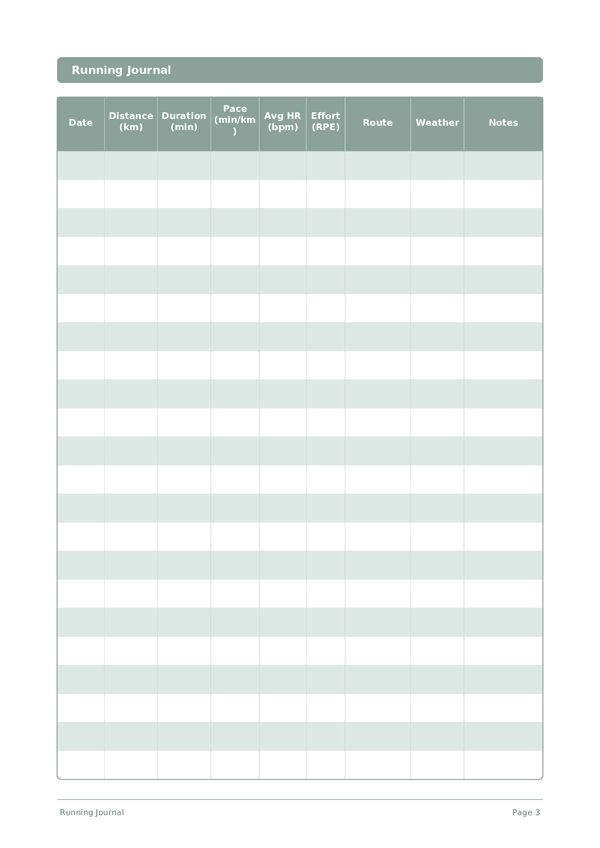
Each page is a table with columns. Fill in one row per entry. Here's what each column is for:
Time
Record what time you ate. Meal timing affects energy, sleep, and digestion. Patterns become visible after a couple of weeks.
Food item
Write what you ate. Be specific enough to be useful (e.g., 'grilled chicken salad' not just 'lunch'). This helps identify food sensitivities and patterns.
Calories
Log your approximate calorie intake. You don't need perfect numbers — estimates help you stay mindful about eating patterns.
Protein (g)
Log protein intake in grams. Adequate protein is crucial for recovery and muscle building, typically 1.6–2.2g per kg of body weight.
Carbs (g)
Fat (g)
Fiber
Notes
Add any additional context or thoughts. This catch-all column is for anything that doesn't fit elsewhere but might be useful later.
Tips for success
When and how often to write
Log each meal and snack immediately in the table format: food item, portion size, calories, and macros if tracking them. Total your calories at the end of each day. Weekly, calculate your daily average and compare it to your target — this weekly view is more meaningful than any single day. Monthly, assess whether your target needs adjustment based on how your body is responding. If counting starts feeling obsessive, take a 3-day break and rely on your built-up food awareness instead.