Printable Coffee Journal
Track brews, dial in parameters, and develop your palate
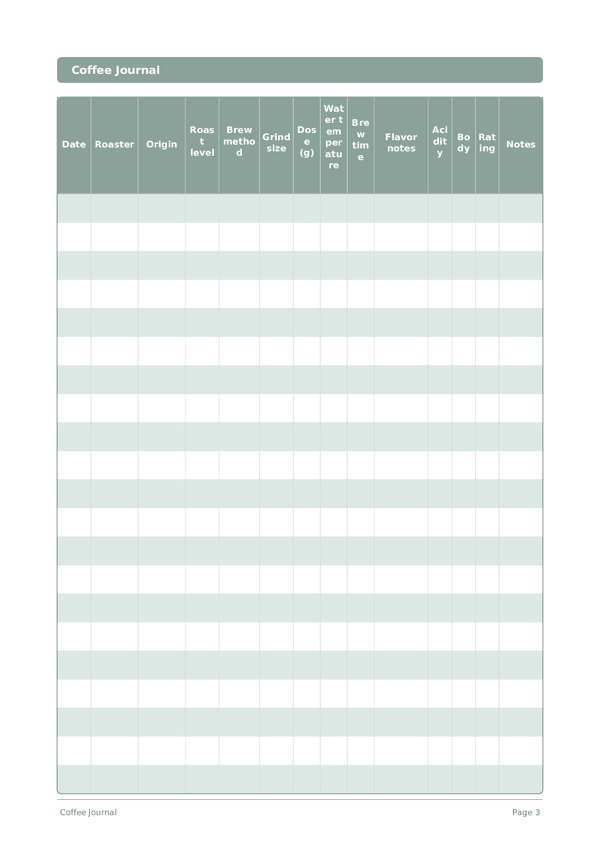
Log every cup with precision: origin, roast level, brew method, grind size, dose, water temperature, brew time, and tasting notes. Build a personal database of brews to refine your technique and discover what makes the perfect cup.
Customize fields
Toggle fields on or off. Click the pencil to rename, or add your own fields.
Benefits
How to Use
What is this journal?
A coffee journal is a structured tasting and brewing log for documenting your coffee explorations. By recording roaster, origin, brew parameters, and detailed flavor notes, you develop your palate and optimize your brewing technique — turning your morning cup from a routine into a craft.
This journal is for coffee lovers who want to go deeper — from home brewers dialing in their pour-over technique to enthusiasts exploring single-origin beans from different regions. Whether you brew with an espresso machine, AeroPress, French press, or pour-over, tracking your variables is the path to consistently excellent coffee.
Specialty coffee professionals emphasize that the difference between good and exceptional coffee often comes down to small adjustments in grind size, water temperature, and brew time. Without records, you cannot replicate your best cups or diagnose your worst. This journal transforms coffee brewing from guesswork into deliberate practice.
Filled example
Here's what a typical entry looks like when filled in:
| Date | Roaster | Origin | Roast level | Brew method | Grind size | Dose (g) | Water temperature | Brew time | Flavor notes | Acidity | Body | Rating | Notes |
|---|---|---|---|---|---|---|---|---|---|---|---|---|---|
| 2025-03-04 | Onyx Coffee Lab | Ethiopia Yirgacheffe, Gedeb station | Light | V60 pour-over | Medium-fine (18 on Comandante) | 18g | 96C | 3:15 | Bright blueberry, jasmine, honey sweetness, clean citrus finish | High, sparkling | Light-medium, tea-like | 9 | Best cup from this bag yet. The slightly coarser grind compared to yesterday reduced astringency. Bloom for 45 seconds was key. |
| 2025-03-04 | Onyx Coffee Lab | Ethiopia Yirgacheffe, Gedeb station | Light | AeroPress | Medium (20 on Comandante) | 15g | 92C | 2:00 | Muted blueberry, more chocolate, heavier body, less floral | Medium, rounded | Medium, syrupy | 7 | Same beans, different method. AeroPress brings out body but loses the delicate florals. Prefer V60 for this origin. |
How to fill in each field
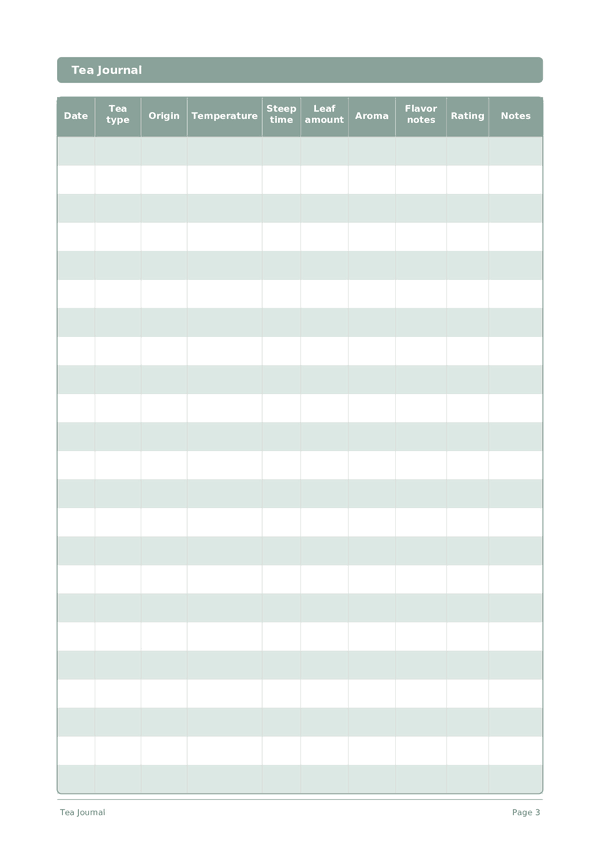
Each page is a table with columns. Fill in one row per entry. Here's what each column is for:
Date
Write today's date. This anchors your entry in time and helps when reviewing entries later.
Roaster
Origin
Roast level
Brew method
Grind size
Dose (g)
Water temperature
Brew time
Flavor notes
Acidity
Body
Rating
Overall rating of the experience
Notes
Add any additional context or thoughts. This catch-all column is for anything that doesn't fit elsewhere but might be useful later.
Tips for success
When and how often to write
Log every brew that you want to learn from — aim for at least one entry per day if you brew at home. The table format makes this fast: 30 seconds to fill in the parameters, another 30 for flavor notes. When dialing in a new bean, log every attempt until you hit the target flavor profile. Review your logs weekly to identify which variables had the most impact. Over months, your data builds a personal brewing reference that no blog or YouTube video can match.