Printable Craft Journal
Craft project tracker and creative hobby journal
Document your craft projects with session logs, material notes, and technique observations. Track progress, capture what works, and build a creative reference library for all your handmade projects.
Customize fields
Toggle fields on or off. Click the pencil to rename, or add your own fields.
What is this journal?
A craft journal documents every making session — the materials you chose, the techniques you tried, and the discoveries that only come from working with your hands. Whether you knit, carve, sew, or build, the gap between what you planned and what actually happened is where learning lives. This journal captures that gap before it fades from memory.
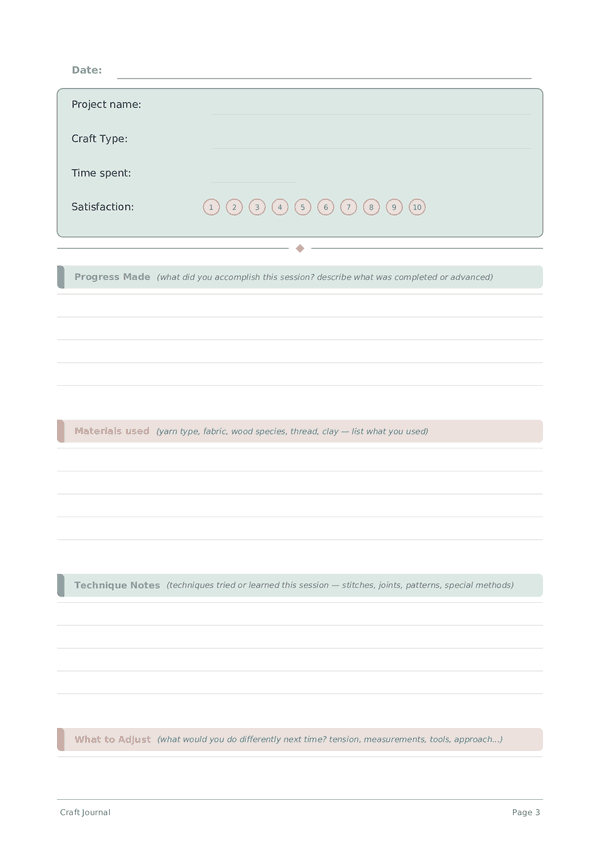
The tracker section logs the project name, craft type, time spent, and a satisfaction rating so you can spot trends in productivity and enjoyment at a glance. The writing section records your progress, materials used, technique notes, and ideas for what to adjust next time. Together these create a maker's logbook that grows more valuable with every entry.
Fill in the tracker during or right after your session and take a few minutes to write about what you noticed. These notes compound: months from now, when you start a similar project, you will have a detailed record of what worked, what to avoid, and exactly which materials and settings produced the results you loved.
Filled example
Here's what a typical entry looks like when filled in:
How to fill in each field
The top of each page has quick-fill fields (ratings, checkboxes, numbers). Below that is a lined section for writing. Here's what each field means:
Project name
What project are you working on today?
Craft Type
e.g. Knitting, Sewing, Woodworking, Embroidery, Crochet, Pottery...
Time spent
How long did you study?
Satisfaction
How satisfied are you with today's session? (1=frustrated, 5=very satisfied)
Progress Made
What did you accomplish this session? Describe what was completed or advanced
Materials used
Yarn type, fabric, wood species, thread, clay — list what you used
Technique Notes
Techniques tried or learned this session — stitches, joints, patterns, special methods
What to Adjust
What would you do differently next time? Tension, measurements, tools, approach...
Tips for success
When and how often to write
Make entries during and after each crafting session while details are fresh. For multi-session projects, write brief notes at the end of each session and a fuller reflection when the project is complete. Aim for at least two entries per week to maintain skill momentum — crafts are motor skills that degrade without regular practice. Monthly, review your completed projects and identify one technique to deepen next month. Seasonal reviews are especially valuable for crafters: they help you plan around seasonal materials, holidays, and gift-giving occasions.