Printable Expense Journal
Track every dollar to take control of your finances
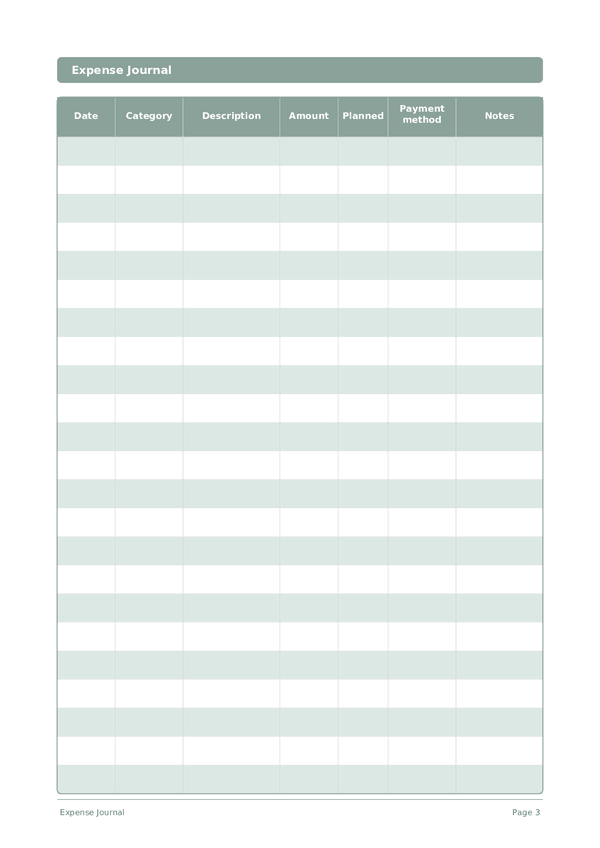
A daily expense log designed to capture every purchase with date, category, amount, and payment method. Compare planned budgets against actual spending, spot financial leaks, and build lasting money awareness. The simple table format makes it easy to fill in on the go and review at the end of each week or month.
Customize fields
Toggle fields on or off. Click the pencil to rename, or add your own fields.
Benefits
How to Use
What is this journal?
An expense journal is a straightforward daily log for tracking every purchase and expenditure you make. By recording the date, category, description, amount, and payment method for each transaction, you build complete visibility into where your money goes. This journal is designed for anyone who wants to take control of their spending — from students and young professionals to families managing household budgets.
Most people significantly underestimate their discretionary spending. Small daily purchases — coffee, snacks, subscriptions, impulse buys — add up to surprisingly large sums over a month. An expense journal makes these invisible costs visible. When you write down every transaction, you naturally become more intentional about your spending, and patterns emerge that help you identify areas where you can cut back without sacrificing quality of life.
This journal is also an excellent companion to budgeting. By comparing your actual expenses against planned amounts, you can see exactly where you are on track and where adjustments are needed. Whether you are saving for a specific goal, paying down debt, or simply building healthier financial habits, consistent expense tracking is the foundation of financial awareness and control.
Filled example
Here's what a typical entry looks like when filled in:
| Date | Category | Description | Amount | Planned | Payment method | Notes |
|---|---|---|---|---|---|---|
| 2026-03-03 | Groceries | Weekly grocery shopping at Whole Foods | 87.5 | 80 | Debit card | Slightly over budget, bought organic produce |
| 2026-03-03 | Transport | Gas fill-up | 52 | 50 | Credit card | Prices went up this week |
| 2026-03-03 | Dining out | Lunch with coworkers, Thai restaurant | 18.75 | 15 | Cash | Unplanned, should bring lunch tomorrow |
| 2026-03-03 | Subscriptions | Spotify Premium monthly | 10.99 | 10.99 | Credit card | Auto-renewal |
| 2026-03-03 | Health | Pharmacy — vitamins and cold medicine | 24.3 | 0 | Debit card | Unexpected, feeling under the weather |
How to fill in each field
Each page is a table with columns. Fill in one row per entry. Here's what each column is for:
Date
Write today's date. This anchors your entry in time and helps when reviewing entries later.
Category
Assign a category to this entry (e.g., food, transport, entertainment). Consistent categories make your data easy to analyze.
Description
Write a brief description of what this entry is about. Future-you will thank present-you for the context.
Amount
Record the amount for this entry. Be precise — rounding creates inaccuracies that add up over time.
Planned
Payment method
Notes
Add any additional context or thoughts. This catch-all column is for anything that doesn't fit elsewhere but might be useful later.
Tips for success
When and how often to write
Log every expense the moment it happens, or at minimum during a 5-minute evening review. The key is daily consistency — even one skipped day creates gaps that snowball into abandonment. At the end of each week, total your categories and compare to the previous week. Monthly, review category totals against your budget targets and identify the top three areas where actual spending deviated most from your plan.
You Might Also Like
Investment Journal
Track trades, analyze decisions, and grow your portfolio
Debt Journal
Track and eliminate debt with a clear payoff strategy
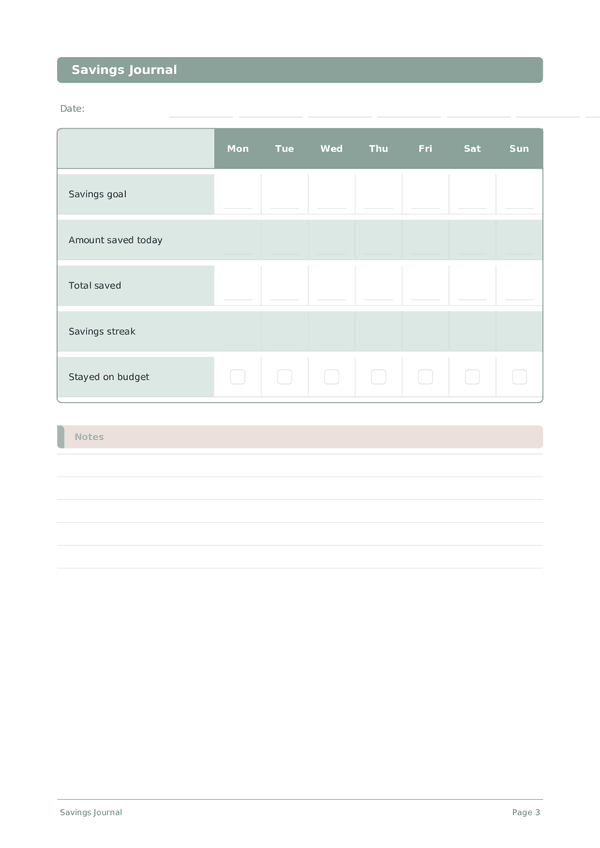
Savings Journal
Track daily savings habits and build toward your financial goals
Career Journal
Track achievements and accelerate professional growth every day