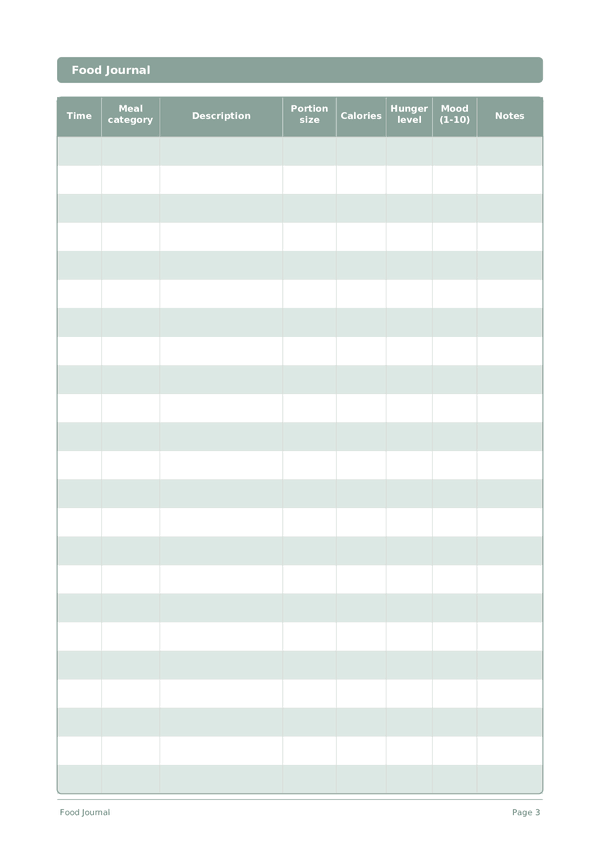
Printable Food Journal
Track every meal with mindfulness and intention
A structured daily food log to record meals, portions, calories, hunger cues, and mood. Build awareness of your eating patterns, spot nutritional gaps, and make more intentional choices for better health.
Customize fields
Toggle fields on or off. Click the pencil to rename, or add your own fields.
Benefits
How to Use
What is this journal?
A food journal is a daily log where you record everything you eat and drink, along with contextual details like meal timing, portion sizes, hunger levels, and how food makes you feel. It goes beyond simple calorie counting by helping you understand your relationship with food — the emotional, physical, and situational factors that shape your eating habits.
This journal is for anyone who wants to develop healthier eating patterns, manage food sensitivities or allergies, support a weight management goal, or simply become more mindful about what they consume. Nutritionists, dietitians, and doctors often recommend food journaling as one of the most effective tools for understanding and improving dietary habits.
Research consistently shows that people who keep food journals are more successful at reaching their nutrition goals. Writing down what you eat creates a natural pause for reflection — you become more aware of mindless snacking, emotional eating, and portion sizes. Over weeks and months, your journal reveals clear patterns: which foods give you energy, which leave you sluggish, and how your mood and hunger interact with your choices.
Filled example
Here's what a typical entry looks like when filled in:
| Time | Meal category | Description | Portion size | Calories | Hunger level | Mood (1-10) | Notes |
|---|---|---|---|---|---|---|---|
| 7:30 | Breakfast | Oatmeal with blueberries, walnuts, and honey. Black coffee. | 1 bowl, 1 cup | 420 | 7 | Rested, calm | Felt satisfied until mid-morning |
| 10:15 | Snack | Greek yogurt with a drizzle of honey | 150g | 130 | 4 | Focused | Light snack before a meeting |
| 13:00 | Lunch | Grilled chicken salad with mixed greens, cherry tomatoes, cucumber, feta, olive oil dressing. Whole wheat roll. | Large bowl, 1 roll | 580 | 8 | Hungry, slightly stressed | Ate at my desk, felt rushed |
| 16:00 | Snack | Apple with almond butter | 1 medium apple, 1 tbsp | 195 | 5 | Afternoon slump | Craving something sweet |
| 19:30 | Dinner | Baked salmon with roasted sweet potatoes and steamed broccoli. Glass of white wine. | 150g salmon, 1 potato, 1 cup broccoli | 720 | 7 | Relaxed | Cooked at home, enjoyed the meal slowly |
| 21:00 | Snack | Chamomile tea and two dark chocolate squares | 1 cup, 20g | 110 | 2 | Content | Not really hungry, just a habit |
How to fill in each field
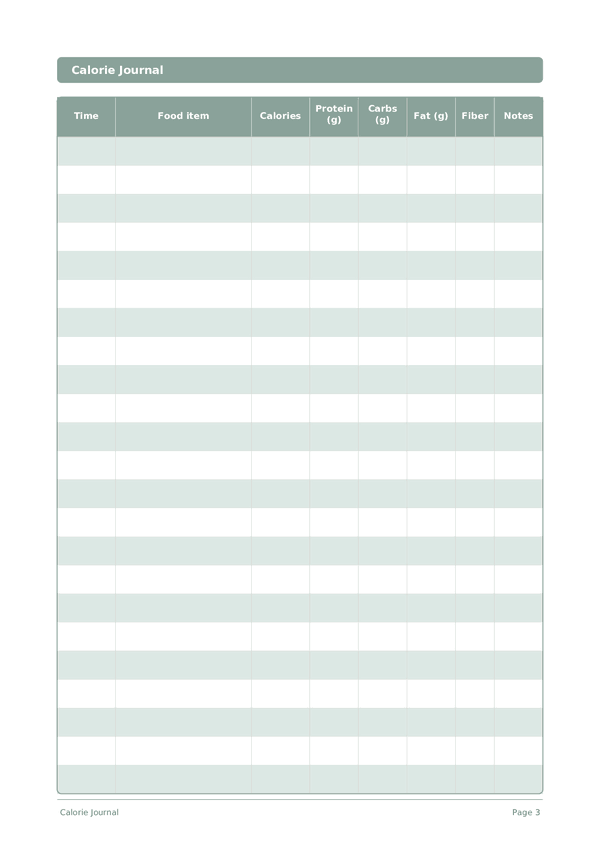
Each page is a table with columns. Fill in one row per entry. Here's what each column is for:
Time
Record what time you ate. Meal timing affects energy, sleep, and digestion. Patterns become visible after a couple of weeks.
Meal category
Description
Write a brief description of what this entry is about. Future-you will thank present-you for the context.
Portion size
Calories
Log your approximate calorie intake. You don't need perfect numbers — estimates help you stay mindful about eating patterns.
Hunger level
How hungry were you overall today? 1 = not hungry at all, 10 = ravenous
Mood (1-10)
Rate your overall emotional state for the day. 1 means very low or depressed, 10 means exceptionally happy and positive. Don't overthink — go with your gut feeling.
Notes
Add any additional context or thoughts. This catch-all column is for anything that doesn't fit elsewhere but might be useful later.
Tips for success
When and how often to write
Log every meal and snack as close to real-time as possible — this is a table-based journal, so each entry is quick: food, portion, time. Aim for completeness over detail; a simple entry is better than a skipped one. Review your food log weekly to spot patterns: late-night eating, skipped meals, emotional triggers. Share your monthly summary with a nutritionist if you are working on dietary goals. Most people see their biggest insights after 2-3 weeks of consistent logging.