Printable Health Journal
Track your body, mind, and wellness every day
A comprehensive daily health check-in that combines quick metrics with space for detailed notes. Track your mood, energy, sleep, pain, stress, hydration, exercise, and medication at a glance, then use the writing sections to describe how you feel, log symptoms, and jot down questions for your doctor. Designed to help you spot patterns, build healthy habits, and have more productive medical appointments.
Customize fields
Toggle fields on or off. Click the pencil to rename, or add your own fields.
Benefits
How to Use
What is this journal?
A health journal is a comprehensive daily log where you record key indicators of your physical and mental well-being — from energy levels and sleep quality to symptoms, medications, and exercise. Rather than focusing on a single condition, it gives you a holistic snapshot of how your body and mind are doing each day.
This journal is ideal for anyone who wants to be more intentional about their health, whether you are managing a chronic condition, recovering from illness, preparing for medical appointments, or simply want to understand the connections between your daily habits and how you feel. It is particularly helpful for people who see multiple specialists and need a unified record.
By tracking these metrics consistently, you begin to see patterns that are otherwise invisible. You might discover that your energy dips on days when you drink less water, or that your mood improves during weeks when you exercise regularly. Over time, your health journal becomes a personal health database — empowering you to have more productive conversations with your doctor and to make lifestyle changes grounded in real data rather than guesswork.
Filled example
Here's what a typical entry looks like when filled in:
How to fill in each field
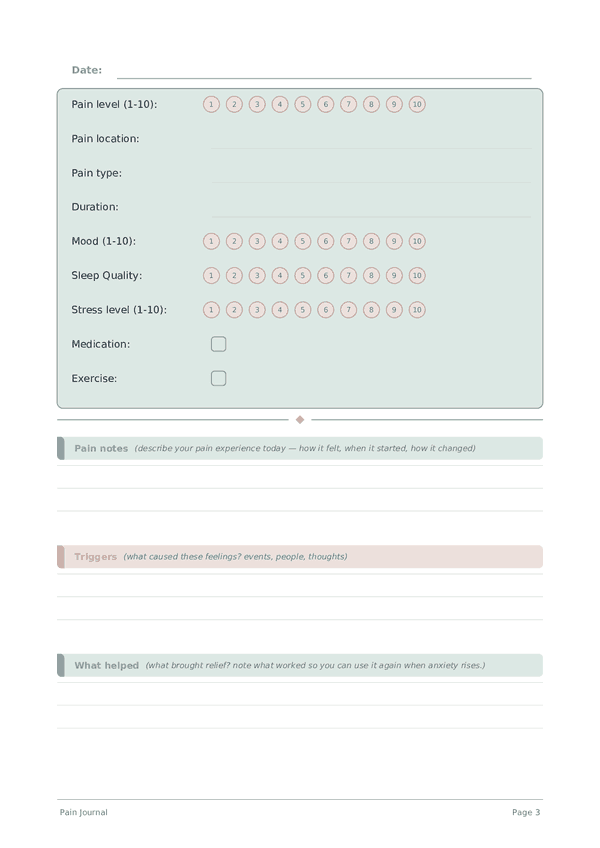
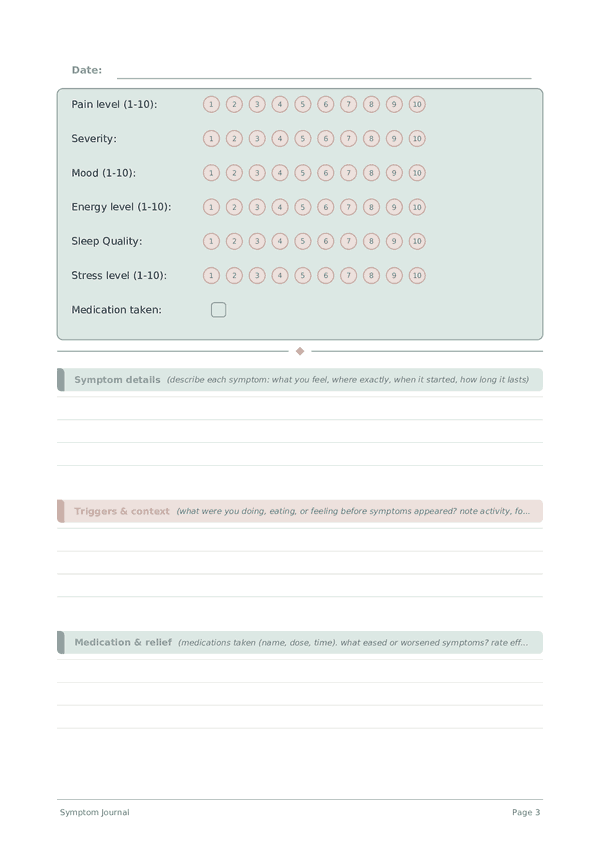
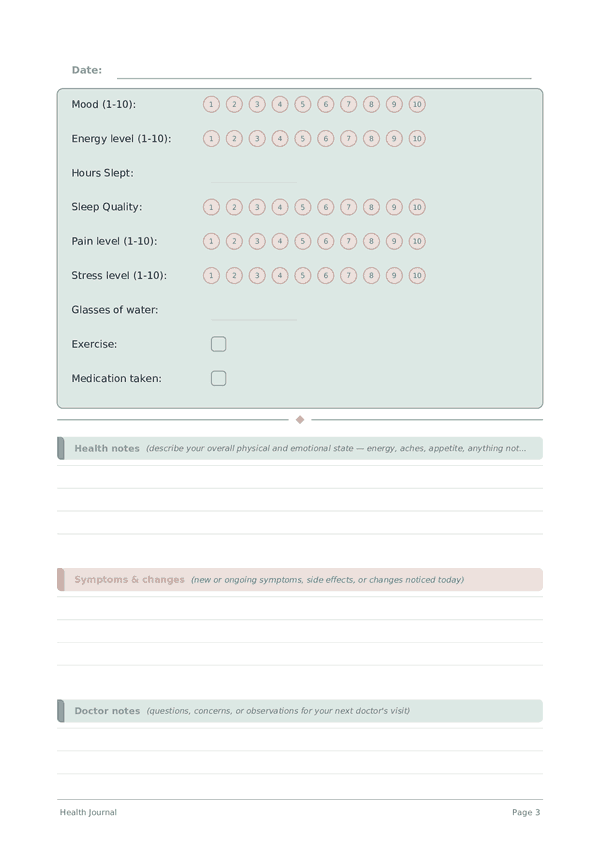
The top of each page has quick-fill fields (ratings, checkboxes, numbers). Below that is a lined section for writing. Here's what each field means:
Mood (1-10)
Rate your overall emotional state for the day. 1 means very low or depressed, 10 means exceptionally happy and positive. Don't overthink — go with your gut feeling.
Energy level (1-10)
Rate your physical and mental energy level. 1 means exhausted and drained, 10 means fully energized and alert. This helps you identify what activities boost or drain your energy.
Hours Slept
Write how many hours you actually slept (not just time in bed). Tracking this alongside mood and energy often reveals powerful connections.
Sleep Quality
Rate how restful your sleep was. 1 means terrible and restless, 5 means deep and refreshing. Quality matters as much as quantity.
Pain level (1-10)
Rate your pain intensity on a scale. Tracking pain levels helps identify triggers, evaluate treatments, and communicate with healthcare providers.
Stress level (1-10)
Rate your stress on a scale of 1–10. Over time, you'll identify your stress patterns and which coping strategies work best.
Glasses of water
Track your daily water intake. Most people need 6–8 glasses. Ticking off glasses throughout the day helps you stay hydrated.
Exercise
Check off whether you exercised today. Even a 10-minute walk counts. The goal is building awareness of your activity patterns.
Medication taken
Did you take your medication today? Note what, when, and any doses missed
Health notes
Describe your overall physical and emotional state — energy, aches, appetite, anything notable
Symptoms & changes
New or ongoing symptoms, side effects, or changes noticed today
Doctor notes
Questions, concerns, or observations for your next doctor's visit
Tips for success
When and how often to write
Fill in the health tracker every evening as part of your bedtime routine — it takes 2-3 minutes. The writing section is for days when something notable happens: a new symptom, a doctor visit, a change in how you feel. Weekly, scan your tracker for patterns — do certain days consistently score lower? Monthly, write a health summary paragraph capturing your overall trajectory. This journal is most powerful when shared with healthcare providers; bring your monthly summaries to checkups.