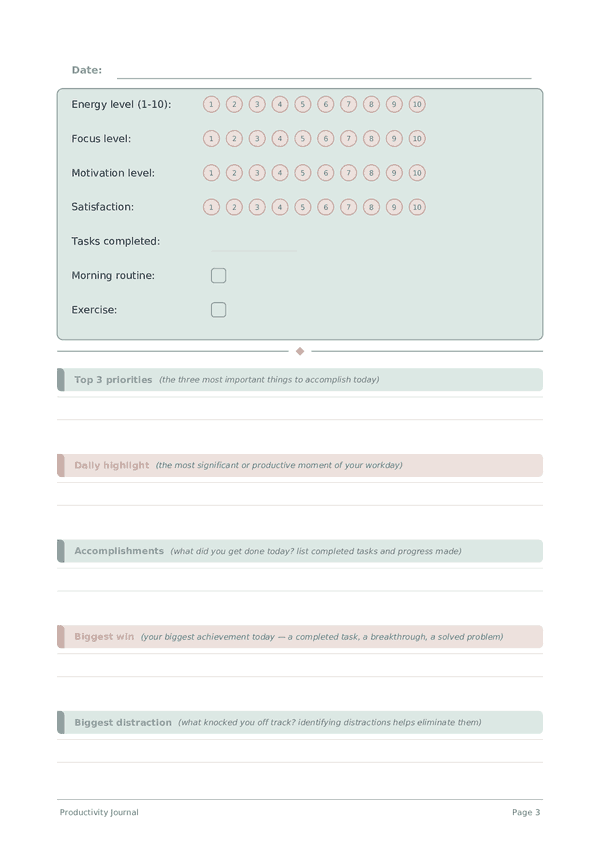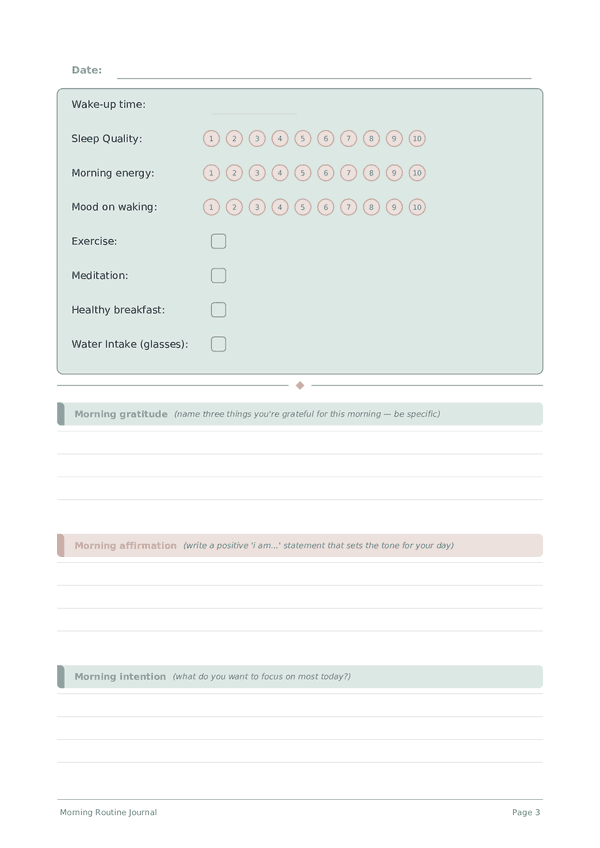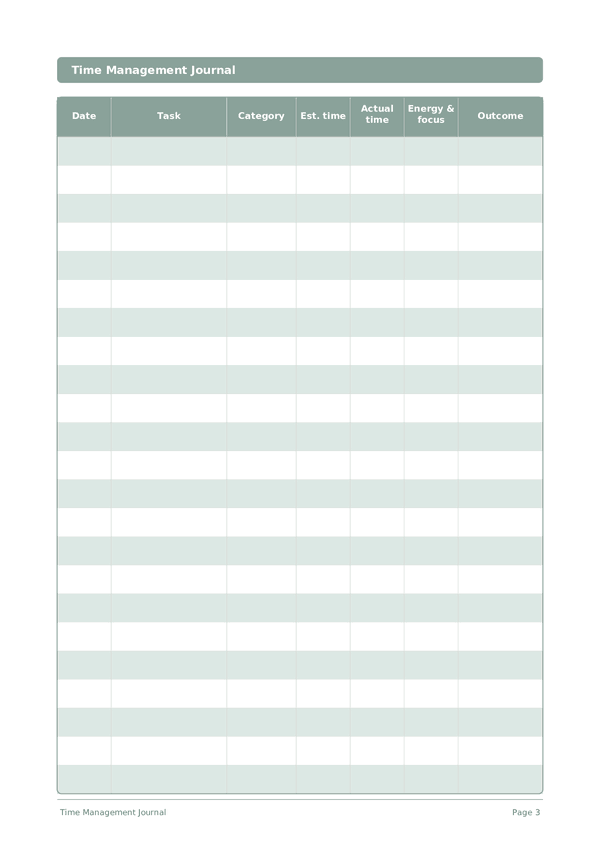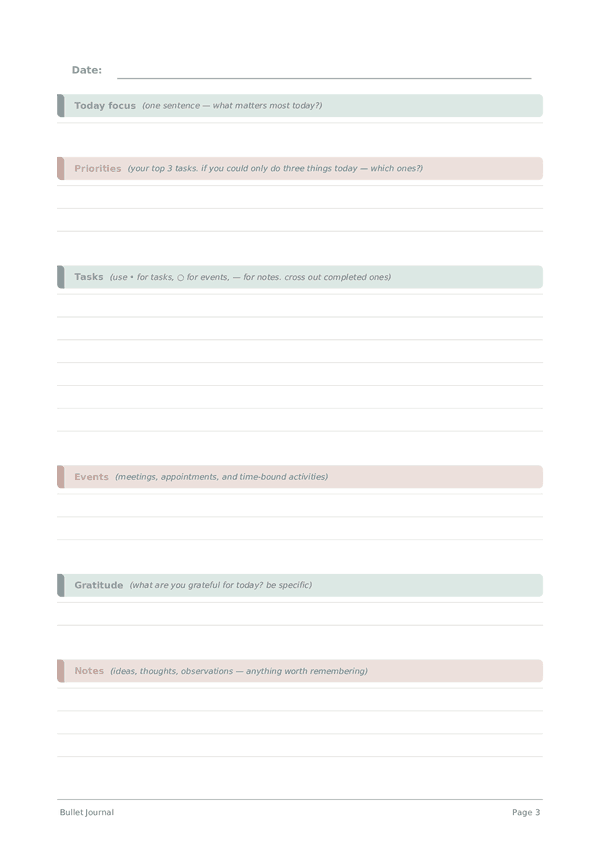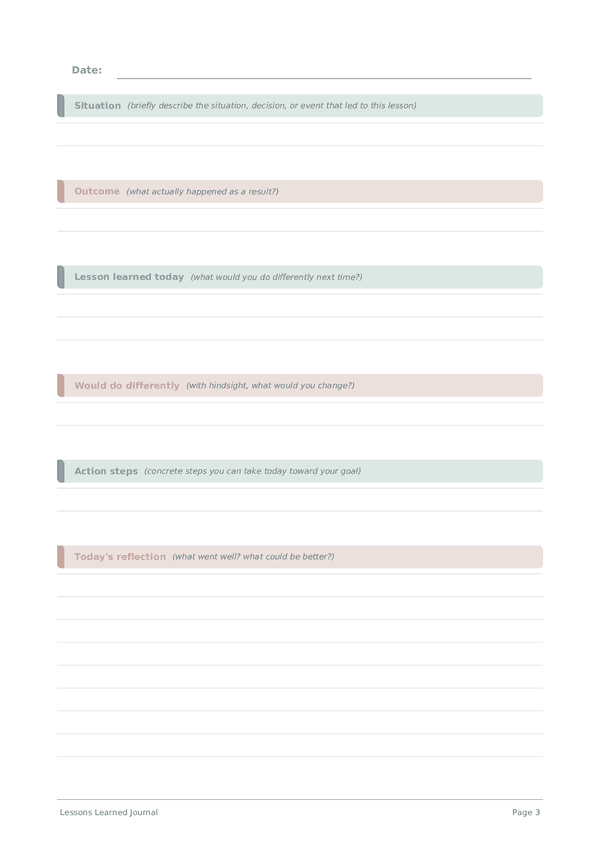
Lessons Learned Journal — page preview

Printable Lessons Learned Journal

Extract wisdom from every experience and grow faster

Daily Entry Productivity & Planning

Stop letting valuable lessons slip away. This structured daily journal guides you through the full after-action cycle — from describing what happened and the outcome, to distilling the core lesson, imagining what you would do differently, and committing to concrete next steps. Grounded in after-action review methodology used by top organisations and reflective learning research, it transforms experience into lasting personal growth.


Print-ready A4 / Letter 100% Free 4 downloads

days
Customize fields

Toggle fields on or off. Click the pencil to rename, or add your own fields.

Download Free PDF

Benefits

Turn every mistake and setback into a concrete, reusable insight
Build a personal wisdom library that compounds over time
Break the cycle of repeating the same errors by capturing root causes
Identify actionable next steps so lessons translate into real change
Develop honest self-awareness and sharpen your decision-making over time

How to Use

Recall a specific situation — a decision, mistake, or surprising outcome — and describe it factually
Record the actual outcome: what happened, whether it matched your expectations, and how it affected you
Distil the core lesson: the single most important insight you are taking away from this experience
Reflect on what you would do differently — be specific about the one change that would have mattered most
Commit to concrete action steps so the lesson becomes a lasting shift in behaviour, not just a thought

What is this journal?

A lessons learned journal is a daily practice for extracting wisdom from experience. Each entry records a situation, its outcome, and — most importantly — the lesson embedded in it. Over time, you build a personal wisdom library that transforms mistakes into assets and experience into genuine expertise.

This journal is for lifelong learners, professionals who want to accelerate their growth, and anyone who believes that experience alone does not teach — reflection on experience teaches. It is particularly valuable for leaders, managers, and entrepreneurs who make decisions in complex, uncertain environments.

Research on experiential learning shows that professionals who regularly reflect on their experiences develop expertise up to 23% faster than those who simply accumulate experience without reflection. The key is structured reflection — not just asking "what happened?" but "what would I do differently?" and "what concrete steps will I take next time?" This journal provides that structure.

Filled example

Here's what a typical entry looks like when filled in:

Tuesday, March 4
Situation
Launched the new product feature to all users simultaneously instead of a phased rollout. The feature had passed all our testing, so I was confident in a full launch.
Outcome
The feature worked perfectly for 95% of users. But the 5% on older browser versions experienced a critical bug that made the entire app unusable. Support tickets spiked by 300% in two hours. We had to roll back the feature for everyone while we fixed the compatibility issue, which took three days.
Lesson learned today
Confidence in testing is not the same as confidence in production. A phased rollout — even a fast one — would have caught the browser compatibility issue with a small user group before it affected everyone. The cost of being cautious (a few extra days) was infinitely less than the cost of the rollback (three days plus user trust damage).
Would do differently
1. Always do a phased rollout, even when testing looks clean — 10% day 1, 50% day 2, 100% day 3. 2. Include browser compatibility testing in our pre-launch checklist specifically. 3. Set up automated monitoring alerts for error rates that trigger before we rely on support tickets.
Action steps
Add phased rollout to our deployment checklist this week. Set up BrowserStack integration for cross-browser testing. Create an error rate monitoring dashboard with Slack alerts.
Today's reflection
The impulse to ship fast came from wanting to show momentum to stakeholders. But fast does not mean reckless. I need to redefine speed as the fastest responsible pace, not the fastest possible pace.

How to fill in each field

Each day you'll find several labeled sections with lines for writing. Here's what each section is for:

Situation

Describe the situation or event objectively, as if you're a neutral observer. Separating facts from feelings helps you see things more clearly.

Outcome

What actually happened as a result?

Lesson learned today

Capture one insight from today's experience. Over time, these lessons become a personal wisdom library.

Would do differently

With hindsight, what would you change?

Action steps

Break your goal into concrete next actions. What exactly will you do, when, and how? The more specific, the better.

Today's reflection

Look back at your day honestly. What went well? What could be better? This isn't about judgment — it's about learning and growing.

Tips for success

Write the lesson immediately after the experience — waiting even a day dulls the emotional context that makes lessons stick in memory
Separate the event from the takeaway: describe what happened in one sentence, then what you now know in another. This distinction turns stories into reusable wisdom
Revisit lessons monthly and tag recurring themes. If the same lesson keeps appearing, you haven\u2019t yet changed the underlying behavior — dig deeper
Include lessons from successes, not just mistakes. Understanding why something worked is just as valuable as understanding why something failed
Write one concrete action you will take differently next time. A lesson without an action plan is just a nice thought that fades by next week

When and how often to write

Write an entry whenever a meaningful experience occurs — aim for at least 3-4 entries per week. The best time is the same evening, while details and emotions are vivid. On Sundays, spend 15 minutes reviewing the week\u2019s lessons and highlight the one that matters most. Monthly, re-read your accumulated lessons and notice which ones you have actually applied versus merely recorded. This review cycle is what transforms isolated observations into lasting personal wisdom.