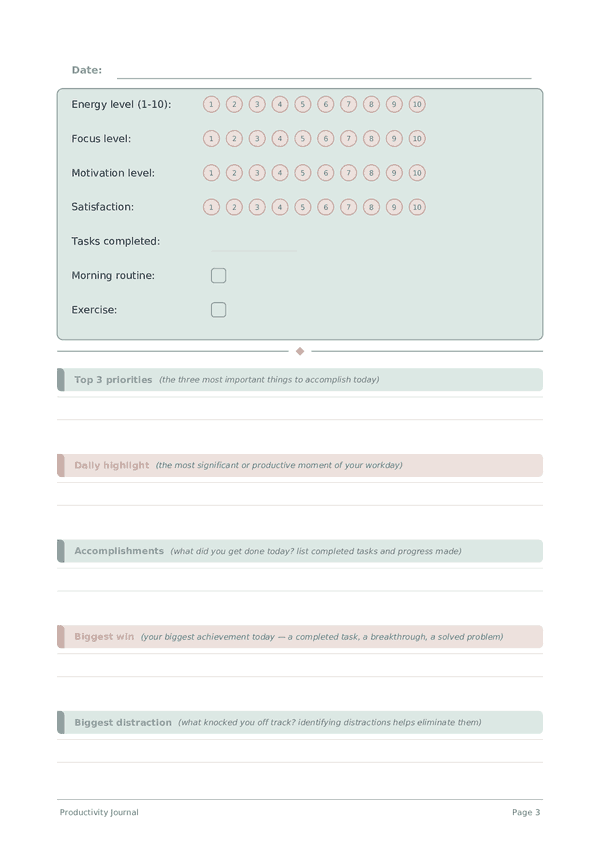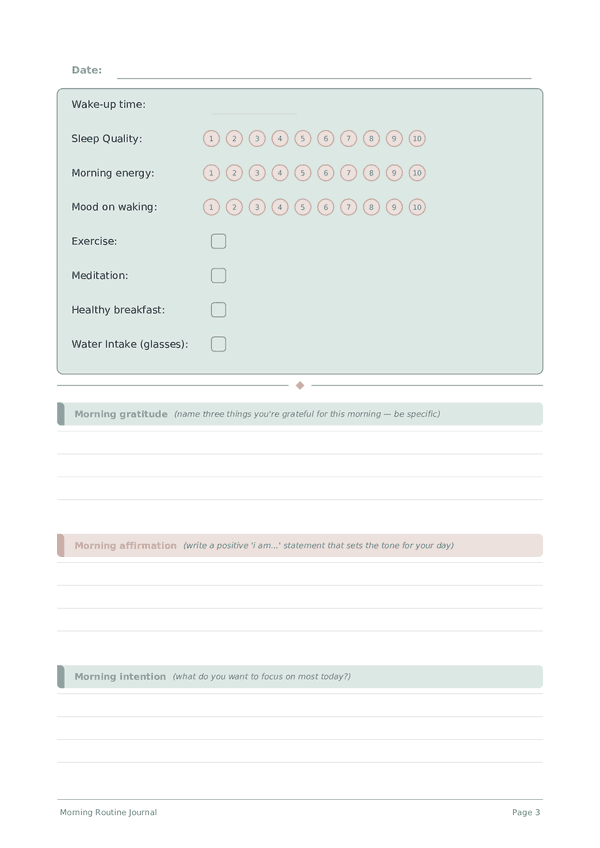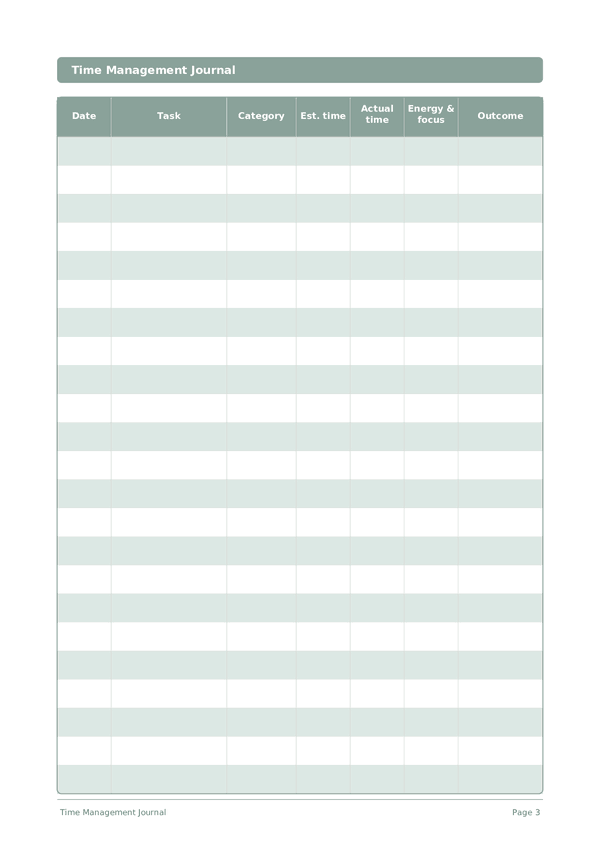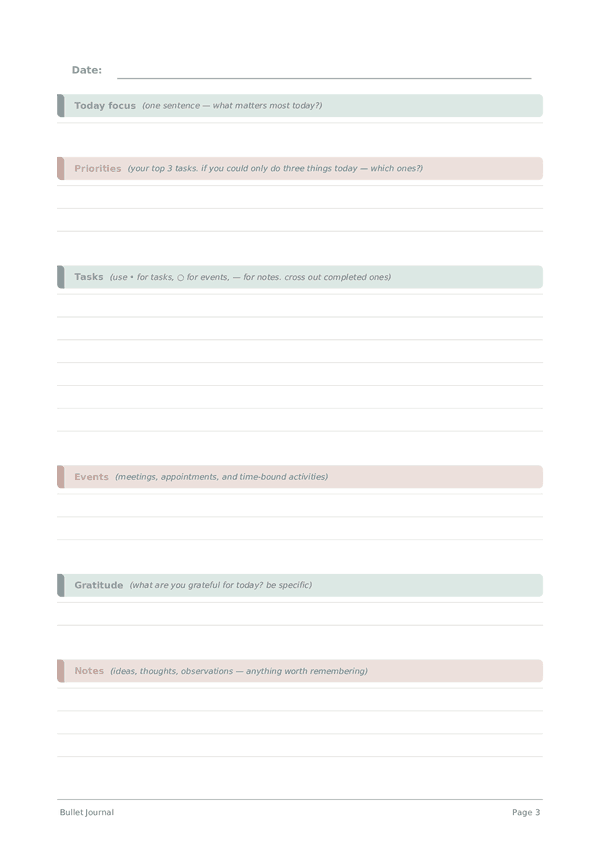
Printable Minimalism Journal
Daily decluttering and intentional living journal
Guide your minimalism journey with daily decluttering logs, reflections on letting go, and intentions for intentional living. Create space for what truly matters.
Customize fields
Toggle fields on or off. Click the pencil to rename, or add your own fields.
What is this journal?
A minimalism journal is a daily practice for documenting your journey toward a simpler, more intentional life. Each entry records what you decluttered, how it felt to let go, and the space — both physical and mental — that you created. It transforms minimalism from a one-time purge into a sustainable daily practice.
This journal is for anyone drawn to living with less — whether you are in the early stages of decluttering a packed home or already living simply and want to maintain that intentionality. It is equally valuable for digital minimalism, relationship decluttering, and simplifying your schedule.
Research on the psychology of possessions shows that our relationship with objects is deeply emotional. Simply discarding things creates anxiety, but reflective decluttering — where you process the feelings attached to each item — leads to lasting freedom from accumulation. This journal guides that reflective process, making minimalism a practice of self-discovery as much as tidying.
Filled example
Here's what a typical entry looks like when filled in:
How to fill in each field
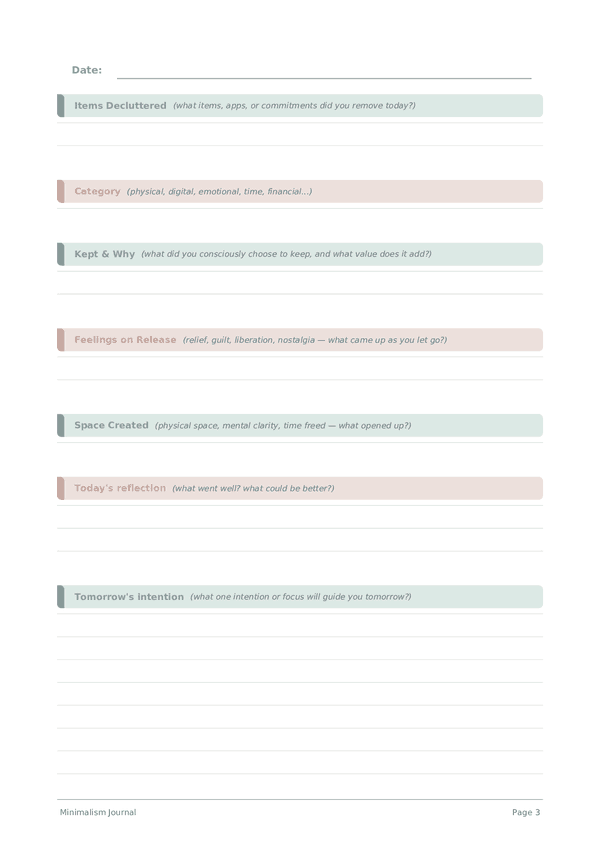
Each day you'll find several labeled sections with lines for writing. Here's what each section is for:
Items Decluttered
What items, apps, or commitments did you remove today?
Category
Physical, digital, emotional, time, financial...
Kept & Why
What did you consciously choose to keep, and what value does it add?
Feelings on Release
Relief, guilt, liberation, nostalgia — what came up as you let go?
Space Created
Physical space, mental clarity, time freed — what opened up?
Today's reflection
Look back at your day honestly. What went well? What could be better? This isn't about judgment — it's about learning and growing.
Tomorrow's intention
What one intention or focus will guide you tomorrow?
Tips for success
When and how often to write
Write daily in the evening, reflecting on your relationship with possessions and consumption that day. Each entry takes just 5-10 minutes. Weekly, review your entries to spot consumption triggers and patterns. When you are in an active decluttering phase, write before and after each session to process the emotions that arise. Once your space stabilizes, shift to 3-4 entries per week focused on maintaining intentionality and resisting lifestyle creep.