Printable Photography Journal
Log your shoots, settings, and creative insights after every session
A structured photography journal to record subjects, camera settings, lighting, and reflections. Reviewing your process helps you develop consistent technique and a stronger photographic vision.
Customize fields
Toggle fields on or off. Click the pencil to rename, or add your own fields.
Benefits
How to Use
What is this journal?
A photography journal is a dedicated space where you document every shoot — from camera settings and lighting conditions to creative reflections and lessons learned. Whether you are a hobbyist discovering your style or a working photographer refining your craft, writing down the details of each session accelerates your growth in ways that reviewing photos alone cannot.
Each entry prompts you to record the subject you photographed, the technical settings you chose (aperture, shutter speed, ISO), and the lighting you worked with. More importantly, it asks you to reflect on what you learned and what you would do differently next time. Over weeks and months these notes reveal patterns in your decision-making that help you become a more intentional photographer.
Use this journal right after a shoot while the details are still fresh. It takes only a few minutes per session and builds a searchable archive of your entire photographic journey — one that no camera roll can replace.
Filled example
Here's what a typical entry looks like when filled in:
How to fill in each field
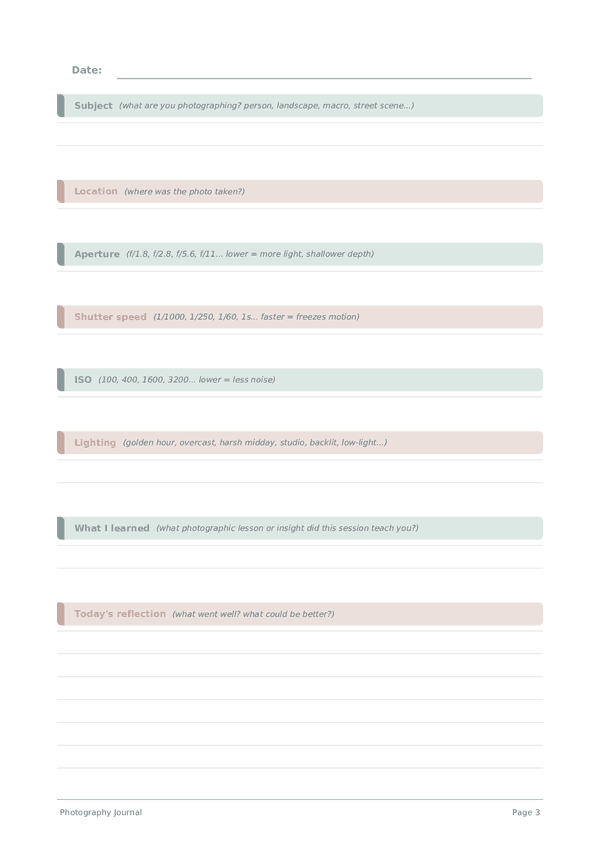
Each day you'll find several labeled sections with lines for writing. Here's what each section is for:
Subject
What are you photographing? Person, landscape, macro, street scene...
Location
Where was the photo taken?
Aperture
f/1.8, f/2.8, f/5.6, f/11... Lower = more light, shallower depth
Shutter speed
1/1000, 1/250, 1/60, 1s... Faster = freezes motion
ISO
100, 400, 1600, 3200... Lower = less noise
Lighting
Golden hour, overcast, harsh midday, studio, backlit, low-light...
What I learned
Write one new thing you learned today. It can be a fact, a skill, an insight about yourself, or a life lesson. Daily learning compounds into wisdom.
Today's reflection
Look back at your day honestly. What went well? What could be better? This isn't about judgment — it's about learning and growing.
Tips for success
When and how often to write
Make a journal entry after every dedicated shoot or photo walk while the experience is still tactile. If you shoot casually throughout the week, batch your reflections into one focused session on the weekend. Monthly, review your entries to identify recurring themes and technical gaps. Quarterly, select your ten best images from journal entries and compare them to the previous quarter — this curated comparison reveals growth that daily shooting alone obscures.