Printable Quit Smoking Journal
Daily tracking and reflection for your smoke-free journey
Combine daily tracking with reflective journaling to support your quit smoking journey. Rate cravings, mood, stress, and energy each day, then write about triggers, coping strategies, and personal victories. Research shows that writing down goals and tracking progress significantly increases success rates in smoking cessation.
Customize fields
Toggle fields on or off. Click the pencil to rename, or add your own fields.
Benefits
How to Use
What is this journal?
A quit smoking journal is a daily support tool for your journey to becoming smoke-free. By tracking your smoke-free status, cravings, mood, and stress alongside reflective writing about triggers and what helped, you build a personalized quit strategy based on real data from your own experience.
This journal is for anyone in the process of quitting smoking — whether you are on day one or day one hundred. Quitting is not a single event but a daily practice that requires self-awareness, strategy, and self-compassion. This journal provides all three.
Smoking cessation research identifies self-monitoring as one of the most effective behavioral strategies for quitting. People who track their cravings and triggers are 2x more likely to successfully quit long-term. The journaling component adds emotional processing that reduces the stress response — one of the primary drivers of relapse — while the daily format creates accountability without pressure.
Filled example
Here's what a typical entry looks like when filled in:
How to fill in each field
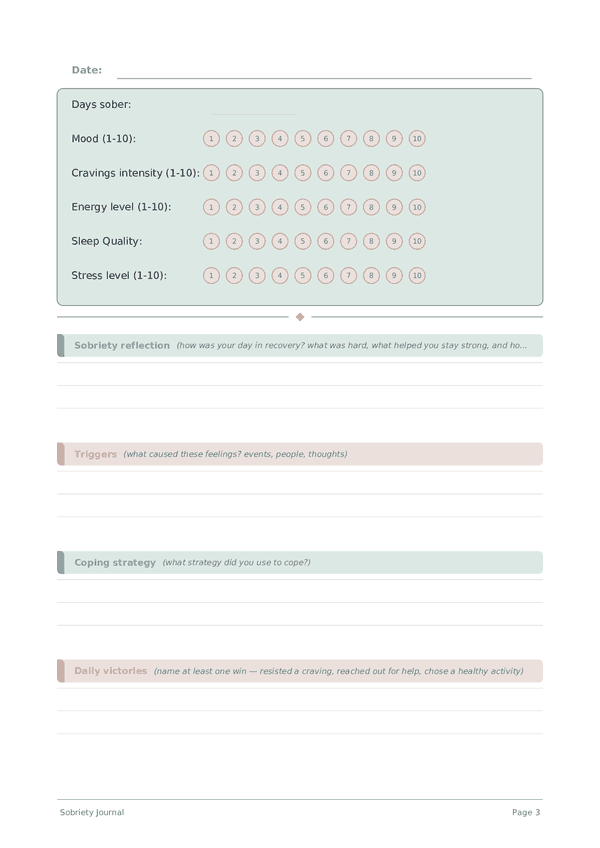
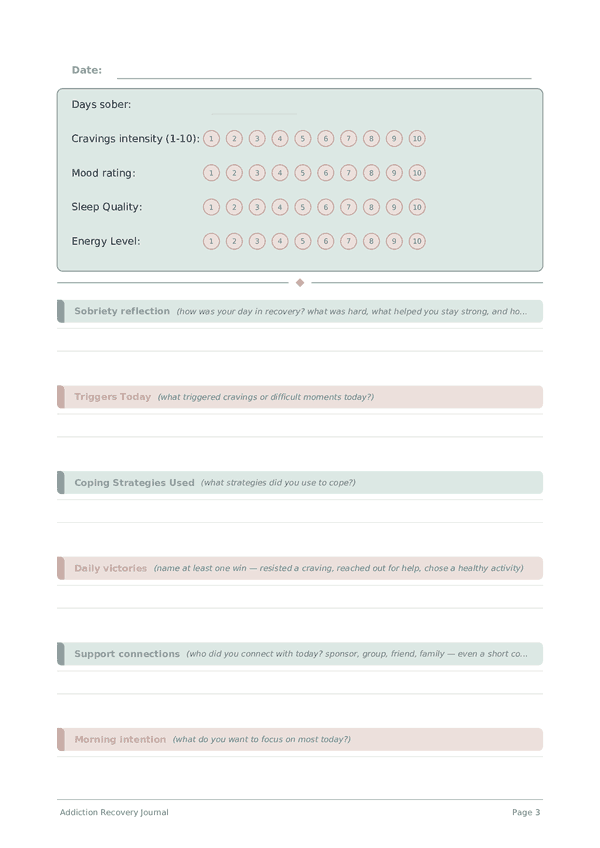
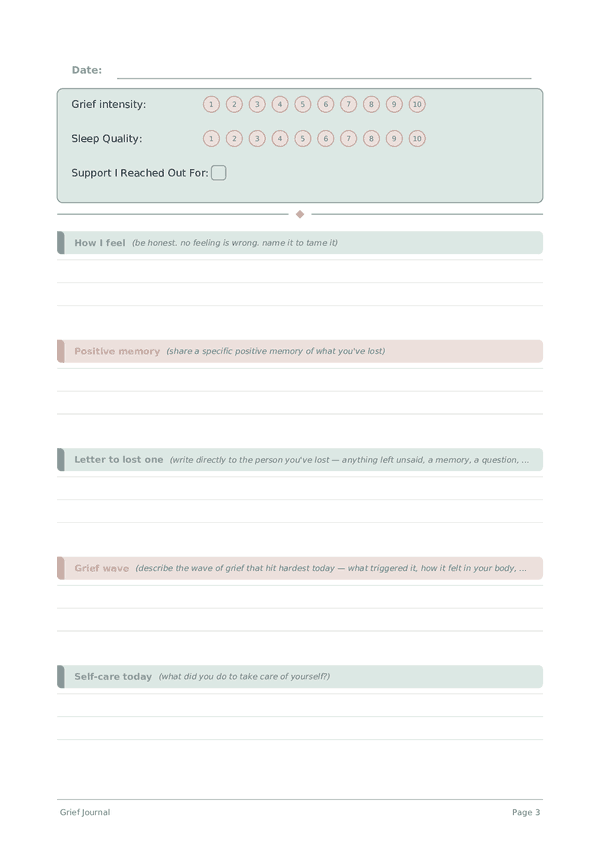
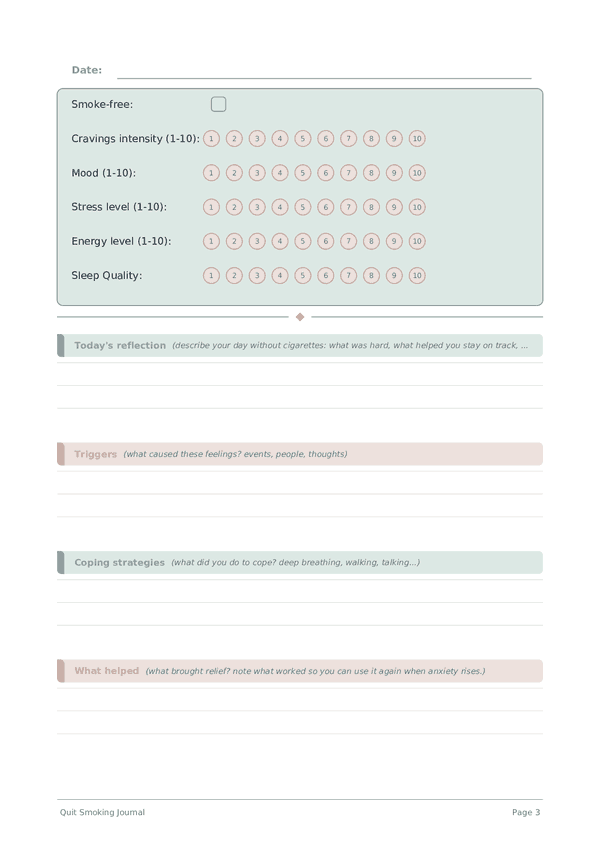
The top of each page has quick-fill fields (ratings, checkboxes, numbers). Below that is a lined section for writing. Here's what each field means:
Smoke-free
Check this off for each day you don't smoke. Visualizing your streak of smoke-free days strengthens your resolve.
Cravings intensity (1-10)
How strong are your cravings today? Rate 1 (barely noticeable) to 10 (overwhelming)
Mood (1-10)
Rate your overall emotional state for the day. 1 means very low or depressed, 10 means exceptionally happy and positive. Don't overthink — go with your gut feeling.
Stress level (1-10)
Rate your stress on a scale of 1–10. Over time, you'll identify your stress patterns and which coping strategies work best.
Energy level (1-10)
Rate your physical and mental energy level. 1 means exhausted and drained, 10 means fully energized and alert. This helps you identify what activities boost or drain your energy.
Sleep Quality
Rate how restful your sleep was. 1 means terrible and restless, 5 means deep and refreshing. Quality matters as much as quantity.
Today's reflection
Look back at your day honestly. What went well? What could be better? This isn't about judgment — it's about learning and growing.
Triggers
Identify what caused your emotional reactions — events, people, thoughts, environments. Recognizing triggers gives you the power to prepare for or avoid them.
Coping strategies
What did you do to cope? Deep breathing, walking, talking...
What helped
What brought relief? Note what worked so you can use it again when anxiety rises.
Accomplishments
What did you get done today? List completed tasks and progress made
Tips for success
When and how often to write
Journal every evening for the first 30 days without exception — this is the critical window where habits form and cravings peak. Log cravings in real-time during the day (even a quick note on your phone to expand later). After the first month, maintain daily entries for at least 3 months total. The craving tracker loses urgency around month 2-3, and that is actually the most dangerous time — keep writing. After 3 months, shift to weekly check-ins to guard against complacency.