Printable Sketch Journal
Open dot-grid pages for sketching, drawing, and visual exploration
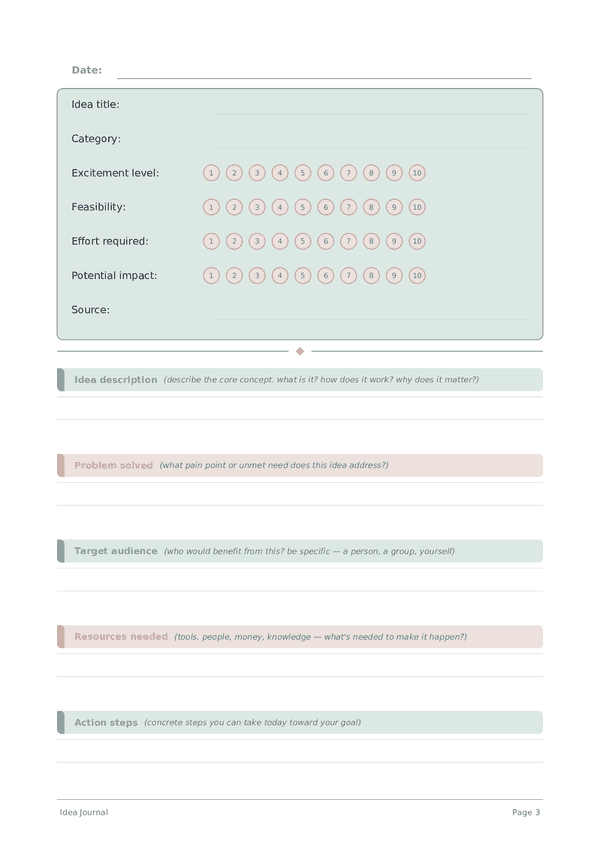
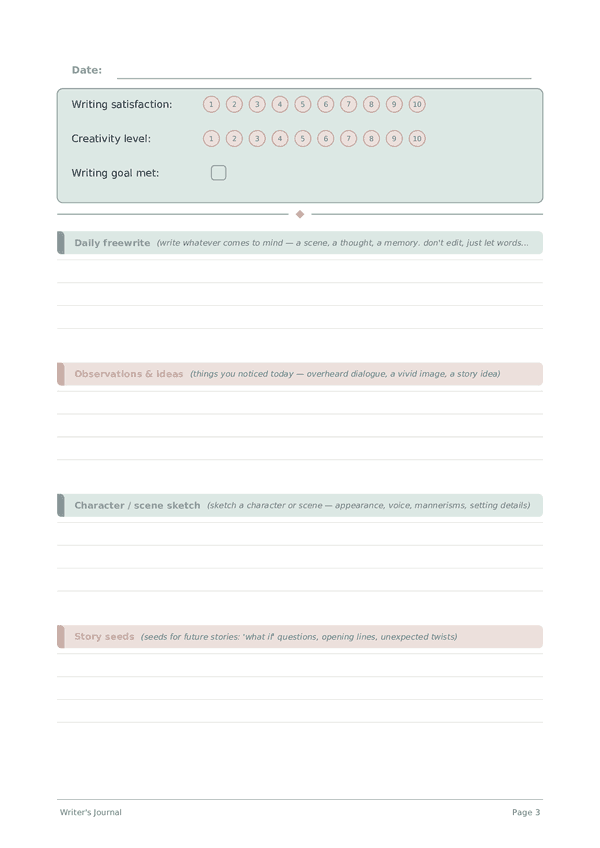
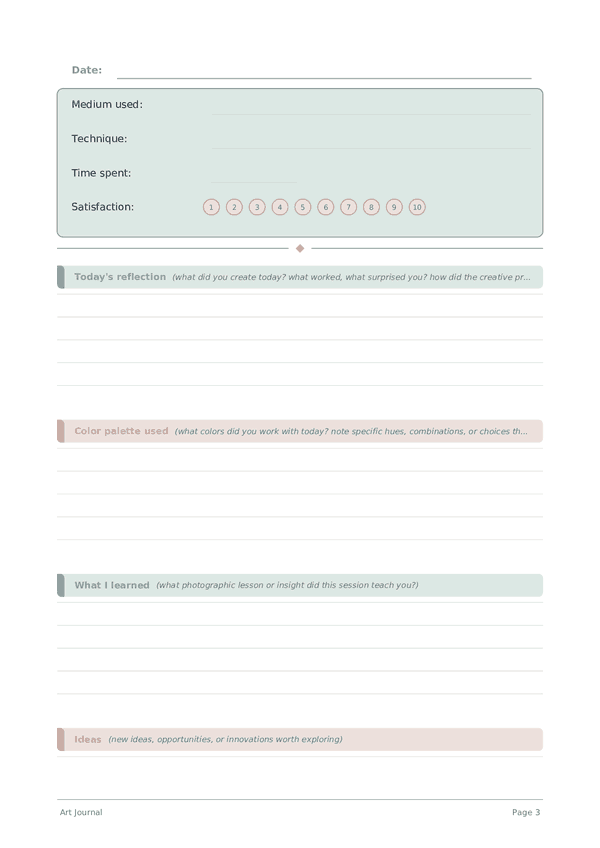
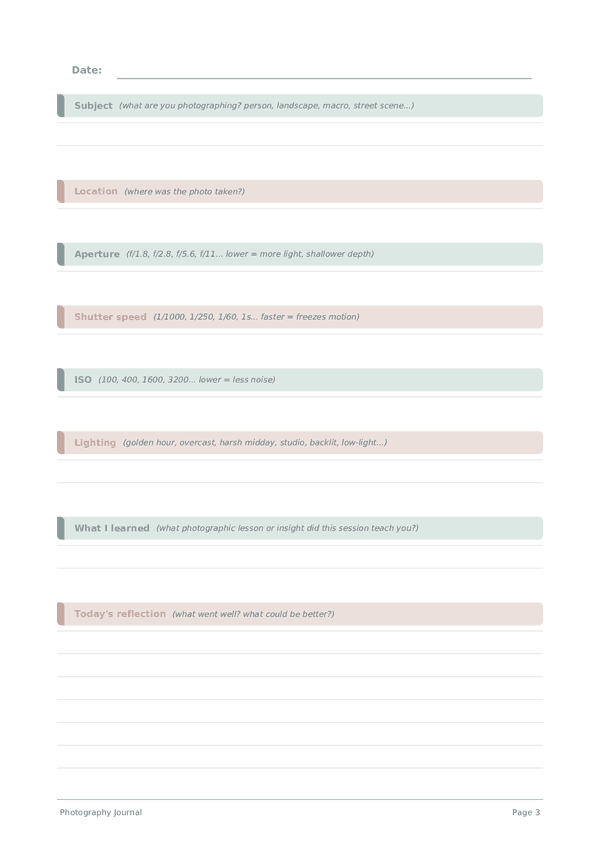
A minimalist sketchbook journal built around mostly blank dot-grid pages — giving you maximum drawing space with just a slim date header and subtle prompts at the bottom. Designed for artists, illustrators, and anyone building a daily drawing habit. Each page is a fresh canvas: use it for quick studies, gesture drawings, detailed illustrations, or spontaneous doodles.
Benefits
How to Use
What is this journal?
A Sketch Journal is a freeform visual space designed for daily drawing practice. Each page features a date header and a dot grid that provides gentle structure without constraining your creativity. The dots serve as subtle guides for proportion, perspective, and alignment while remaining invisible enough to let your sketches breathe. It is the ideal format for quick studies, visual notes, and experimental mark-making.
Sketching daily is one of the most effective ways to develop your observational skills and artistic confidence. Unlike formal drawing exercises, a sketch journal invites imperfection — it is a place to explore, experiment, and play without pressure. The dot grid supports technical work when you need it, but it never demands it. Over time, the filled pages become a visual diary of your evolving eye and hand.
Date each page and commit to putting something on paper every day, even if it is just a five-minute gesture drawing or a quick doodle of your coffee cup. Do not erase, do not tear out pages. The value of a sketch journal lies in the unfiltered record of practice. Flip through past pages regularly to appreciate your progress and rediscover ideas worth developing further.
Filled example
Here's what a typical entry looks like when filled in:
Tips for success
When and how often to write
Sketch daily, even if only for five minutes. Research on skill acquisition (Ericsson, 1993) shows that frequency beats duration — a five-minute daily sketch builds more skill than a single weekly two-hour session. Carry your journal so you can sketch during commutes, lunch breaks, or waiting times. Set a weekly "deep sketch" session of 30 to 60 minutes where you work on longer studies. Review your pages monthly to see improvement; progress in sketching is gradual but unmistakable over 30-day arcs.