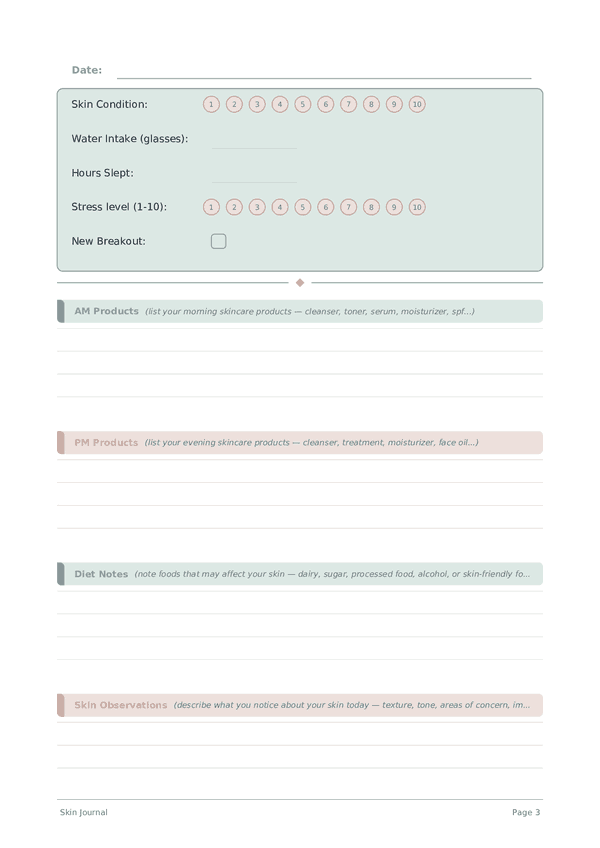
Printable Skin Journal
Daily skincare routine tracker and skin health journal
Build your best skin through daily routine tracking and pattern recognition. Log products, monitor lifestyle factors like hydration and sleep, and identify what truly improves your complexion over time.
Customize fields
Toggle fields on or off. Click the pencil to rename, or add your own fields.
What is this journal?
A skin journal is a daily tracking tool designed for anyone who wants to understand and improve their skin health. By rating your skin condition, logging water intake, sleep, stress levels, and noting breakouts alongside your skincare routine and diet, you create a holistic picture of the factors influencing your complexion. This journal bridges the gap between guessing what works and knowing what works.
Skin is the body's largest organ, and its condition is influenced by a complex web of internal and external factors. A product that works wonders for one person may cause breakouts in another, and environmental changes can shift your skin's needs overnight. By maintaining consistent daily entries, you can isolate which products, foods, or habits correlate with your best and worst skin days — information that even a dermatologist cannot determine from a single office visit.
Whether you are battling acne, managing eczema or rosacea, building an anti-aging routine, or simply curious about optimizing your skin, this journal turns anecdotal impressions into reliable data. It is especially powerful when introducing new products, as you can precisely track their effects over the crucial first weeks of use.
Filled example
Here's what a typical entry looks like when filled in:
How to fill in each field
The top of each page has quick-fill fields (ratings, checkboxes, numbers). Below that is a lined section for writing. Here's what each field means:
Skin Condition
Rate your skin condition today. Track improvements or flare-ups to identify triggers like food, stress, or products.
Water Intake (glasses)
How many glasses of water did you drink today? Aim for 6–8 glasses for optimal skin hydration
Hours Slept
Write how many hours you actually slept (not just time in bed). Tracking this alongside mood and energy often reveals powerful connections.
Stress level (1-10)
Rate your stress on a scale of 1–10. Over time, you'll identify your stress patterns and which coping strategies work best.
New Breakout
Did any new breakouts appear today? Check if yes to track patterns over time
AM Products
List your morning skincare products — cleanser, toner, serum, moisturizer, SPF...
PM Products
List your evening skincare products — cleanser, treatment, moisturizer, face oil...
Diet Notes
Note foods that may affect your skin — dairy, sugar, processed food, alcohol, or skin-friendly foods
Skin Observations
Describe what you notice about your skin today — texture, tone, areas of concern, improvements
What Changed
Did you change anything today — new product, different diet, more sleep? Note it to track cause and effect
Tips for success
When and how often to write
Do a brief skin check and log every morning — note any new breakouts, irritation, dryness, or improvement. Record your full skincare routine (AM and PM products) and mark any product changes. Weekly, review your skin photos side by side to detect gradual changes invisible day-to-day. Monthly, assess which products and habits correlate with your best and worst skin weeks. Before dermatologist visits, prepare a summary from your journal: current routine, recent changes, trigger patterns, and product duration. This data transforms your appointment from guesswork into evidence-based care.