Printable Weather Journal
Daily weather observations for amateur meteorologists
A structured daily log for anyone who wants to track local weather conditions with precision and consistency. Record temperature, humidity, sky condition, precipitation, wind, and cloud cover each day to build a meaningful personal climate record. Over weeks and months, patterns emerge — seasonal shifts, microclimatic quirks, and correlations with everyday life become visible.
Customize fields
Toggle fields on or off. Click the pencil to rename, or add your own fields.
Benefits
How to Use
What is this journal?
A weather journal is a daily tracker for recording local weather conditions with precision. By logging temperature, humidity, sky conditions, and precipitation each day, you build a hyperlocal climate record that reveals seasonal patterns, microclimates, and long-term trends that official weather stations may miss.
This journal is for weather enthusiasts, gardeners, photographers, outdoor planners, and anyone fascinated by the ever-changing atmosphere. It is also valuable for documenting how weather affects your mood, energy, and activities — creating a personal weather-life correlation record.
Citizen weather observation has a long and valuable history in meteorology. Your daily records contribute to understanding local climate patterns that coarse-grained weather data cannot capture. Over years, this journal becomes a personal almanac — telling you exactly when your area's seasons shift, which weeks bring the best light for photography, and how your garden's microclimate differs from the nearest weather station.
Filled example
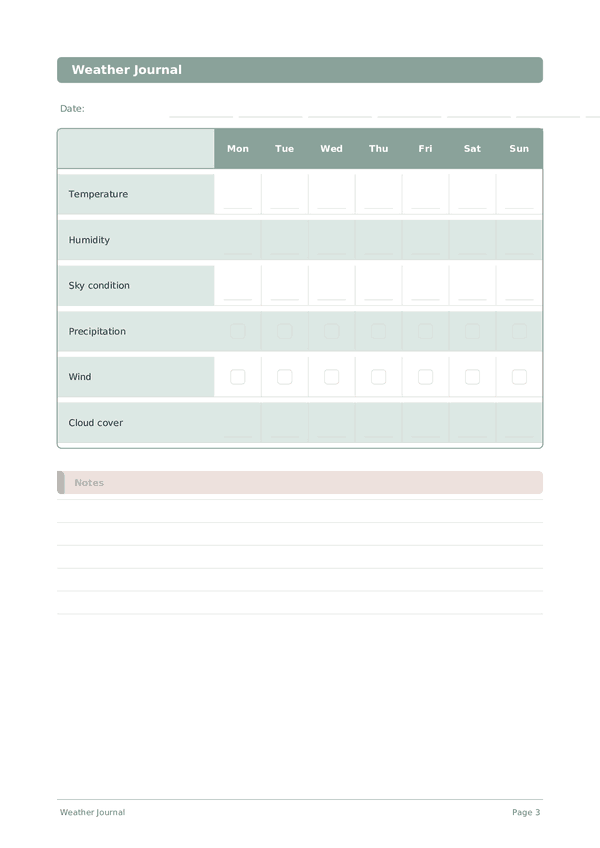
Here's what a typical entry looks like when filled in:
| Mon | Tue | Wed | Thu | Fri | Sat | Sun | |
|---|---|---|---|---|---|---|---|
| Temperature | 8 | 11 | 14 | 12 | 9 | 7 | 10 |
| Humidity | 72 | 65 | 58 | 70 | 78 | 82 | 68 |
| Sky condition | Overcast | Partly sunny | Clear | Cloudy | Rain | Fog AM, clear PM | Partly cloudy |
| Precipitation | ✓ | ✓ | |||||
| Wind | ✓ | ✓ | ✓ | ||||
| Cloud cover | 9 | 5 | 1 | 7 | 10 | 6 | 4 |
How to fill in each field
Each page is a weekly grid. Rows are your tracking items, columns are days of the week. Here's what each item means:
Temperature
Record your basal body temperature. Temperature shifts help track ovulation and overall cycle health.
Humidity
Sky condition
What does the sky look like right now? Describe clouds, clarity, or weather
Precipitation
Wind
Cloud cover
Tips for success
When and how often to write
Record observations at the same time every day without exception \u2014 consistency is the foundation of meaningful weather data. Morning readings capture overnight changes; afternoon readings capture the day\u2019s peak conditions. A twice-daily habit takes under 2 minutes each time. Weekly, scan your entries for developing patterns. Monthly and seasonally, compare this period to the same period in previous years. After one full year, your data becomes a genuine reference for your local microclimate.