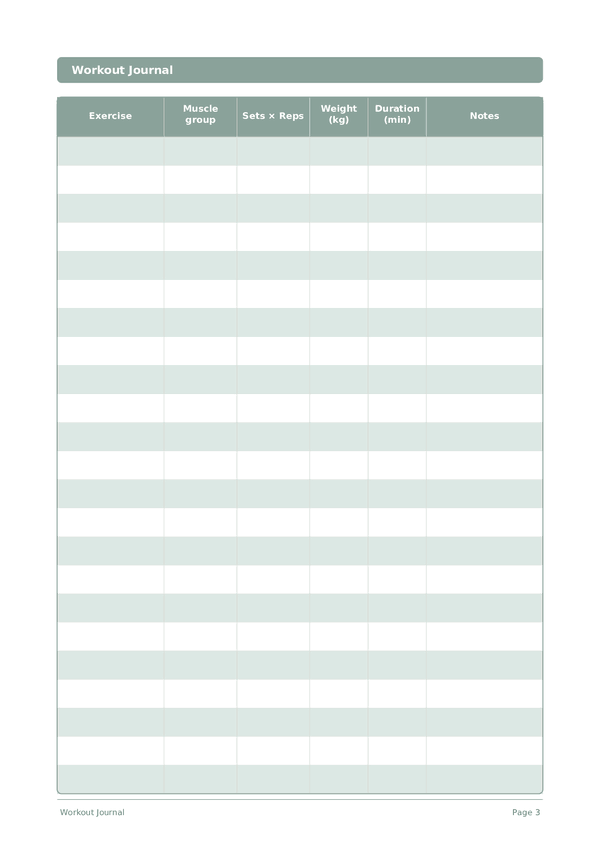
Printable Workout Journal
Track every set, rep, and weight — see your strength grow over time
A structured workout log that helps you record exercises, sets, reps, weights, and duration for each training session. Built for gym-goers and home athletes alike, this journal keeps your progress visible and your motivation high.
Customize fields
Toggle fields on or off. Click the pencil to rename, or add your own fields.
Benefits
How to Use
What is this journal?
A workout journal is a structured training log where you record every exercise you perform — the type, target muscle group, sets, reps, weights, and duration. It serves as both a detailed record of what you did and a planning tool for progressive overload, helping you ensure that your training is moving forward rather than staying stagnant.
This journal is designed for anyone who exercises regularly and wants to train with intention, from gym beginners learning proper programming to experienced lifters tracking periodization cycles. It is equally valuable for people doing bodyweight training, group fitness classes, or rehabilitation exercises — any physical activity where tracking progress leads to better outcomes.
The difference between people who make consistent progress in the gym and those who plateau often comes down to one thing: tracking. When you write down that you bench pressed 60 kg for 3 sets of 8 reps, you know that next session you should aim for 3 sets of 9 or increase the weight. Without a journal, most people repeat the same weights and reps for months without realizing it. Your workout journal transforms each session from an isolated event into part of a coherent, progressive plan.
Filled example
Here's what a typical entry looks like when filled in:
| Exercise | Muscle group | Sets × Reps | Weight (kg) | Duration (min) | Notes |
|---|---|---|---|---|---|
| Barbell Back Squat | Legs / Glutes | 4 x 8 | 80 | 12 | Warm-up: 2x10 at 40kg. Depth was good on all sets. |
| Romanian Deadlift | Hamstrings / Lower Back | 3 x 10 | 60 | 10 | Focused on slow eccentric. Felt stretch in hamstrings. |
| Leg Press | Quads | 3 x 12 | 140 | 8 | Feet placed high and wide |
| Walking Lunges | Legs / Glutes | 3 x 12 each leg | 16 | 8 | Dumbbells, 8kg each hand |
| Leg Curl Machine | Hamstrings | 3 x 12 | 35 | 6 | Last 2 reps were tough |
| Calf Raises (Standing) | Calves | 4 x 15 | 50 | 6 | Full range of motion, 2-sec pause at top |
| Plank | Core | 3 x 60 sec | 0 | 5 | Finished with 3 sets of planks for core stability |
How to fill in each field
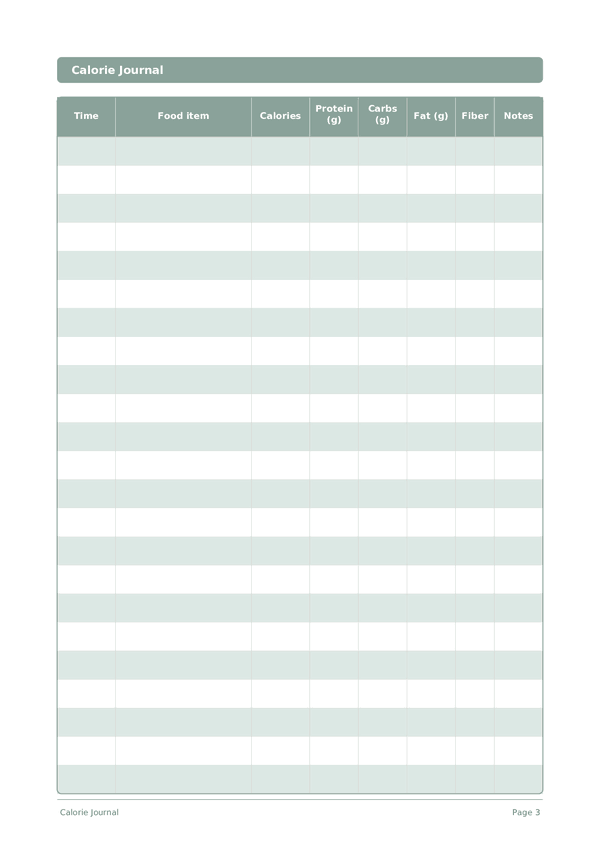
Each page is a table with columns. Fill in one row per entry. Here's what each column is for:
Exercise
Write what type of exercise you did (e.g., running, yoga, weight training). Variety matters — tracking helps ensure a balanced routine.
Muscle group
Chest, back, legs, shoulders, arms, core...
Sets × Reps
Record sets and repetitions (e.g., 3×12). This is your strength training log — progressive overload becomes visible over time.
Weight (kg)
Record your weight if you're tracking it. Weigh yourself at the same time each day for consistent data. Focus on weekly trends, not daily fluctuations.
Duration (min)
Record how long you exercised or practiced in minutes. Tracking duration helps you see your commitment grow and find your optimal session length.
Notes
Add any additional context or thoughts. This catch-all column is for anything that doesn't fit elsewhere but might be useful later.
Tips for success
When and how often to write
Log every workout in the table format immediately during or after your session: exercise name, sets, reps, weight, and rest periods. On rest days, note recovery activities (stretching, foam rolling, walking) and how your body feels. Weekly, review your training log to ensure progressive overload is happening and no muscle group is neglected. Every 4-6 weeks, compare your current numbers to your starting point — this is where real motivation lives. Deload weeks should also be logged to track how recovery affects subsequent performance.