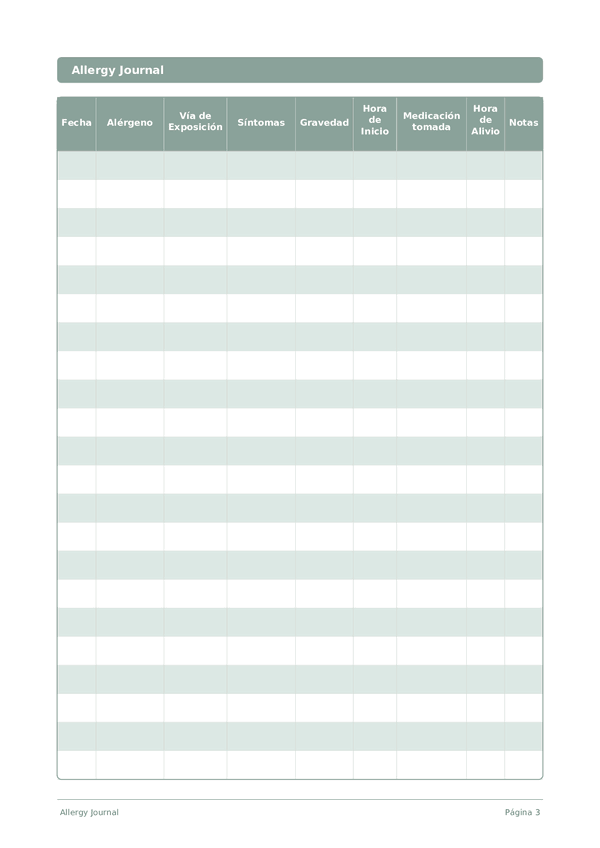
Printable Allergy Journal
Allergy reaction tracker and exposure log
Track allergic reactions with detailed exposure and symptom logging. Identify patterns, monitor treatment effectiveness, and build comprehensive records to share with your allergist for better diagnosis and management.
Personalizar campos
Activa o desactiva campos. Haz clic en el lápiz para renombrar, o añade tus propios campos.
¿Qué es este diario?
An allergy journal is a systematic log for tracking allergic reactions and identifying the substances that trigger them. Whether you are dealing with food allergies, seasonal hay fever, skin sensitivities, or environmental allergens, this journal helps you record each incident with enough detail to spot patterns and make informed decisions about avoidance strategies and treatments.
Allergies can be frustratingly difficult to pin down, especially when multiple allergens are involved or reactions are delayed. By recording the allergen, how you were exposed, the symptoms that appeared, their severity, timing, and what provided relief, you build a comprehensive history that an allergist can use to guide testing and treatment. Many people discover previously unrecognized triggers simply by reviewing a few weeks of careful entries.
This journal is particularly valuable for parents tracking children's allergies, individuals with multiple sensitivities, or anyone preparing for allergy testing. It ensures that no reaction goes undocumented and provides the detailed evidence needed for accurate diagnosis and effective management plans.
Ejemplo completado
Así es como se ve una entrada típica cuando se rellena:
| Fecha | Alérgeno | Vía de Exposición | Síntomas | Gravedad | Hora de Inicio | Medicación tomada | Hora de Alivio | Notas |
|---|---|---|---|---|---|---|---|---|
| 2026-02-28 | Pollen (birch) | Inhalation | Sneezing, itchy eyes, runny nose | 6 | Within 30 min | Cetirizine 10mg | 1 hour | Windy day, was outdoors for 2 hours |
| 2026-03-01 | Shrimp | Ingestion | Hives on arms, lip swelling | 8 | 15 minutes | Diphenhydramine 25mg | 3 hours | Accidental exposure in restaurant dish |
| 2026-03-02 | Dust mites | Inhalation | Nasal congestion, cough | 4 | 1 hour | Nasal corticosteroid spray | 2 hours | After cleaning old bookshelf |
| 2026-03-03 | Nickel (jewelry) | Skin contact | Red rash, itching at contact area | 5 | 6 hours | Hydrocortisone cream | 2 days | Wore new earrings for first time |
Cómo rellenar cada campo
Cada pagina es una tabla con columnas. Completa una fila por entrada. Esto es lo que significa cada columna:
Fecha
Escribe la fecha de hoy. Esto ancla tu entrada en el tiempo y ayuda cuando revisas entradas despues.
Alérgeno
Registra el alergeno o sospecha de desencadenante. Ser preciso ayuda a ti y a tu medico a identificar exactamente que causa las reacciones.
Vía de Exposición
Síntomas
Enumera los sintomas que experimentaste hoy. Se especifico sobre tipo, ubicacion y severidad. Los patrones en los sintomas a menudo senalan desencadenantes o necesidades de tratamiento.
Gravedad
Que tan severos son tus sintomas hoy? Califica del 1 (leve) al 10 (debilitante)
Hora de Inicio
Medicación tomada
Tomaste tu medicamento hoy? Anota que, cuando y cualquier dosis que hayas omitido
Hora de Alivio
Notas
Agrega cualquier contexto o pensamiento adicional. Esta columna general es para cualquier cosa que no encaje en otro lugar pero pueda ser util despues.
Consejos para el exito
Cuando y con que frecuencia escribir
Log every allergic reaction immediately with full details — waiting even a few hours causes you to forget potential triggers. During allergy season, make a brief daily entry even on symptom-free days, noting weather, outdoor time, and pollen exposure. This creates a complete picture for your allergist. If you suspect food allergies, log every meal and snack for at least 2 weeks to establish patterns. Before allergy appointments, review your journal to summarize your top triggers, most effective treatments, and any new or worsening reactions.
Preguntas frecuentes
¿Por qué registrar la vía de exposición junto al alérgeno?
La AAAAI (American Academy of Allergy, Asthma & Immunology) señala que las reacciones varían según la vía: los alimentos ingeridos causan reacciones gastrointestinales y sistémicas; los pólenes inhalados desencadenan síntomas respiratorios; el contacto cutáneo produce dermatitis. La columna vía de Exposición distingue esto para su alergólogo. La ACAAI usa los datos de vía para diferenciar reacciones mediadas por IgE de dermatitis de contacto o intolerancias no alérgicas.
¿Con qué rapidez deben aparecer los síntomas tras la exposición?
Según la AAAAI: las reacciones mediadas por IgE (alergia verdadera) suelen comenzar en minutos o hasta 2 horas tras la exposición, lo que capta la columna hora de Inicio. Las reacciones tardías (24-48 horas, p. ej., dermatitis de contacto) sugieren mecanismos no IgE. La anafilaxia (severidad ≥7/10 con síntomas respiratorios o circulatorios) suele alcanzar su pico en 5-30 minutos: use el autoinyector de epinefrina si lo tiene prescrito y llame al 112 de inmediato.
¿Qué severidad requiere atención de emergencia?
Criterios de la ACAAI y la AAAAI: cualquier reacción con dificultad respiratoria, hinchazón de garganta, mareos, pulso rápido, urticaria extensa o vómitos tras una posible exposición al alérgeno es una posible anafilaxia: use el autoinyector de epinefrina si está prescrito y llame al 112. Las valoraciones de severidad ≥7 con afectación multisistémica (piel + vías respiratorias + aparato digestivo) definen la anafilaxia. Documente todo en el diario después para su alergólogo.
¿Cómo ayuda esto a mi alergólogo a diagnosticar alergias específicas?
Según la AAAAI, los alergólogos usan 4-8 semanas de diarios de reacciones para identificar alérgenos sospechosos para pruebas de punción cutánea o análisis de sangre (IgE específica). Los patrones a través de múltiples exposiciones importan más que los eventos únicos. Las columnas alérgeno, vía, síntomas, hora de Inicio y severidad coinciden con la anamnesis estructurada que recogen los alergólogos. Lleve todas las páginas a su cita: esta evidencia reduce los paneles de pruebas y los análisis innecesarios.
¿Puedo usarlo para alergias ambientales como el polen o los ácaros?
Sí. La AAAAI hace seguimiento de los alérgenos ambientales mediante diarios de síntomas correlacionados con los recuentos locales de polen (disponibles en la Red Española de Aerobiología y redes equivalentes en LATAM). Registre el alérgeno (p. ej., 'polen de olivo', 'caspa de gato'), la vía (inhalado, contacto) y los síntomas. Cruce los datos con los pronósticos diarios de polen. Tres temporadas de datos ayudan a identificar sensibilidades específicas para la inmunoterapia según las guías de la ACAAI.
¿Cómo hago seguimiento de reacciones alérgicas alimentarias de forma segura?
Nota de seguridad crítica: nunca se exponga intencionalmente a un alérgeno conocido para probarse: las pruebas de provocación oral supervisadas por un médico son el único método diagnóstico seguro según la AAAAI. Use este diario solo para exposiciones accidentales y para rastrear patrones. Registre todos los ingredientes de las comidas asociadas con reacciones en la columna de notas: los alérgenos ocultos (p. ej., leche en alimentos procesados) a menudo causan reacciones inexplicables.
¿Qué le indica los datos de hora de Alivio a mi alergólogo?
La duración y el momento del alivio revelan la efectividad del medicamento. Según la AAAAI: los antihistamínicos H1 (cetirizina, loratadina, fexofenadina) suelen actuar en 30-60 minutos para las reacciones leves. Los síntomas persistentes más de 4-6 horas tras el antihistamínico sugieren patología más grave o elección incorrecta del medicamento. Documente nombre, dosis, momento y tiempo hasta el alivio: informa las decisiones del alergólogo sobre la escalada del tratamiento.
¿Cuándo debo ver a un alergólogo y cuándo puedo manejarlo yo mismo?
Criterios de derivación de la AAAAI: cualquier historial de anafilaxia, reacciones recurrentes a desencadenantes conocidos o desconocidos, alergias que afectan a la vida diaria, sospechas de alergias alimentarias en niños, asma más alergias. La ACAAI recomienda evaluación cuando los antihistamínicos sin receta no controlan los síntomas o ha tenido 2+ visitas a urgencias por reacciones alérgicas. Lleve 4-8 semanas de entradas del diario: aceleran significativamente el diagnóstico.
También Te Puede Gustar
Rueda para ampliar, arrastra para mover