Printable Pain Journal
Track pain patterns, triggers, and relief strategies
A comprehensive daily pain tracker that combines structured metrics with reflective writing. Rate pain intensity, log location and type, track sleep, mood, and stress levels, and write about what triggers your pain and what brings relief. Build a detailed record to share with your healthcare provider for more effective treatment.
Personalizar campos
Activa o desactiva campos. Haz clic en el lápiz para renombrar, o añade tus propios campos.
Beneficios
Cómo Usar
¿Qué es este diario?
A pain journal is a structured daily record where you track the details of your physical pain — its location, intensity, duration, and the factors that influence it. By writing down this information consistently, you create a detailed picture of your pain patterns that can be difficult to recall from memory alone, especially during medical appointments.
This journal is designed for anyone living with chronic pain, recovering from injury, or managing conditions like migraines, arthritis, fibromyalgia, or back pain. It is equally useful if you are experiencing new or unexplained pain and want to identify triggers or patterns before consulting a doctor.
Keeping a pain journal helps you take an active role in your own care. Over time, you will be able to see which activities, foods, sleep habits, or stress levels correlate with flare-ups, and which treatments or strategies provide genuine relief. This data becomes an invaluable tool for conversations with healthcare providers and for making informed decisions about your treatment plan.
Ejemplo completado
Así es como se ve una entrada típica cuando se rellena:
Cómo rellenar cada campo
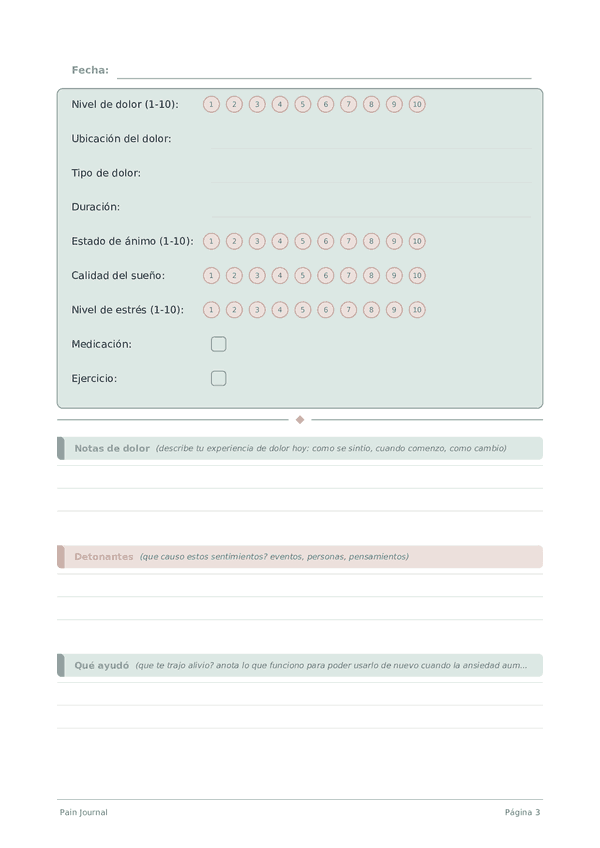
La parte superior de cada pagina tiene campos de llenado rapido (calificaciones, casillas, numeros). Debajo hay una seccion con lineas para escribir. Esto es lo que significa cada campo:
Nivel de dolor (1-10)
Califica la intensidad de tu dolor en una escala. Rastrear los niveles de dolor ayuda a identificar desencadenantes, evaluar tratamientos y comunicarte con los profesionales de salud.
Ubicación del dolor
Donde duele? Se especifico: parte baja de la espalda, rodilla izquierda, detras de los ojos, etc.
Tipo de dolor
Describe la sensacion: agudo, sordo, pulsante, ardiente, molesto o algo diferente
Duración
Registra cuanto duro el episodio o evento. Los datos de duracion ayudan a identificar patrones y evaluar la efectividad del tratamiento.
Estado de ánimo (1-10)
Califica tu estado emocional general del dia. 1 significa muy bajo o deprimido, 10 significa excepcionalmente feliz y positivo. No lo pienses demasiado: ve con tu instinto.
Calidad del sueño
Califica que tan reparador fue tu sueno. 1 significa terrible y agitado, 5 significa profundo y refrescante. La calidad importa tanto como la cantidad.
Nivel de estrés (1-10)
Califica tu estres en una escala del 1 al 10. Con el tiempo, identificaras tus patrones de estres y que estrategias de afrontamiento funcionan mejor.
Medicación
Registra los medicamentos tomados, incluyendo nombre y dosis. El seguimiento consistente te ayuda a ti y a tu medico a evaluar la efectividad del tratamiento.
Ejercicio
Marca si hiciste ejercicio hoy. Incluso una caminata de 10 minutos cuenta. El objetivo es crear conciencia de tus patrones de actividad.
Notas de dolor
Describe tu experiencia de dolor hoy: como se sintio, cuando comenzo, como cambio
Detonantes
Identifica que causo tus reacciones emocionales: eventos, personas, pensamientos, entornos. Reconocer los desencadenantes te da el poder de prepararte o evitarlos.
Qué ayudó
Que te trajo alivio? Anota lo que funciono para poder usarlo de nuevo cuando la ansiedad aumente.
Impacto diario
Como afecto el dolor tu actividad, sueno, animo o vida social hoy?
Consejos para el exito
Cuando y con que frecuencia escribir
Fill in the tracker three times daily: morning (how did you wake up?), midday (how is activity affecting pain?), and evening (how did the day go overall?). Keep the tracker entries brief — just numbers and a few words. Use the writing section when pain is significant or when you notice a new pattern. Bring your weekly summary to medical appointments — doctors consistently report that patients with pain journals receive more targeted treatment. Review monthly to spot seasonal or cyclical patterns.
Preguntas frecuentes
¿Qué debe incluir un diario de dolor para la consulta médica?
Según la Guía de Práctica Clínica del CDC para la Prescripción de Opioides (2022, MMWR) y las recomendaciones de la American Chronic Pain Association: puntuación de intensidad 0–10, localización, carácter (ardor/punzada/dolor sordo), duración del episodio, desencadenantes, efectividad de la medicación, sueño, estado de ánimo y actividad. Esta plantilla cubre los 9 campos esenciales. Lleve registros de 2–4 semanas: suficientes para identificar patrones clínicamente relevantes.
¿Cómo describo correctamente el carácter del dolor: ardor, presión, pulsación?
La clasificación estándar es el Cuestionario de Dolor McGill (Melzack, 1975, Pain, 1(3)). Descriptores sensoriales: pulsátil, punzante, ardor, presión, tracción. El ardor suele indicar dolor neuropático; la pulsación, dolor vascular (migraña); el dolor sordo, origen musculoesquelético; la punzada, proceso inflamatorio. Estos descriptores ayudan al médico a diferenciar tipos de dolor y seleccionar el tratamiento adecuado.
¿Es este diario adecuado para migraña, fibromialgia y artritis?
Sí. La American Migraine Foundation, el American College of Rheumatology y la Arthritis Foundation recomiendan oficialmente el diario de dolor. Para la migraña, registre el aura y los desencadenantes (alimentos, hormonas, clima). Para la fibromialgia, controle la tríada sueño-estrés-dolor (según los criterios diagnósticos ACR 2016). Para la artritis, anote la rigidez matutina y la correlación con la actividad. La plantilla es flexible: adapte los campos a su condición específica.
¿Qué es la escala de dolor 0–10 y cómo se utiliza?
La Escala de Valoración Numérica (NRS-11) es el instrumento estándar de la International Association for the Study of Pain (IASP). 0 = sin dolor, 10 = el peor dolor imaginable. Hjermstad et al. (2011, Journal of Pain and Symptom Management, 41(6)) la validaron en una revisión sistemática de 19 estudios. Evalúe «en este momento», no un promedio diario: las puntuaciones en tiempo real ofrecen datos clínicos más fiables.
¿Con qué frecuencia debo rellenar el diario de dolor: una vez al día o más?
Tres veces al día: mañana, mediodía y tarde. Stone & Broderick (2007, Pain Medicine, 8(suppl 3)) demostraron que las valoraciones retrospectivas del dolor difieren de las en tiempo real entre un 20 y un 30 %. Cuanto menor sea el intervalo entre el evento y el registro, más fiables serán los datos. Durante episodios agudos o brotes, registre de inmediato: anote la hora de inicio, la duración y cualquier intervención utilizada.
¿Qué desencadenantes de dolor vale la pena registrar?
Según el NIH National Institute of Neurological Disorders and Stroke y la American Migraine Foundation: clima (presión barométrica, humedad), alimentación (alimentos con tiramina en la migraña), cantidad y calidad del sueño, estrés, actividad física, ciclo hormonal, postura, tiempo de pantalla, cafeína y alcohol. Registre todo lo ocurrido en las 24 horas anteriores a un episodio de dolor. Los patrones se vuelven visibles tras 2–4 semanas de seguimiento sistemático.
¿Por qué es mejor un diario de dolor en papel que una aplicación?
Tres razones. Privacidad de datos médicos: tras la resolución de la FTC con Flo Health (enero de 2021) quedó documentado que las apps de salud pueden compartir datos con terceros. Los médicos consultan fácilmente los registros escritos durante la visita, sin necesidad de exportar. El papel funciona durante la fotofobia de la migraña y no requiere batería ni conexión. Las apps y el papel no se excluyen: muchos pacientes utilizan ambos.
¿Puede un diario de dolor ayudar a identificar la causa de un dolor inexplicable?
El diario no diagnostica, pero revela patrones que los médicos utilizan para el diagnóstico. La International Association for the Study of Pain (IASP) y la American Academy of Pain Medicine incluyen el diario de dolor en los protocolos de evaluación clínica del dolor crónico. Lleve al menos 2–4 semanas de registros: aportan datos diarios, semanales y por desencadenante que no pueden reconstruirse de memoria.
También Te Puede Gustar
Rueda para ampliar, arrastra para mover