Printable Symptom Journal
Track symptoms, triggers, and treatments daily
A structured daily journal that combines quick health ratings with detailed symptom notes. Rate your pain, mood, energy, and sleep at a glance, then describe symptoms, identify triggers, and log medications in dedicated writing sections. Designed to help you spot patterns and give your doctor a clear, organized health history.
Personalizar campos
Activa o desactiva campos. Haz clic en el lápiz para renombrar, o añade tus propios campos.
Beneficios
Cómo Usar
¿Qué es este diario?
A symptom journal is a focused daily record where you document specific symptoms you are experiencing — their severity, timing, and the circumstances surrounding them. Unlike a general health journal, it zeroes in on tracking particular symptoms over time so you and your healthcare providers can identify patterns, triggers, and the effectiveness of treatments.
This journal is designed for anyone dealing with ongoing or recurring symptoms that are difficult to explain, diagnose, or manage. Whether you are navigating a new health concern, living with a chronic illness, tracking side effects of a medication, or monitoring symptoms while waiting for a diagnosis, this journal gives your observations structure and consistency.
Consistently recording your symptoms transforms vague impressions into concrete data. Instead of telling your doctor "I have been feeling worse lately," you can show them exactly when symptoms intensified, what you were doing at the time, and which interventions helped. This level of detail can accelerate diagnosis, improve treatment plans, and give you a greater sense of control over your health journey.
Ejemplo completado
Así es como se ve una entrada típica cuando se rellena:
Cómo rellenar cada campo
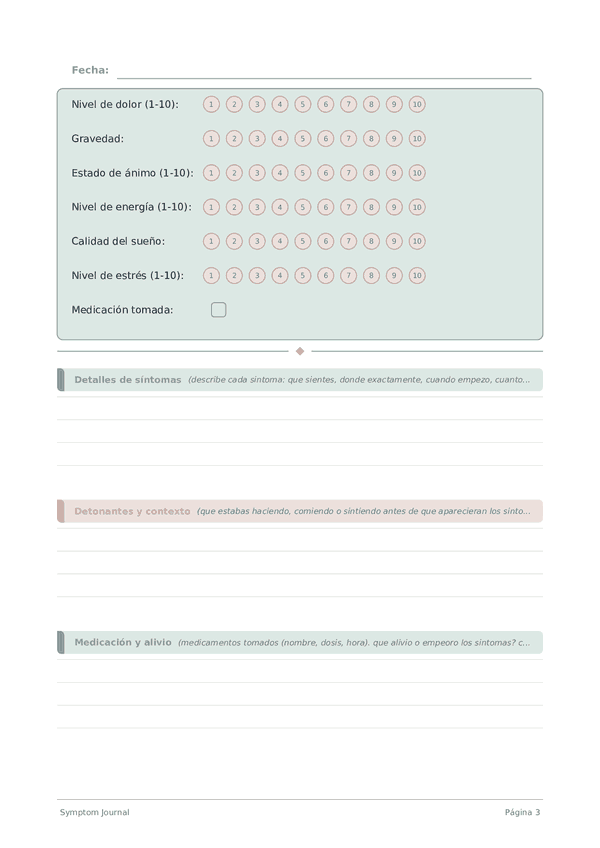
La parte superior de cada pagina tiene campos de llenado rapido (calificaciones, casillas, numeros). Debajo hay una seccion con lineas para escribir. Esto es lo que significa cada campo:
Nivel de dolor (1-10)
Califica la intensidad de tu dolor en una escala. Rastrear los niveles de dolor ayuda a identificar desencadenantes, evaluar tratamientos y comunicarte con los profesionales de salud.
Gravedad
Que tan severos son tus sintomas hoy? Califica del 1 (leve) al 10 (debilitante)
Estado de ánimo (1-10)
Califica tu estado emocional general del dia. 1 significa muy bajo o deprimido, 10 significa excepcionalmente feliz y positivo. No lo pienses demasiado: ve con tu instinto.
Nivel de energía (1-10)
Califica tu nivel de energia fisica y mental. 1 significa agotado y sin fuerzas, 10 significa totalmente energizado y alerta. Esto te ayuda a identificar que actividades aumentan o agotan tu energia.
Calidad del sueño
Califica que tan reparador fue tu sueno. 1 significa terrible y agitado, 5 significa profundo y refrescante. La calidad importa tanto como la cantidad.
Nivel de estrés (1-10)
Califica tu estres en una escala del 1 al 10. Con el tiempo, identificaras tus patrones de estres y que estrategias de afrontamiento funcionan mejor.
Medicación tomada
Tomaste tu medicamento hoy? Anota que, cuando y cualquier dosis que hayas omitido
Detalles de síntomas
Describe cada sintoma: que sientes, donde exactamente, cuando empezo, cuanto dura
Detonantes y contexto
Que estabas haciendo, comiendo o sintiendo antes de que aparecieran los sintomas? Anota actividad, comida, clima, estres
Medicación y alivio
Medicamentos tomados (nombre, dosis, hora). Que alivio o empeoro los sintomas? Califica la efectividad
Notas del médico
Preguntas, preocupaciones u observaciones para tu proxima visita medica
Consejos para el exito
Cuando y con que frecuencia escribir
Log symptoms as they occur throughout the day — even a quick note with time, symptom, and intensity is valuable. Do a full entry each evening, reviewing the day and adding context about activities, diet, and stress. Before medical appointments, compile your entries into a one-page summary of symptom frequency, severity, and patterns. This journal should run continuously during diagnostic periods and active treatment. Once a condition stabilizes, weekly check-ins may be sufficient to monitor for changes.
Preguntas frecuentes
¿Qué información debe capturar un diario de síntomas para una visita médica?
Según la guía de Mayo Clinic y la AAFP (2021), un registro de síntomas útil captura fecha de inicio, localización, carácter, severidad (0-10), duración, desencadenantes, lo que lo alivió o empeoró y factores asociados como sueño, ánimo y estrés. Esta plantilla cubre los ocho aspectos mediante el rastreador más las secciones Detalles del síntoma, Desencadenantes y contexto, y Medicación y qué ayudó. Normalmente 2-4 semanas de entradas bastan para identificar patrones clínicamente relevantes.
¿Cómo distingo 'nivel de dolor' de 'severidad' en el rastreador?
La guía de la IASP diferencia el dolor (una sensación nociceptiva o neuropática específica, 0-10) de la severidad global de síntomas, que engloba el impacto funcional: náuseas, fatiga, mareos o angustia. Use nivel de dolor (1-10) para el malestar localizado y severity para la carga general de síntomas del día que afecta sus actividades. El uso consistente durante semanas ayuda al médico a separar la respuesta analgésica de la trayectoria general de la enfermedad.
¿Cómo de específico debo ser en la sección Desencadenantes y contexto?
Muy específico. La American Migraine Foundation y el ACOG (para síntomas cíclicos) recomiendan registrar lo que comió, exposiciones ambientales, duración del sueño, fase menstrual, eventos de estrés, medicamentos y actividad física en las 24 horas anteriores a los síntomas. Las entradas vagas como 'cansado' no aportan información. La mayoría de los patrones de desencadenantes emergen tras 4-6 semanas de registro detallado revisado junto a las puntuaciones de severidad.
¿Puedo usar este diario para varias condiciones coexistentes?
Sí, pero sea explícito. El NIH (2022, Multiple Chronic Conditions Framework) muestra que los pacientes con dos o más condiciones crónicas se benefician más del seguimiento unificado. Etiquete cada entrada de síntoma por condición (p. ej., 'SII', 'migraña'), o use código de color con una leyenda. Comparta con cada especialista; los patrones entre sistemas —como brotes por estrés que afectan varias condiciones— solo emergen con un registro combinado de 6-8 semanas.
¿Cómo se relacionan las valoraciones de ánimo, energía y sueño con los síntomas físicos?
Las revisiones de JAMA (2019) y Psychosomatic Medicine muestran sistemáticamente vínculos bidireccionales: el sueño deficiente amplifica la percepción del dolor en un 20-40%; el dolor crónico empeora el estado de ánimo; el estrés desencadena brotes de SII, migraña y afecciones dermatológicas. Valorar estos cuatro factores a diario revela correlaciones que ningún especialista individual detectaría. Lleve los patrones —no páginas crudas— a las citas.
¿Qué hago si mis síntomas varían mucho de un día para otro?
La alta variabilidad en sí misma es clínicamente significativa. El ACR (American College of Rheumatology) y la Cochrane Collaboration señalan que los patrones de fluctuación diaria ayudan a distinguir los trastornos inflamatorios de los mecánicos o funcionales. Registre todos los días, incluso los 'buenos': las lagunas ocultan el nivel base. Tras 3-4 semanas, calcule la severidad media por semana. Las tendencias de los promedios son más informativas para el diagnóstico que los picos aislados.
¿Debo registrar los síntomas en tiempo real o al final del día?
Ambos funcionan, pero la consistencia importa más que el momento. Los estudios de Pain (2018, 159(4)) muestran que la precisión del recuerdo cae un ~30% a las 24 horas, por lo que anote los datos clave —hora de inicio, pico de severidad, desencadenantes— en pocas horas. Use la sección del rastreador por la tarde para las valoraciones resumen. Las líneas de Detalles del síntoma pueden rellenarse más tarde a partir de notas rápidas en el teléfono o en papel.
¿Cuándo deben las entradas del diario de síntomas llevarme a buscar atención urgente?
Señales de alarma de Mayo Clinic y los CDC: severidad ≥8/10 durante más de 24 horas, síntomas nuevos graves y repentinos (dolor torácico, cambios neurológicos, cefalea severa, dificultad respiratoria) o empeoramiento rápido de un síntoma monitorizado requieren evaluación médica urgente. Llame al 112 (España y la mayor parte de Europa) o al 911 (México, Argentina, Colombia) ante una emergencia. El diario documenta la historia; no reemplaza el juicio clínico.
También Te Puede Gustar
Rueda para ampliar, arrastra para mover