Printable Blood Pressure Journal
Monitor blood pressure for heart health
Record systolic, diastolic, and pulse readings with timestamps. Essential for managing hypertension and providing your doctor with accurate blood pressure trends.
Personalizar campos
Activa o desactiva campos. Haz clic en el lápiz para renombrar, o añade tus propios campos.
Beneficios
Cómo Usar
¿Qué es este diario?
A blood pressure journal is a structured daily log designed for anyone who needs to monitor their cardiovascular health. Whether you have been diagnosed with hypertension, are managing pre-hypertension, or simply want to track your readings for wellness purposes, this journal provides a clear, organized way to record every measurement alongside context such as time of day, medications taken, and any symptoms you experience.
Consistent blood pressure tracking is one of the most effective tools for managing heart health. By recording your systolic and diastolic values, pulse rate, and the circumstances around each reading, you create a detailed dataset that reveals patterns your doctor can use to adjust treatment. Many patients discover that certain times of day, activities, or foods correlate with elevated readings — insights that are invisible without a written record.
This journal is especially valuable for those preparing for medical appointments. Instead of relying on a single office reading, you can present weeks of data that paint a complete picture of your cardiovascular health, leading to more informed and personalized care.
Ejemplo completado
Así es como se ve una entrada típica cuando se rellena:
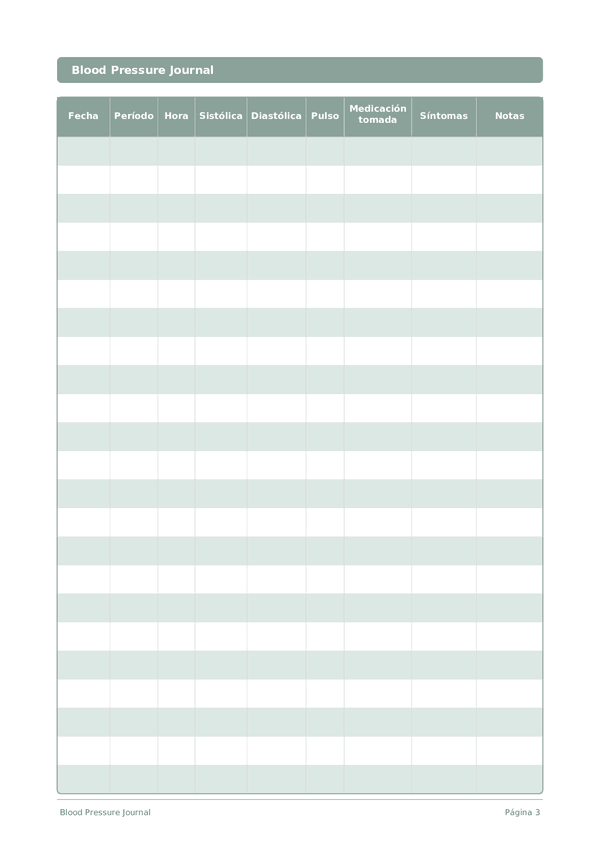
| Fecha | Período | Hora | Sistólica | Diastólica | Pulso | Medicación tomada | Síntomas | Notas |
|---|---|---|---|---|---|---|---|---|
| 2026-03-01 | Morning | 07:15 | 128 | 82 | 72 | Lisinopril 10mg | None | Measured after 5 min rest |
| 2026-03-01 | Evening | 20:30 | 135 | 87 | 78 | Lisinopril 10mg | Mild headache | Stressful day at work |
| 2026-03-02 | Morning | 07:20 | 124 | 80 | 70 | Lisinopril 10mg | None | Slept well, 7.5 hours |
| 2026-03-02 | Evening | 21:00 | 130 | 84 | 74 | Lisinopril 10mg | None | 30 min walk after dinner |
| 2026-03-03 | Morning | 06:50 | 122 | 78 | 68 | Lisinopril 10mg | None | Calm morning, yoga session |
Cómo rellenar cada campo
Cada pagina es una tabla con columnas. Completa una fila por entrada. Esto es lo que significa cada columna:
Fecha
Escribe la fecha de hoy. Esto ancla tu entrada en el tiempo y ayuda cuando revisas entradas despues.
Período
Hora
Registra la hora de la medicion o evento. La consistencia en los horarios hace que los datos sean comparables y revela patrones segun la hora del dia.
Sistólica
Registra el numero superior de tu lectura de presion arterial (sistolica). Esto mide la presion cuando tu corazon late.
Diastólica
Registra el numero inferior de tu lectura de presion arterial (diastolica). Esto mide la presion cuando tu corazon descansa entre latidos.
Pulso
Registra tu frecuencia cardiaca en pulsaciones por minuto. Las tendencias del pulso en reposo revelan cambios en la aptitud cardiovascular con el tiempo.
Medicación tomada
Tomaste tu medicamento hoy? Anota que, cuando y cualquier dosis que hayas omitido
Síntomas
Enumera los sintomas que experimentaste hoy. Se especifico sobre tipo, ubicacion y severidad. Los patrones en los sintomas a menudo senalan desencadenantes o necesidades de tratamiento.
Notas
Agrega cualquier contexto o pensamiento adicional. Esta columna general es para cualquier cosa que no encaje en otro lugar pero pueda ser util despues.
Consejos para el exito
Cuando y con que frecuencia escribir
Measure twice daily: once in the morning before taking medications (this is your «true baseline»), and once in the evening. Take two consecutive readings each time, 1–2 minutes apart, and record both. Before medical appointments, have at least 2 weeks of consistent data to show your doctor. Weekly, review your averages to spot upward or downward trends. If your home readings consistently differ from clinic readings by more than 10 mmHg, discuss «masked hypertension» or «white-coat hypertension» with your provider.
Preguntas frecuentes
¿Qué lecturas de tensión arterial se consideran normales frente a altas?
Según la AHA/ACC (2017, Hypertension, 71(6)): normal <120/80 mmHg; elevada 120-129/<80; hipertensión estadio 1: 130-139/80-89; estadio 2: ≥140/90. Crisis hipertensiva >180/120 requiere atención médica inmediata: llame al 112. La NHS UK usa umbrales ligeramente más altos; siga los objetivos de su médico, que pueden diferir en diabetes, enfermedad renal o edad. Consulte este diario con su cardiólogo. No constituye diagnóstico médico.
¿Por qué tomar dos lecturas con 1-2 minutos de diferencia?
La AHA (2019, Hypertension, 73(5)) y las guías de la ESC recomiendan promediar 2 lecturas porque la primera suele estar elevada debido a la breve activación simpática. Siéntese en silencio 5 minutos antes de medir. Registre el promedio de ambas lecturas, o anote las dos y promédielas después. Las lecturas únicas sobreestiman la prevalencia de la hipertensión en un 10-15%, lo que lleva al sobrediagnóstico y medicación innecesaria.
¿Cuál es la técnica de medición correcta?
Técnica de la AHA: siéntese con la espalda apoyada, pies planos, brazo en el nivel del corazón, manguito en el brazo desnudo con el tamaño correcto (cámara cubre el 80% del perímetro del brazo). Sin hablar, cafeína, ejercicio ni fumar 30 minutos antes. Vacie la vejiga primero. Las columnas de período y hora permiten mantener un horario constante matutino y vespertino, normalmente dentro de una hora de levantarse y antes de dormir.
¿Por qué registrar lecturas matutinas y vespertinas?
Según Hypertension (2018, 71(5)) y las directrices de la ACC, la tensión arterial sigue un patrón circadiano: pico matutino y descenso vespertino. Los pacientes sin descenso nocturno ('non-dippers') tienen mayor riesgo cardiovascular. Las lecturas matutinas antes de la medicación evalúan el control nocturno; las vespertinas muestran los efectos diurnos. La columna de período capta esto: su cardiólogo necesita ambas para evaluar el momento y la dosis de la medicación.
¿Cuánto tiempo debo hacer seguimiento antes de compartirlo con mi médico?
La AHA y la NICE recomiendan al menos 7 días consecutivos de lecturas dos veces al día para establecer una línea base fiable; 14 días mejoran la precisión. Descarte las lecturas del primer día, que suelen estar elevadas. Calcule el promedio de los días restantes. Las páginas de 15 filas del diario soportan fácilmente 7+ días. Lleve a cada cita de cardiología: las lecturas domiciliarias a menudo difieren significativamente de las del consultorio (efecto de bata blanca).
¿Qué es la hipertensión de bata blanca y cómo ayuda este diario?
Según la AHA, la hipertensión de bata blanca afecta al 15-30% de los pacientes: lecturas elevadas en el consultorio pero normales en casa. Sin monitorización domiciliaria, esto lleva a medicación innecesaria. Por el contrario, la hipertensión enmascarada (normal en el consultorio, elevada en casa) pasa desapercibida sin seguimiento. Los datos del diario domiciliario durante 7+ días, junto con la monitorización ambulatoria periódica según las guías de la ACC, distinguen estos patrones e informan un diagnóstico preciso.
¿Qué lecturas requieren atención médica urgente?
Criterios de crisis hipertensiva de la AHA: sistólica ≥180 o diastólica ≥120 mmHg. Con síntomas (dolor torácico, disnea, cambios de visión, cefalea grave, síntomas neurológicos), esto es una emergencia hipertensiva que requiere evaluación urgente en urgencias: llame al 112. Sin síntomas (urgencia hipertensiva), espere 5 minutos, vuelva a medir; si sigue elevada, contacte con su médico el mismo día. Documente los síntomas en la columna de síntomas.
¿Cómo hago seguimiento de los efectos de los medicamentos sobre la tensión arterial?
Según Mayo Clinic, registre el nombre del medicamento, la dosis y el momento en la columna medicación tomada. Los antihipertensivos suelen alcanzar el estado estacionario en 2-4 semanas. Compare los promedios de 14 días antes y después de iniciar la medicación o cambiar la dosis. La columna de pulso también importa: los betabloqueantes reducen tanto la TA como la frecuencia cardíaca; los IECA afectan principalmente a la TA. Comparta las tendencias con su cardiólogo para optimizar la dosis.
También Te Puede Gustar
Rueda para ampliar, arrastra para mover