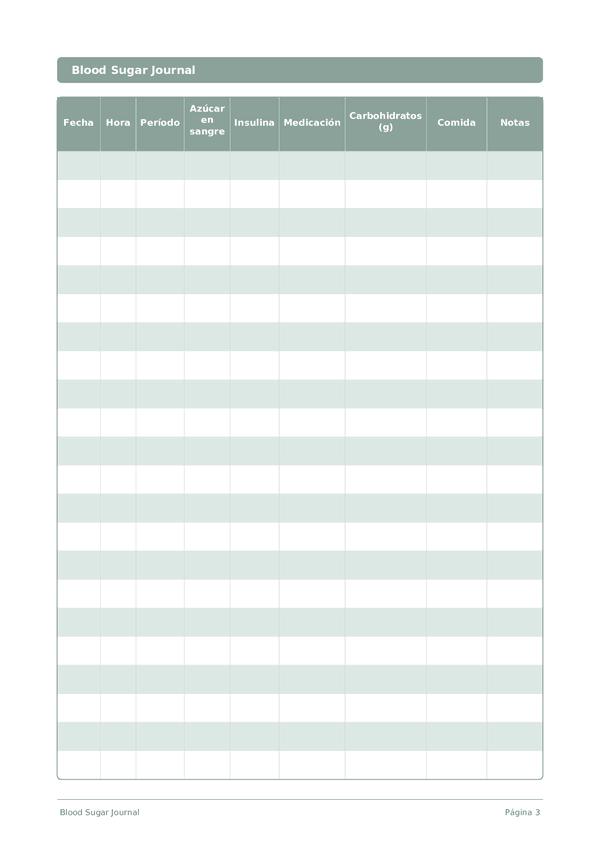
Printable Blood Sugar Journal
Manage diabetes with precise glucose tracking
Log blood sugar levels, insulin doses, meals, and notes to maintain tight glucose control. An essential tool for diabetics and pre-diabetics managing their condition.
Personalizar campos
Activa o desactiva campos. Haz clic en el lápiz para renombrar, o añade tus propios campos.
Beneficios
Cómo Usar
¿Qué es este diario?
A blood sugar journal is an essential tool for anyone managing diabetes or pre-diabetes. By recording your glucose levels throughout the day alongside insulin doses, carbohydrate intake, meals, and medications, you build a comprehensive picture of how your body responds to food, activity, and treatment. This journal is designed to make daily tracking simple and consistent.
Understanding blood sugar patterns is the foundation of effective diabetes management. A written log allows you and your healthcare team to identify trends — such as post-meal spikes, dawn phenomenon, or the impact of exercise — that fingerstick readings alone cannot reveal. With consistent entries, you gain the ability to make proactive adjustments to diet, medication timing, and lifestyle habits.
Whether you are newly diagnosed and learning how your body reacts, or a long-term diabetic fine-tuning your regimen, this journal transforms scattered data into actionable knowledge. Bring it to your endocrinologist appointments and watch the quality of your consultations improve dramatically.
Ejemplo completado
Así es como se ve una entrada típica cuando se rellena:
| Fecha | Hora | Período | Azúcar en sangre | Insulina | Medicación | Carbohidratos (g) | Comida | Notas |
|---|---|---|---|---|---|---|---|---|
| 2026-03-01 | 07:00 | Fasting | 105 | 8 | Metformin 500mg | 0 | — | Fasting reading upon waking |
| 2026-03-01 | 09:30 | After breakfast | 148 | 0 | — | 45 | Oatmeal with berries | Slightly higher than target |
| 2026-03-01 | 12:00 | Before lunch | 112 | 6 | — | 0 | — | Returned to normal range |
| 2026-03-01 | 14:30 | After lunch | 156 | 0 | Metformin 500mg | 55 | Grilled chicken sandwich | Need to reduce bread portion |
| 2026-03-01 | 22:00 | Bedtime | 118 | 10 | — | 30 | Light salad | Good evening number |
Cómo rellenar cada campo
Cada pagina es una tabla con columnas. Completa una fila por entrada. Esto es lo que significa cada columna:
Fecha
Escribe la fecha de hoy. Esto ancla tu entrada en el tiempo y ayuda cuando revisas entradas despues.
Hora
Registra la hora de la medicion o evento. La consistencia en los horarios hace que los datos sean comparables y revela patrones segun la hora del dia.
Período
Azúcar en sangre
Registra tu lectura de azucar en sangre. Rastrearlo junto con las comidas y la actividad revela que sube o baja tus niveles.
Insulina
Registra las unidades de insulina administradas. El seguimiento preciso de insulina es esencial para manejar el azucar en sangre y ajustar las dosis.
Medicación
Registra los medicamentos tomados, incluyendo nombre y dosis. El seguimiento consistente te ayuda a ti y a tu medico a evaluar la efectividad del tratamiento.
Carbohidratos (g)
Comida
Describe la comida asociada con esta entrada. El contexto alrededor de las comidas (antes, despues, que comiste) ayuda a identificar correlaciones con tus lecturas.
Notas
Agrega cualquier contexto o pensamiento adicional. Esta columna general es para cualquier cosa que no encaje en otro lugar pero pueda ser util despues.
Consejos para el exito
Cuando y con que frecuencia escribir
Test and log at the times your doctor recommends — typically fasting (morning before eating), before meals, and 2 hours after meals. Record every reading with time, meal context, and any relevant notes (exercise, stress, illness). Weekly, review your patterns: Which meals cause the biggest spikes? Which time of day are readings highest? Monthly, calculate your average fasting and post-meal values to share with your healthcare team. Consistent logging is what transforms raw numbers into actionable treatment guidance.
Preguntas frecuentes
¿Cuáles son los objetivos de glucemia que debo alcanzar?
Según los ADA Standards of Care (2024, Diabetes Care, 47 Suppl 1): en ayunas 80-130 mg/dL (4,4-7,2 mmol/L); 1-2 horas postprandial <180 mg/dL (<10,0 mmol/L); HbA1c <7% para la mayoría de los adultos. Los objetivos varían por edad, embarazo, riesgo de hipoglucemia y comorbilidades. Siga siempre los objetivos individualizados de su endocrinólogo: estas entradas del diario son documentación, no diagnóstico. Consulte también a su médico o educador en diabetes.
¿Cuándo debo medir la glucemia a lo largo del día?
La ADA recomienda medir a horas consistentes: en ayunas (al despertar), antes de las comidas, 1-2 horas después de las comidas, antes de dormir y ante síntomas. Los pacientes con DM1 en insulina intensiva suelen medir 4-8 veces al día; los de DM2 con medicación oral pueden hacerlo 1-2 veces. La columna de período (ayunas/premeal/postmeal/bedtime) hace los patrones evidentes. Consulte la frecuencia óptima con su endocrinólogo o educador en diabetes.
¿Cómo correlaciono los hidratos con la respuesta glucémica?
Según la ADA, un aumento de glucosa postprandial >50 mg/dL sobre el nivel premeal indica insulina insuficiente o exceso de hidratos para la dosis. Las columnas carbohidratos (g) y azúcar en sangre pareadas durante 2 semanas revelan ratios hidratos-glucosa personales y la sensibilidad a la insulina. Lleve esto a su endocrinólogo para ajuste de dosis: Diabetes Care (2020, 43(7)) muestra que la revisión continua de estos patrones reduce la HbA1c en un 0,5-1%.
¿Qué es la hipoglucemia y cómo debo responder?
La ADA define la hipoglucemia como glucemia <70 mg/dL (<3,9 mmol/L); grave cuando <54 mg/dL. Los síntomas incluyen temblores, sudoración, confusión y hambre. Trate con 15 g de hidratos de acción rápida (zumo, tabletas de glucosa), vuelva a medir en 15 minutos y repita si sigue bajo. La hipoglucemia grave con alteración de la consciencia requiere glucagón o atención de emergencia. Registre todos los episodios: los episodios frecuentes indican necesidad de ajuste de medicación.
¿En qué se diferencia de un monitor continuo de glucosa (MCG)?
Los MCG (Dexcom, Libre, Medtronic) proporcionan 288 lecturas/día con flechas de tendencia. Diabetes Care (2021, 44(1)) muestra que los MCG mejoran la HbA1c más que las punciones digitales solas. Sin embargo, el diario capta el contexto —composición de la comida, ejercicio, enfermedad, estrés— que los MCG pierden. Use ambos: MCG para datos detallados, diario para la narrativa explicativa. La ADA recomienda cada vez más el MCG para la DM1 y la DM2 con manejo intensivo.
¿Qué tipos de insulina debo registrar en la columna de medicación?
La ADA categoriza: de acción rápida (lispro, aspart, glulisina) antes de las comidas; de acción prolongada (glargina, detemir, degludec) una o dos veces al día para la cobertura basal; mezclas premezcladas. Registre nombre, unidades y momento en medication. Lleve 2+ semanas de páginas del diario a su endocrinólogo: los ajustes basal/bolo dependen de patrones invisibles para la HbA1c en un solo punto.
¿Cómo afectan el ejercicio y la enfermedad a la glucemia?
Según la ADA: el ejercicio aeróbico típicamente baja la glucosa durante y 24+ horas después; el entrenamiento de resistencia puede elevarla agudamente. La enfermedad, la infección y el uso de esteroides elevan la glucosa sustancialmente. Anote estas situaciones en la columna de notas: explican lecturas que de otro modo parecerían erráticas. Revise con su equipo de diabetes los protocolos para días de enfermedad (medir cada 2-4 horas, mantener la hidratación, comprobar cetonas si DM1).
¿Cuándo requieren atención médica urgente las lecturas de glucosa?
Señales de alarma de la ADA: glucemia >300 mg/dL (>16,7 mmol/L) con síntomas (vómitos, dolor abdominal, aliento afrutado, respiración rápida) sugiere CAD: llame al 112. Las lecturas persistentes >250 con cetonas positivas (DM1) también requieren urgencias. La hipoglucemia grave con confusión necesita glucagón y atención de emergencia. Documente todos los episodios: los patrones de extremos frecuentes indican la necesidad de intensificación del tratamiento.
También Te Puede Gustar
Rueda para ampliar, arrastra para mover