Printable Food Journal
Track every meal with mindfulness and intention
A structured daily food log to record meals, portions, calories, hunger cues, and mood. Build awareness of your eating patterns, spot nutritional gaps, and make more intentional choices for better health.
Personalizar campos
Activa o desactiva campos. Haz clic en el lápiz para renombrar, o añade tus propios campos.
Beneficios
Cómo Usar
¿Qué es este diario?
A food journal is a daily log where you record everything you eat and drink, along with contextual details like meal timing, portion sizes, hunger levels, and how food makes you feel. It goes beyond simple calorie counting by helping you understand your relationship with food — the emotional, physical, and situational factors that shape your eating habits.
This journal is for anyone who wants to develop healthier eating patterns, manage food sensitivities or allergies, support a weight management goal, or simply become more mindful about what they consume. Nutritionists, dietitians, and doctors often recommend food journaling as one of the most effective tools for understanding and improving dietary habits.
Research consistently shows that people who keep food journals are more successful at reaching their nutrition goals. Writing down what you eat creates a natural pause for reflection — you become more aware of mindless snacking, emotional eating, and portion sizes. Over weeks and months, your journal reveals clear patterns: which foods give you energy, which leave you sluggish, and how your mood and hunger interact with your choices.
Ejemplo completado
Así es como se ve una entrada típica cuando se rellena:
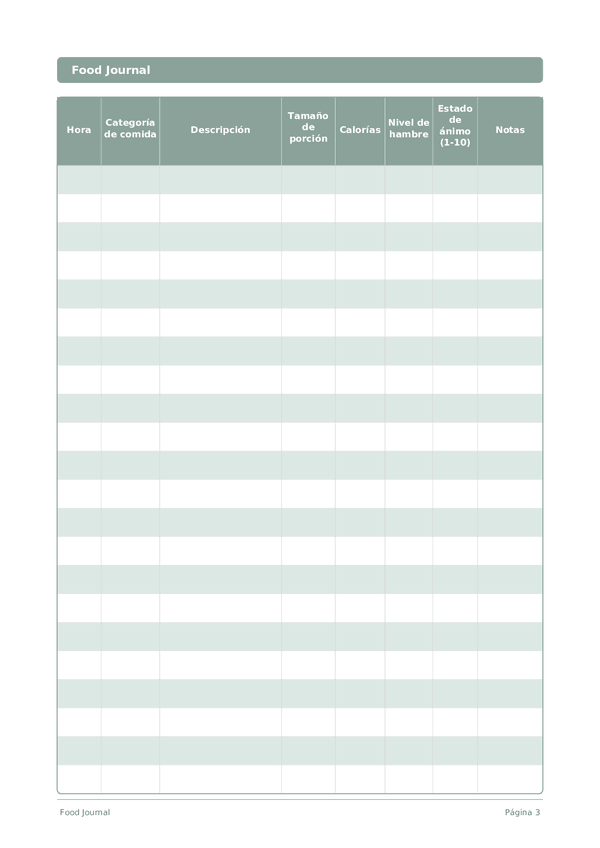
| Hora | Categoría de comida | Descripción | Tamaño de porción | Calorías | Nivel de hambre | Estado de ánimo (1-10) | Notas |
|---|---|---|---|---|---|---|---|
| 7:30 | Breakfast | Oatmeal with blueberries, walnuts, and honey. Black coffee. | 1 bowl, 1 cup | 420 | 7 | Rested, calm | Felt satisfied until mid-morning |
| 10:15 | Snack | Greek yogurt with a drizzle of honey | 150g | 130 | 4 | Focused | Light snack before a meeting |
| 13:00 | Lunch | Grilled chicken salad with mixed greens, cherry tomatoes, cucumber, feta, olive oil dressing. Whole wheat roll. | Large bowl, 1 roll | 580 | 8 | Hungry, slightly stressed | Ate at my desk, felt rushed |
| 16:00 | Snack | Apple with almond butter | 1 medium apple, 1 tbsp | 195 | 5 | Afternoon slump | Craving something sweet |
| 19:30 | Dinner | Baked salmon with roasted sweet potatoes and steamed broccoli. Glass of white wine. | 150g salmon, 1 potato, 1 cup broccoli | 720 | 7 | Relaxed | Cooked at home, enjoyed the meal slowly |
| 21:00 | Snack | Chamomile tea and two dark chocolate squares | 1 cup, 20g | 110 | 2 | Content | Not really hungry, just a habit |
Cómo rellenar cada campo
Cada pagina es una tabla con columnas. Completa una fila por entrada. Esto es lo que significa cada columna:
Hora
Registra a que hora comiste. Los horarios de comida afectan la energia, el sueno y la digestion. Los patrones se hacen visibles despues de un par de semanas.
Categoría de comida
Descripción
Escribe una breve descripcion de esta entrada. Tu yo del futuro te agradecera el contexto.
Tamaño de porción
Calorías
Registra tu ingesta aproximada de calorias. No necesitas numeros perfectos: las estimaciones te ayudan a ser consciente de tus patrones alimenticios.
Nivel de hambre
Que tanta hambre tuviste en general hoy? 1=sin hambre, 10=hambriento extremo
Estado de ánimo (1-10)
Califica tu estado emocional general del dia. 1 significa muy bajo o deprimido, 10 significa excepcionalmente feliz y positivo. No lo pienses demasiado: ve con tu instinto.
Notas
Agrega cualquier contexto o pensamiento adicional. Esta columna general es para cualquier cosa que no encaje en otro lugar pero pueda ser util despues.
Consejos para el exito
Cuando y con que frecuencia escribir
Log every meal and snack as close to real-time as possible — this is a table-based journal, so each entry is quick: food, portion, time. Aim for completeness over detail; a simple entry is better than a skipped one. Review your food log weekly to spot patterns: late-night eating, skipped meals, emotional triggers. Share your monthly summary with a nutritionist if you are working on dietary goals. Most people see their biggest insights after 2-3 weeks of consistent logging.
Preguntas frecuentes
¿Cómo apoya la escala nivel de hambre de 1 a 10 la alimentación consciente?
La Academy of Nutrition and Dietetics recomienda la escala hambre-saciedad (1=hambre extrema, 5=neutral, 10=sobrealimentado) para distinguir el hambre física de la alimentación emocional. Valorar antes de cada comida interrumpe la alimentación automática. El American Journal of Clinical Nutrition (2014, 100(2)) muestra que los comensales conscientes consumen menos calorías con mayor satisfacción. La columna de hambre de la plantilla convierte una señal interna en un hábito registrable, apoyando los objetivos de peso sin restricción.
¿Por qué registrar el estado de ánimo junto a las comidas?
Según la APA (2021) e investigaciones sobre obesidad en JAMA (2018, 319(7)), el 30-60% de los episodios de sobrealimentación son impulsados por emociones (estrés, aburrimiento, tristeza, celebración). Registrar el estado de ánimo junto a los alimentos revela patrones invisibles para el simple recuento calórico. Tras 2-3 semanas, la mayoría identifica 1-3 desencadenantes emocionales: un conocimiento que permite intervenciones específicas como la comprobación HALT (Hambre, Ira/Anger, Soledad/Lonely, Cansancio/Tired) antes de comer.
¿En qué se diferencia un diario de alimentación de un contador de calorías?
Un diario de alimentación enfatiza el contexto —momento de la comida, hambre, estado de ánimo, porción— más que los números precisos. Las USDA Dietary Guidelines (2020-2025) y las revisiones Cochrane respaldan ambos enfoques. La plantilla de food-journal incluye la estimación calórica como una columna entre ocho, restando intencionalmente importancia a la precisión numérica. Esto funciona mejor para usuarios propensos a trastornos alimentarios o que encuentran insostenible el recuento estricto de calorías, según la guía de la APA.
¿Debo pesar las porciones o calcularlas a ojo?
Para mayor precisión, pesar en una báscula de cocina durante las primeras 1-2 semanas calibra sus estimaciones de porciones: los valores a ojo suelen errar en un 20-40% según el American Journal of Clinical Nutrition (2018, 107(6)). Tras la calibración, las medidas con la mano (palma=proteína, puño=hidratos, pulgar=grasas) funcionan para la mayoría de las comidas. La columna tamaño de porción acepta cualquier unidad consistente —gramos, tazas, puñados— mientras se mantenga con ella.
¿Puede este diario ayudar a identificar sensibilidades alimentarias?
Sí, cuando se usa de forma sistemática. La AAAAI (American Academy of Allergy, Asthma & Immunology) y la AAP recomiendan una dieta de eliminación de 2-4 semanas con registro detallado de alimentos para identificar sensibilidades. Use la columna de notas para registrar síntomas (hinchazón, dolor de cabeza, fatiga, reacciones cutáneas) dentro de las 24-48 horas posteriores a las comidas. Para alergias sospechadas (anafilaxia, urticaria), consulte a un alergólogo: esto es cribado, no diagnóstico.
¿Qué categorías de comidas debo usar?
Categorías estándar según las USDA Dietary Guidelines: Desayuno, Almuerzo, Cena, Merienda. Algunos usuarios añaden 'Bebida' para las bebidas con cafeína o alcohólicas. La columna categoría de comida acepta texto libre: la consistencia importa más que la etiqueta exacta. Registrar 3 comidas + 2 tentempiés al día revela patrones de frecuencia alimentaria; los ADA Standards of Care (2024, Diabetes Care, 47 Suppl 1) vinculan el horario irregular de comidas con mayor variabilidad glucémica.
¿Cuánto tiempo hasta ver patrones en el diario de alimentación?
La mayoría identifica patrones claros en 2-3 semanas. La investigación conductual del NIH NCCIH (2022) muestra que 21 días de registro consistente es el umbral típico para la autocomprensión. Revise semanalmente: agrupe las comidas por categoría, busque la alimentación nocturna tardía, identifique los momentos de más hambre y conecte el estado de ánimo con alimentos específicos. Lleve 4+ semanas a un dietista para un análisis personalizado.
¿Es seguro el diario de alimentación para alguien con historial de trastornos alimentarios?
Úselo con orientación clínica. La APA y la Academy for Eating Disorders señalan que el seguimiento detallado de alimentos puede empeorar la anorexia, bulimia, trastorno por atracón u ortorexia al reforzar la preocupación por la comida. Si tiene ese historial, considere centrarse en las valoraciones de hambre y estado de ánimo sin recuentos calóricos, o use solo la columna de notas. Un dietista o especialista en trastornos alimentarios puede adaptar el diario de forma segura.
También Te Puede Gustar
Rueda para ampliar, arrastra para mover