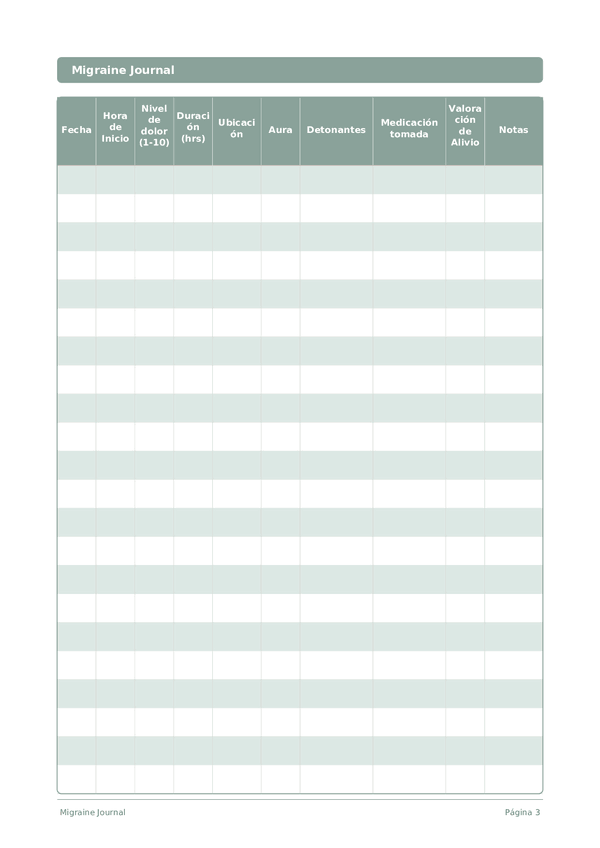
Printable Migraine Journal
Migraine attack tracker and headache diary
Track migraine patterns with detailed attack logging for better diagnosis and treatment. Record triggers, symptoms, medications, and relief outcomes to identify patterns and communicate effectively with your neurologist.
Personalizar campos
Activa o desactiva campos. Haz clic en el lápiz para renombrar, o añade tus propios campos.
¿Qué es este diario?
A migraine journal is a detailed attack diary designed for anyone who experiences recurrent migraines or severe headaches. By systematically recording each episode — including onset time, pain level, duration, location of pain, aura symptoms, potential triggers, and medications used — you create a medical-grade log that helps both you and your neurologist understand your unique migraine pattern.
Migraines are highly individual, and what triggers one person may have no effect on another. The power of a migraine journal lies in revealing your personal triggers over time. After several weeks of consistent entries, you may discover connections between attacks and factors like sleep changes, certain foods, weather shifts, hormonal cycles, or stress. This insight is invaluable for developing a targeted prevention strategy.
Healthcare providers frequently recommend migraine diaries as part of treatment planning. A well-maintained journal helps your doctor evaluate medication effectiveness, determine whether preventive treatment is needed, and track whether attack frequency is improving. It transforms vague recollections into concrete data that drives better clinical decisions.
Ejemplo completado
Así es como se ve una entrada típica cuando se rellena:
| Fecha | Hora de Inicio | Nivel de dolor (1-10) | Duración (hrs) | Ubicación | Aura | Detonantes | Medicación tomada | Valoración de Alivio | Notas |
|---|---|---|---|---|---|---|---|---|---|
| 2026-02-25 | 14:00 | 7 | 6 | Right temple | Visual spots | Skipped lunch, bright lights | Sumatriptan 50mg | 6 | Had to leave work early |
| 2026-02-27 | 06:30 | 5 | 3 | Both temples | None | Poor sleep (4 hours) | Ibuprofen 400mg | 8 | Woke up with headache, resolved by mid-morning |
| 2026-03-01 | 18:00 | 8 | 10 | Left side | Tingling in hand | Red wine at dinner, stress | Sumatriptan 50mg + Metoclopramide | 5 | Severe nausea, had to lie down in dark room |
| 2026-03-03 | 11:00 | 4 | 2 | Forehead | None | Screen time, dehydration | Paracetamol 500mg | 9 | Mild episode, resolved with medication and water |
Cómo rellenar cada campo
Cada pagina es una tabla con columnas. Completa una fila por entrada. Esto es lo que significa cada columna:
Fecha
Escribe la fecha de hoy. Esto ancla tu entrada en el tiempo y ayuda cuando revisas entradas despues.
Hora de Inicio
Nivel de dolor (1-10)
Califica la intensidad de tu dolor en una escala. Rastrear los niveles de dolor ayuda a identificar desencadenantes, evaluar tratamientos y comunicarte con los profesionales de salud.
Duración (hrs)
Ubicación
Donde se tomo la foto?
Aura
Detonantes
Identifica que causo tus reacciones emocionales: eventos, personas, pensamientos, entornos. Reconocer los desencadenantes te da el poder de prepararte o evitarlos.
Medicación tomada
Tomaste tu medicamento hoy? Anota que, cuando y cualquier dosis que hayas omitido
Valoración de Alivio
Notas
Agrega cualquier contexto o pensamiento adicional. Esta columna general es para cualquier cosa que no encaje en otro lugar pero pueda ser util despues.
Consejos para el exito
Cuando y con que frecuencia escribir
Log every headache and migraine event as it happens — onset time, symptoms, triggers, and treatment. On headache-free days, still record a brief entry noting sleep quality, stress, and any potential trigger exposures. This baseline data is essential because your doctor needs to see both attack days and non-attack days to identify patterns. Weekly, tally your headache days. Monthly, bring your complete log to your neurologist — studies show patients with migraine diaries receive more accurate diagnoses and better-targeted treatment plans.
Preguntas frecuentes
¿Qué información necesitan los neurólogos de un diario de migraña?
Según la American Migraine Foundation y la International Headache Society (ICHD-3, 2018), los neurólogos necesitan frecuencia de ataques, duración, intensidad del dolor (0-10), localización, presencia de aura, desencadenantes, medicamentos y resultados del alivio: las ocho columnas de esta plantilla. Cephalalgia (2019, 39(3)) muestra que 8-12 semanas de seguimiento detallado permiten el diagnóstico diferencial entre subtipos de migraña, cefalea tensional y cefalea en racimos.
¿Cómo ayuda la columna de aura en el diagnóstico?
El ICHD-3 (2018) distingue la migraña con aura (síntomas visuales, sensoriales, del habla o motores que preceden al dolor) de la migraña sin aura: implicaciones de manejo distintas. La columna de aura capta la presencia y el tipo. Auras visuales comunes: líneas en zigzag, puntos ciegos, destellos. El aura sin cefalea posterior también ocurre. La American Migraine Foundation señala que ~25-30% de los pacientes con migraña experimentan aura. Documente el momento de inicio en relación con la cefalea.
¿Qué desencadenantes debo rastrear con más cuidado?
Según Headache (2019, 59(9)) y la American Migraine Foundation, los desencadenantes comunes son el estrés, los cambios de sueño, el ciclo menstrual, alimentos específicos (quesos curados, embutidos, alcohol, glutamato monosódico), cambios de tiempo, deshidratación, saltarse comidas y estímulos sensoriales intensos. La columna de desencadenantes debe capturar todos los candidatos en las 24 horas previas al inicio del ataque. Los patrones requieren 3-6 meses de registro: los ataques individuales raramente identifican desencadenantes verdaderos.
¿Cómo sé si un medicamento realmente funciona?
Criterios de efectividad de la International Headache Society: reducción del dolor de grave (7+) a leve (≤3) en 2 horas, sostenida durante 24 horas, sin recurrencia. Registre nombre, dosis, momento y valoración de Alivio (0-10). Compare durante 10+ ataques: la respuesta a un solo ataque no es fiable. La American Headache Society (2021) recomienda considerar medicación preventiva cuando los ataques superan 4 días/mes o deterioran significativamente la función.
¿Qué niveles de dolor y duraciones son clínicamente significativos?
Los criterios del ICHD-3 para la migraña exigen ataques de 4-72 horas (sin tratar), con dolor moderado-grave (5+ en escala de 10 puntos), a menudo unilateral y pulsátil. El estado de mal migrañoso (ataque continuo >72 horas) requiere evaluación médica. Las columnas duración (hrs) y nivel de dolor (1-10) capturan esto. Los datos de Headache (2020, 60(3)) muestran que los pacientes subestiman la frecuencia en un 30-50% sin registro diario.
¿En qué se diferencia este diario de apps de migraña como Migraine Buddy?
Las apps automatizan los recordatorios pero dependen de la memoria para entradas retrospectivas tardías; los registros en papel fomentan la documentación inmediata tras el ataque. El formato estructurado de 10 columnas aquí se corresponde con los criterios diagnósticos del ICHD-3 de forma más completa que la mayoría de las apps. Los estudios de Cephalalgia (2020) muestran que los diarios en papel estandarizados siguen siendo el estándar de oro para ensayos clínicos y consultas neurológicas. Use ambos si le resulta útil: app para recordatorios, diario para el historial médico.
¿Cuándo debe una cefalea motivar atención médica urgente?
Señales de alarma de la American Migraine Foundation y Mayo Clinic: cefalea en 'trueno' que alcanza la intensidad máxima en segundos, la peor cefalea de su vida, cefalea con fiebre y rigidez de cuello, síntomas neurológicos (debilidad, pérdida de visión, confusión, habla alterada), cefalea tras traumatismo craneal, nuevo patrón de cefalea después de los 50 años. Llame al 112 de inmediato: estos síntomas sugieren afecciones graves como ictus, hemorragia o meningitis.
¿Cuánto tiempo hasta que los patrones sean útiles para el tratamiento?
Según la American Headache Society, 8-12 semanas de registro diario detallado suelen revelar patrones de desencadenantes, respuesta óptima a los medicamentos y frecuencia base de ataques. Tres meses de datos es el estándar para la evaluación de la medicación preventiva: valore si los ataques disminuyeron en ≥50% en frecuencia o severidad. Lleve todas las páginas a su neurólogo; las tendencias importan más que los ataques individuales para las decisiones de tratamiento.
También Te Puede Gustar
Rueda para ampliar, arrastra para mover