Printable Journal des allergies
Suivi des réactions allergiques et carnet d'exposition
Track allergic reactions with detailed exposure and symptom logging. Identify patterns, monitor treatment effectiveness, and build comprehensive records to share with your allergist for better diagnosis and management.
Personnaliser les champs
Activez ou désactivez les champs. Cliquez sur le crayon pour renommer, ou ajoutez vos propres champs.
Qu'est-ce que ce journal ?
An allergy journal is a systematic log for tracking allergic reactions and identifying the substances that trigger them. Whether you are dealing with food allergies, seasonal hay fever, skin sensitivities, or environmental allergens, this journal helps you record each incident with enough detail to spot patterns and make informed decisions about avoidance strategies and treatments.
Allergies can be frustratingly difficult to pin down, especially when multiple allergens are involved or reactions are delayed. By recording the allergen, how you were exposed, the symptoms that appeared, their severity, timing, and what provided relief, you build a comprehensive history that an allergist can use to guide testing and treatment. Many people discover previously unrecognized triggers simply by reviewing a few weeks of careful entries.
This journal is particularly valuable for parents tracking children's allergies, individuals with multiple sensitivities, or anyone preparing for allergy testing. It ensures that no reaction goes undocumented and provides the detailed evidence needed for accurate diagnosis and effective management plans.
Exemple rempli
Voici à quoi ressemble une entrée typique une fois remplie :
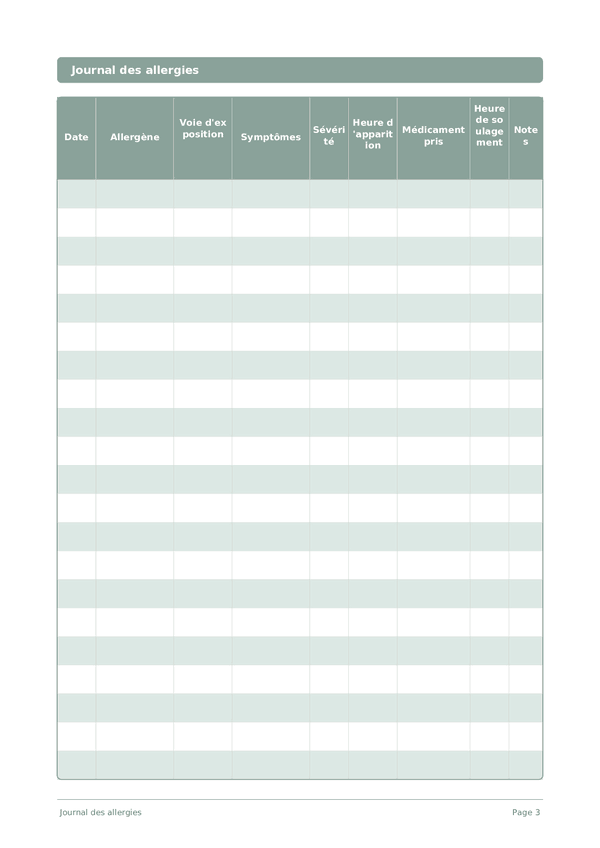
| Date | Allergène | Voie d'exposition | Symptômes | Sévérité | Heure d'apparition | Médicament pris | Heure de soulagement | Notes |
|---|---|---|---|---|---|---|---|---|
| 2026-02-28 | Pollen (birch) | Inhalation | Sneezing, itchy eyes, runny nose | 6 | Within 30 min | Cetirizine 10mg | 1 hour | Windy day, was outdoors for 2 hours |
| 2026-03-01 | Shrimp | Ingestion | Hives on arms, lip swelling | 8 | 15 minutes | Diphenhydramine 25mg | 3 hours | Accidental exposure in restaurant dish |
| 2026-03-02 | Dust mites | Inhalation | Nasal congestion, cough | 4 | 1 hour | Nasal corticosteroid spray | 2 hours | After cleaning old bookshelf |
| 2026-03-03 | Nickel (jewelry) | Skin contact | Red rash, itching at contact area | 5 | 6 hours | Hydrocortisone cream | 2 days | Wore new earrings for first time |
Comment remplir chaque champ
Chaque page est un tableau avec des colonnes. Remplissez une ligne par entrée. Voici à quoi sert chaque colonne :
Date
Inscrivez la date du jour. Cela ancre votre entrée dans le temps et aide lors de la relecture ultérieure.
Allergène
Enregistrez l'allergène ou le déclencheur suspecté. Être précis aide vous et votre médecin à identifier exactement ce qui provoque les réactions.
Voie d'exposition
Symptômes
Listez les symptômes que vous avez ressentis aujourd'hui. Soyez précis quant au type, à la localisation et à la gravité. Les tendances dans les symptômes pointent souvent vers des déclencheurs ou des besoins de traitement.
Sévérité
Quelle est la gravité de vos symptômes aujourd'hui ? Notez de 1 (léger) à 10 (invalidant)
Heure d'apparition
Médicament pris
Avez-vous pris vos médicaments aujourd'hui ? Notez lesquels, quand, et les doses oubliées
Heure de soulagement
Notes
Ajoutez tout contexte ou réflexion supplémentaire. Cette colonne fourre-tout est pour tout ce qui ne rentre pas ailleurs mais pourrait être utile plus tard.
Conseils pour réussir
Quand et à quelle fréquence écrire
Log every allergic reaction immediately with full details — waiting even a few hours causes you to forget potential triggers. During allergy season, make a brief daily entry even on symptom-free days, noting weather, outdoor time, and pollen exposure. This creates a complete picture for your allergist. If you suspect food allergies, log every meal and snack for at least 2 weeks to establish patterns. Before allergy appointments, review your journal to summarize your top triggers, most effective treatments, and any new or worsening reactions.
Questions fréquentes
Pourquoi noter la voie d'exposition en même temps que l'allergène ?
Les allergologues notent que les réactions varient selon la voie — les aliments ingérés provoquent des réactions gastro-intestinales et systémiques ; les pollens inhalés déclenchent des symptômes respiratoires ; le contact cutané produit une dermatite. La colonne voie d'exposition distingue ces situations pour votre allergologue. Cette information permet de différencier les réactions médiées par les IgE des dermatites de contact ou des intolérances non allergiques.
À quelle vitesse les symptômes doivent-ils apparaître après l'exposition ?
Les réactions médiées par les IgE (vraie allergie) commencent généralement dans les minutes à 2 heures suivant l'exposition — c'est ce que capture la colonne heure d'apparition. Les réactions retardées (24 à 48 heures, ex. : dermatite de contact, œsophagite à éosinophiles) suggèrent des mécanismes non IgE. L'anaphylaxie (sévérité ≥ 7/10 avec symptômes respiratoires ou circulatoires) atteint généralement son pic en 5 à 30 minutes — épinéphrine immédiate et urgences requises.
Quel niveau de sévérité justifie des soins d'urgence ?
Toute réaction avec difficultés respiratoires, gonflement de la gorge, vertiges, pouls rapide, urticaire couvrant le corps, ou vomissements après une exposition à un allergène suspecté est une anaphylaxie potentielle — utilisez l'auto-injecteur d'adrénaline si prescrit et appelez le 15 (SAMU) ou le 112. Une sévérité ≥ 7 avec atteinte multi-systémique (peau + respiratoire + digestif) définit l'anaphylaxie. Documentez tout dans le journal ensuite pour votre allergologue.
Comment cela aide-t-il votre allergologue à diagnostiquer des allergies spécifiques ?
Les allergologues utilisent 4 à 8 semaines de journaux de réactions pour identifier les allergènes suspects pour les tests cutanés ou sanguins (IgE spécifiques). Les tendances sur plusieurs expositions importent plus que les événements isolés. Les colonnes allergène, voie, symptômes, heure d'apparition et sévérité correspondent à l'anamnèse structurée que les allergologues collectent. Apportez toutes les pages à votre rendez-vous.
Puis-je l'utiliser pour les allergies environnementales comme le pollen ou les poils d'animaux ?
Oui. Les journaux de symptômes corrélés aux comptages locaux de pollen (disponibles auprès du Réseau National de Surveillance Aérobiologique en France) permettent le suivi. Enregistrez l'allergène (ex. : « pollen de bouleau », « poils de chat »), la voie (inhalé, contact) et les symptômes. Trois saisons de données polliniques aident à identifier les sensibilisations spécifiques pour la candidature à l'immunothérapie.
Comment suivre les réactions allergiques alimentaires en toute sécurité ?
Note de sécurité essentielle : ne vous exposez jamais intentionnellement à un allergène connu pour des tests — les provocation orales supervisées par un médecin sont la seule méthode diagnostique sûre. Utilisez ce journal uniquement pour les expositions accidentelles et le suivi des tendances. Enregistrez tous les ingrédients des repas associés aux réactions dans la colonne notes — les allergènes cachés (ex. : lait dans les aliments transformés) provoquent souvent des réactions inexpliquées.
Que disent les données heure de soulagement à votre allergologue ?
La durée et le timing du soulagement révèlent l'efficacité des médicaments. Les antihistaminiques H1 (cétirizine, loratadine, fexofénadine) agissent généralement en 30 à 60 minutes pour les réactions légères. Des symptômes persistants au-delà de 4 à 6 heures après un antihistaminique suggèrent une pathologie plus sévère ou un mauvais choix de médicament. Documentez le nom, la dose, le timing et le délai d'action.
Quand consulter un allergologue plutôt que de gérer soi-même ?
Critères de référence : tout antécédent d'anaphylaxie, réactions récurrentes à des déclencheurs identifiés ou inconnus, allergies affectant la vie quotidienne, suspicion d'allergies alimentaires chez les enfants, asthme plus allergies. Une consultation s'impose quand les antihistaminiques en vente libre ne contrôlent pas les symptômes ou si vous avez eu 2+ passages aux urgences pour des réactions allergiques. Apportez 4 à 8 semaines d'entrées de journal.
Vous aimerez aussi
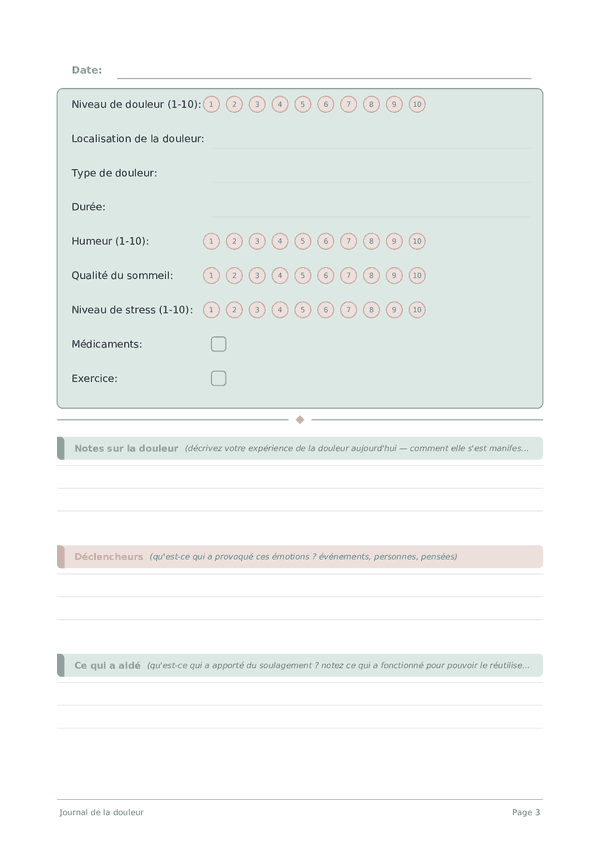
Journal de la douleur
Suivez les schémas de douleur, les déclencheurs et les stratégies de soulagement
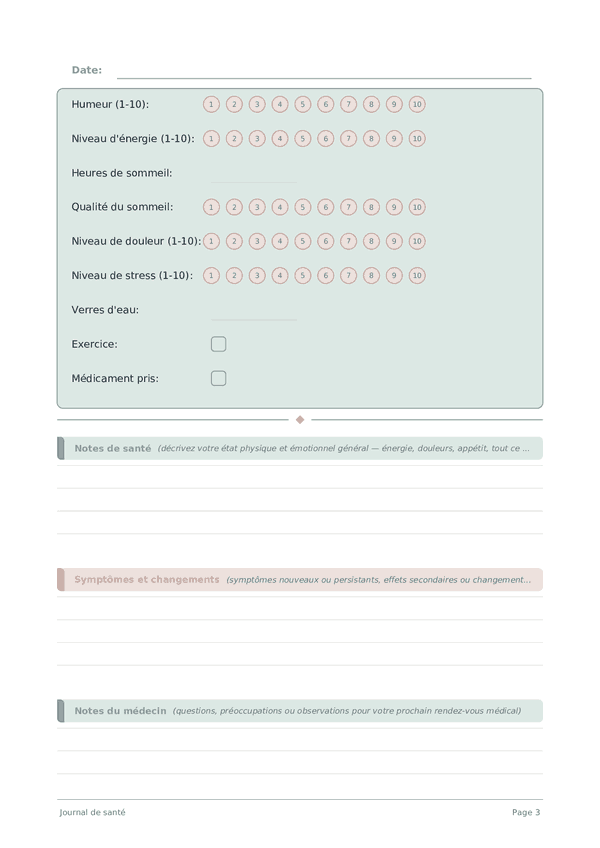
Journal de santé
Suivez votre corps, votre esprit et votre bien-être chaque jour
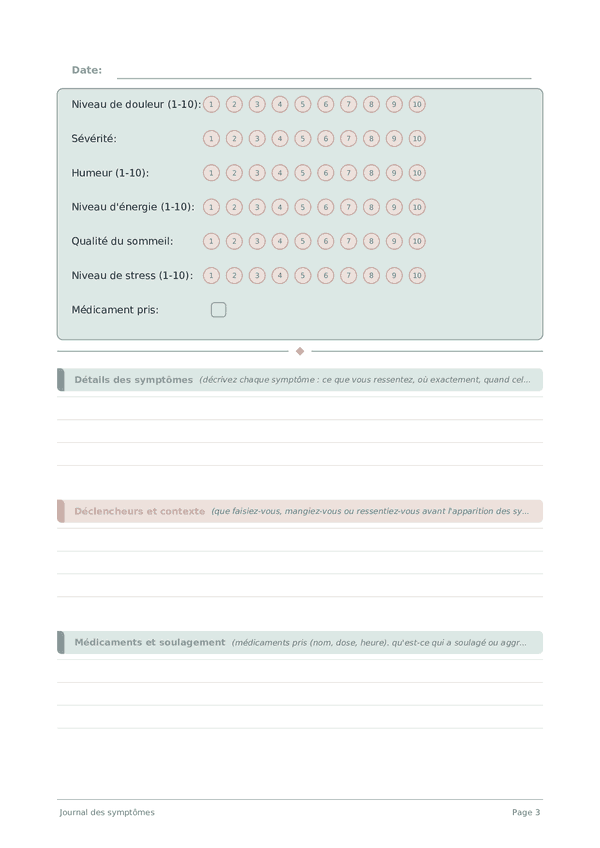
Journal des symptômes
Suivez vos symptômes, déclencheurs et traitements au quotidien
Journal des calories
Suivez les calories et les macros à chaque repas
Molette pour zoomer, glisser pour déplacer