Printable Journal des symptômes
Suivez vos symptômes, déclencheurs et traitements au quotidien
A structured daily journal that combines quick health ratings with detailed symptom notes. Rate your pain, mood, energy, and sleep at a glance, then describe symptoms, identify triggers, and log medications in dedicated writing sections. Designed to help you spot patterns and give your doctor a clear, organized health history.
Personnaliser les champs
Activez ou désactivez les champs. Cliquez sur le crayon pour renommer, ou ajoutez vos propres champs.
Avantages
Comment utiliser
Qu'est-ce que ce journal ?
A symptom journal is a focused daily record where you document specific symptoms you are experiencing — their severity, timing, and the circumstances surrounding them. Unlike a general health journal, it zeroes in on tracking particular symptoms over time so you and your healthcare providers can identify patterns, triggers, and the effectiveness of treatments.
This journal is designed for anyone dealing with ongoing or recurring symptoms that are difficult to explain, diagnose, or manage. Whether you are navigating a new health concern, living with a chronic illness, tracking side effects of a medication, or monitoring symptoms while waiting for a diagnosis, this journal gives your observations structure and consistency.
Consistently recording your symptoms transforms vague impressions into concrete data. Instead of telling your doctor "I have been feeling worse lately," you can show them exactly when symptoms intensified, what you were doing at the time, and which interventions helped. This level of detail can accelerate diagnosis, improve treatment plans, and give you a greater sense of control over your health journey.
Exemple rempli
Voici à quoi ressemble une entrée typique une fois remplie :
Comment remplir chaque champ
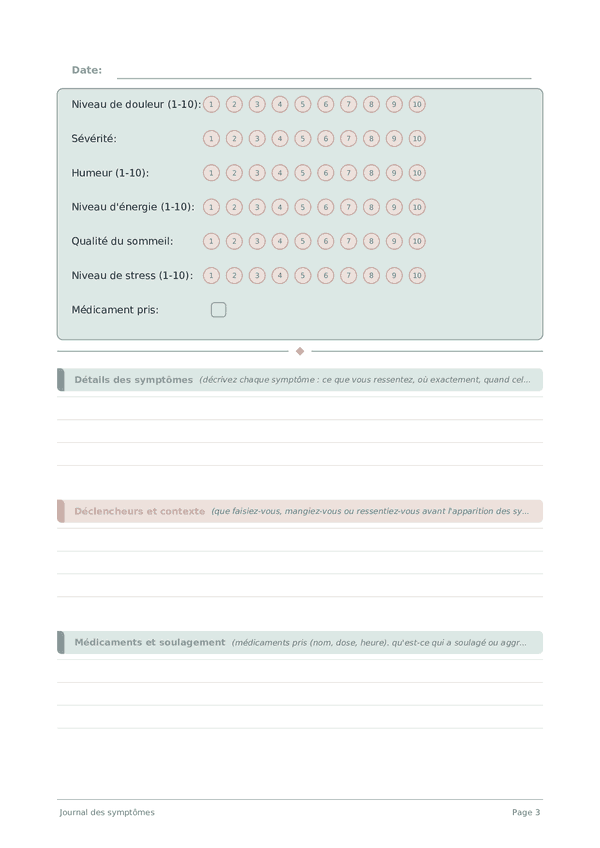
Le haut de chaque page comporte des champs à remplissage rapide (évaluations, cases à cocher, chiffres). En dessous se trouve une section lignée pour écrire. Voici ce que signifie chaque champ :
Niveau de douleur (1-10)
Évaluez l'intensité de votre douleur sur une échelle. Suivre les niveaux de douleur aide à identifier les déclencheurs, évaluer les traitements et communiquer avec les professionnels de santé.
Sévérité
Quelle est la gravité de vos symptômes aujourd'hui ? Notez de 1 (léger) à 10 (invalidant)
Humeur (1-10)
Évaluez votre état émotionnel général de la journée. 1 signifie très bas ou déprimé, 10 signifie exceptionnellement heureux et positif. Ne réfléchissez pas trop — fiez-vous à votre instinct.
Niveau d'énergie (1-10)
Évaluez votre niveau d'énergie physique et mentale. 1 signifie épuisé et vidé, 10 signifie plein d'énergie et alerte. Cela vous aide à identifier quelles activités stimulent ou drainent votre énergie.
Qualité du sommeil
Évaluez la qualité reposante de votre sommeil. 1 signifie terrible et agité, 5 signifie profond et réparateur. La qualité compte autant que la quantité.
Niveau de stress (1-10)
Évaluez votre stress sur une échelle de 1 à 10. Avec le temps, vous identifierez vos schémas de stress et les stratégies d'adaptation qui fonctionnent le mieux.
Médicament pris
Avez-vous pris vos médicaments aujourd'hui ? Notez lesquels, quand, et les doses oubliées
Détails des symptômes
Décrivez chaque symptôme : ce que vous ressentez, où exactement, quand cela a commencé, combien de temps cela dure
Déclencheurs et contexte
Que faisiez-vous, mangiez-vous ou ressentiez-vous avant l'apparition des symptômes ? Notez l'activité, l'alimentation, la météo, le stress
Médicaments et soulagement
Médicaments pris (nom, dose, heure). Qu'est-ce qui a soulagé ou aggravé les symptômes ? Évaluez l'efficacité
Notes du médecin
Questions, préoccupations ou observations pour votre prochain rendez-vous médical
Conseils pour réussir
Quand et à quelle fréquence écrire
Log symptoms as they occur throughout the day — even a quick note with time, symptom, and intensity is valuable. Do a full entry each evening, reviewing the day and adding context about activities, diet, and stress. Before medical appointments, compile your entries into a one-page summary of symptom frequency, severity, and patterns. This journal should run continuously during diagnostic periods and active treatment. Once a condition stabilizes, weekly check-ins may be sufficient to monitor for changes.
Questions fréquentes
Quelles informations un journal de symptômes doit-il contenir pour une consultation médicale ?
Selon les recommandations de la Mayo Clinic et de la médecine générale, un journal de symptômes utile capture la date d'apparition, la localisation, le caractère, la sévérité (0–10), la durée, les déclencheurs, ce qui a soulagé ou aggravé, et les facteurs associés (sommeil, humeur, stress). Ce modèle couvre les huit dimensions via le tracker et les sections Détails du symptôme, Déclencheurs et Contexte, et Médicaments. Généralement, 2 à 4 semaines d'entrées suffisent pour identifier des tendances cliniquement significatives.
Comment distinguer « niveau de douleur » de « sévérité » dans le tracker ?
Les recommandations différencient la douleur (sensation nociceptive ou neuropathique spécifique, 0–10) de la sévérité globale des symptômes, qui englobe l'impact fonctionnel — nausées, fatigue, vertiges, détresse. Utilisez niveau de douleur (1-10) pour un inconfort localisé et severity pour la charge symptomatique globale de la journée affectant vos activités. Une utilisation cohérente sur des semaines aide votre médecin à distinguer la réponse aux analgésiques de la trajectoire générale de la maladie.
À quel point doit-on être précis dans la section Déclencheurs et Contexte ?
Très précis. Les recommandations pour les migraines et les symptômes cycliques conseillent de noter ce que vous avez mangé, les expositions environnementales, la durée du sommeil, la phase menstruelle, les événements stressants, les médicaments et l'activité physique dans les 24 heures précédant les symptômes. Les entrées vagues comme « fatigué » ne génèrent aucun insight. La plupart des tendances de déclencheurs émergent après 4 à 6 semaines de suivi détaillé.
Puis-je utiliser ce journal pour plusieurs pathologies coexistantes ?
Oui, mais soyez explicite. Les patients souffrant de deux affections chroniques ou plus bénéficient le plus d'un suivi unifié. Étiquetez chaque entrée de symptôme par affection (ex. : « SII », « migraine »), ou utilisez un code couleur. Partagez avec chaque spécialiste — les tendances inter-systémiques, comme les poussées liées au stress affectant plusieurs pathologies, n'émergent qu'avec un suivi combiné sur 6 à 8 semaines.
Comment les évaluations d'humeur, d'énergie et de sommeil se rapportent-elles aux symptômes physiques ?
Les études montrent de façon constante des liens bidirectionnels : un mauvais sommeil amplifie la perception de la douleur de 20 à 40 % ; la douleur chronique aggrave l'humeur ; le stress provoque des poussées de SII, de migraine et de pathologies dermatologiques. Évaluer ces quatre variables quotidiennement révèle des corrélations qu'aucun spécialiste isolé ne détecterait. Apportez des tendances, pas des pages brutes, à vos rendez-vous.
Que faire si mes symptômes varient beaucoup d'un jour à l'autre ?
La variabilité élevée est en elle-même cliniquement significative. Les sociétés rhumatologiques et Cochrane notent que les tendances de fluctuation quotidienne aident à distinguer les troubles inflammatoires des troubles mécaniques ou fonctionnels. Enregistrez tous les jours, même les « bons » — les lacunes masquent le niveau de base. Après 3 à 4 semaines, calculez votre sévérité moyenne par semaine. Les tendances dans les moyennes sont plus informatives sur le plan diagnostique que les pics.
Vaut-il mieux enregistrer les symptômes en temps réel ou en fin de journée ?
Les deux fonctionnent, mais la cohérence prime sur le timing. Des études montrent que la précision du rappel chute d'environ 30 % après 24 heures — notez donc les données clés (heure d'apparition, pic de sévérité, déclencheurs) dans les quelques heures qui suivent. Utilisez la section tracker le soir pour les évaluations récapitulatives.
Quand les entrées du journal de symptômes doivent-elles m'inciter à consulter en urgence ?
Signaux d'alarme de la Mayo Clinic : sévérité ≥ 8/10 persistant plus de 24 heures, symptômes sévères soudains et nouveaux (douleur thoracique, modifications neurologiques, céphalée intense, difficultés respiratoires), ou aggravation rapide d'un symptôme suivi nécessitent une évaluation médicale rapide. En France, appelez le 15 (SAMU) ou le 112 pour une urgence. Le journal documente l'histoire — il ne remplace pas le jugement clinique.
Vous aimerez aussi
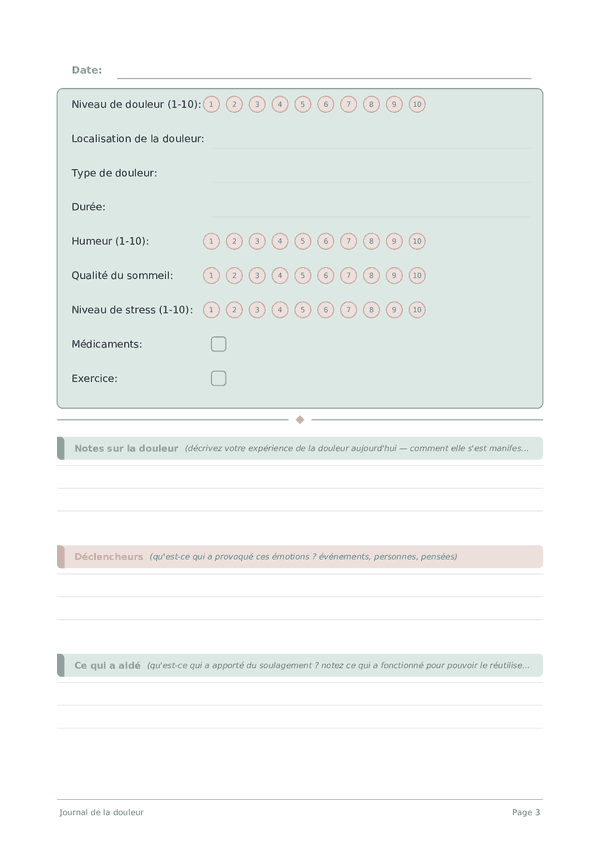
Journal de la douleur
Suivez les schémas de douleur, les déclencheurs et les stratégies de soulagement
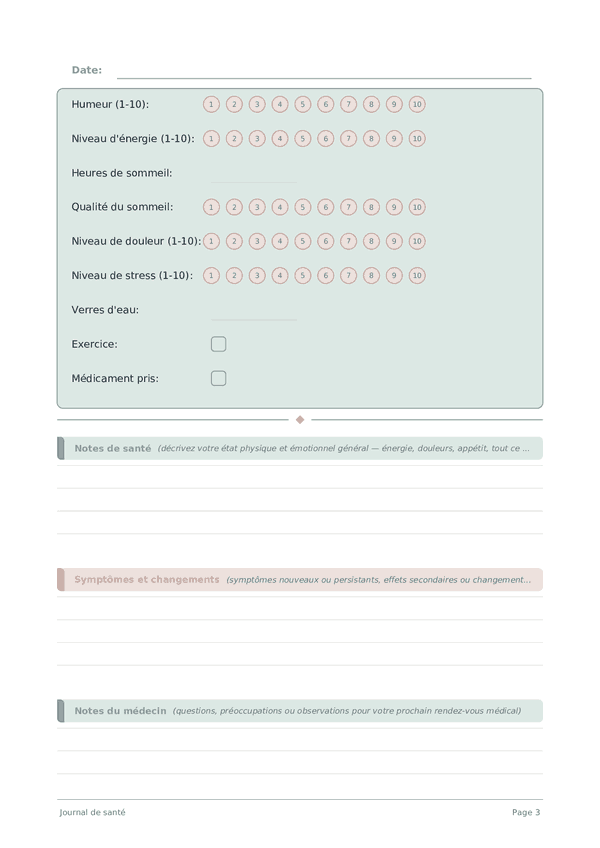
Journal de santé
Suivez votre corps, votre esprit et votre bien-être chaque jour
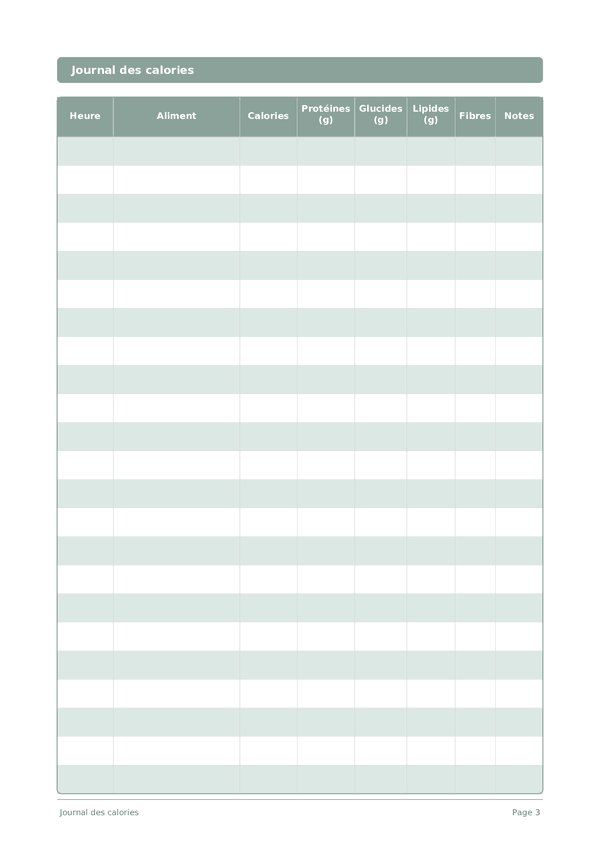
Journal des calories
Suivez les calories et les macros à chaque repas
Journal de course à pied
Suivez chaque course, mesurez vos progrès et atteignez vos objectifs
Molette pour zoomer, glisser pour déplacer