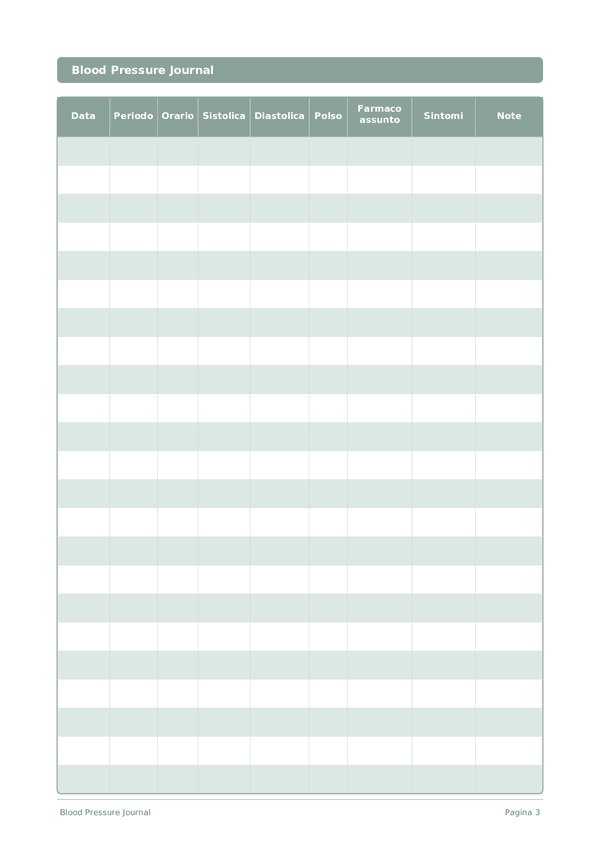
Printable Diario della Pressione Arteriosa
Monitora la pressione arteriosa per la salute del cuore
Personalizza campi
Attiva o disattiva i campi. Clicca la matita per rinominare, oppure aggiungi i tuoi campi.
Cos'è questo diario?
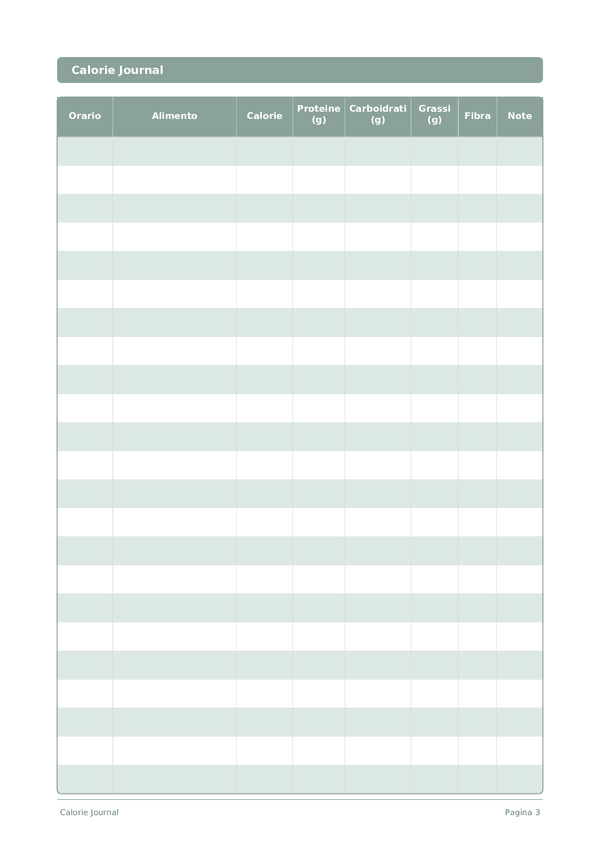
Questo è un diario a registro tabellare — ogni pagina contiene una tabella strutturata con colonne per registrare i dati. Perfetto per tenere traccia di spese, allenamenti, letture o qualsiasi attività che beneficia di voci organizzate e confrontabili.
Come compilare ogni campo
Ogni pagina è una tabella con colonne. Compila una riga per ogni voce. Ecco a cosa serve ogni colonna:
Data
Scrivi la data di oggi. Questo ancora la tua voce nel tempo e aiuta quando si rivedono le voci in seguito.
Periodo
Orario
Registra l'ora della misurazione o dell'evento. Una tempistica coerente rende i dati confrontabili e rivela schemi legati all'ora del giorno.
Sistolica
Registra il numero superiore della tua misurazione della pressione sanguigna (sistolica). Misura la pressione quando il tuo cuore batte.
Diastolica
Registra il numero inferiore della tua misurazione della pressione sanguigna (diastolica). Misura la pressione quando il tuo cuore riposa tra i battiti.
Polso
Registra la tua frequenza cardiaca in battiti al minuto. Le tendenze del polso a riposo rivelano i cambiamenti nella forma cardiovascolare nel tempo.
Farmaco assunto
Hai preso i tuoi farmaci oggi? Annota cosa, quando e se hai saltato delle dosi
Sintomi
Elenca i sintomi che hai avuto oggi. Sii specifico riguardo al tipo, alla posizione e alla gravità. Gli schemi nei sintomi spesso indicano trigger o necessità di trattamento.
Note
Aggiungi qualsiasi contesto o pensiero aggiuntivo. Questa colonna tuttofare è per tutto ciò che non si adatta altrove ma potrebbe essere utile in seguito.
Consigli per il successo
Quando e con quale frequenza scrivere
Aggiungi voci man mano che gli eventi accadono durante il giorno. Per i registri finanziari, annota ogni transazione immediatamente. Per i registri di attività, compila dopo ogni sessione. Fai una revisione settimanale o mensile per analizzare i tuoi dati ed estrarre intuizioni.
Domande frequenti
Quali valori di pressione sanguigna sono considerati normali rispetto ad alti?
Secondo AHA/ACC (2017, Hypertension, 71(6)): Normale <120/80 mmHg; Elevata 120–129/<80; Ipertensione stadio 1: 130–139/80–89; Stadio 2: ≥140/90. Una crisi ipertensiva >180/120 richiede immediata attenzione medica. Registra sia la sistolica che la diastolica nelle rispettive colonne. Il NHS UK utilizza soglie leggermente più alte; segui gli obiettivi indicati dal tuo medico, che possono differire in caso di diabete, malattia renale o per l'età.
Perché effettuare due misurazioni a distanza di 1–2 minuti?
Le linee guida AHA (2019, Hypertension, 73(5)) e ESC raccomandano di calcolare la media di 2 misurazioni perché la prima è spesso elevata a causa di una breve attivazione simpatica. Siediti tranquillo per 5 minuti prima di misurare. Registra la media di entrambe le letture, o annota entrambe e calcolala in seguito. Le misurazioni singole sovrastimano la prevalenza dell'ipertensione del 10–15%, portando a una sovradiagnosi e a farmaci non necessari.
Qual è la tecnica di misurazione corretta?
Tecnica AHA: siediti con la schiena supportata, i piedi piatti a terra, il braccio appoggiato all'altezza del cuore, il bracciale sul braccio nudo con la misura corretta (il manicotto copre l'80% della circonferenza del braccio). Niente conversazioni, caffeina, esercizio fisico o fumo nei 30 minuti precedenti. Svuota la vescica prima. Le colonne del periodo e dell'orario ti consentono di mantenere misurazioni mattutine e serali costanti — di solito entro un'ora dal risveglio e prima di andare a letto.
Perché registrare le misurazioni mattutine e serali?
Secondo Hypertension (2018, 71(5)) e le linee guida ACC, la pressione sanguigna segue un ritmo circadiano — picco mattutino e calo serale. I pazienti senza abbassamento notturno (non-dippers) hanno un rischio cardiovascolare più elevato. Le misurazioni mattutine prima del farmaco valutano il controllo notturno; le misurazioni serali mostrano gli effetti diurni. La colonna del periodo cattura questo — il tuo cardiologo ha bisogno di entrambe per valutare i tempi e il dosaggio della terapia.
Per quanto tempo dovrei monitorare prima di condividere i dati con il mio medico?
AHA e NICE raccomandano almeno 7 giorni consecutivi di misurazioni due volte al giorno per stabilire un baseline affidabile; 14 giorni migliorano l'accuratezza. Scarta le misurazioni del primo giorno poiché sono spesso elevate. Calcola la media dei giorni rimanenti. Le pagine da 15 righe del diario supportano facilmente 7 o più giorni. Portalo a ogni visita cardiologica — le misurazioni domiciliari spesso differiscono significativamente da quelle ambulatoriali (effetto camice bianco).
Cos'è l'ipertensione da camice bianco e come aiuta questo diario?
Secondo l'AHA, l'ipertensione da camice bianco colpisce il 15–30% dei pazienti — valori elevati in ambulatorio ma normali a casa. Senza monitoraggio domiciliare, questo porta a farmaci non necessari. Al contrario, l'ipertensione mascherata (normale in ambulatorio, elevata a casa) non viene rilevata senza monitoraggio. I dati del diario domiciliare su 7 o più giorni, abbinati al monitoraggio ambulatoriale periodico secondo le linee guida ACC, distinguono questi pattern e consentono una diagnosi accurata.
Quali valori richiedono un intervento medico urgente?
Criteri di crisi ipertensiva AHA: sistolica ≥180 o diastolica ≥120 mmHg. Con sintomi (dolore toracico, mancanza di respiro, cambiamenti visivi, forte mal di testa, sintomi neurologici), si tratta di un'emergenza ipertensiva che richiede valutazione immediata al pronto soccorso. Senza sintomi (urgenza ipertensiva), aspetta 5 minuti, riesegui la misurazione; se ancora elevata, contatta il tuo medico in giornata. Documenta i sintomi nella colonna dei sintomi.
Come monitoro l'effetto dei farmaci sulla pressione sanguigna?
Secondo la Mayo Clinic, registra il nome del farmaco, la dose e l'orario di assunzione nella colonna farmaco assunto. Gli antipertensivi raggiungono tipicamente uno stato stazionario in 2–4 settimane. Confronta le medie di 14 giorni prima e dopo l'inizio del farmaco o le variazioni di dose. Anche la colonna del polso è importante — i beta-bloccanti riducono sia la pressione sanguigna che la frequenza cardiaca; gli ACE-inibitori agiscono principalmente sulla pressione. Condividi i trend con il tuo cardiologo per l'ottimizzazione del dosaggio.
Potrebbe piacerti anche
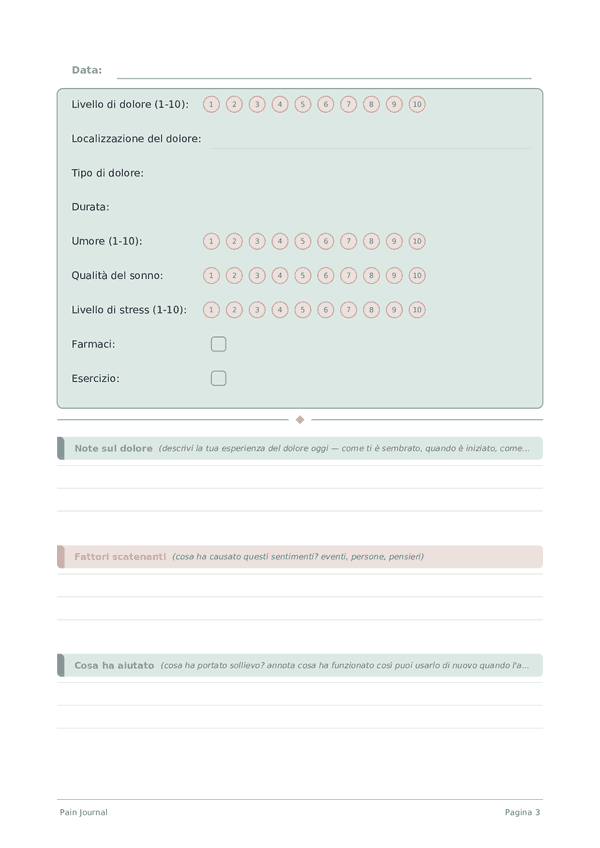
Diario del Dolore
Monitora i pattern del dolore, i trigger e le strategie di sollievo
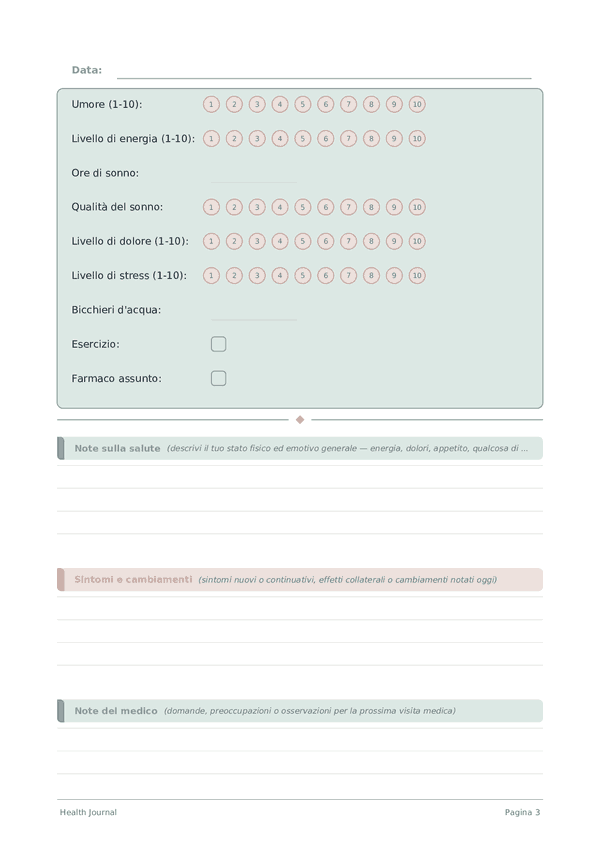
Diario della Salute
Monitora il tuo corpo, la mente e il benessere ogni giorno
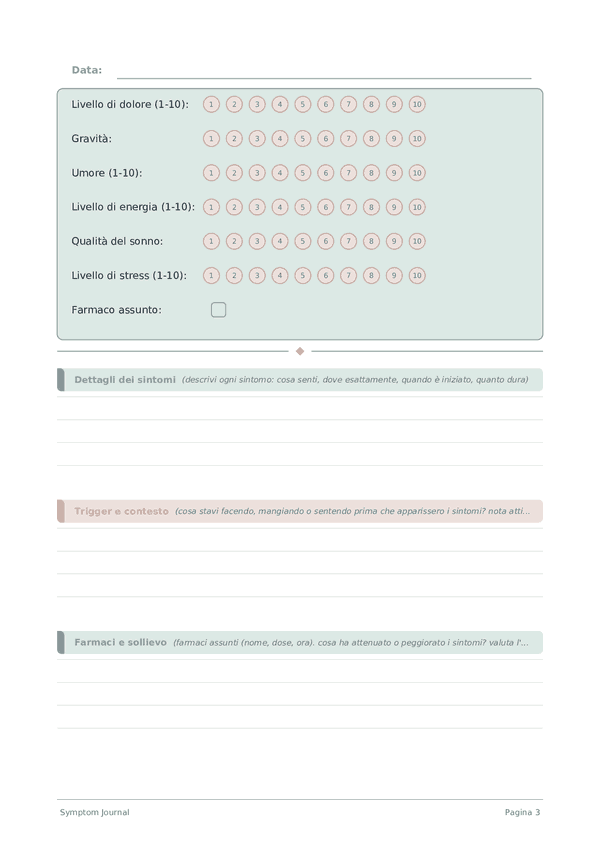
Diario dei Sintomi
Monitora sintomi, trigger e trattamenti ogni giorno
Diario delle Calorie
Monitora calorie e macronutrienti ad ogni pasto
Scorri per ingrandire, trascina per spostare