Printable Diario del Dolore
Monitora i pattern del dolore, i trigger e le strategie di sollievo
Personalizza campi
Attiva o disattiva i campi. Clicca la matita per rinominare, oppure aggiungi i tuoi campi.
Cos'è questo diario?
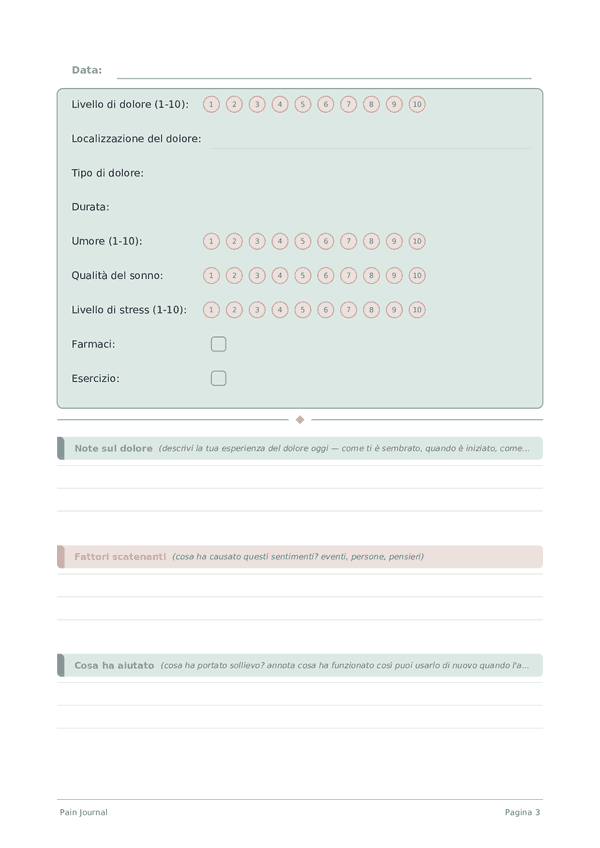
Questo è un diario ibrido — ogni pagina combina una sezione di tracciamento rapido in cima con un'area di scrittura a righe in basso. Ciò ti consente di catturare sia dati misurabili che riflessioni in forma libera in un unico posto.
Come compilare ogni campo
La parte superiore di ogni pagina ha campi a compilazione rapida (valutazioni, caselle di controllo, numeri). Sotto c'è una sezione a righe per scrivere. Ecco cosa significa ogni campo:
Livello di dolore (1-10)
Valuta l'intensità del dolore su una scala. Monitorare i livelli di dolore aiuta a identificare i trigger, valutare i trattamenti e comunicare con i professionisti sanitari.
Localizzazione del dolore
Dove fa male? Sii specifico — parte bassa della schiena, ginocchio sinistro, dietro gli occhi, ecc.
Tipo di dolore
Descrivi la sensazione — acuto, sordo, pulsante, bruciante, dolente, o qualcos'altro
Durata
Registra quanto è durato l'episodio o l'evento. I dati sulla durata aiutano a identificare schemi e valutare l'efficacia del trattamento.
Umore (1-10)
Valuta il tuo stato emotivo complessivo della giornata. 1 significa molto basso o depresso, 10 significa eccezionalmente felice e positivo. Non pensarci troppo — vai con la tua sensazione istintiva.
Qualità del sonno
Valuta quanto è stato riposante il tuo sonno. 1 significa terribile e agitato, 5 significa profondo e rigenerante. La qualità conta quanto la quantità.
Livello di stress (1-10)
Valuta il tuo stress su una scala da 1 a 10. Nel tempo, identificherai i tuoi schemi di stress e le strategie di coping più efficaci.
Farmaci
Registra i farmaci assunti, inclusi nome e dosaggio. Un monitoraggio coerente aiuta te e il tuo medico a valutare l'efficacia del trattamento.
Esercizio
Segna se hai fatto esercizio oggi. Anche una camminata di 10 minuti conta. L'obiettivo è costruire consapevolezza dei tuoi schemi di attività.
Note sul dolore
Descrivi la tua esperienza del dolore oggi — come ti è sembrato, quando è iniziato, come è cambiato
Fattori scatenanti
Identifica cosa ha causato le tue reazioni emotive — eventi, persone, pensieri, ambienti. Riconoscere i trigger ti dà il potere di prepararti o evitarli.
Cosa ha aiutato
Cosa ha portato sollievo? Annota cosa ha funzionato così puoi usarlo di nuovo quando l'ansia aumenta.
Impatto quotidiano
Come ha influenzato il dolore la tua attività, il sonno, l'umore o la vita sociale oggi?
Consigli per il successo
Quando e con quale frequenza scrivere
Compila una pagina al giorno. La parte del tracker richiede meno di un minuto; cerca di farlo a un orario costante. La sezione di scrittura può essere fatta nello stesso momento o riservata quando hai 5 minuti tranquilli. Entrambe le parti insieme ti danno il quadro più completo della tua giornata.
Domande frequenti
Cosa deve includere un diario del dolore per una visita medica?
Secondo la Linea Guida Clinica CDC per la Prescrizione di Oppioidi per il Dolore (2022, MMWR Recommendations and Reports, 71(3)) e le raccomandazioni dell'American Chronic Pain Association: valutazione dell'intensità 0–10, sede, carattere (bruciore/pugnalata/dolore sordo), durata dell'episodio, fattori scatenanti, efficacia del farmaco, più sonno, umore e attività. Questo diario copre tutti e 9 i campi principali. Porta 2–4 settimane di voci — sufficienti per identificare pattern clinicamente significativi.
Come descrivo correttamente il carattere del dolore — bruciore, dolore sordo, pulsazione?
La classificazione standard è il McGill Pain Questionnaire (Melzack, 1975, Pain, 1(3), 277–299), ancora in uso clinico. Descrittori sensoriali: pulsante, a scossa, a pugnalata, tagliente, bruciante, tirante, pressante. Il bruciore spesso segnala dolore neuropatico; la pulsazione suggerisce un'origine vascolare (emicrania); il dolore sordo indica un'origine muscolo-scheletrica; la pugnalata indica dolore infiammatorio. Questi descrittori aiutano il tuo medico a differenziare i tipi di dolore e a selezionare la terapia appropriata.
Questo diario è adatto per emicrania, fibromialgia e artrite?
Sì. La American Migraine Foundation, l'American College of Rheumatology e la Arthritis Foundation raccomandano ufficialmente la tenuta di un diario del dolore. Per l'emicrania, cattura l'aura e i fattori scatenanti (cibo, ormoni, meteo). Per la fibromialgia, monitora la triade sonno-stress-dolore (secondo i criteri diagnostici ACR 2016 per la fibromialgia). Per l'artrite, registra la rigidità mattutina e le correlazioni con l'attività. Il diario è flessibile — adatta i campi alla tua condizione specifica.
Cos'è la scala del dolore 0–10 e come si usa?
La Numeric Rating Scale (NRS-11) è lo strumento standard dell'International Association for the Study of Pain (IASP). 0 = nessun dolore, 10 = il peggior dolore immaginabile. Hjermstad et al. (2011, Journal of Pain and Symptom Management, 41(6), 1073–1093) l'hanno validata in una revisione sistematica di 19 studi. Valuta "in questo momento", non una media giornaliera — le valutazioni istantanee forniscono dati clinici più affidabili.
Con quale frequenza devo compilare un diario del dolore — una volta al giorno o di più?
Tre volte al giorno: mattina, mezzogiorno, sera. Stone & Broderick (2007, Pain Medicine, 8(suppl 3), S85–S93) hanno dimostrato che le valutazioni retrospettive del dolore divergono da quelle in tempo reale del 20–30%. Minore è l'intervallo tra l'evento e la registrazione, più affidabili sono i dati. Durante gli episodi acuti o le riacutizzazioni, registra immediatamente — cattura l'orario di insorgenza, la durata e qualsiasi intervento utilizzato.
Quali fattori scatenanti del dolore vale la pena monitorare?
Secondo il NIH National Institute of Neurological Disorders and Stroke e la American Migraine Foundation: meteo (pressione barometrica, umidità), alimentazione (alimenti contenenti tiramina per l'emicrania), quantità e qualità del sonno, stress, attività fisica, ciclo ormonale, postura, tempo davanti agli schermi, caffeina e alcol. Registra tutto nelle 24 ore precedenti un episodio di dolore. I pattern diventano visibili dopo 2–4 settimane di monitoraggio sistematico.
Perché un diario del dolore cartaceo è migliore di un'app?
Per tre motivi. Privacy dei dati sanitari: dopo il accordo FTC di Flo Health (gennaio 2021), è documentato che le app di salute possono condividere dati con terze parti. I medici leggono facilmente i registri scritti a mano durante le visite — non è necessario alcun export. La versione cartacea funziona durante la fotofobia correlata all'emicrania, non richiede batteria né connettività. App e versione cartacea non si escludono a vicenda — molti pazienti usano entrambe.
Un diario del dolore può aiutare a identificare la causa di un dolore inspiegabile?
Il diario non diagnostica, ma rivela i pattern che i medici usano per la diagnosi. L'International Association for the Study of Pain (IASP) e la American Academy of Pain Medicine includono la tenuta del diario del dolore nei protocolli di valutazione clinica per il dolore cronico. Porta almeno 2–4 settimane di voci — forniscono dati giornalieri, settimanali e basati sui fattori scatenanti che non possono essere ricostruiti dalla memoria.
Potrebbe piacerti anche
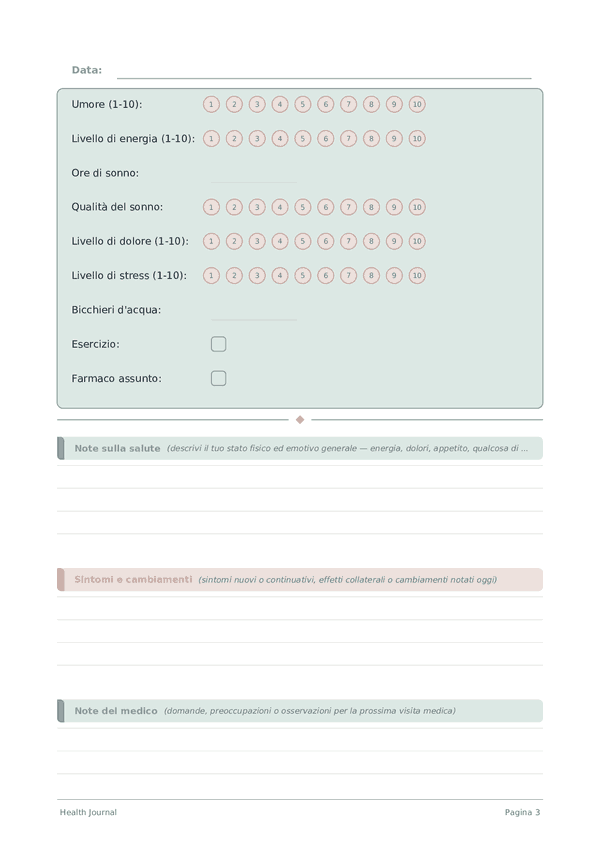
Diario della Salute
Monitora il tuo corpo, la mente e il benessere ogni giorno
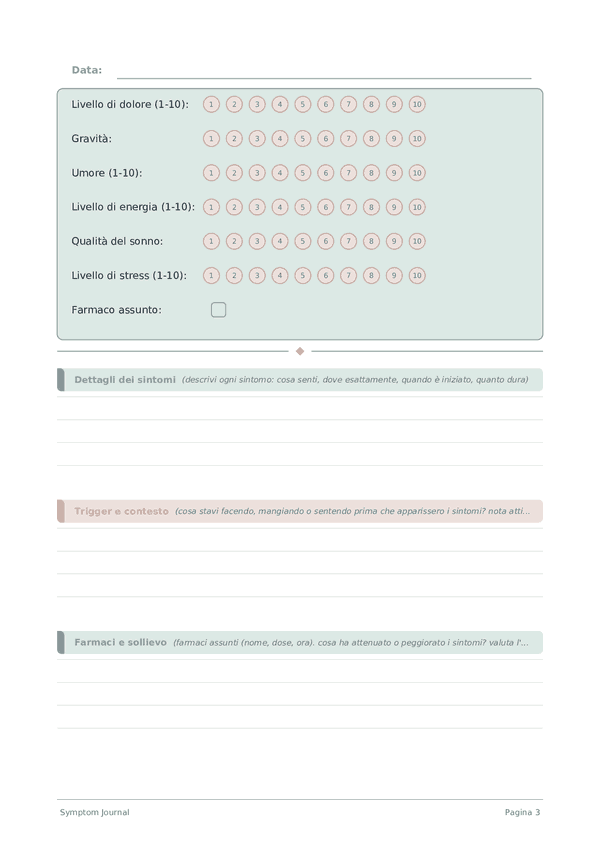
Diario dei Sintomi
Monitora sintomi, trigger e trattamenti ogni giorno
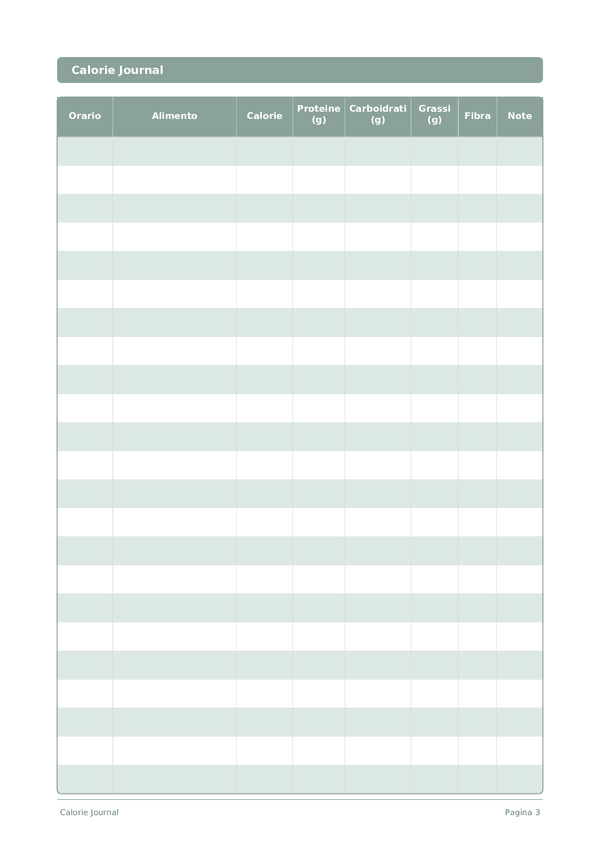
Diario delle Calorie
Monitora calorie e macronutrienti ad ogni pasto
Diario della Corsa
Monitora ogni corsa, misura i progressi e raggiungi i tuoi obiettivi
Scorri per ingrandire, trascina per spostare