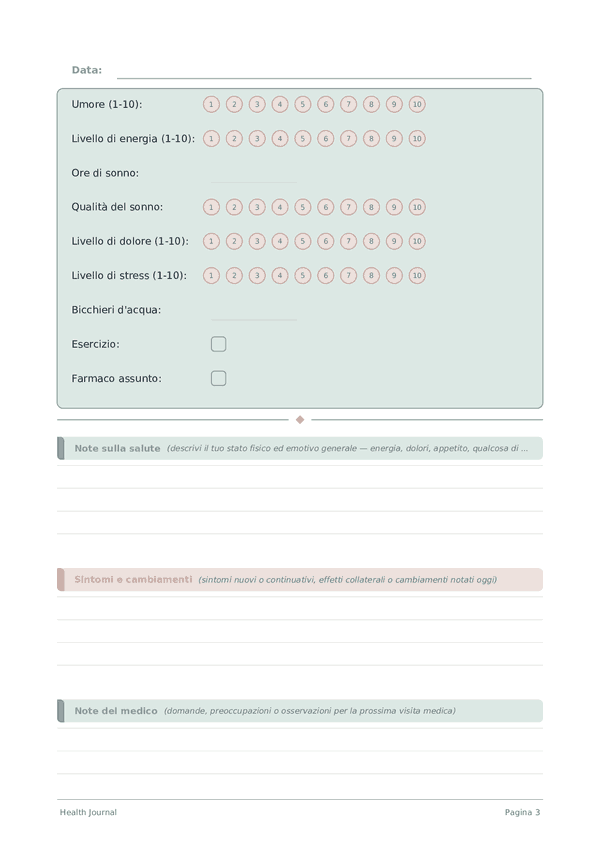
Printable Diario della Salute
Monitora il tuo corpo, la mente e il benessere ogni giorno
Personalizza campi
Attiva o disattiva i campi. Clicca la matita per rinominare, oppure aggiungi i tuoi campi.
Cos'è questo diario?
Questo è un diario ibrido — ogni pagina combina una sezione di tracciamento rapido in cima con un'area di scrittura a righe in basso. Ciò ti consente di catturare sia dati misurabili che riflessioni in forma libera in un unico posto.
Come compilare ogni campo
La parte superiore di ogni pagina ha campi a compilazione rapida (valutazioni, caselle di controllo, numeri). Sotto c'è una sezione a righe per scrivere. Ecco cosa significa ogni campo:
Umore (1-10)
Valuta il tuo stato emotivo complessivo della giornata. 1 significa molto basso o depresso, 10 significa eccezionalmente felice e positivo. Non pensarci troppo — vai con la tua sensazione istintiva.
Livello di energia (1-10)
Valuta il tuo livello di energia fisica e mentale. 1 significa esausto e svuotato, 10 significa pieno di energia e sveglio. Questo ti aiuta a identificare quali attività aumentano o drenano la tua energia.
Ore di sonno
Scrivi quante ore hai effettivamente dormito (non solo il tempo a letto). Monitorare questo insieme all'umore e all'energia rivela spesso connessioni potenti.
Qualità del sonno
Valuta quanto è stato riposante il tuo sonno. 1 significa terribile e agitato, 5 significa profondo e rigenerante. La qualità conta quanto la quantità.
Livello di dolore (1-10)
Valuta l'intensità del dolore su una scala. Monitorare i livelli di dolore aiuta a identificare i trigger, valutare i trattamenti e comunicare con i professionisti sanitari.
Livello di stress (1-10)
Valuta il tuo stress su una scala da 1 a 10. Nel tempo, identificherai i tuoi schemi di stress e le strategie di coping più efficaci.
Bicchieri d'acqua
Monitora l'assunzione giornaliera di acqua. La maggior parte delle persone ha bisogno di 6–8 bicchieri. Spuntare i bicchieri durante il giorno ti aiuta a mantenerti idratato.
Esercizio
Segna se hai fatto esercizio oggi. Anche una camminata di 10 minuti conta. L'obiettivo è costruire consapevolezza dei tuoi schemi di attività.
Farmaco assunto
Hai preso i tuoi farmaci oggi? Annota cosa, quando e se hai saltato delle dosi
Note sulla salute
Descrivi il tuo stato fisico ed emotivo generale — energia, dolori, appetito, qualcosa di rilevante
Sintomi e cambiamenti
Sintomi nuovi o continuativi, effetti collaterali o cambiamenti notati oggi
Note del medico
Domande, preoccupazioni o osservazioni per la prossima visita medica
Consigli per il successo
Quando e con quale frequenza scrivere
Compila una pagina al giorno. La parte del tracker richiede meno di un minuto; cerca di farlo a un orario costante. La sezione di scrittura può essere fatta nello stesso momento o riservata quando hai 5 minuti tranquilli. Entrambe le parti insieme ti danno il quadro più completo della tua giornata.
Domande frequenti
Cosa può rivelare un diario della salute quotidiano che i controlli occasionali non possono?
Secondo il NIH (2020, Self-Management of Chronic Diseases) e le linee guida della Mayo Clinic, la registrazione quotidiana costante fa emergere pattern invisibili nelle istantanee singole — ad esempio correlazioni sonno-dolore o riacutizzazioni di sintomi legate allo stress. Questo modello cattura nove metriche (umore, energia, sonno, dolore, stress, idratazione, esercizio, farmaci) più osservazioni in testo libero, fornendo ai clinici una timeline di 4 settimane molto più ricca della storia basata sulla memoria. Consulta il tuo medico prima di apportare modifiche al trattamento.
Come dovrei usare le valutazioni da 1 a 10 per umore, dolore e stress?
L'American Pain Society e l'IASP raccomandano le scale di valutazione numerica 0–10 perché rilevano cambiamenti clinicamente significativi di ≥2 punti. Valuta ogni sera alla stessa ora, con 0 come 'assente' e 10 come 'il peggio immaginabile'. Evita di ricalibrare a metà settimana — la coerenza conta più della precisione. I pattern su 14–21 giorni hanno più peso di qualsiasi punteggio singolo e aiutano il tuo clinico a valutare la risposta al trattamento.
In cosa differisce da un'app per telefono come Apple Health?
Le app automatizzano le metriche ma raramente catturano il contesto narrativo. Questo formato ibrido stampabile combina campi tracker rapidi con una sezione in testo libero 'Come mi sento oggi' più prompt per i sintomi e le note mediche. Il CDC (2023, Patient-Generated Health Data) sottolinea che la riflessione scritta a mano migliora il ricordo e riduce la fatica da app. I diari cartacei evitano anche le preoccupazioni sulla privacy dei dati e sono accettati dai clinici che non possono visualizzare le esportazioni di app di terze parti.
Il monitoraggio quotidiano dei sintomi è adatto a chi non ha una diagnosi?
Sì. L'USPSTF (2022) incoraggia il monitoraggio preventivo del peso, del sonno e dell'attività fisica negli adulti sani. Le nove metriche del modello coprono i fattori dello stile di vita modificabili evidenziati dall'AHA's Life's Essential 8 (2022, Circulation, 146(5), e18-e43). Monitorare prima che compaiano i sintomi stabilisce un baseline personale, rendendo più facile rilevare i cambiamenti futuri. Condividi i pattern con il tuo medico di base alle visite annuali.
Come compilo efficacemente la sezione 'Note per il mio medico'?
L'AAFP (2021, Effective Patient-Clinician Communication) raccomanda di scrivere da tre a cinque elementi specifici: sintomi nuovi o peggiorati con date di insorgenza, effetti collaterali dei farmaci e domande prioritarie. Evita voci vaghe come 'mi sento strano'. Usa prima le righe per sintomi e cambiamenti, poi sintetizza in domande precise. Porta il diario — o le pagine fotografate — alla tua visita in modo che il clinico possa esaminare i trend piuttosto che affidarsi al ricordo verbale.
Quante settimane di dati trovano davvero utili i clinici?
Secondo le linee guida cliniche NICE e i protocolli di monitoraggio AHA, 2–4 settimane di voci quotidiane è il minimo tipico per l'analisi dei trend. La Mayo Clinic raccomanda 6–8 settimane per le condizioni croniche come l'ipertensione o il dolore cronico per rilevare la risposta ai farmaci. I pattern legati al sonno e all'umore di solito emergono entro 14 giorni. Porta tutte le pagine completate — le settimane incomplete sono comunque informative.
Il monitoraggio dei sintomi può aumentare l'ansia per la salute invece di ridurla?
L'APA (2021, Clinical Practice Guideline for Anxiety Disorders) sottolinea che il monitoraggio strutturato riduce generalmente l'ansia esternalizzando le preoccupazioni, ma la ruminazione è un rischio per le persone con ansia da salute o DOC. Limita le voci a un momento fisso al giorno, usa la sezione note per il medico per contenere le preoccupazioni ed evita le ricerche online di sintomi. Se il controllo diventa compulsivo, consulta un clinico sui metodi cognitivo-comportamentali.
Qual è l'errore più comune quando si inizia un diario della salute?
Documentare troppo e poi smettere entro due settimane. NIH NCCIH (2022, Behavior Change Research) mostra che l'aderenza cala bruscamente quando le voci richiedono più di cinque minuti. Questo modello è progettato per meno di tre minuti: valuta i nove elementi del tracker, poi scrivi due o tre frasi. Salta completamente la sezione con le righe nei giorni più impegnati — le sole valutazioni producono comunque dati di trend utilizzabili per il tuo medico.
Potrebbe piacerti anche
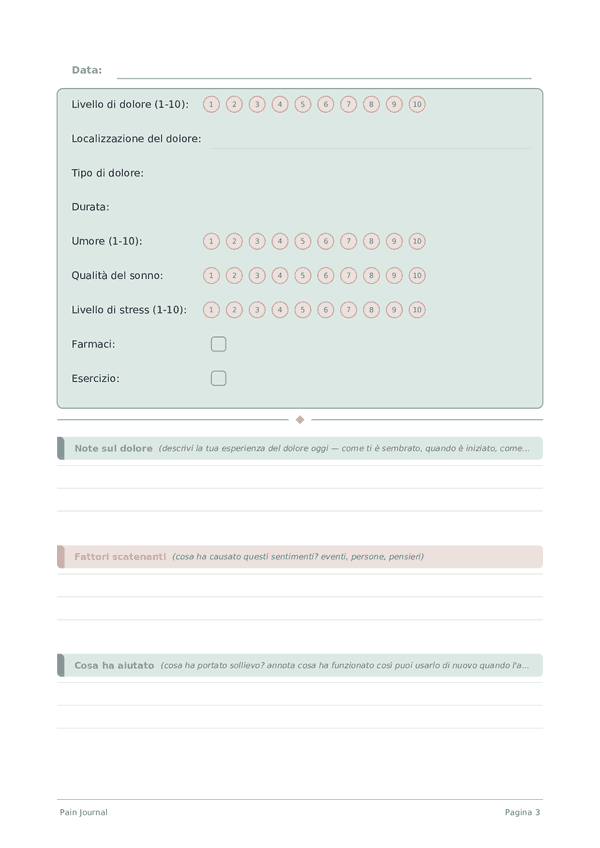
Diario del Dolore
Monitora i pattern del dolore, i trigger e le strategie di sollievo
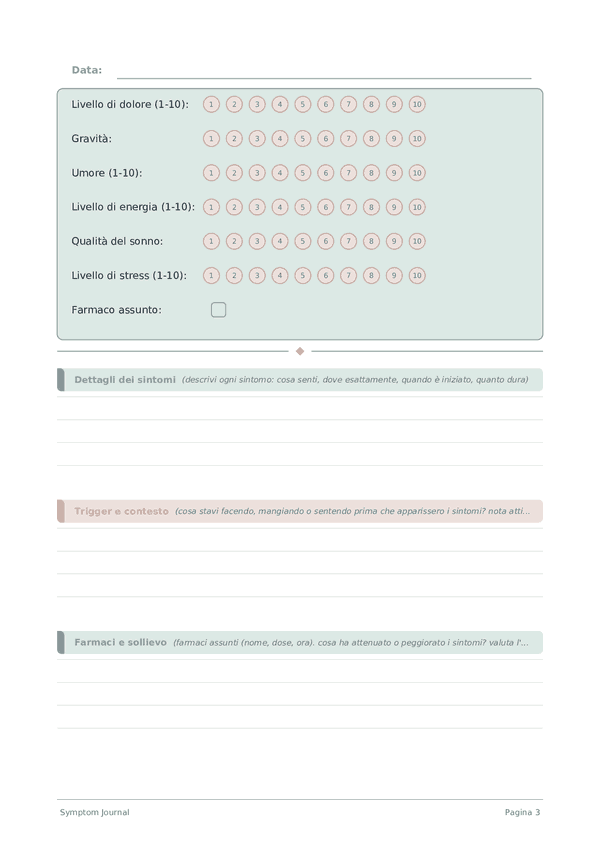
Diario dei Sintomi
Monitora sintomi, trigger e trattamenti ogni giorno
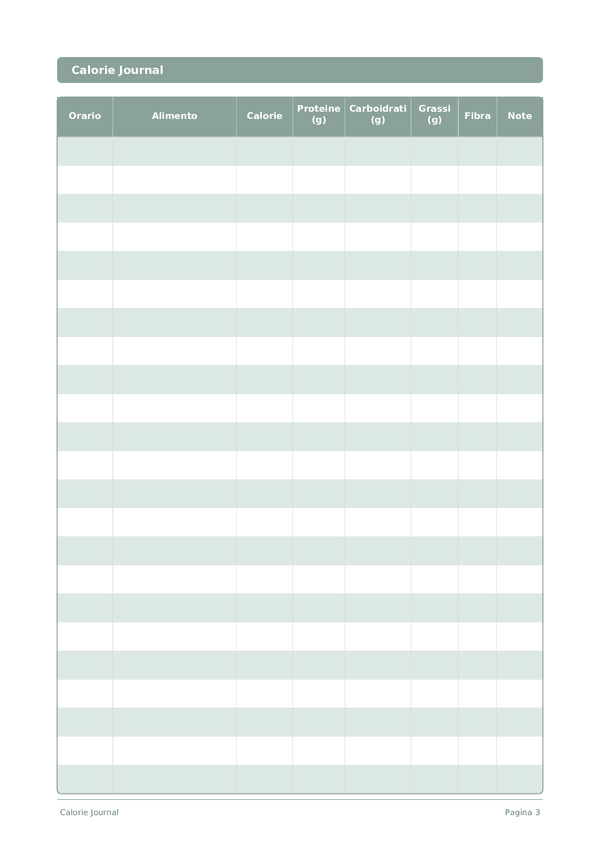
Diario delle Calorie
Monitora calorie e macronutrienti ad ogni pasto
Diario della Corsa
Monitora ogni corsa, misura i progressi e raggiungi i tuoi obiettivi
Scorri per ingrandire, trascina per spostare