Printable Diario della Corsa
Monitora ogni corsa, misura i progressi e raggiungi i tuoi obiettivi
Personalizza campi
Attiva o disattiva i campi. Clicca la matita per rinominare, oppure aggiungi i tuoi campi.
Cos'è questo diario?
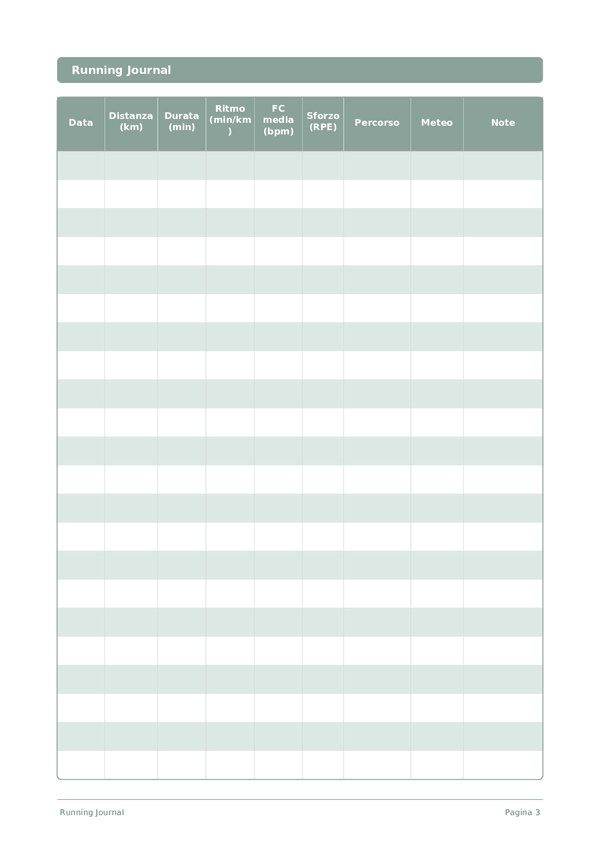
Questo è un diario a registro tabellare — ogni pagina contiene una tabella strutturata con colonne per registrare i dati. Perfetto per tenere traccia di spese, allenamenti, letture o qualsiasi attività che beneficia di voci organizzate e confrontabili.
Come compilare ogni campo
Ogni pagina è una tabella con colonne. Compila una riga per ogni voce. Ecco a cosa serve ogni colonna:
Data
Scrivi la data di oggi. Questo ancora la tua voce nel tempo e aiuta quando si rivedono le voci in seguito.
Distanza (km)
Registra la distanza percorsa (in km o miglia). Vedere la tua distanza aumentare nelle settimane è un potente motivatore.
Durata (min)
Registra per quanti minuti hai fatto esercizio o praticato. Monitorare la durata ti aiuta a vedere la tua costanza crescere e trovare la lunghezza ottimale della sessione.
Ritmo (min/km)
Annota il tuo ritmo (es. min/km o min/miglio). Monitorare il ritmo insieme a come ti sei sentito ti aiuta a trovare il tuo punto ottimale.
FC media (bpm)
Frequenza cardiaca media in battiti al minuto
Sforzo (RPE)
Sforzo percepito: 1=molto facile, 10=sforzo massimo
Percorso
Nome del percorso, quartiere o sentiero
Meteo
Soleggiato, nuvoloso, pioggia, vento — condizioni attuali
Note
Aggiungi qualsiasi contesto o pensiero aggiuntivo. Questa colonna tuttofare è per tutto ciò che non si adatta altrove ma potrebbe essere utile in seguito.
Consigli per il successo
Quando e con quale frequenza scrivere
Aggiungi voci man mano che gli eventi accadono durante il giorno. Per i registri finanziari, annota ogni transazione immediatamente. Per i registri di attività, compila dopo ogni sessione. Fai una revisione settimanale o mensile per analizzare i tuoi dati ed estrarre intuizioni.
Domande frequenti
Perché registrare insieme la frequenza cardiaca e l'RPE (sforzo percepito) per ogni corsa?
Il British Journal of Sports Medicine (2017, 51(20)) e il consenso dell'American College of Sports Medicine mostrano che abbinare la frequenza cardiaca oggettiva all'RPE soggettivo rileva i guadagni di forma fisica e il superallenamento meglio di entrambi da soli. Quando la frequenza cardiaca sale allo stesso RPE, si sta accumulando fatica. Quando l'RPE scende alla stessa frequenza cardiaca, la capacità aerobica sta migliorando. Il design a due colonne di questo diario supporta entrambi i segnali.
Come calcolo il ritmo da distanza e durata?
Ritmo (min/km) = durata ÷ distanza. Per una corsa di 5 km in 30 minuti, il ritmo è 6:00/km. Il diario fornisce distanza, durata dell'esercizio e una colonna dedicata al ritmo così puoi verificare il calcolo. Medicine & Science in Sports & Exercise (2019, 51(4)) nota che il monitoraggio costante del ritmo nell'arco di settimane rivela tendenze della forma aerobica invisibili nei singoli allenamenti.
Cosa significa esattamente la scala RPE 1–10?
La scala Borg CR-10, utilizzata da ACSM e British Journal of Sports Medicine, definisce 1 come 'molto leggero' (jogging di riscaldamento), 5 come 'abbastanza faticoso' (ritmo conversazionale), 7 come 'duro' (soglia) e 10 come 'sforzo massimo'. La maggior parte del chilometraggio settimanale dovrebbe essere a RPE 3–5 (aerobico facile). Riservare RPE 7+ a una o due sessioni a settimana riduce il rischio di infortuni secondo la letteratura sull'allenamento polarizzato 80/20.
Quante corse a settimana sono sufficienti per vedere progressi?
L'USPSTF e le Linee Guida OMS sull'Attività Fisica (2020) raccomandano 150 minuti di attività aerobica moderata a settimana. Per la corsa in particolare, l'ACSM suggerisce 3–5 sessioni a settimana con almeno un giorno di riposo. I principianti possono progredire con 3 corse; i corridori intermedi registrano tipicamente 4–5. Usa i totali settimanali del diario per verificare il volume — i chilometri totali e i minuti sono le variabili che guidano la maggior parte degli adattamenti.
In quale range di frequenza cardiaca devono rientrare le corse facili?
Circa il 60–70% della frequenza cardiaca massima, secondo l'ACSM. Stima la massima come 220 meno l'età (una formula approssimativa — i valori reali variano). Per un corridore di 40 anni, max ≈ 180 bpm, quindi la zona facile è 108–126 bpm. Le revisioni del British Journal of Sports Medicine mostrano che il 75–80% del chilometraggio settimanale dovrebbe rientrare in questa zona 'conversazionale'. Usa la colonna della frequenza cardiaca per verificare di non spingere troppo nelle giornate facili.
Come può il diario aiutarmi a evitare infortuni da superallenamento?
Il British Journal of Sports Medicine (2016, 50(17)) mostra che i rapporti del carico di lavoro acuto-cronico superiori a 1,5 aumentano notevolmente il rischio di infortuni. Monitora i totali settimanali di distanza e confrontali con la media mobile delle ultime 4 settimane — aumenti superiori al 10% a settimana sono segnali d'allarme. L'aumento della frequenza cardiaca a un ritmo invariato, insieme all'aumento dell'RPE, segnala il cumulo di fatica. La colonna delle note è il posto giusto per segnalare precocemente dolori e affaticamento.
Qual è la differenza rispetto a Strava o Garmin Connect?
Le app GPS automatizzano la distanza e la frequenza cardiaca ma raramente catturano il contesto qualitativo. Le colonne delle note e del meteo ti permettono di registrare il vento contrario, i profili collinari, la qualità del sonno e l'alimentazione — variabili che spiegano una corsa lenta quando i soli dati grezzi sembrano indicare una perdita di forma fisica. La ricerca NIH NCCIH (2022) sul cambiamento comportamentale mostra che la revisione scritta a mano durante il defaticamento migliora l'aderenza e l'autovalutazione più dei dashboard passivi.
Devo registrare le corse facili e i riscaldamenti, o solo gli allenamenti chiave?
Registra tutto. ACSM e Medicine & Science in Sports & Exercise sottolineano il carico totale di allenamento, non solo le sessioni intense. Le corse facili costituiscono la maggior parte del volume settimanale e guidano gli adattamenti aerobici. Saltarle nel diario sottostima il carico e oscura il rapporto tra ritmo facile e intenso. Una singola riga del diario per ogni corsa — anche i jogging di recupero di 20 minuti — mantiene il quadro completo.
Potrebbe piacerti anche
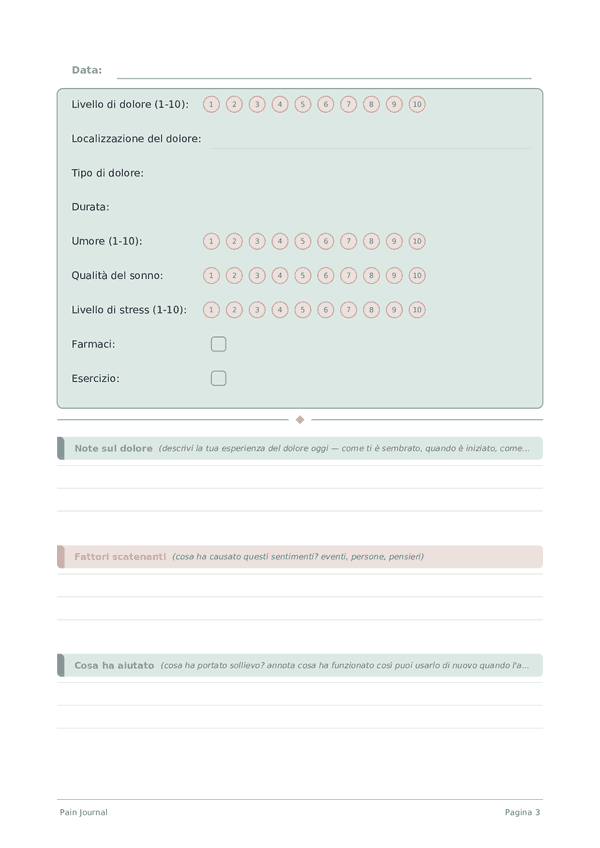
Diario del Dolore
Monitora i pattern del dolore, i trigger e le strategie di sollievo
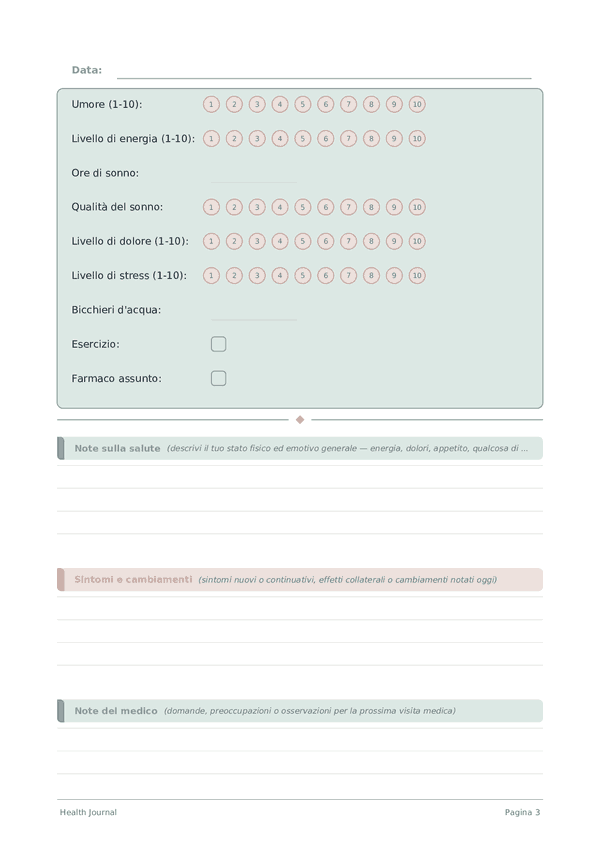
Diario della Salute
Monitora il tuo corpo, la mente e il benessere ogni giorno
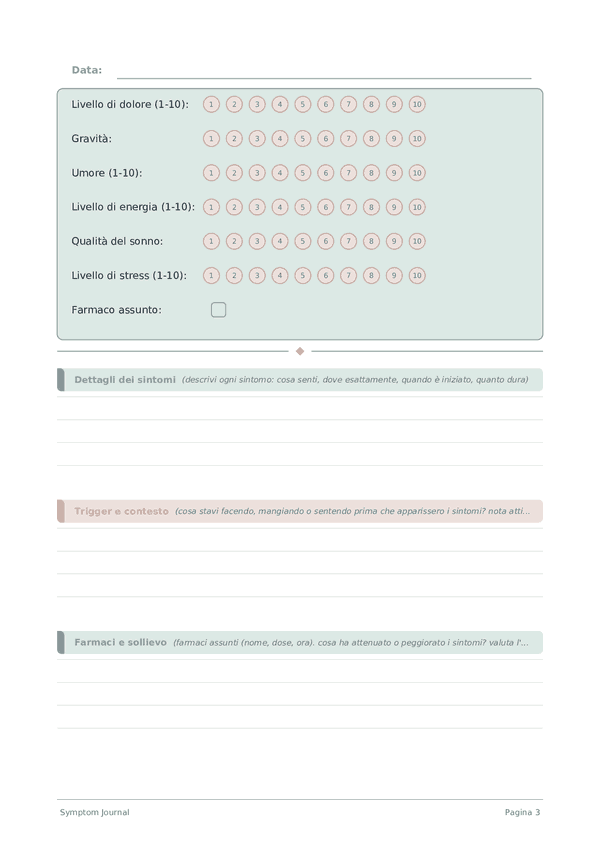
Diario dei Sintomi
Monitora sintomi, trigger e trattamenti ogni giorno
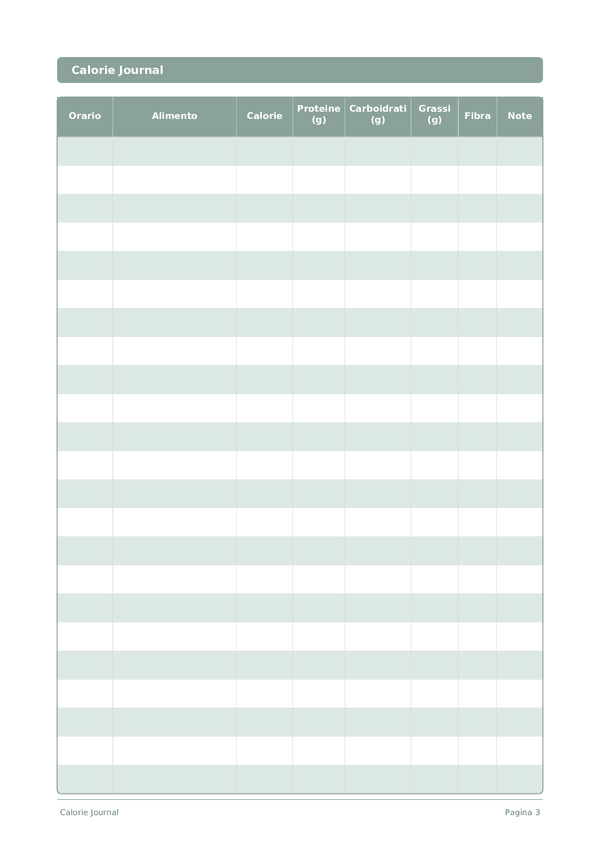
Diario delle Calorie
Monitora calorie e macronutrienti ad ogni pasto
Scorri per ingrandire, trascina per spostare