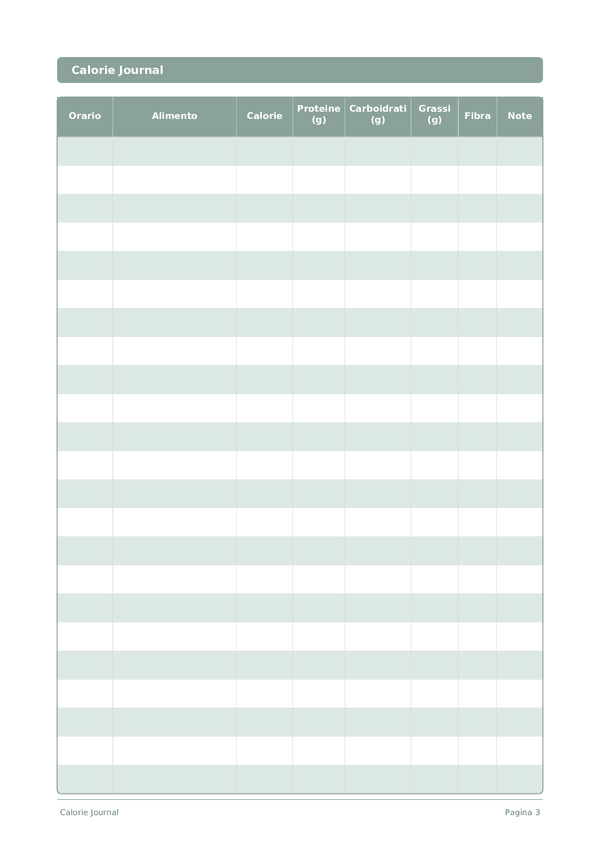
Printable Diario delle Calorie
Monitora calorie e macronutrienti ad ogni pasto
Personalizza campi
Attiva o disattiva i campi. Clicca la matita per rinominare, oppure aggiungi i tuoi campi.
Cos'è questo diario?
Questo è un diario a registro tabellare — ogni pagina contiene una tabella strutturata con colonne per registrare i dati. Perfetto per tenere traccia di spese, allenamenti, letture o qualsiasi attività che beneficia di voci organizzate e confrontabili.
Come compilare ogni campo
Ogni pagina è una tabella con colonne. Compila una riga per ogni voce. Ecco a cosa serve ogni colonna:
Orario
Registra a che ora hai mangiato. La tempistica dei pasti influenza l'energia, il sonno e la digestione. Gli schemi diventano visibili dopo un paio di settimane.
Alimento
Scrivi cosa hai mangiato. Sii abbastanza specifico da essere utile (es. 'insalata di pollo alla griglia' non solo 'pranzo'). Questo aiuta a identificare sensibilità alimentari e schemi.
Calorie
Registra l'apporto calorico approssimativo. Non hai bisogno di numeri perfetti — le stime ti aiutano a rimanere consapevole dei tuoi schemi alimentari.
Proteine (g)
Registra l'apporto proteico in grammi. Un'adeguata assunzione di proteine è fondamentale per il recupero e la costruzione muscolare, tipicamente 1,6–2,2 g per kg di peso corporeo.
Carboidrati (g)
Grassi (g)
Fibra
Note
Aggiungi qualsiasi contesto o pensiero aggiuntivo. Questa colonna tuttofare è per tutto ciò che non si adatta altrove ma potrebbe essere utile in seguito.
Consigli per il successo
Quando e con quale frequenza scrivere
Aggiungi voci man mano che gli eventi accadono durante il giorno. Per i registri finanziari, annota ogni transazione immediatamente. Per i registri di attività, compila dopo ogni sessione. Fai una revisione settimanale o mensile per analizzare i tuoi dati ed estrarre intuizioni.
Domande frequenti
Contare le calorie aiuta davvero nella gestione del peso?
Sì — una revisione Cochrane e le Linee Guida Dietetiche USDA per gli Americani (2020–2025) confermano che la consapevolezza dell'apporto energetico migliora i risultati di peso se abbinata all'equilibrio dei macronutrienti. Studi dell'American Journal of Clinical Nutrition mostrano che chi si automonitorizza perde circa il doppio del peso nell'arco di sei mesi. Il layout a cinque macronutrienti di questo modello (calorie, proteine, carboidrati, grassi, fibre) supporta l'enfasi sulla qualità alimentare complessiva raccomandata dall'ADA, non solo la restrizione calorica.
Quanto devono essere precise le mie stime di calorie e macronutrienti?
Un margine del ±10–15% è sufficiente per il monitoraggio dei trend, secondo le linee guida dell'Academy of Nutrition and Dietetics. Studi dell'American Journal of Clinical Nutrition (2017) mostrano che anche una registrazione imperfetta produce cambiamenti comportamentali significativi. Usa le etichette alimentari, USDA FoodData Central o un'app con scanner di codici a barre per la consultazione. La coerenza nelle settimane conta più della precisione per singolo pasto — concentrati sui totali settimanali piuttosto che sull'esattezza di ogni singolo pasto.
Perché il modello separa le fibre dai carboidrati?
Le Linee Guida Dietetiche USDA (2020–2025) raccomandano 25–34 g di fibre al giorno, eppure la maggior parte degli adulti ne consuma circa 16 g. Gli Standard di Cura ADA (2024, Diabetes Care, 47 Suppl 1) sottolineano il ruolo delle fibre nel controllo glicemico e nella salute cardiovascolare. Tracciare le fibre separatamente dai carboidrati totali rivela pattern di qualità alimentare che il conteggio dei carboidrati netti nasconde. Punta a un alto rapporto fibre/carboidrati totali — in genere più è alto, meglio è per la salute metabolica.
Quante proteine dovrei assumere per pasto?
L'USDA raccomanda 0,8 g/kg di peso corporeo al giorno per gli adulti sedentari; il British Journal of Sports Medicine (2018, 52(6)) e il consenso ISSN suggeriscono 1,4–2,0 g/kg per le persone attive. Distribuire l'apporto su 3–4 pasti da 20–40 g ciascuno ottimizza la sintesi proteica muscolare. Usa la colonna delle proteine per verificare la distribuzione — concentrare tutte le proteine a cena è comune ma meno efficace rispetto a una distribuzione uniforme.
Questo modello è adatto a chi ha una storia di disturbi alimentari?
Usalo con cautela. L'APA e l'Academy for Eating Disorders avvertono che il monitoraggio dettagliato delle calorie può peggiorare i comportamenti restrittivi o l'ortoressia. Se hai una storia di anoressia, bulimia o disturbo da alimentazione incontrollata, consulta un dietista registrato o un terapeuta prima di iniziare a registrare. La variante senza calorie (slug food-journal) è generalmente più sicura. Il monitoraggio è uno strumento, non una misura morale.
In cosa si differenzia da MyFitnessPal o Cronometer?
Le app automatizzano la ricerca ma incoraggiano un comportamento continuo sullo smartphone; questa tabella stampabile richiede una registrazione breve e intenzionale ai pasti. NIH NCCIH (2022) nota che gli strumenti per il cambiamento del comportamento funzionano meglio quando il livello di attrito è appena sufficiente a stimolare la riflessione. I diari cartacei evitano anche i livelli sociali e pubblicitari delle app di nutrizione. Usa l'app per la ricerca, poi trasferisci i dati chiave nel diario per la registrazione effettiva.
Come utilizzo i totali settimanali del diario?
Somma ciascuna colonna per tutti i 7 giorni. Confronta i totali con gli obiettivi delle Linee Guida Dietetiche USDA (2020–2025): calorie corrispondenti al fabbisogno stimato dalle tabelle CDC per il BMR degli adulti, proteine a 0,8–2,0 g/kg, fibre 25–34 g/giorno, grassi saturi sotto il 10% delle calorie. Cerca pattern nei giorni feriali rispetto al fine settimana — rivelano spesso il punto di leva più alto per il peso e i marker metabolici.
Qual è l'errore di registrazione più comune?
Non registrare gli spuntini e le bevande. I dati CDC NHANES e studi dell'American Journal of Clinical Nutrition (2019) mostrano che le persone sottostimano l'apporto del 20–40%, principalmente per spuntini dimenticati e calorie liquide (bibite, succhi, alcol, caffè con latte). Usa la colonna dell'orario del pasto per ogni occasione alimentare — incluso un singolo biscotto o un caffè con panna. Registrare zero voci è peggio che registrare una stima.
Potrebbe piacerti anche
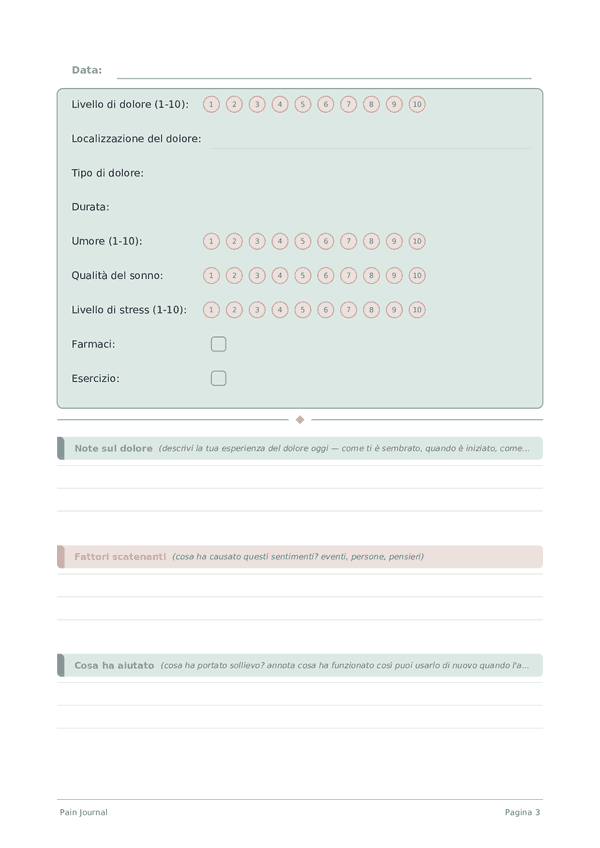
Diario del Dolore
Monitora i pattern del dolore, i trigger e le strategie di sollievo
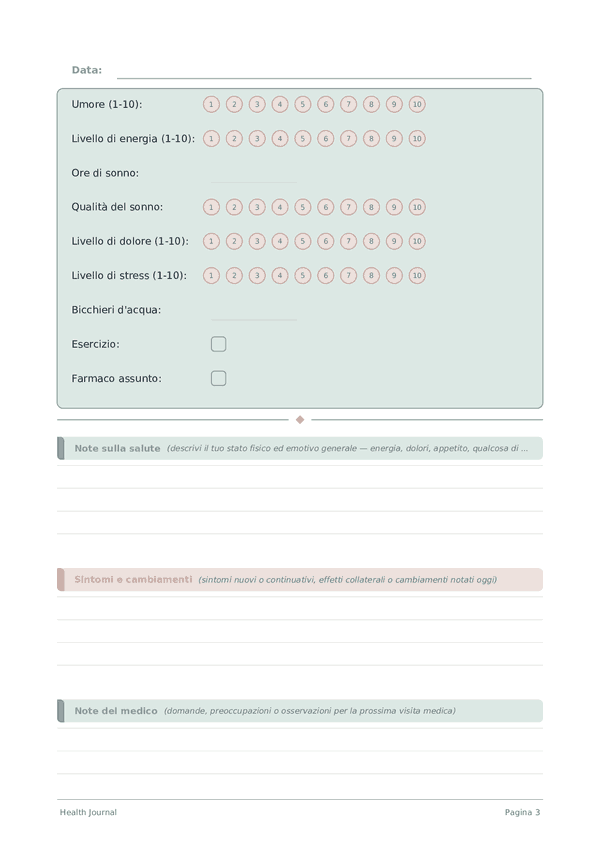
Diario della Salute
Monitora il tuo corpo, la mente e il benessere ogni giorno
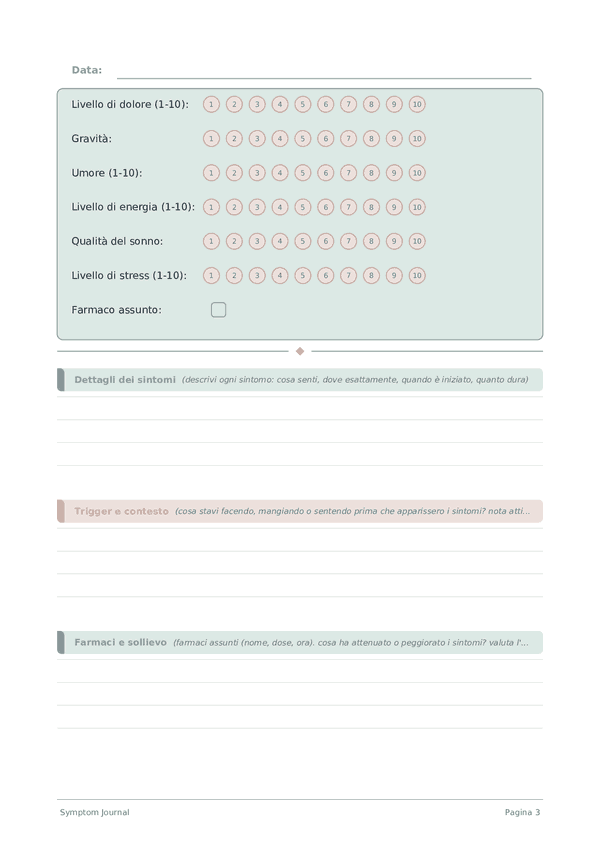
Diario dei Sintomi
Monitora sintomi, trigger e trattamenti ogni giorno
Diario della Corsa
Monitora ogni corsa, misura i progressi e raggiungi i tuoi obiettivi
Scorri per ingrandire, trascina per spostare