Printable Diario della Glicemia
Gestisci il diabete con un monitoraggio preciso della glicemia
Personalizza campi
Attiva o disattiva i campi. Clicca la matita per rinominare, oppure aggiungi i tuoi campi.
Cos'è questo diario?
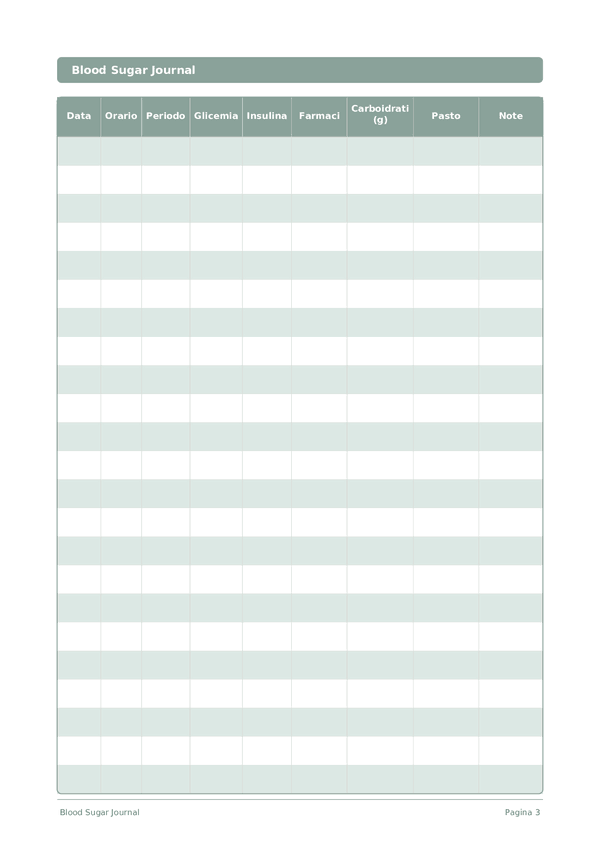
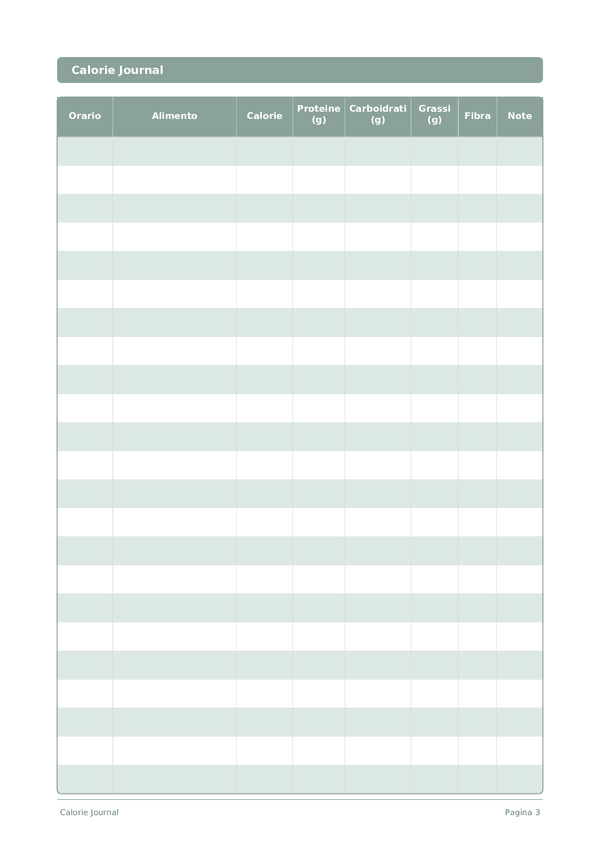
Questo è un diario a registro tabellare — ogni pagina contiene una tabella strutturata con colonne per registrare i dati. Perfetto per tenere traccia di spese, allenamenti, letture o qualsiasi attività che beneficia di voci organizzate e confrontabili.
Come compilare ogni campo
Ogni pagina è una tabella con colonne. Compila una riga per ogni voce. Ecco a cosa serve ogni colonna:
Data
Scrivi la data di oggi. Questo ancora la tua voce nel tempo e aiuta quando si rivedono le voci in seguito.
Orario
Registra l'ora della misurazione o dell'evento. Una tempistica coerente rende i dati confrontabili e rivela schemi legati all'ora del giorno.
Periodo
Glicemia
Registra la tua misurazione della glicemia. Monitorarla insieme ai pasti e all'attività rivela cosa alza o abbassa i tuoi livelli.
Insulina
Registra le unità di insulina somministrate. Un monitoraggio accurato dell'insulina è essenziale per gestire la glicemia e regolare i dosaggi.
Farmaci
Registra i farmaci assunti, inclusi nome e dosaggio. Un monitoraggio coerente aiuta te e il tuo medico a valutare l'efficacia del trattamento.
Carboidrati (g)
Pasto
Descrivi il pasto associato a questa voce. Il contesto attorno ai pasti (prima, dopo, cosa hai mangiato) aiuta a identificare correlazioni con le tue letture.
Note
Aggiungi qualsiasi contesto o pensiero aggiuntivo. Questa colonna tuttofare è per tutto ciò che non si adatta altrove ma potrebbe essere utile in seguito.
Consigli per il successo
Quando e con quale frequenza scrivere
Aggiungi voci man mano che gli eventi accadono durante il giorno. Per i registri finanziari, annota ogni transazione immediatamente. Per i registri di attività, compila dopo ogni sessione. Fai una revisione settimanale o mensile per analizzare i tuoi dati ed estrarre intuizioni.
Domande frequenti
Quali obiettivi di glicemia dovrei puntare a raggiungere?
Secondo gli Standard di Cura ADA (2024, Diabetes Care, 47 Suppl 1): glicemia a digiuno 80–130 mg/dL (4,4–7,2 mmol/L); 1–2 ore postprandiale <180 mg/dL (<10,0 mmol/L); HbA1c <7% per la maggior parte degli adulti. Gli obiettivi variano in base all'età, alla gravidanza, al rischio di ipoglicemia e alle comorbilità. Gli obiettivi per la pediatria e la gravidanza sono più stringenti secondo l'ACOG. Segui sempre gli obiettivi individualizzati del tuo endocrinologo — queste voci del diario sono documentazione, non diagnosi.
Quando dovrei misurare la glicemia nel corso della giornata?
L'ADA raccomanda di misurare a orari costanti: a digiuno (al risveglio), prima dei pasti, 1–2 ore dopo i pasti, prima di andare a letto e in presenza di sintomi. I pazienti con diabete di tipo 1 in terapia insulinica intensiva misurano tipicamente 4–8 volte al giorno; i pazienti con diabete di tipo 2 in terapia con farmaci orali possono misurare 1–2 volte. La colonna del periodo (digiuno/pre-pasto/post-pasto/notte) rende evidenti i pattern. Discuti la frequenza ottimale con il tuo endocrinologo o educatore diabetologico.
Come correlo i carboidrati alla risposta glicemica?
Secondo l'ADA, un aumento della glicemia postprandiale >50 mg/dL rispetto al valore pre-pasto indica insulina insufficiente o eccesso di carboidrati per la dose. Le colonne carboidrati consumati e glicemia abbinate su 2 settimane rivelano i rapporti personali carboidrati-glucosio e la sensibilità all'insulina. Portali al tuo endocrinologo per l'aggiustamento della dose — Diabetes Care (2020, 43(7)) mostra che la revisione continua di questi pattern riduce l'HbA1c dello 0,5–1%.
Cos'è l'ipoglicemia e come devo reagire?
L'ADA definisce l'ipoglicemia come glicemia <70 mg/dL (<3,9 mmol/L), grave quando <54 mg/dL. I sintomi includono tremore, sudorazione, confusione, fame. Tratta con 15 g di carboidrati ad azione rapida (succo, compresse di glucosio), ricontrolla dopo 15 minuti, ripeti se ancora bassa. L'ipoglicemia grave con alterazione della coscienza richiede glucagone e assistenza di emergenza. Registra tutti gli episodi — i valori bassi frequenti indicano la necessità di aggiustare la terapia.
In cosa differisce da un monitor continuo del glucosio (CGM)?
I CGM (Dexcom, Libre, Medtronic) forniscono 288 misurazioni al giorno con frecce di tendenza. Diabetes Care (2021, 44(1)) mostra che i CGM migliorano l'HbA1c più delle sole punture al dito. Tuttavia, il diario cattura il contesto — composizione del pasto, esercizio fisico, malattia, stress — che i CGM non rilevano. Usa entrambi: il CGM per i dati granulari, il diario per la narrazione esplicativa. L'ADA raccomanda sempre più il CGM per il diabete di tipo 1 e il tipo 2 in gestione intensiva.
Quali tipi di insulina dovrei registrare nella colonna farmaci?
L'ADA categorizza: ad azione rapida (lispro, aspart, glulisina) somministrata prima dei pasti; ad azione prolungata (glargine, detemir, degludec) una o due volte al giorno per la copertura basale; combinazioni premiscelate. Registra nome, unità e orario nella colonna farmaci. Porta 2 o più settimane di pagine del diario al tuo endocrinologo — gli aggiustamenti basal/bolus dipendono da pattern invisibili alla sola HbA1c.
Come influiscono l'esercizio fisico e la malattia sulla glicemia?
Secondo l'ADA: l'esercizio aerobico abbassa tipicamente la glicemia durante e per 24 o più ore dopo; il training di resistenza può aumentarla acutamente. Malattia, infezioni e uso di steroidi aumentano la glicemia in modo sostanziale. Annota questi fattori nella colonna note — spiegano valori che altrimenti sembrerebbero erratici. I protocolli per i giorni di malattia (misurazione ogni 2–4 ore, idratazione adeguata, controllo chetoni per il tipo 1) devono essere rivisti con il tuo team diabetologico.
Quando i valori glicemici richiedono un intervento medico urgente?
Segnali d'allarme ADA: glicemia >300 mg/dL (>16,7 mmol/L) con sintomi (vomito, dolore addominale, alito fruttato, respiro rapido) suggerisce DKA — emergenza. Valori persistenti >250 con chetoni positivi (tipo 1) richiedono anch'essi una valutazione al pronto soccorso. L'ipoglicemia grave con confusione necessita di glucagone e assistenza di emergenza. Documenta tutti gli episodi — pattern di valori estremi frequenti indicano la necessità di intensificare il trattamento.
Potrebbe piacerti anche
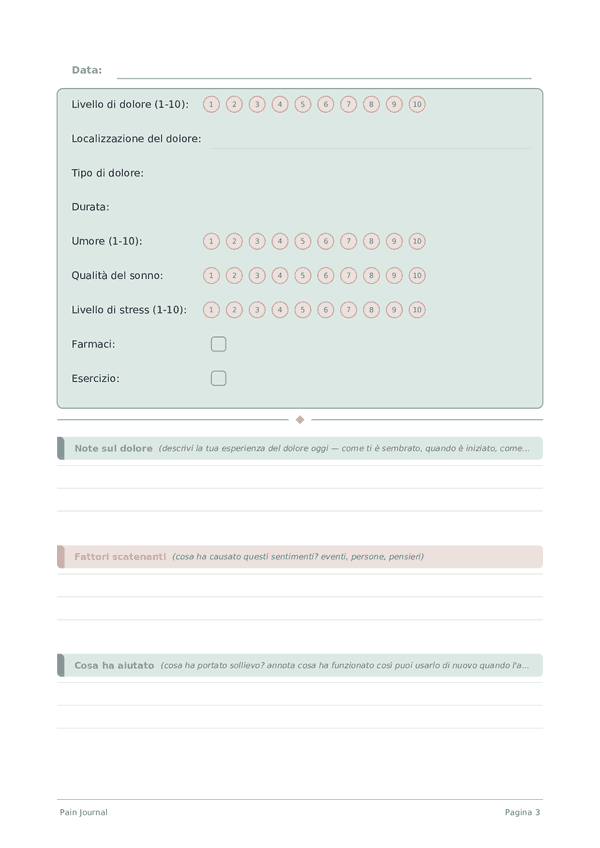
Diario del Dolore
Monitora i pattern del dolore, i trigger e le strategie di sollievo
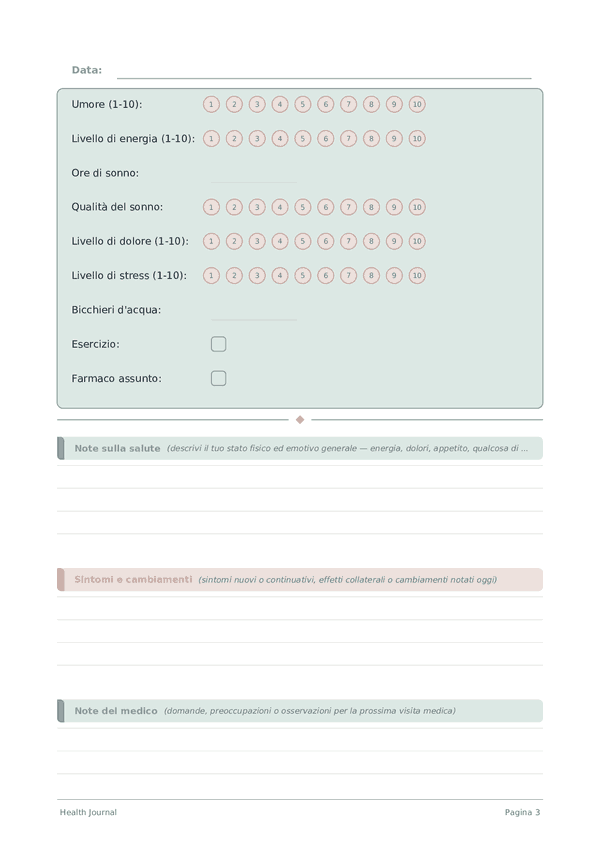
Diario della Salute
Monitora il tuo corpo, la mente e il benessere ogni giorno
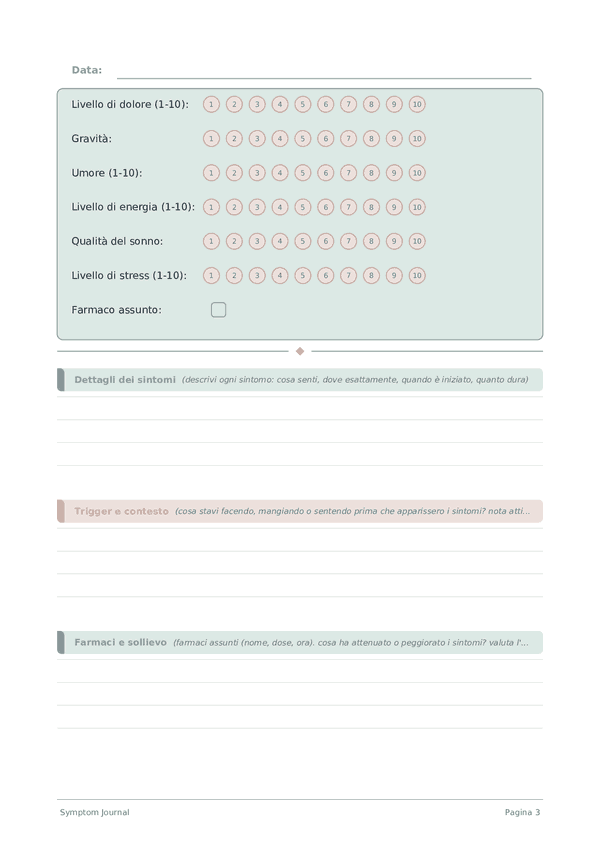
Diario dei Sintomi
Monitora sintomi, trigger e trattamenti ogni giorno
Diario delle Calorie
Monitora calorie e macronutrienti ad ogni pasto
Scorri per ingrandire, trascina per spostare