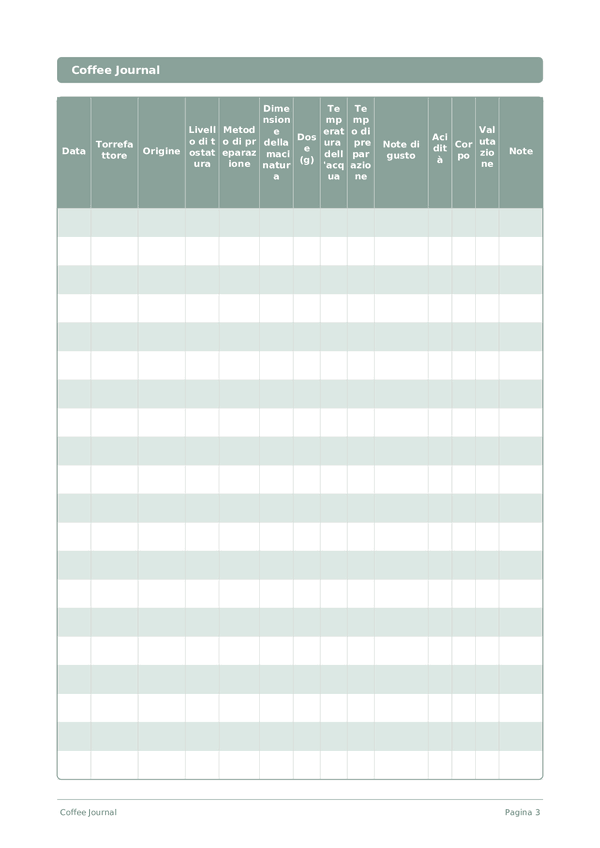
Printable Diario del Caffè
Monitora le preparazioni, affina i parametri e sviluppa il tuo palato
Personalizza campi
Attiva o disattiva i campi. Clicca la matita per rinominare, oppure aggiungi i tuoi campi.
Cos'è questo diario?
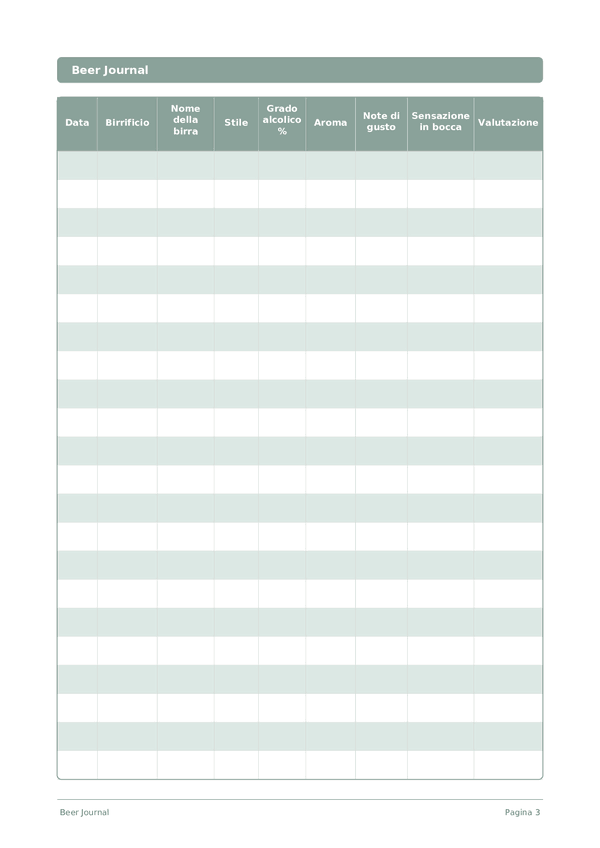
Questo è un diario a registro tabellare — ogni pagina contiene una tabella strutturata con colonne per registrare i dati. Perfetto per tenere traccia di spese, allenamenti, letture o qualsiasi attività che beneficia di voci organizzate e confrontabili.
Come compilare ogni campo
Ogni pagina è una tabella con colonne. Compila una riga per ogni voce. Ecco a cosa serve ogni colonna:
Data
Scrivi la data di oggi. Questo ancora la tua voce nel tempo e aiuta quando si rivedono le voci in seguito.
Torrefattore
Origine
Livello di tostatura
Metodo di preparazione
Dimensione della macinatura
Dose (g)
Temperatura dell'acqua
Tempo di preparazione
Note di gusto
Acidità
Corpo
Valutazione
Valutazione complessiva dell'esperienza
Note
Aggiungi qualsiasi contesto o pensiero aggiuntivo. Questa colonna tuttofare è per tutto ciò che non si adatta altrove ma potrebbe essere utile in seguito.
Consigli per il successo
Quando e con quale frequenza scrivere
Aggiungi voci man mano che gli eventi accadono durante il giorno. Per i registri finanziari, annota ogni transazione immediatamente. Per i registri di attività, compila dopo ogni sessione. Fai una revisione settimanale o mensile per analizzare i tuoi dati ed estrarre intuizioni.
Domande frequenti
Come si ottimizzano i parametri dell'espresso usando le colonne dose, macinatura, temperatura e tempo?
La Specialty Coffee Association (SCA, Brewing Standards) definisce come target Gold Cup una resa di estrazione del 18–22% e un TDS dell'1,15–1,35% per il caffè filtro; per l'espresso i target variano in base alla ricetta. Mantieni la dose costante (ad esempio 18 g), poi regola la macinatura verso il più fine per estrazioni più rapide o verso il più grosso per quelle più lente. Registra ogni modifica a una sola variabile alla volta su righe consecutive. Dopo 10–15 voci emergono schemi che collegano macinatura, tempo e gusto — un metodo che la formazione Q Grader (Coffee Quality Institute) formalizza.
Come si registrano correttamente le note di gusto — dovrei usare il Coffee Taster's Flavor Wheel?
Sì. Il Coffee Taster's Flavor Wheel della SCA (2016, rivisto con il World Coffee Research Sensory Lexicon) fornisce un vocabolario condiviso che va dalle categorie generali (fruttato, nocciolato, floreale) ai descrittori specifici (mora, mandorla, gelsomino). Inizia con termini generali nelle prime voci, poi affina man mano che il tuo palato si sviluppa. I protocolli di cupping Q Grader richiedono descrittori tratti da questo lessico. Abbina le note di gusto ai campi acidità e corpo — insieme formano le dimensioni sensoriali principali del modulo di cupping SCA.
Come si valutano in modo coerente acidità, corpo e punteggio complessivo?
Il modulo di cupping SCA valuta ogni attributo su una scala da 6 a 10: 6 = buono, 7 = molto buono, 8 = eccellente, 9–10 = straordinario. Per l'acidità, distingui la qualità (brillante rispetto a tagliente) dall'intensità. Il corpo si riferisce alla consistenza in bocca, non all'intensità del gusto. Mantieni il punteggio complessivo entro un punto dalla media degli attributi — gli outlier indicano di solito un bias da alone. La formazione Q Grader enfatizza la calibrazione attraverso campioni di riferimento ripetuti.
Perché registrare separatamente origine e grado di tostatura — non sono correlati?
Origine e tostatura interagiscono, ma sono variabili indipendenti. L'Arabica Variety Atlas del World Coffee Research documenta che la stessa varietà dall'Etiopia o dalla Colombia esprime un'identità gustativa distinta, mentre il grado di tostatura determina quanto di quel carattere d'origine sopravvive. Le tostature chiare preservano l'acidità d'origine; quelle scure spostano i gusti verso note dominate dalla torrefazione. Tracciare entrambi permette di distinguere 'mi piace l'Etiopia' da 'mi piacciono le tostature chiare' — una distinzione che la maggior parte dei bevitori occasionali confonde.
Quale temperatura dell'acqua dovrei registrare, e conta davvero?
Gli SCA Brewing Standards indicano 93–96 °C come intervallo ottimale per l'estrazione del caffè filtro. Temperature più basse portano a sottoestrazione — risultato acido e debole; quelle più alte rischiano amarezza. Ricerche pubblicate su Food Research International (ad esempio, studi su temperatura di preparazione e resa di estrazione) confermano che la temperatura guida la cinetica di estrazione insieme alla macinatura e al tempo di contatto. Se prepari sotto i 90 °C, aspettati di dover orientarti verso macinature più fini o tempi più lunghi. Registra la temperatura effettiva, non quella del bollitore se differiscono.
In cosa si differenzia questo diario cartaceo dalle app per il caffè come Filtru o Beanconqueror?
Le app automatizzano timer e archiviazione delle ricette, ma spostano l'attenzione dalla tazza. La carta richiede un'osservazione deliberata, che la formazione sensoriale Q Grader (CQI) enfatizza come abilità fondamentale — la strumentazione non può sostituire la degustazione calibrata. Dieci righe per pagina incoraggiano anche il confronto orizzontale tra estrazioni consecutive, più difficile da scorrere su schermi piccoli. Usa l'app per la precisione del cronometro se vuoi, ma registra i dati sensoriali qui per una riflessione più approfondita.
Quante voci sono necessarie prima di identificare le mie preferenze reali?
I ricercatori del World Coffee Research e gli educatori SCA suggeriscono in linea di massima 30–50 degustazioni deliberate prima che emergano schemi chiari — origini preferite, gradi di tostatura, metodi di preparazione. Mantieni una variabile costante a settimana (ad esempio, stessi chicchi con macinatura variabile) per isolare gli effetti. Rivedi mensilmente la colonna delle valutazioni: i tuoi punteggi superiori all'8 si concentrano su naturali etiopici, lavati colombiani o specifici torrefattori? Il formato tabella rende possibile questa lettura longitudinale — il tuo palato diventa il database.
Quali errori comuni di calibrazione dovrei evitare quando registro?
Primo, cambiare più variabili tra un'estrazione e l'altra — perdi l'isolamento. Secondo, valutare senza annusare prima; l'aroma guida il 70–80% della percezione del gusto (ricerca olfattiva di base riassunta nella letteratura di Food Chemistry). Terzo, ignorare il contenuto minerale dell'acqua, che l'SCA Water Quality Handbook (2009) dimostra influire significativamente sull'estrazione. Quarto, note di gusto vaghe — 'nocciolato' è meno utile di 'mandorla, cioccolato al latte.' Infine, valutare prima che la tazza si raffreddi; molti sapori emergono solo sotto i 60 °C.
Potrebbe piacerti anche
Scorri per ingrandire, trascina per spostare