Printable Diario del Vino
Documenta le esperienze di degustazione del vino
Personalizza campi
Attiva o disattiva i campi. Clicca la matita per rinominare, oppure aggiungi i tuoi campi.
Cos'è questo diario?
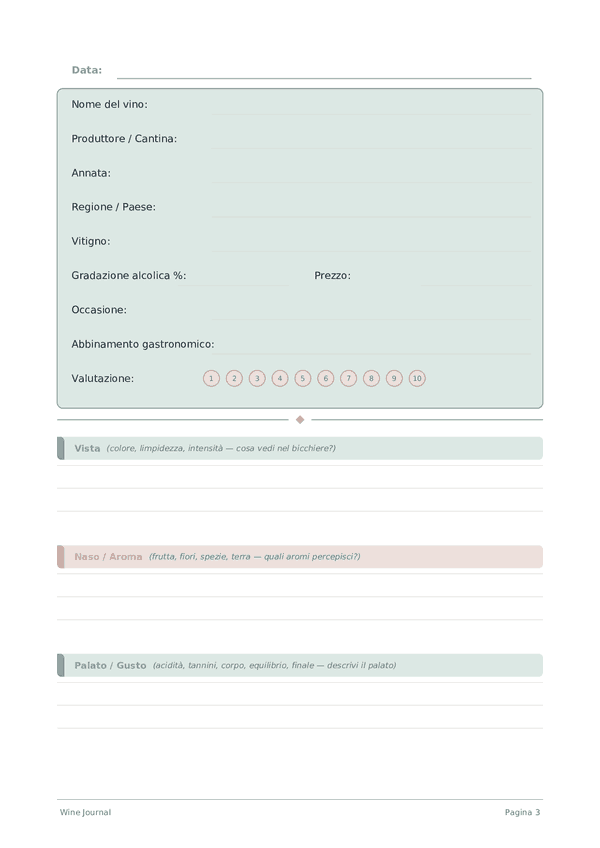
Questo è un diario ibrido — ogni pagina combina una sezione di tracciamento rapido in cima con un'area di scrittura a righe in basso. Ciò ti consente di catturare sia dati misurabili che riflessioni in forma libera in un unico posto.
Come compilare ogni campo
La parte superiore di ogni pagina ha campi a compilazione rapida (valutazioni, caselle di controllo, numeri). Sotto c'è una sezione a righe per scrivere. Ecco cosa significa ogni campo:
Nome del vino
Nome completo del vino come appare sull'etichetta
Produttore / Cantina
Nome della cantina o produttore — chi ha prodotto questo vino?
Annata
Anno in cui sono state raccolte le uve — es. 2019, 2021
Regione / Paese
Da dove proviene? es. Bordeaux, Francia o Napa, USA
Vitigno
Varietà o uvaggio — Cabernet Sauvignon, Merlot, Chardonnay...
Gradazione alcolica %
Percentuale di alcool come indicato sull'etichetta — es. 13,5%
Prezzo
Quanto hai pagato? Prezzo della bottiglia nella tua valuta locale
Occasione
Lavoro, casual, serata romantica, festa, palestra, viaggio, evento speciale...
Abbinamento gastronomico
Cosa hai mangiato insieme, o cosa si abbinerebbe bene? Formaggi, bistecca, pasta...
Valutazione
Il tuo punteggio complessivo per questo vino: 1 = sgradevole, 10 = eccezionale
Vista
Colore, limpidezza, intensità — cosa vedi nel bicchiere?
Naso / Aroma
Frutta, fiori, spezie, terra — quali aromi percepisci?
Palato / Gusto
Acidità, tannini, corpo, equilibrio, finale — descrivi il palato
Impressioni generali
Lo riacquisteresti? Considerazioni generali su questo vino
Consigli per il successo
Quando e con quale frequenza scrivere
Compila una pagina al giorno. La parte del tracker richiede meno di un minuto; cerca di farlo a un orario costante. La sezione di scrittura può essere fatta nello stesso momento o riservata quando hai 5 minuti tranquilli. Entrambe le parti insieme ti danno il quadro più completo della tua giornata.
Domande frequenti
Come si struttura una nota di degustazione usando le sezioni vista, aroma, gusto e note?
Segui il Systematic Approach to Tasting (SAT) del WSET (Level 3, edizione corrente): inizia con la vista — intensità e tonalità del colore; poi l'aroma — note primarie di frutto, secondarie della vinificazione, terziarie dell'invecchiamento; poi il gusto — dolcezza, acidità, tannino, alcol, corpo, intensità aromatica, lunghezza del finale; concludi con le considerazioni generali nelle note. Il Court of Master Sommeliers (Deductive Tasting Method) segue la stessa sequenza. I quattro prompt del diario corrispondono direttamente ai pilastri del SAT.
Cosa scrivere nei campi regione e vitigno al di là dell'ovvio?
Registra la denominazione (ad esempio, Barolo DOCG, Sancerre AOC) invece del solo paese, perché l'OIV (International Organisation of Vine and Wine, 2023, State of the World Vine and Wine Sector) cataloga oltre 1.400 indicazioni geografiche. Per il vitigno, indica se si tratta di una varietà singola o di un uvaggio con le percentuali approssimative. I materiali di studio del WSET Level 2 sottolineano che l'abbinamento regione-vitigno predice lo stile in modo più affidabile del singolo produttore, aiutandoti a orientare le preferenze nelle degustazioni future.
Come si usa in modo coerente la valutazione da 1 a 10 su molte bottiglie?
Wine Spectator e Decanter pubblicano scale a 100 punti, ma per uso personale il Court of Master Sommeliers raccomanda un sistema semplice e ripetibile. Ancóra la tua scala: 6 = corretto ma non memorabile, 7–8 = piacevole, 9 = eccellente nel suo stile, 10 = davvero eccezionale. Valuta il vino secondo il suo stile — un ottimo Beaujolais e un ottimo Barolo possono entrambi meritare 9. Rivaluta occasionalmente per ricalibrarsi man mano che il palato evolve.
Quali note sugli abbinamenti gastronomici vale la pena registrare — e perché?
Registra il piatto, gli ingredienti principali e se l'abbinamento ha esaltato, completato o scontrato i sapori. Il WSET insegna che l'acidità si abbina al grasso, il tannino alle proteine, la dolcezza alla dolcezza; documentare i risultati costruisce una biblioteca personale di abbinamenti più velocemente di quanto non faccia leggere le regole. Le ricerche della UC Davis Viticulture & Enology sui fenolici confermano che l'interazione tannino-proteina è misurabile, non soggettiva. Annota anche il campo occasione — i vini per eventi speciali beneficiano di segnali contestuali nella memoria per riferimenti futuri.
In cosa si differenzia questo diario da app come Vivino o CellarTracker?
Le app si basano su valutazioni del crowdsourcing che possono distorcere la percezione prima ancora di degustare. Scrivere le proprie note per prime — come richiede la metodologia SAT del WSET — sviluppa una calibrazione indipendente del palato. I commentatori di Decanter e Vinous consigliano costantemente di degustare alla cieca o senza essere influenzati dai punteggi. Il formato fisico del diario incoraggia anche un'osservazione più lenta e deliberata. Puoi comunque consultare le app in seguito, ma il registro primario rimane la tua impressione non condizionata.
Dovrei registrare la percentuale di alcol e il prezzo — qual è il valore analitico?
Sì. L'OIV (2023, State of the World Vine and Wine Sector) riporta un aumento medio dell'alcol nelle principali regioni a causa dei cambiamenti climatici, quindi tracciare l'ABV rivela la deriva stilistica attraverso le annate. Il rapporto qualità-prezzo è la tua metrica più praticabile: etichetta i vini in cui la tua valutazione supera le aspettative di prezzo come 'da riacquistare'. Il WSET Level 3 chiede specificamente ai candidati di valutare il rapporto qualità-prezzo, riconoscendolo come un'abilità apprendibile, non un'opinione.
Quanti vini registrare prima che emergano schemi nelle mie preferenze?
La maggior parte degli educatori WSET e del Court of Master Sommeliers suggerisce 50–100 degustazioni deliberate prima che i pattern di preferenza si cristallizzino chiaramente. Classifica le voci per regione, vitigno e valutazione, poi rivedile mensilmente: valuti costantemente il Riesling della Mosella sopra il Sauvignon Blanc neozelandese? La tua tolleranza ai tannini sta crescendo? I campi strutturati del diario rendono possibile questa analisi retrospettiva, mentre la memoria da sola distorce affidabilmente le impressioni passate dopo circa tre mesi.
Errori comuni da evitare quando si scrivono note di degustazione?
Primo, descrittori vaghi — 'buono' o 'morbido' non hanno valore analitico; usa il Lessico delle famiglie aromatiche del WSET (agrumi, frutta a nocciolo, tropicale, ecc.). Secondo, il bias da alone — lasciare che il prezzo o la reputazione del produttore influenzino la valutazione prima di degustare. Terzo, saltare la valutazione visiva, che segnala età e vitigno. Quarto, confrontare stili diversi con un unico punteggio assoluto. Infine, giudicare frettolosamente — i protocolli del Court of Master Sommeliers prevedono almeno tre minuti per vino.
Potrebbe piacerti anche
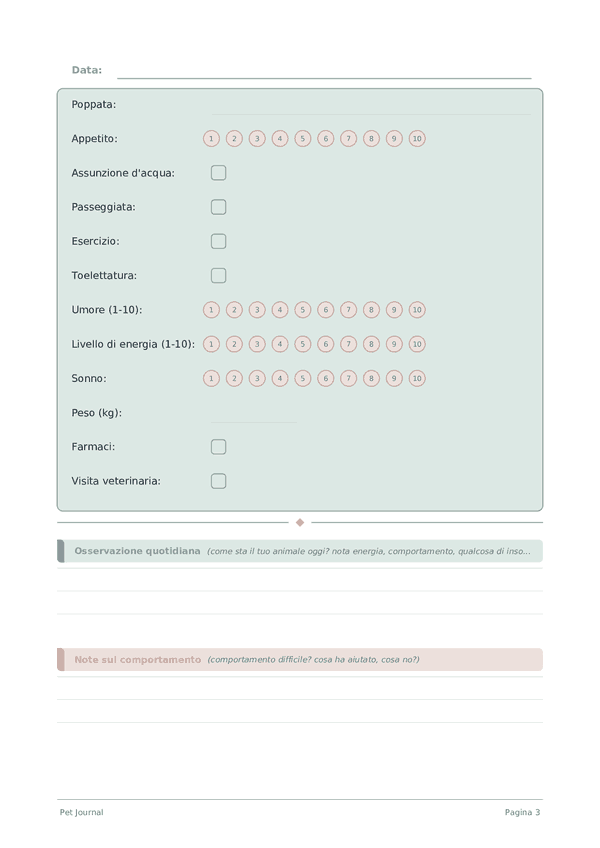
Diario degli Animali Domestici
Registro quotidiano delle cure per il tuo compagno peloso
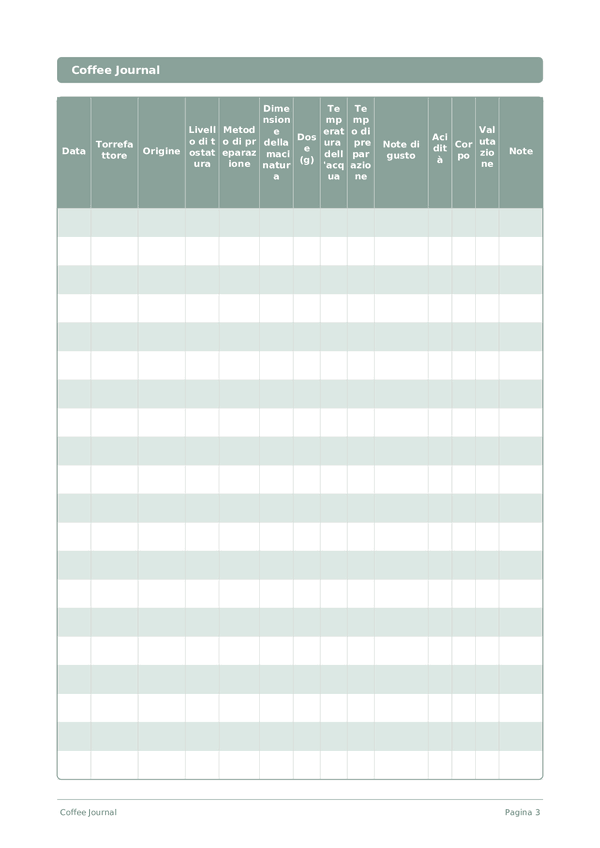
Diario del Caffè
Monitora le preparazioni, affina i parametri e sviluppa il tuo palato
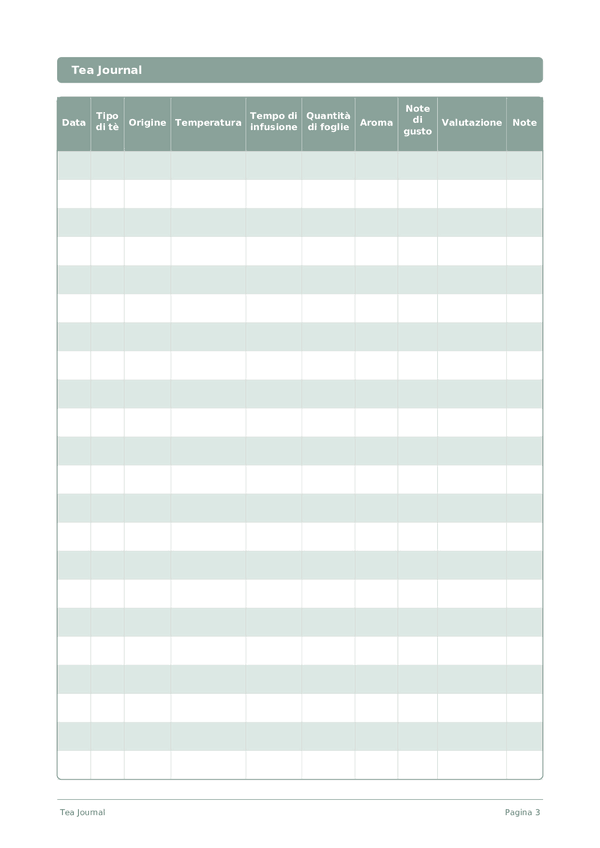
Diario del Tè
Monitora ogni tazza — dalla foglia all'ultimo sorso
Diario della Birra
Monitora e valuta ogni birra artigianale che assaggi
Scorri per ingrandire, trascina per spostare