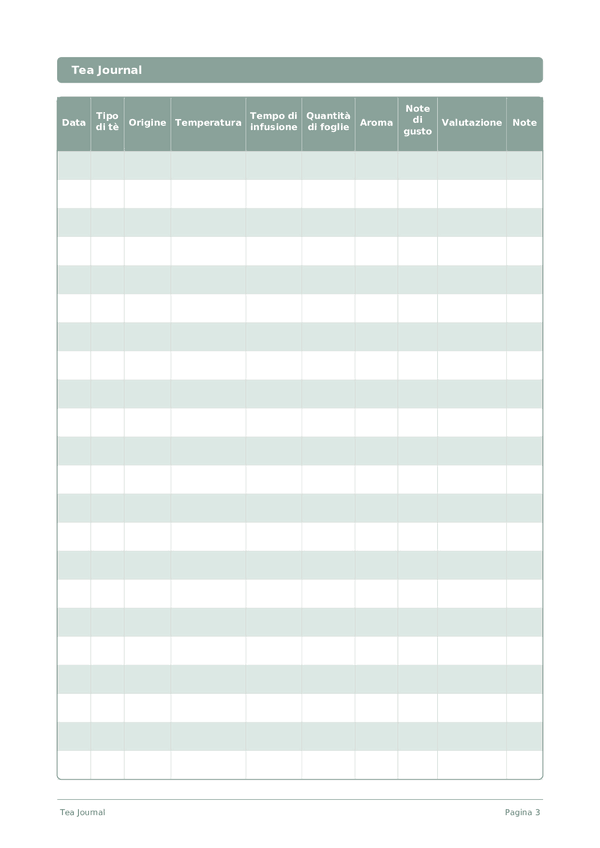
Printable Diario del Tè
Monitora ogni tazza — dalla foglia all'ultimo sorso
Personalizza campi
Attiva o disattiva i campi. Clicca la matita per rinominare, oppure aggiungi i tuoi campi.
Cos'è questo diario?
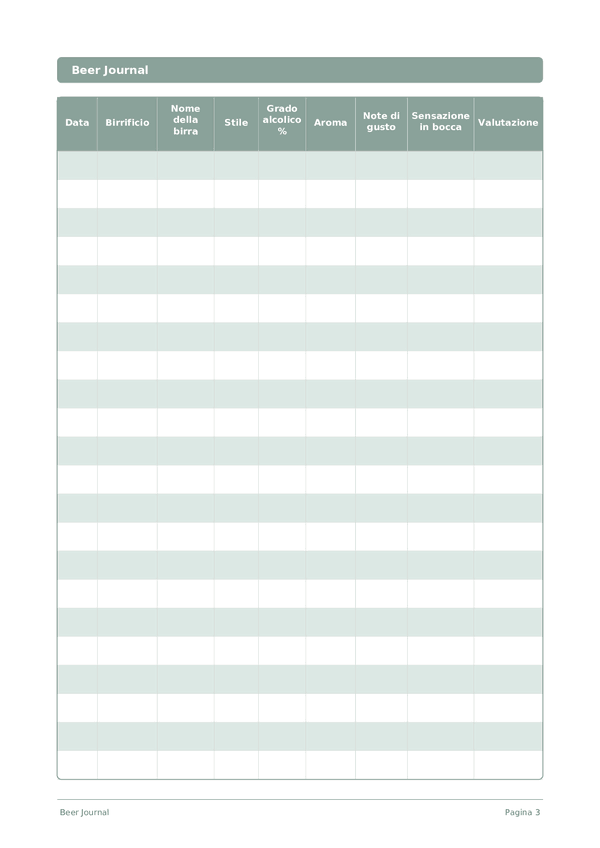
Questo è un diario a registro tabellare — ogni pagina contiene una tabella strutturata con colonne per registrare i dati. Perfetto per tenere traccia di spese, allenamenti, letture o qualsiasi attività che beneficia di voci organizzate e confrontabili.
Come compilare ogni campo
Ogni pagina è una tabella con colonne. Compila una riga per ogni voce. Ecco a cosa serve ogni colonna:
Data
Scrivi la data di oggi. Questo ancora la tua voce nel tempo e aiuta quando si rivedono le voci in seguito.
Tipo di tè
Origine
Temperatura
Registra la tua temperatura corporea basale. I cambiamenti di temperatura aiutano a monitorare l'ovulazione e la salute complessiva del ciclo.
Tempo di infusione
Quantità di foglie
Aroma
Note di gusto
Valutazione
Valutazione complessiva dell'esperienza
Note
Aggiungi qualsiasi contesto o pensiero aggiuntivo. Questa colonna tuttofare è per tutto ciò che non si adatta altrove ma potrebbe essere utile in seguito.
Consigli per il successo
Quando e con quale frequenza scrivere
Aggiungi voci man mano che gli eventi accadono durante il giorno. Per i registri finanziari, annota ogni transazione immediatamente. Per i registri di attività, compila dopo ogni sessione. Fai una revisione settimanale o mensile per analizzare i tuoi dati ed estrarre intuizioni.
Domande frequenti
Quale temperatura dell'acqua dovrei registrare per tè verde, oolong, nero e pu-erh?
La Specialty Tea Institute e i principali riferimenti sulle zone di coltivazione del tè convergono su range generali: verde 70–80 °C, bianco 75–85 °C, oolong 85–95 °C, nero e pu-erh 95–100 °C. Gli studi nel Journal of Agricultural and Food Chemistry sull'estrazione delle catechine confermano che la temperatura guida il rilascio dei polifenoli — troppo alta estrae amarezza, troppo bassa produce un tè sottile. Registra la temperatura effettiva, non solo l'impostazione del bollitore, poiché becchi e gaiwan abbassano la temperatura dell'acqua di 5–10 °C durante il trasferimento.
Quanto tempo di infusione per i diversi tipi di tè, e come registro più infusioni?
Le linee guida della Specialty Tea Institute suggeriscono: verde 1–3 min, nero 3–5 min, oolong 1–5 min (aumentando per ogni infusione), pu-erh 30 s–3 min in stile gongfu. Le foglie sfuse di qualità supportano 3–7 infusioni; registrale come righe separate con tempo infusione '30s, 45s, 1m'. Le ricerche in Food Chemistry sulla cinetica di infusione del tè mostrano che i profili di estrazione dei composti cambiano tra un'infusione e l'altra — le prime rilasciano aminoacidi, le successive tannini. Le righe sequenziali rendono visibile questa evoluzione.
Quale vocabolario aromatico usare nella colonna aroma?
Attingi da lavori sensoriali consolidati: floreale (gelsomino, orchidea), erbaceo (erba appena tagliata, spinaci), nocciolato (castagna, mandorla), terroso (sottobosco, legno umido), affumicato, marino, mielato, minerale. La Specialty Tea Institute insegna tre valutazioni distinte: aroma delle foglie secche, aroma delle foglie umide dopo il risciacquo e aroma dell'infusione. Le ricerche in Food Chemistry sui volatili del tè (linalolo, geraniolo, metil jasmonato) supportano queste categorie su base chimica. Sii specifico — 'floreale' da solo perde valore analitico nel corso di centinaia di voci.
Quanto deve essere precisa la quantità di foglie — e perché è così importante?
Registra grammi per 100 ml d'acqua, non solo cucchiaini, poiché la densità delle foglie varia molto tra le foglie piatte verdi e l'oolong arrotolato. I parametri di preparazione della Specialty Tea Institute si basano tipicamente su 2–3 g per 200 ml in stile occidentale, 5–7 g per 100 ml in stile gongfu. Il rapporto determina la forza dell'estrazione indipendentemente dal tempo di infusione — troppe foglie con infusione breve non produce lo stesso risultato di poche foglie con infusione lunga. Una piccola bilancia da cucina ripaga rapidamente il suo costo in questo contesto.
Questo diario è adatto anche a infusi di erbe, matcha e tè in bustina — non solo foglie sfuse?
Sì. Le colonne funzionano per qualsiasi infusione: tipo tè cattura matcha, erbe, rooibos o camomilla; temperatura, tempo infusione e quantità_foglie si applicano comunque. Le voci per il matcha registrano lo stile di preparazione con il frullino invece del tempo di infusione. Il tè in bustina è perfettamente valido da registrare — l'ITF (International Tea Federation) traccia i volumi dei tè in bustina come maggioranza del consumo globale. Il valore del diario sta nell'osservazione ripetibile, non in questioni di formato.
In cosa si differenzia la registrazione del tè da quella del caffè o del vino?
Il tè è unico nel supportare più infusioni dallo stesso carico di foglie, quindi una singola 'sessione' può riempire più righe. A differenza del vino, i parametri del tè (temperatura, tempo, rapporto) sono attivamente variabili, più simili al caffè. A differenza del caffè, il rapporto tra caffeina e L-teanina modifica l'esperienza cognitivamente — le ricerche in Food Chemistry documentano il profilo calmante dell'aminoacido L-teanina. Riserva la colonna delle note per il contesto non sensoriale: ora del giorno, umore, cibo abbinato.
Quante sessioni prima di trovare le mie origini e tipologie di tè preferite?
Conta su 30–50 sessioni registrate prima che emergano schemi chiari. Filtra le voci per tipo tè e colonna valutazione: i tuoi punteggi superiori all'8 si concentrano su oolong Dan Cong, Darjeeling primo flusso o tè nero dello Yunnan? L'origine conta anche — il percorso formativo della Specialty Tea Institute enfatizza parallelismi con il terroir vinicolo. Dopo 50 sessioni, puoi anche identificare quali parametri di infusione sottoperformano costantemente, così la tua tecnica di preparazione migliora insieme alle tue decisioni d'acquisto.
Errori comuni che rovinano la qualità dei dati del diario del tè?
Primo, calcolare ad occhio la quantità di foglie invece di pesarle — elimina la variabile del rapporto. Secondo, registrare solo la prima infusione quando ne sono state preparate più. Terzo, descrizioni di aroma vaghe come 'odore piacevole' — usa le famiglie di descrittori ITF o della Specialty Tea Institute. Quarto, valutare subito, quando molti tè rivelano complessità nel liquido che si raffredda. Quinto, ignorare la fonte dell'acqua — le ricerche in Food Chemistry mostrano che il contenuto minerale altera significativamente l'estrazione, proprio come con il caffè.
Potrebbe piacerti anche
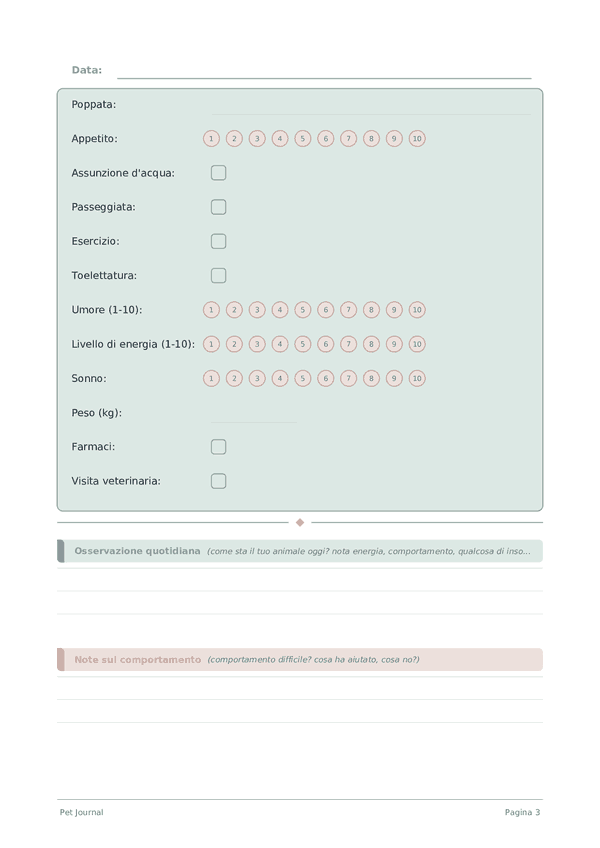
Diario degli Animali Domestici
Registro quotidiano delle cure per il tuo compagno peloso
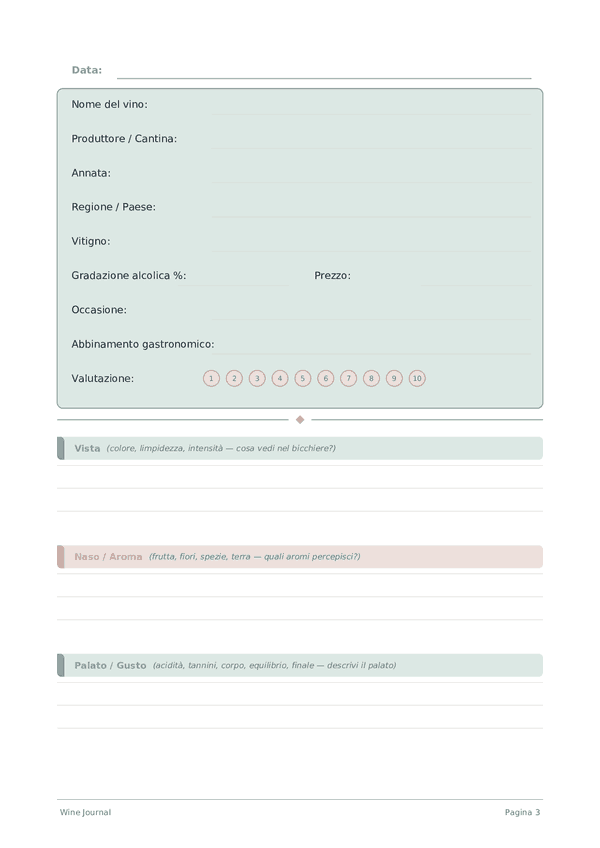
Diario del Vino
Documenta le esperienze di degustazione del vino
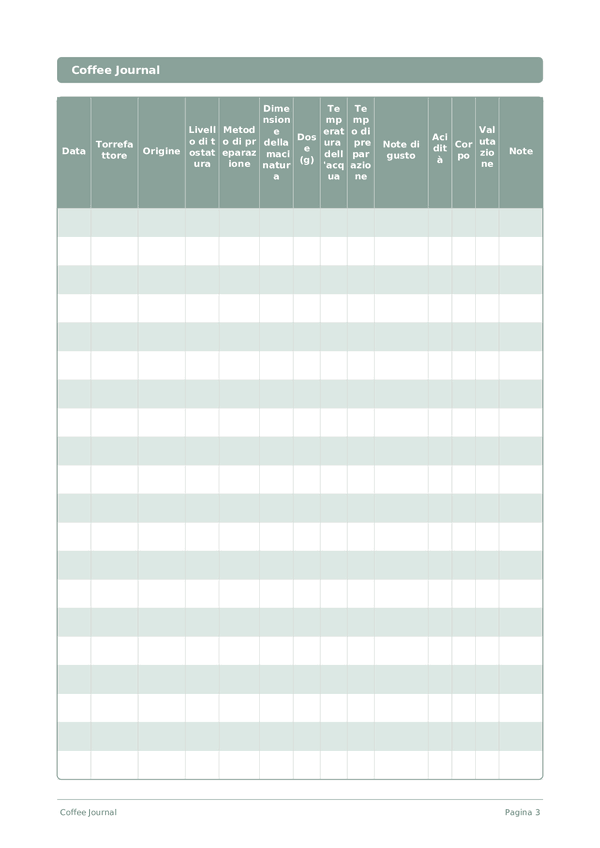
Diario del Caffè
Monitora le preparazioni, affina i parametri e sviluppa il tuo palato
Diario della Birra
Monitora e valuta ogni birra artigianale che assaggi
Scorri per ingrandire, trascina per spostare