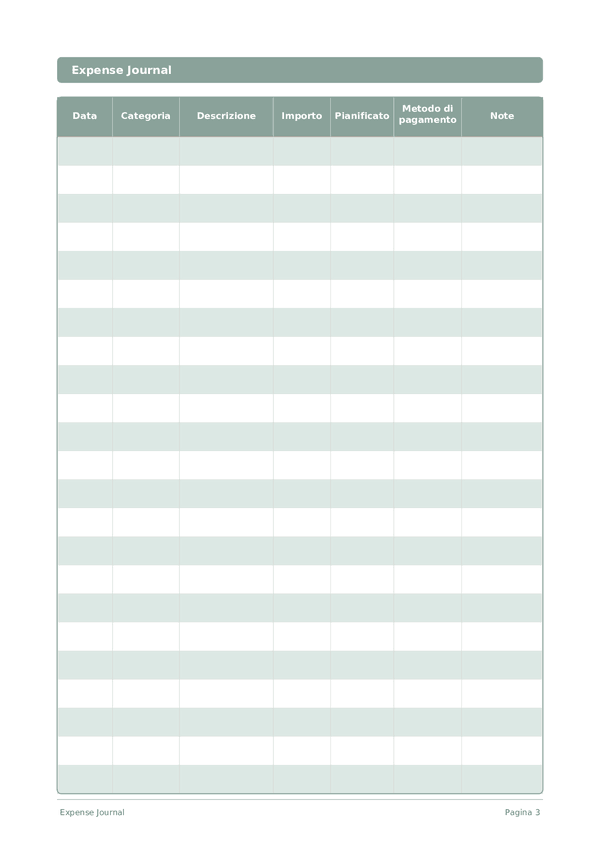
Printable Diario delle Spese
Monitora ogni euro per prendere il controllo delle tue finanze
Personalizza campi
Attiva o disattiva i campi. Clicca la matita per rinominare, oppure aggiungi i tuoi campi.
Cos'è questo diario?
Questo è un diario a registro tabellare — ogni pagina contiene una tabella strutturata con colonne per registrare i dati. Perfetto per tenere traccia di spese, allenamenti, letture o qualsiasi attività che beneficia di voci organizzate e confrontabili.
Come compilare ogni campo
Ogni pagina è una tabella con colonne. Compila una riga per ogni voce. Ecco a cosa serve ogni colonna:
Data
Scrivi la data di oggi. Questo ancora la tua voce nel tempo e aiuta quando si rivedono le voci in seguito.
Categoria
Assegna una categoria a questa voce (es. cibo, trasporti, intrattenimento). Categorie coerenti rendono i tuoi dati facili da analizzare.
Descrizione
Scrivi una breve descrizione di cosa riguarda questa voce. Il te del futuro ringrazierà il te del presente per il contesto.
Importo
Registra l'importo per questa voce. Sii preciso — gli arrotondamenti creano imprecisioni che si accumulano nel tempo.
Pianificato
Metodo di pagamento
Note
Aggiungi qualsiasi contesto o pensiero aggiuntivo. Questa colonna tuttofare è per tutto ciò che non si adatta altrove ma potrebbe essere utile in seguito.
Consigli per il successo
Quando e con quale frequenza scrivere
Aggiungi voci man mano che gli eventi accadono durante il giorno. Per i registri finanziari, annota ogni transazione immediatamente. Per i registri di attività, compila dopo ogni sessione. Fai una revisione settimanale o mensile per analizzare i tuoi dati ed estrarre intuizioni.
Domande frequenti
Perché usare un diario delle spese cartaceo quando esistono app come Mint o YNAB?
Per tre motivi. La registrazione a mano crea un momento di consapevolezza — Soman (2001, Journal of Consumer Research, 27(4), 460–474) ha dimostrato che una registrazione dei pagamenti più 'dolorosa' riduce le spese successive. Privacy dei dati finanziari: gli aggregatori di conti e le app di budget accedono all'intera cronologia delle transazioni. Terzo: le app automatizzano il monitoraggio, ma è la pausa manuale a cambiare il comportamento. Molti utenti usano carta e digitale in parallelo.
Quali categorie di spesa dovrei usare nel mio budget?
Il Consumer Expenditure Survey del Bureau of Labor Statistics degli Stati Uniti (2024) riporta le allocazioni medie delle famiglie: abitazione (~33%), trasporti (~17%), alimentazione (~12%), previdenza personale (~12%), sanità (~8%), intrattenimento (~5%), abbigliamento (~3%). Per i budget personali, 7–10 categorie sono sufficienti: alimentari, ristoranti, trasporti, utenze, comunicazioni, intrattenimento, abbigliamento, salute, regali, altro. Mantieni le categorie fisse — il confronto mese per mese richiede definizioni stabili.
Cos'è il metodo delle buste e funziona con un diario cartaceo?
Il budget con le buste (cash stuffing) è stato reso popolare da Dave Ramsey in 'The Total Money Makeover' (Thomas Nelson, 2003). La sua base accademica è Heath & Soll (1996, Journal of Consumer Research, 23(1), 40–52): la categorizzazione mentale del budget ('mental budgeting') riduce significativamente le spese eccessive. All'inizio del mese, il contante viene distribuito tra le buste di categoria; si spende solo da esse. Diario e buste si rafforzano a vicenda.
Come uso il confronto pianificato-vs-effettivo in questo diario delle spese?
All'inizio del mese, registra l'importo pianificato per categoria nella colonna 'pianificato'. Registra gli effettivi man mano che spendi. Settimanalmente e mensilmente, calcola lo scostamento. Il budget a base zero (Pyhrr, 1970, Harvard Business Review, nov–dic) richiede che ogni unità di budget abbia un'assegnazione. Se gli effettivi superano il piano di oltre il 15% in una categoria, rivedi il piano o le abitudini di spesa.
Quante voci entrano in una pagina del diario delle spese?
18 righe al giorno — sufficienti per la maggior parte delle famiglie. Il Survey of Consumer Payment Choice della Federal Reserve (2022) riporta che i consumatori statunitensi effettuano in media 39 transazioni al mese — circa 1,3 al giorno. Le famiglie con frequenza elevata arrivano a 6–8 al giorno. Il modello fornisce 32 pagine: 30 giorni più copertina e istruzioni. Per molti piccoli acquisti dello stesso tipo, raggruppali in un'unica riga con il totale.
Come analizzo il diario delle spese a fine mese?
Processo in cinque passi: 1) somma i totali per categoria; 2) identifica le 3 categorie principali per quota; 3) segnala gli scostamenti piano-vs-effettivo superiori al 15%; 4) conteggia gli acquisti impulsivi su una riga separata; 5) impegnati in 1–2 aggiustamenti per il mese successivo. La revisione mensile delle spese è una raccomandazione standard del Consumer Financial Protection Bureau (CFPB) degli Stati Uniti e di analoghi programmi di educazione finanziaria delle banche centrali nazionali.
Questo diario delle spese è adatto ai budget familiari o solo a quelli personali?
Entrambi. Per l'uso familiare, aggiungi le iniziali di chi spende nella colonna 'note'. Archuleta et al. (2011, Journal of Family and Economic Issues, 32(4)) hanno rilevato che la pianificazione finanziaria condivisa si correla con una maggiore soddisfazione coniugale e un minor conflitto finanziario. In alternativa: due diari con una riconciliazione settimanale di 30 minuti. In entrambi i casi, la visibilità condivisa delle spese elimina le uscite nascoste.
È vero che la spesa con carta supera quella in contanti?
Sì, confermato in modo consistente. Il primo studio è di Hirschman (1979, Journal of Consumer Research, 6(1), 58–66). Soman (2001, JCR, 27(4)) ha misurato una spesa con carta significativamente più alta nei supermercati. Prelec & Simester (2001, Marketing Letters, 12(1), 5–12) hanno condotto un esperimento d'asta al MIT che mostra una disponibilità a pagare fino al 100% più alta con le carte. La colonna 'metodo pagamento' ti permette di testare questo schema sui tuoi dati nel corso di un mese.
Potrebbe piacerti anche
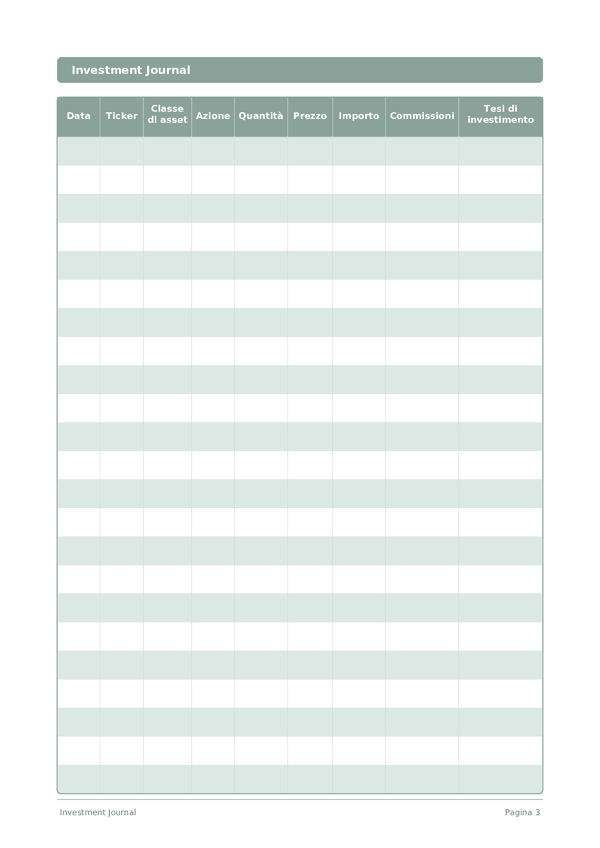
Diario degli Investimenti
Monitora le operazioni, analizza le decisioni e fai crescere il tuo portafoglio
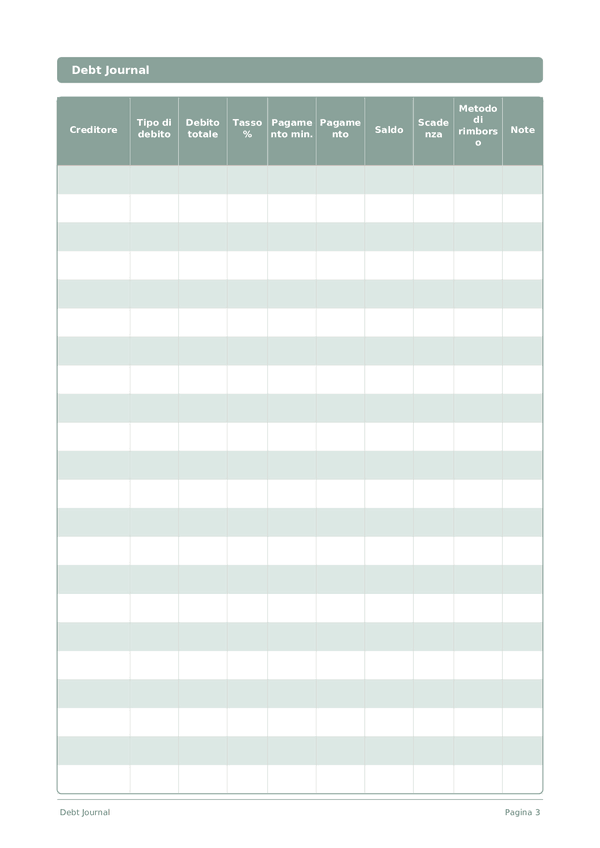
Diario dei Debiti
Monitora ed elimina i debiti con una chiara strategia di rimborso
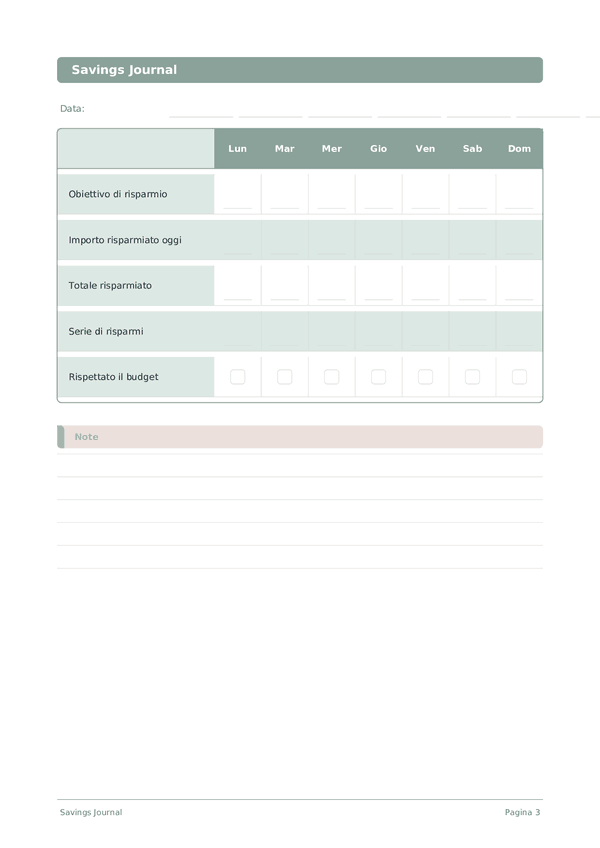
Diario del Risparmio
Monitora le abitudini di risparmio quotidiane e avanzati verso i tuoi obiettivi finanziari
Diario di Carriera
Monitora i risultati e accelera la crescita professionale ogni giorno
Scorri per ingrandire, trascina per spostare