Printable Diario Alimentare
Monitora ogni pasto con consapevolezza e intenzione
Personalizza campi
Attiva o disattiva i campi. Clicca la matita per rinominare, oppure aggiungi i tuoi campi.
Cos'è questo diario?
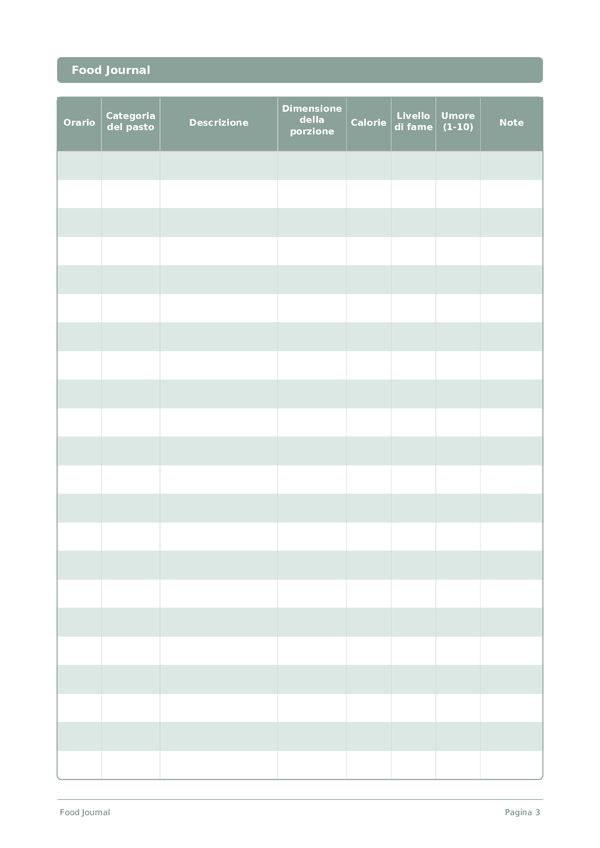
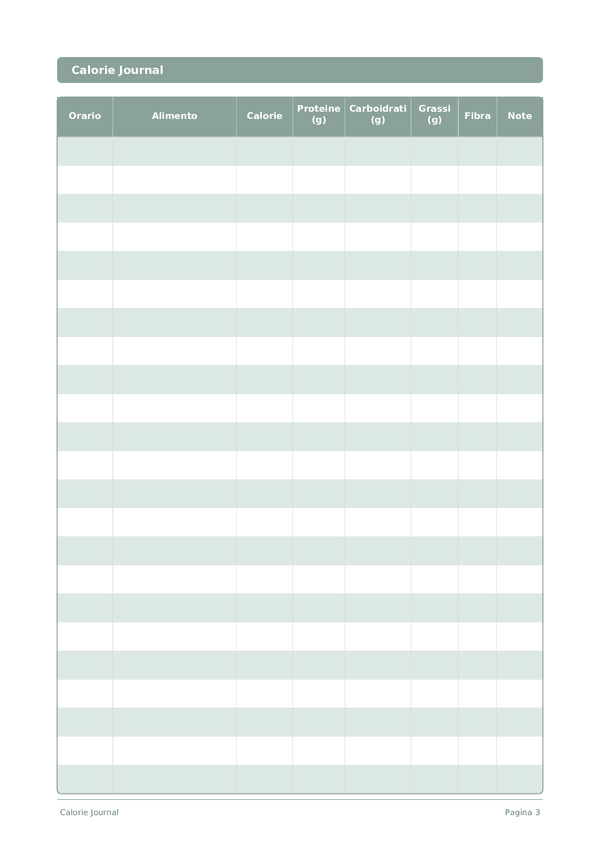
Questo è un diario a registro tabellare — ogni pagina contiene una tabella strutturata con colonne per registrare i dati. Perfetto per tenere traccia di spese, allenamenti, letture o qualsiasi attività che beneficia di voci organizzate e confrontabili.
Come compilare ogni campo
Ogni pagina è una tabella con colonne. Compila una riga per ogni voce. Ecco a cosa serve ogni colonna:
Orario
Registra a che ora hai mangiato. La tempistica dei pasti influenza l'energia, il sonno e la digestione. Gli schemi diventano visibili dopo un paio di settimane.
Categoria del pasto
Descrizione
Scrivi una breve descrizione di cosa riguarda questa voce. Il te del futuro ringrazierà il te del presente per il contesto.
Dimensione della porzione
Calorie
Registra l'apporto calorico approssimativo. Non hai bisogno di numeri perfetti — le stime ti aiutano a rimanere consapevole dei tuoi schemi alimentari.
Livello di fame
Quanto fame hai avuto complessivamente oggi? 1 = per niente affamato, 10 = famelico
Umore (1-10)
Valuta il tuo stato emotivo complessivo della giornata. 1 significa molto basso o depresso, 10 significa eccezionalmente felice e positivo. Non pensarci troppo — vai con la tua sensazione istintiva.
Note
Aggiungi qualsiasi contesto o pensiero aggiuntivo. Questa colonna tuttofare è per tutto ciò che non si adatta altrove ma potrebbe essere utile in seguito.
Consigli per il successo
Quando e con quale frequenza scrivere
Aggiungi voci man mano che gli eventi accadono durante il giorno. Per i registri finanziari, annota ogni transazione immediatamente. Per i registri di attività, compila dopo ogni sessione. Fai una revisione settimanale o mensile per analizzare i tuoi dati ed estrarre intuizioni.
Domande frequenti
Come supporta la scala della fame 1–10 il mangiare consapevole?
L'Academy of Nutrition and Dietetics raccomanda la scala fame-sazietà (1=affamato, 5=neutro, 10=pieno) per distinguere la fame fisica dal mangiare emotivo. Valutare prima di ogni pasto interrompe il comportamento alimentare automatico. L'American Journal of Clinical Nutrition (2014, 100(2)) mostra che chi mangia in modo consapevole consuma meno calorie con maggiore soddisfazione. La colonna del livello di fame pre-pasto del modello converte un segnale interno in un'abitudine registrabile, supportando gli obiettivi di peso senza restrizioni.
Perché registrare l'umore insieme ai pasti?
Secondo l'APA (2021) e la ricerca sull'obesità in JAMA (2018, 319(7)), il 30–60% degli episodi di iperfagia è guidato dalle emozioni (stress, noia, tristezza, festeggiamenti). Registrare l'umore accanto al cibo rivela pattern invisibili al solo conteggio calorico. Dopo 2–3 settimane, la maggior parte degli utenti identifica 1–3 trigger emotivi — una conoscenza che consente interventi mirati come il controllo HALT (Hungry, Angry, Lonely, Tired — Affamato, Arrabbiato, Solo, Stanco) prima di mangiare.
In cosa differisce un diario alimentare da un contacalorie?
Un diario alimentare enfatizza il contesto — orario dei pasti, fame, umore, porzione — piuttosto che i numeri precisi. Le Linee Guida Dietetiche USDA (2020–2025) e le revisioni Cochrane supportano entrambi gli approcci. Il modello del diario alimentare include la stima calorica come una singola colonna tra otto, de-enfatizzando intenzionalmente la precisione numerica. Funziona meglio per gli utenti inclini a disturbi alimentari o che trovano il conteggio rigoroso delle calorie insostenibile, secondo le linee guida APA.
Devo pesare le porzioni o farlo a occhio?
Per la precisione, pesare su una bilancia da cucina durante le prime 1–2 settimane calibra le tue stime visive — i valori a occhio sono tipicamente sbagliati del 20–40% secondo l'American Journal of Clinical Nutrition (2018, 107(6)). Dopo la calibrazione, le misure basate sulla mano (palmo=proteine, pugno=carboidrati, pollice=grassi) funzionano per la maggior parte dei pasti. La colonna della porzione accetta qualsiasi unità coerente — grammi, tazze, manciate — purché tu la mantenga nel tempo.
Può questo diario aiutare a identificare le sensibilità alimentari?
Sì, se usato in modo sistematico. L'AAAAI (American Academy of Allergy, Asthma & Immunology) e l'AAP raccomandano una dieta di eliminazione di 2–4 settimane con registrazione alimentare dettagliata per identificare le sensibilità. Usa la colonna delle note per tracciare i sintomi (gonfiore, mal di testa, stanchezza, reazioni cutanee) entro 24–48 ore dai pasti. Per allergie sospette (anafilassi, orticaria), consulta un allergologo; questo è uno screening, non una diagnosi.
Quali categorie di pasto dovrei usare?
Categorie standard secondo le Linee Guida Dietetiche USDA: Colazione, Pranzo, Cena, Spuntino. Alcuni utenti aggiungono 'Bevanda' per bevande contenenti caffeina o alcoliche. La colonna categoria del pasto accetta testo libero — la coerenza conta più dell'etichetta esatta. Monitorare 3 pasti + 2 spuntini al giorno rivela i pattern di frequenza alimentare; gli Standard di Cura ADA (2024, Diabetes Care, 47 Suppl 1) collegano l'irregolarità degli orari dei pasti a una maggiore variabilità glicemica.
Quanto tempo ci vuole prima di vedere i pattern nel mio diario alimentare?
La maggior parte degli utenti identifica pattern chiari in 2–3 settimane. La ricerca comportamentale del NIH NCCIH (2022) mostra che 21 giorni di registrazione costante è la soglia tipica per l'auto-consapevolezza. Fai una revisione settimanale: raggruppa i pasti per categoria, cerca i pasti notturni, identifica i momenti di maggiore fame e collega l'umore a specifici alimenti. Porta 4 o più settimane a un dietista registrato per un'analisi personalizzata.
Il diario alimentare è sicuro per chi ha una storia di disturbi alimentari?
Usalo con la guida di un clinico. L'APA e l'Academy for Eating Disorders sottolineano che il monitoraggio dettagliato del cibo può peggiorare anoressia, bulimia, disturbo da alimentazione incontrollata o ortoressia, rafforzando la preoccupazione per il cibo. Se hai tale storia, considera di concentrarti solo sui punteggi di fame e umore senza conteggio calorico, o usa solo la colonna delle note. Un dietista registrato o uno specialista in disturbi alimentari può adattare il diario in modo sicuro.
Potrebbe piacerti anche
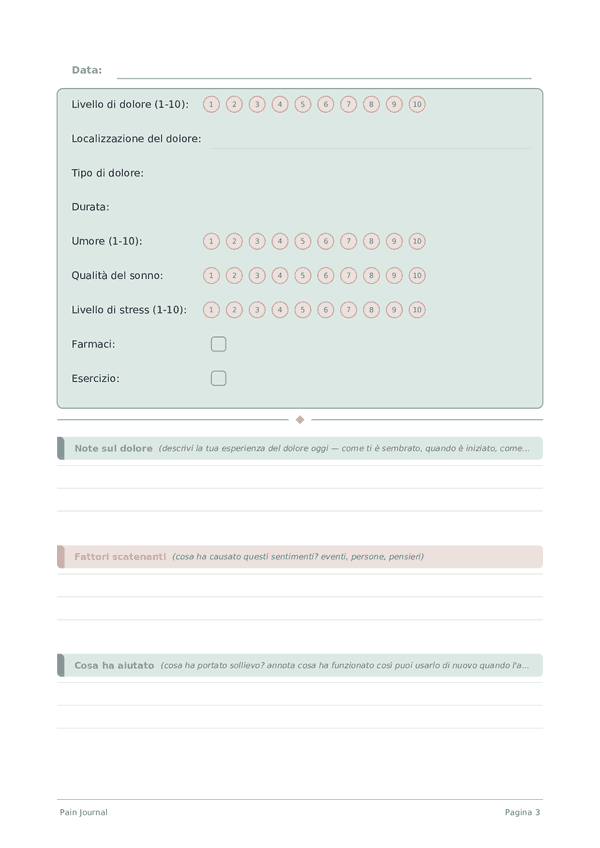
Diario del Dolore
Monitora i pattern del dolore, i trigger e le strategie di sollievo
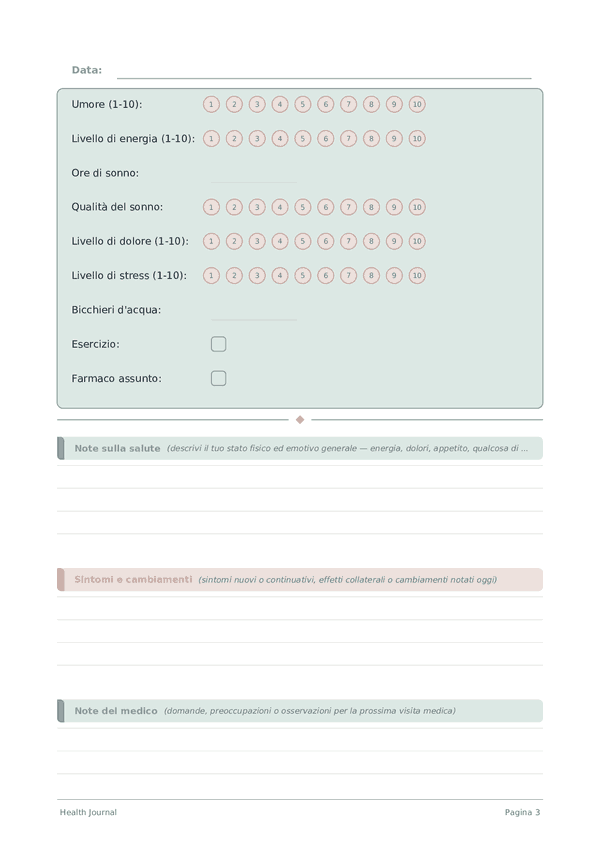
Diario della Salute
Monitora il tuo corpo, la mente e il benessere ogni giorno
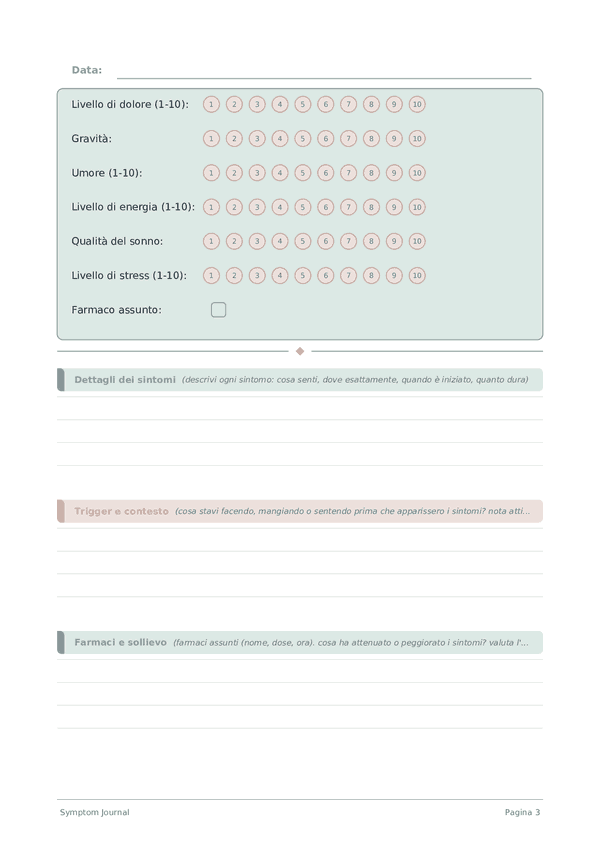
Diario dei Sintomi
Monitora sintomi, trigger e trattamenti ogni giorno
Diario delle Calorie
Monitora calorie e macronutrienti ad ogni pasto
Scorri per ingrandire, trascina per spostare