Printable Diario dell'Emicrania
Tracker degli attacchi di emicrania e diario del mal di testa
Personalizza campi
Attiva o disattiva i campi. Clicca la matita per rinominare, oppure aggiungi i tuoi campi.
Cos'è questo diario?
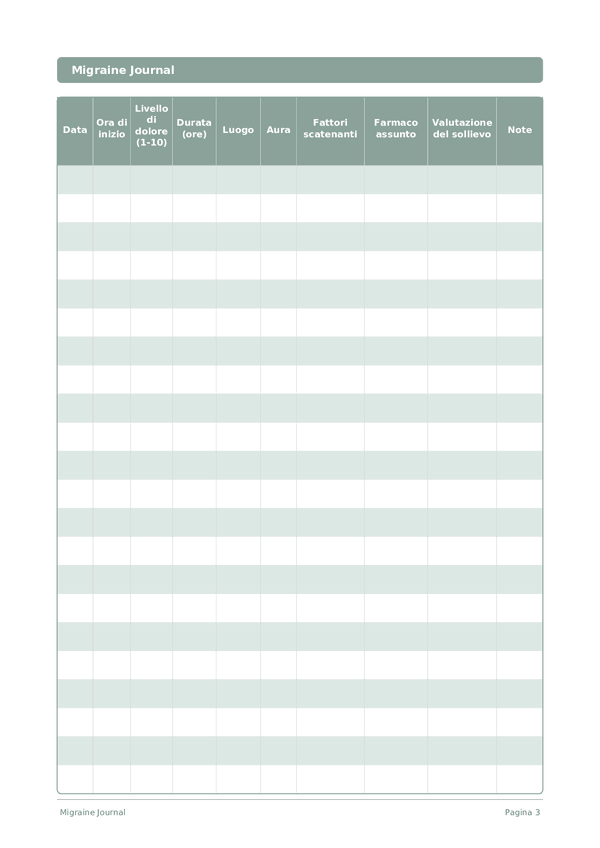
Questo è un diario a registro tabellare — ogni pagina contiene una tabella strutturata con colonne per registrare i dati. Perfetto per tenere traccia di spese, allenamenti, letture o qualsiasi attività che beneficia di voci organizzate e confrontabili.
Come compilare ogni campo
Ogni pagina è una tabella con colonne. Compila una riga per ogni voce. Ecco a cosa serve ogni colonna:
Data
Scrivi la data di oggi. Questo ancora la tua voce nel tempo e aiuta quando si rivedono le voci in seguito.
Ora di inizio
Livello di dolore (1-10)
Valuta l'intensità del dolore su una scala. Monitorare i livelli di dolore aiuta a identificare i trigger, valutare i trattamenti e comunicare con i professionisti sanitari.
Durata (ore)
Luogo
Dove è stata scattata la foto?
Aura
Fattori scatenanti
Identifica cosa ha causato le tue reazioni emotive — eventi, persone, pensieri, ambienti. Riconoscere i trigger ti dà il potere di prepararti o evitarli.
Farmaco assunto
Hai preso i tuoi farmaci oggi? Annota cosa, quando e se hai saltato delle dosi
Valutazione del sollievo
Note
Aggiungi qualsiasi contesto o pensiero aggiuntivo. Questa colonna tuttofare è per tutto ciò che non si adatta altrove ma potrebbe essere utile in seguito.
Consigli per il successo
Quando e con quale frequenza scrivere
Aggiungi voci man mano che gli eventi accadono durante il giorno. Per i registri finanziari, annota ogni transazione immediatamente. Per i registri di attività, compila dopo ogni sessione. Fai una revisione settimanale o mensile per analizzare i tuoi dati ed estrarre intuizioni.
Domande frequenti
Quali informazioni hanno bisogno i neurologi da un diario dell'emicrania?
Secondo la American Migraine Foundation e l'International Headache Society (ICHD-3, 2018), i neurologi hanno bisogno di frequenza degli attacchi, durata, intensità del dolore (0–10), sede, presenza di aura, fattori scatenanti, farmaci e risultati dell'alleviamento — tutte le otto colonne di questo diario. Cephalalgia (2019, 39(3)) mostra che 8–12 settimane di monitoraggio dettagliato consentono la diagnosi differenziale tra sottotipi di emicrania, cefalea tensiva e cefalea a grappolo.
Come aiuta la colonna dell'aura nella diagnosi?
L'ICHD-3 (2018) distingue l'emicrania con aura (sintomi visivi, sensitivi, del linguaggio o motori che precedono il dolore) dall'emicrania senza aura — implicazioni gestionali diverse. La colonna dell'aura cattura la presenza e il tipo. Aure visive comuni: linee a zigzag, punti ciechi, luci lampeggianti. Si verifica anche un'aura senza successiva cefalea. La American Migraine Foundation segnala che circa il 25–30% dei pazienti con emicrania presenta aura. Documenta la tempistica di insorgenza rispetto alla cefalea.
Quali fattori scatenanti devo monitorare con maggiore attenzione?
Secondo Headache (2019, 59(9)) e la American Migraine Foundation: i fattori scatenanti comuni sono stress, variazioni del sonno, ciclo mestruale, alimenti specifici (formaggi stagionati, carni lavorate, alcol, MSG), cambiamenti climatici, disidratazione, pasti saltati e stimoli sensoriali intensi. La colonna dei fattori scatenanti dovrebbe rilevare tutti i possibili fattori nelle 24 ore precedenti l'inizio dell'attacco. I pattern richiedono 3–6 mesi di registrazione — i singoli attacchi raramente identificano i veri fattori scatenanti.
Come faccio a sapere se un farmaco sta davvero funzionando?
Criteri di efficacia dell'International Headache Society: riduzione del dolore da grave (7+) a lieve (≤3) entro 2 ore, sostenuta per 24 ore, senza recidiva. Registra nome del farmaco, dose, tempistica e valutazione del sollievo (0–10). Confronta su 10+ attacchi — la risposta a un singolo attacco non è affidabile. La American Headache Society (2021) raccomanda di considerare la terapia preventiva quando gli attacchi superano i 4 giorni al mese o compromettono significativamente la funzione.
Quali livelli di dolore e durate sono clinicamente significativi?
I criteri diagnostici ICHD-3 per l'emicrania richiedono attacchi della durata di 4–72 ore (non trattati), con dolore da moderato a grave (5+ su scala a 10 punti), spesso unilaterale e pulsante. Lo stato emicranico (attacco continuo >72 ore) richiede valutazione medica. Le colonne della durata in ore e del livello di dolore catturano questi dati. I dati di Headache (2020, 60(3)) mostrano che i pazienti sottostimano la frequenza del 30–50% senza registrazione giornaliera.
Qual è la differenza rispetto alle app per l'emicrania come Migraine Buddy?
Le app automatizzano i prompt ma si affidano alla memoria per le voci retrospettive; i diari cartacei favoriscono la documentazione immediata dopo l'attacco. Il formato strutturato a 10 colonne di questo diario corrisponde ai criteri diagnostici ICHD-3 in modo più completo rispetto alla maggior parte delle app. Gli studi di Cephalalgia (2020) mostrano che i diari cartacei standardizzati rimangono il gold standard per gli studi clinici e le consulenze neurologiche. Usa entrambi se utile — app per i promemoria, diario per il registro medico.
Quando le cefalee devono portare ad attenzione medica urgente?
Segnali d'allarme della American Migraine Foundation e della Mayo Clinic: cefalea 'a colpo di tuono' che raggiunge la massima intensità in pochi secondi, la peggiore cefalea della vita, cefalea con febbre e rigidità del collo, sintomi neurologici (debolezza, perdita della vista, confusione, difficoltà nel parlare), cefalea dopo un trauma cranico, nuovo pattern di cefalea dopo i 50 anni. Questi suggeriscono condizioni gravi (ictus, emorragia, meningite) che richiedono valutazione immediata al pronto soccorso.
Quanto tempo ci vuole perché i pattern diventino utili per il trattamento?
Secondo la American Headache Society, 8–12 settimane di registrazione giornaliera dettagliata rivelano tipicamente i pattern dei fattori scatenanti, la risposta ottimale ai farmaci e la frequenza di base degli attacchi. Tre mesi di dati è lo standard per la valutazione dei farmaci preventivi — valuta se gli attacchi sono diminuiti di almeno il 50% in frequenza o gravità. Porta tutte le pagine al tuo neurologo; le tendenze contano più dei singoli attacchi per le decisioni terapeutiche.
Potrebbe piacerti anche
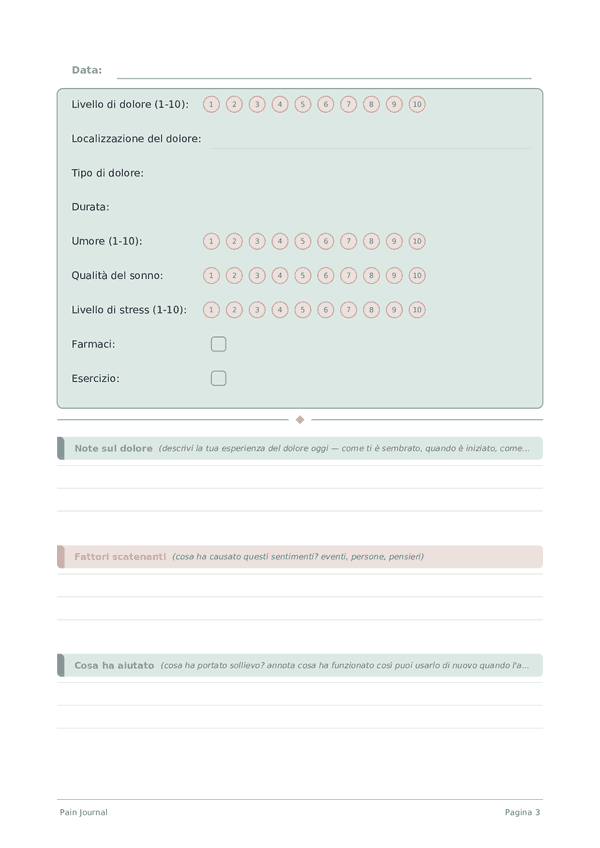
Diario del Dolore
Monitora i pattern del dolore, i trigger e le strategie di sollievo
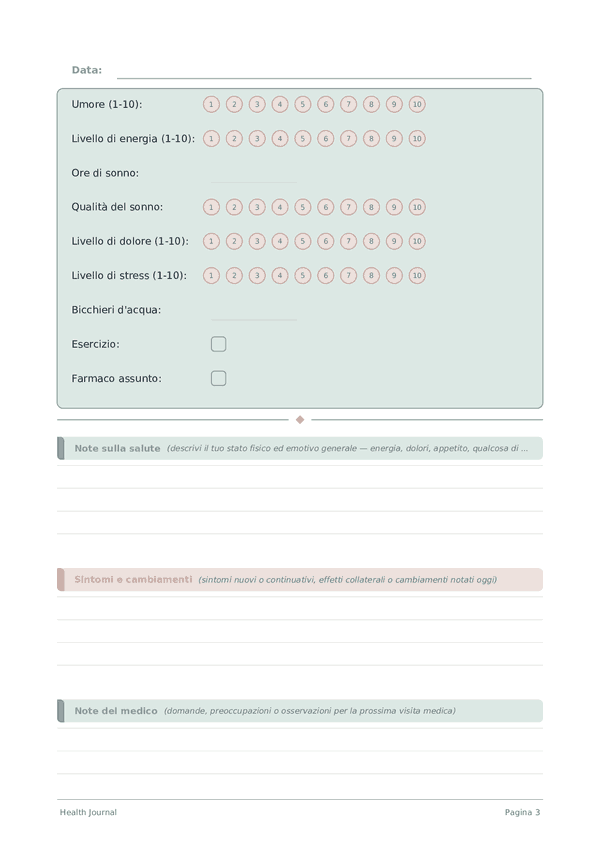
Diario della Salute
Monitora il tuo corpo, la mente e il benessere ogni giorno
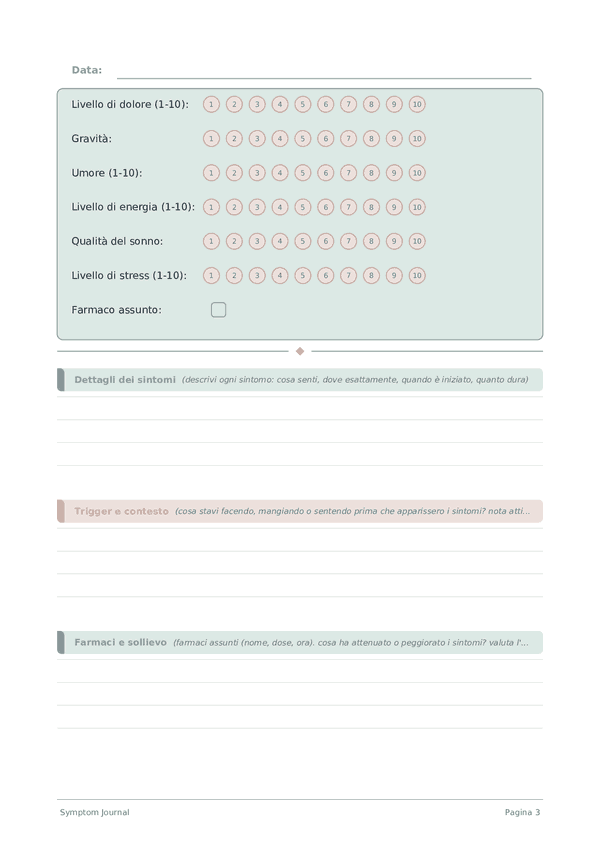
Diario dei Sintomi
Monitora sintomi, trigger e trattamenti ogni giorno
Diario delle Calorie
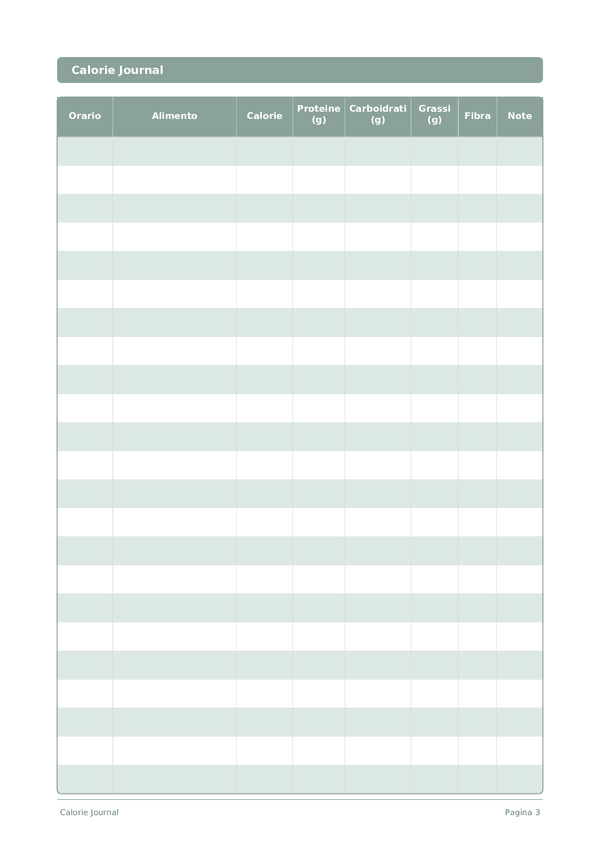
Monitora calorie e macronutrienti ad ogni pasto
Scorri per ingrandire, trascina per spostare