Printable Diario del Recupero
Diario quotidiano di supporto al recupero e responsabilità della sobrietà
Personalizza campi
Attiva o disattiva i campi. Clicca la matita per rinominare, oppure aggiungi i tuoi campi.
Cos'è questo diario?
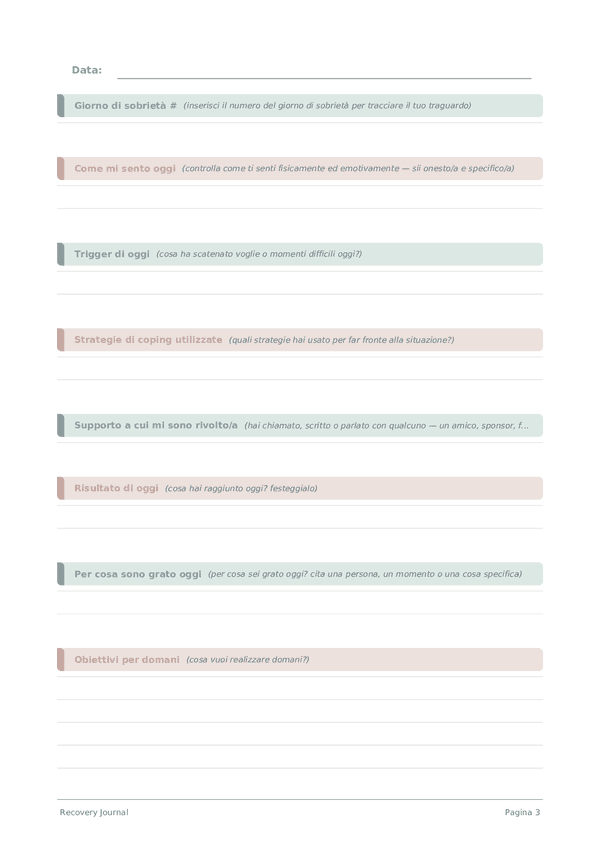
Questo è un diario con inserimenti giornalieri — ogni pagina rappresenta un giorno con domande strutturate che guidano la tua riflessione. Le sezioni sono progettate in modo che compilarle richieda solo 5–10 minuti, rendendo facile mantenere un'abitudine quotidiana.
Come compilare ogni campo
Ogni giorno troverai diverse sezioni etichettate con righe per scrivere. Ecco a cosa serve ogni sezione:
Giorno di sobrietà #
Inserisci il numero del giorno di sobrietà per tracciare il tuo traguardo
Come mi sento oggi
Fai il punto su te stesso: come ti senti fisicamente ed emotivamente adesso? Sii specifico — 'stanco ma speranzoso' è più utile di 'bene'.
Trigger di oggi
Cosa ha scatenato voglie o momenti difficili oggi?
Strategie di coping utilizzate
Quali strategie hai usato per far fronte alla situazione?
Supporto a cui mi sono rivolto/a
Hai chiamato, scritto o parlato con qualcuno — un amico, sponsor, familiare o consulente?
Risultato di oggi
Scrivi qualcosa che hai realizzato oggi, per quanto piccolo. Riconoscere le vittorie quotidiane costruisce fiducia e slancio.
Per cosa sono grato oggi
Elenca 1–3 cose per cui sei grato oggi. Possono essere grandi o piccole — un buon pasto, una parola gentile, il sole. Scrivere di gratitudine è una delle pratiche di benessere più supportate scientificamente.
Obiettivi per domani
Cosa vuoi realizzare domani?
Consigli per il successo
Quando e con quale frequenza scrivere
Compila una pagina al giorno. La maggior parte delle persone trova che la mattina (10 minuti dopo il risveglio) o la sera (prima di dormire) funzionino meglio. Scegli un orario e mantienilo per almeno due settimane prima di cambiare. La chiave è la regolarità, non la perfezione.
Domande frequenti
Come supporta la scrittura quotidiana nel diario il recupero dalla dipendenza?
NIH NIAAA (2021, Treating Alcohol Use Disorder) e i principi basati sull'evidenza del NIDA identificano l'automonitoraggio come una competenza fondamentale per la prevenzione delle ricadute. APA e SAMHSA riportano che la riflessione quotidiana — in particolare la consapevolezza dei fattori scatenanti e la pratica della gratitudine — riduce il rischio di ricaduta rafforzando l'identità del recupero e il richiamo delle strategie di coping. I prompt strutturati di questo diario (giorni di sobrietà, fattori scatenanti, strategie di coping, contatti di supporto) sono allineati con i modelli cognitivo-comportamentali di prevenzione delle ricadute. Usalo in aggiunta al trattamento professionale, non come sostituto.
Qual è il valore del monitoraggio dei giorni di sobrietà?
Secondo NIAAA e le tradizioni dei gruppi di supporto tra pari come AA/NA, i traguardi di sobrietà rafforzano il cambiamento identitario. La ricerca comportamentale nel Journal of Substance Abuse Treatment mostra che i contatori di giorni visibili correlano con astinenze più lunghe. Il campo dei giorni di sobrietà fornisce un'affermazione quotidiana — la ricerca APA (2021) nota che il piccolo rinforzo costante supera i riconoscimenti intensivi ma infrequenti. Festeggia i traguardi (30, 60, 90 giorni; 1 anno) con il tuo sponsor o la tua rete di supporto.
Come devo identificare e documentare i fattori scatenanti?
Secondo NIDA (2020, Principles of Drug Addiction Treatment) e il modello di prevenzione delle ricadute di Marlatt: i fattori scatenanti rientrano nelle categorie emotivi (HALT: fame/rabbia/solitudine/stanchezza), sociali (persone/luoghi), ambientali (stimoli visivi) e interni (pensieri/voglie). Usa la sezione dei fattori scatenanti odierni per registrare eventi specifici, intensità (lieve/moderata/grave) e come hai risposto. I pattern nell'arco di 4–8 settimane rivelano situazioni ad alto rischio da pianificare in anticipo.
Cosa conta come 'strategia di coping' degna di monitoraggio?
Le strategie di coping basate sull'evidenza di SAMHSA e APA includono: urge surfing, chiamare lo sponsor, partecipare a una riunione, esercizio fisico, pratica della mindfulness, allontanarsi dal luogo scatenante, chiamare una linea di crisi. Documenta ciò che hai usato nella sezione delle strategie di coping utilizzate e se ha funzionato. La ricerca NIH NIDA mostra che ricordare per iscritto le strategie di coping efficaci del passato costruisce l'«autoefficacia» — la fiducia nella capacità futura di affrontare le difficoltà, il più forte predittore singolo di recupero sostenuto.
Perché è importante il prompt 'hai contattato il tuo supporto'?
Secondo la ricerca NIDA e i gruppi di supporto AA/NA, l'isolamento sociale è il più forte predittore acuto di ricaduta; il contatto quotidiano — anche breve — protegge significativamente dalle ricadute. Il campo dedicato al supporto registra le chiamate allo sponsor, la partecipazione alle riunioni, i messaggi agli amici o le sessioni con il terapeuta. I dati APA (2021) mostrano che qualsiasi forma di coinvolgimento nella comunità del recupero correla con astinenze più lunghe. L'assenza di contatti per 3 o più giorni è un segnale clinico d'allarme da sollevare con il tuo professionista del trattamento.
Come si inserisce la pratica della gratitudine nel recupero?
Secondo il Journal of Substance Abuse Treatment e la ricerca di psicologia positiva dell'APA, la pratica della gratitudine attiva i circuiti della ricompensa in modo diverso dall'uso di sostanze e riduce la disforia — un importante fattore di rischio per la ricaduta. Il prompt della gratitudine richiede specificità (secondo Emmons, 2003, Journal of Personality and Social Psychology, 84(2)): elenca tre cose specifiche, non generiche. Tre settimane di pratica costante mostrano un miglioramento misurabile dell'umore negli studi clinici.
Questo diario è appropriato senza un trattamento professionale?
Supporta ma non sostituisce le cure cliniche. SAMHSA e NIDA sottolineano che i disturbi da uso di sostanze gravi richiedono tipicamente una disintossicazione medica, un trattamento farmacologico assistito (ad esempio, buprenorfina, naltrexone) e una terapia comportamentale. Il diario integra il trattamento fornendo dati che il tuo consulente o medico può esaminare. La sospensione da alcol, benzodiazepine o oppioidi senza supervisione medica può essere pericolosa per la vita — consulta uno specialista in medicina delle dipendenze o rivolgiti a un servizio di assistenza per le dipendenze nella tua area.
Quando i pattern nel diario devono portare a chiedere aiuto urgente?
Criteri di crisi SAMHSA: pensieri di autolesionismo o suicidio (chiama il Telefono Amico al 02 2327 2327 o il servizio di emergenza 118), ricaduta attiva, sintomi gravi di astinenza, o persistente incapacità di usare strategie di coping. I pattern nel diario — fattori scatenanti crescenti, contatti di supporto in calo, voci ripetute di voglie — richiedono un contatto immediato con il tuo sponsor, terapeuta o centro di trattamento. NIDA sottolinea che l'intervento precoce durante i momenti di 'scivolone' previene la progressione verso una ricaduta completa — il tuo diario può rilevare questa traiettoria con giorni di anticipo.
Potrebbe piacerti anche
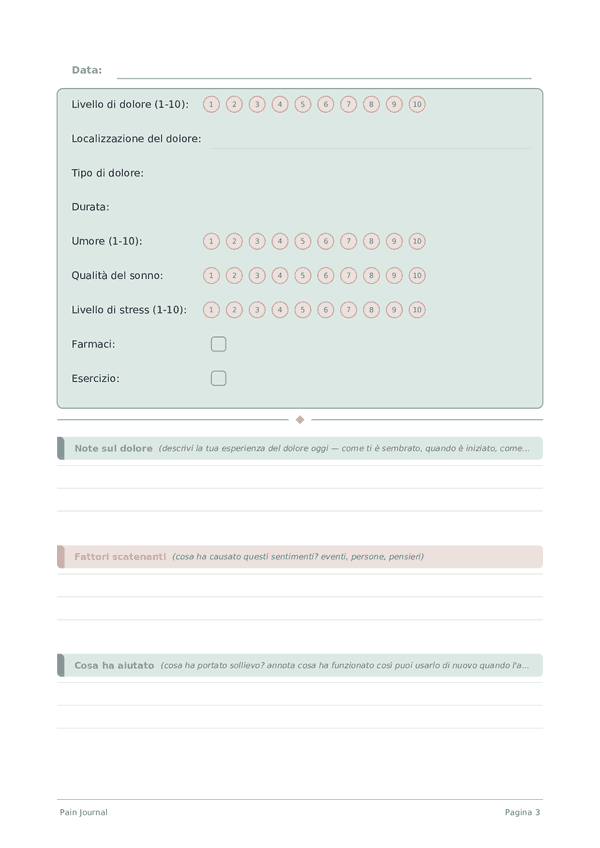
Diario del Dolore
Monitora i pattern del dolore, i trigger e le strategie di sollievo
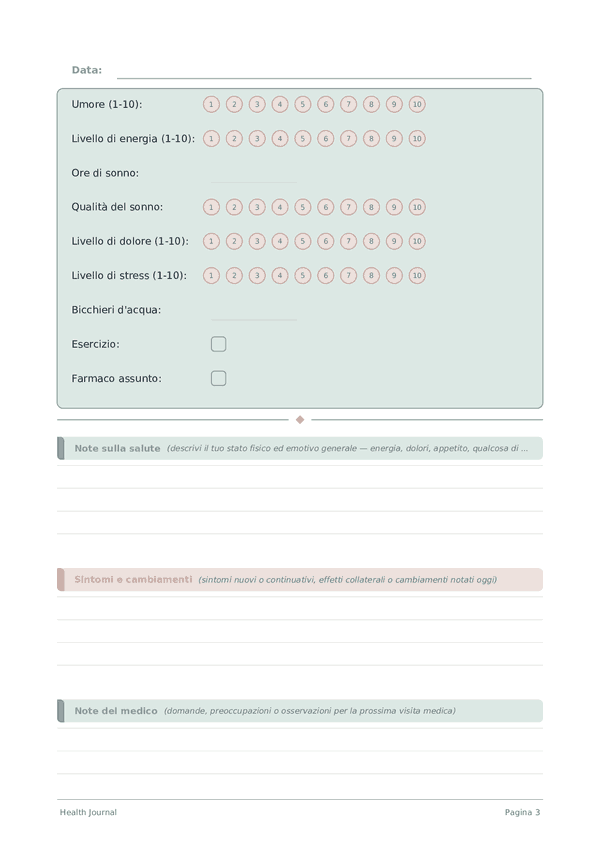
Diario della Salute
Monitora il tuo corpo, la mente e il benessere ogni giorno
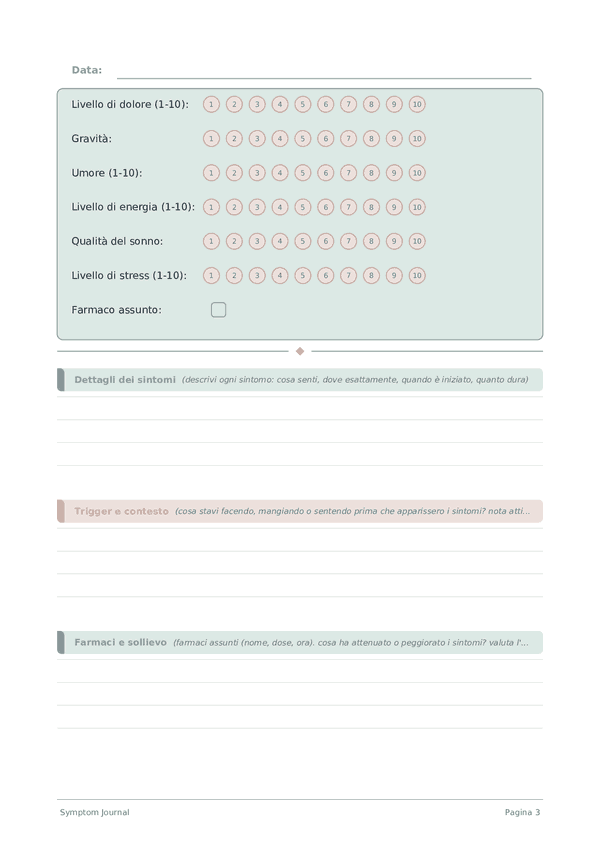
Diario dei Sintomi
Monitora sintomi, trigger e trattamenti ogni giorno
Diario delle Calorie
Monitora calorie e macronutrienti ad ogni pasto
Scorri per ingrandire, trascina per spostare