Printable Diario del Sonno
Tracker del sonno e diario della qualità del riposo
Personalizza campi
Attiva o disattiva i campi. Clicca la matita per rinominare, oppure aggiungi i tuoi campi.
Cos'è questo diario?
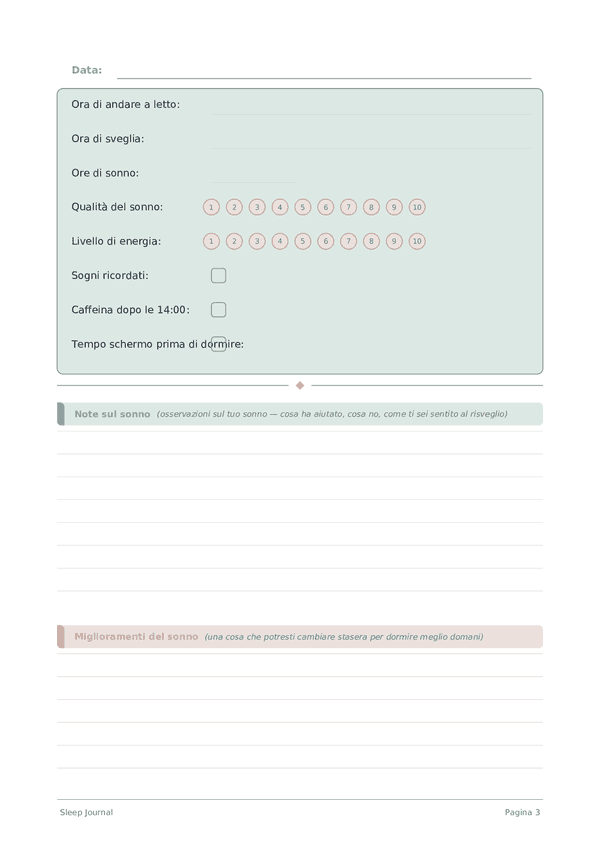
Questo è un diario ibrido — ogni pagina combina una sezione di tracciamento rapido in cima con un'area di scrittura a righe in basso. Ciò ti consente di catturare sia dati misurabili che riflessioni in forma libera in un unico posto.
Come compilare ogni campo
La parte superiore di ogni pagina ha campi a compilazione rapida (valutazioni, caselle di controllo, numeri). Sotto c'è una sezione a righe per scrivere. Ecco cosa significa ogni campo:
Ora di andare a letto
A che ora sei andato a letto? (es. 22:30)
Ora di sveglia
A che ora ti sei svegliato? (es. 6:30)
Ore di sonno
Scrivi quante ore hai effettivamente dormito (non solo il tempo a letto). Monitorare questo insieme all'umore e all'energia rivela spesso connessioni potenti.
Qualità del sonno
Valuta quanto è stato riposante il tuo sonno. 1 significa terribile e agitato, 5 significa profondo e rigenerante. La qualità conta quanto la quantità.
Livello di energia
Quanto ti senti energico/a stamattina? (1=esausto, 5=completamente carico)
Sogni ricordati
Hai ricordato qualche sogno al risveglio?
Caffeina dopo le 14:00
Hai consumato caffeina (caffè, tè, energy drink) dopo le 14:00?
Tempo schermo prima di dormire
Hai usato schermi (telefono, TV, computer) nell'ora prima di andare a letto?
Note sul sonno
Osservazioni sul tuo sonno — cosa ha aiutato, cosa no, come ti sei sentito al risveglio
Miglioramenti del sonno
Una cosa che potresti cambiare stasera per dormire meglio domani
Consigli per il successo
Quando e con quale frequenza scrivere
Compila una pagina al giorno. La parte del tracker richiede meno di un minuto; cerca di farlo a un orario costante. La sezione di scrittura può essere fatta nello stesso momento o riservata quando hai 5 minuti tranquilli. Entrambe le parti insieme ti danno il quadro più completo della tua giornata.
Domande frequenti
Di quante ore di sonno hanno davvero bisogno gli adulti?
Il consenso dell'AASM (American Academy of Sleep Medicine) e della rivista Sleep (2015, 38(6)) indica che gli adulti hanno bisogno di 7–9 ore di sonno per notte; gli adolescenti 8–10; i bambini in età scolare 9–12. Il NHLBI conferma che dormire costantemente meno di 6 ore aumenta i rischi cardiovascolari, metabolici e immunitari. Usa il campo ore di sonno per registrare il sonno effettivo, non solo il tempo trascorso a letto. Meno di 7 ore per 14 o più giorni consecutivi richiede attenzione clinica.
Cosa misura davvero la qualità del sonno, al di là delle ore?
L'AASM definisce la qualità in base all'efficienza (tempo dormito ÷ tempo a letto), ai risvegli dopo l'addormentamento e alla sensazione di riposo. La valutazione da 1 a 10 cattura la restaurazione soggettiva, distinta dalla durata. Sleep Medicine (2018, 41) mostra che 7 ore di sonno frammentato equivalgono fisiologicamente a circa 5 ore di sonno consolidato. Abbina i punteggi di ore di sonno con le valutazioni di qualità del sonno per individuare problemi di qualità che il semplice conteggio delle ore non rileva.
Come influisce la caffeina dopo le 14:00 sul sonno?
La caffeina ha un'emivita di 5–6 ore secondo l'AASM e Sleep (2013, 36(11)), il che significa che 200 mg consumati alle 14:00 hanno ancora 50 mg attivi all'ora di andare a letto. Gli studi mostrano che la caffeina entro 6 ore dal sonno riduce il sonno totale di 41 minuti e la qualità del sonno in modo misurabile. La casella caffeina dopo le 14:00, abbinata alle valutazioni di qualità del sonno, costruisce prove personali. La maggior parte delle persone sottovaluta l'impatto della caffeina sul proprio sonno.
Perché tenere traccia del tempo trascorso davanti agli schermi prima di dormire?
Le evidenze dell'AASM e del NIH NIA mostrano che la luce blu sopprime l'insorgenza della melatonina di circa 90 minuti, ritardando il sonno. Sleep (2017, 40(9)) ha riscontrato che l'uso del telefono entro 1 ora dall'ora di coricarsi riduce il sonno totale di 35 minuti in media. La casella tempo schermo prima di dormire si correla con le valutazioni di qualità del sonno: la maggior parte degli utenti nota un calo di qualità di 1,5–2 punti nelle serate con molto utilizzo degli schermi. Prova a staccare dagli schermi per 1 ora prima di dormire.
In cosa si differenzia questo diario da un fitness tracker da polso?
I dispositivi indossabili stimano le fasi del sonno tramite movimenti e frequenza cardiaca, con una precisione del 70–80% circa rispetto alla polisonnografia secondo Sleep (2020, 43(7)). Non tengono conto del contesto: caffeina, stress, temperatura della stanza, sogni. Questo diario integra i dati del dispositivo con le variabili che guidano davvero la qualità del sonno. La valutazione clinica dell'AASM utilizza ancora i diari del sonno come standard di riferimento per la valutazione ambulatoriale, non i dati dei dispositivi indossabili.
Quando i problemi di sonno dovrebbero portarmi dal medico?
Segnali d'allarme secondo l'AASM: difficoltà ad addormentarsi o a rimanere addormentati per 3 o più notti a settimana per 3 o più mesi (insonnia cronica), russamento forte con sonnolenza diurna (sospetta apnea del sonno), impulso a muovere le gambe di notte (sindrome delle gambe senza riposo) o eccessiva sonnolenza diurna nonostante ore adeguate. Porta con te 2 settimane di voci del diario: accorciano il percorso diagnostico e potrebbero qualificarti per la polisonnografia o il test del sonno a domicilio.
Qual è il miglioramento del sonno più efficace basato sulle evidenze?
Secondo le Linee Guida di Pratica Clinica dell'AASM (2021) e le revisioni Cochrane, la CBT-I (terapia cognitivo-comportamentale per l'insonnia) supera i farmaci per il sonno nel lungo termine. Elementi chiave che puoi applicare da solo: orario di sveglia costante (anche nei fine settimana), controllo degli stimoli (il letto = solo sonno) e restrizione del sonno. Il prompt miglioramenti del sonno incoraggia a testare un cambiamento alla volta. Le linee guida sull'igiene del sonno del NHLBI sono anche punti di partenza basati sulle evidenze.
Perché registrare i sogni nel diario?
Il ricordo dei sogni si correla con il sonno REM, che costituisce il 20–25% del sonno sano secondo l'AASM. I brutti sogni frequenti possono indicare una risposta traumatica, apnea del sonno o effetti dei farmaci: l'APA segnala che il disturbo da incubi è clinicamente diagnosticabile. Monitorare il ricordo dei sogni (sì/no) insieme a qualità del sonno rivela schemi di interruzione del REM. La sezione note può catturare il contenuto dei sogni se terapeutico: le tradizioni psicoterapeute lo valorizzano come materiale di autoconoscenza.
Potrebbe piacerti anche
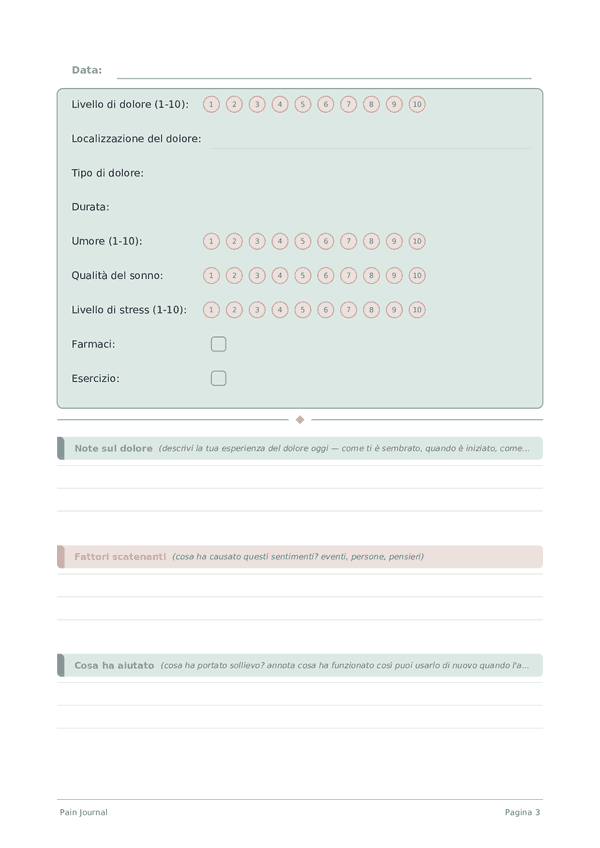
Diario del Dolore
Monitora i pattern del dolore, i trigger e le strategie di sollievo
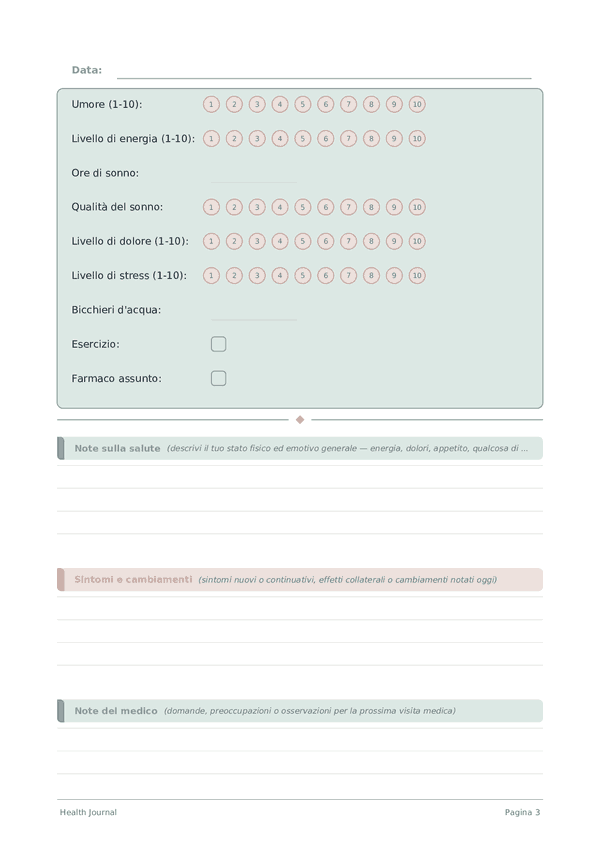
Diario della Salute
Monitora il tuo corpo, la mente e il benessere ogni giorno
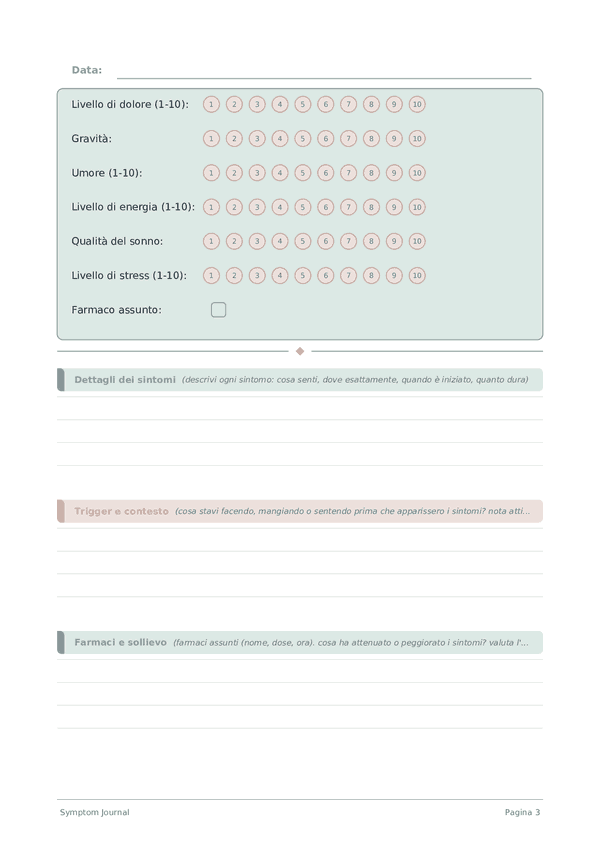
Diario dei Sintomi
Monitora sintomi, trigger e trattamenti ogni giorno
Diario delle Calorie
Monitora calorie e macronutrienti ad ogni pasto
Scorri per ingrandire, trascina per spostare