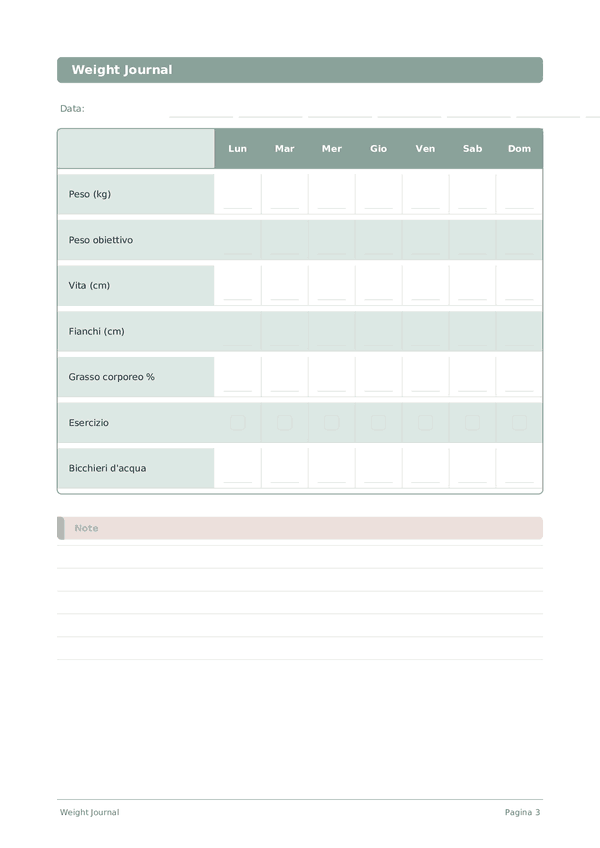
Printable Diario del Peso
Monitora le misure corporee e raggiungi i tuoi obiettivi di peso
Personalizza campi
Attiva o disattiva i campi. Clicca la matita per rinominare, oppure aggiungi i tuoi campi.
Cos'è questo diario?
Questo è un diario di monitoraggio settimanale — una griglia visiva in cui segni le abitudini, valuti le tue metriche o spunti i compiti giorno per giorno. Ogni pagina copre una settimana, rendendo facile individuare schemi e costruire coerenza.
Come compilare ogni campo
Ogni pagina è una griglia settimanale. Le righe sono i tuoi elementi da monitorare, le colonne sono i giorni della settimana. Ecco cosa significa ogni elemento:
Peso (kg)
Registra il tuo peso se lo stai monitorando. Pesati alla stessa ora ogni giorno per dati coerenti. Concentrati sulle tendenze settimanali, non sulle fluttuazioni quotidiane.
Peso obiettivo
Vita (cm)
Misura la tua circonferenza vita. Più affidabile del peso da solo, la misurazione della vita riflette i veri cambiamenti della composizione corporea.
Fianchi (cm)
Grasso corporeo %
Esercizio
Segna se hai fatto esercizio oggi. Anche una camminata di 10 minuti conta. L'obiettivo è costruire consapevolezza dei tuoi schemi di attività.
Bicchieri d'acqua
Monitora l'assunzione giornaliera di acqua. La maggior parte delle persone ha bisogno di 6–8 bicchieri. Spuntare i bicchieri durante il giorno ti aiuta a mantenerti idratato.
Consigli per il successo
Quando e con quale frequenza scrivere
Segna il tracker ogni sera prima di dormire. Richiede meno di un minuto. Alla fine di ogni settimana, prenditi 5 minuti per rivedere la griglia e notare gli schemi. Ogni mese, sfoglia tutte le settimane per vedere il tuo arco di progresso.
Domande frequenti
Perché il diario tiene traccia di vita e fianchi oltre al peso?
L'American Heart Association (2022, Circulation, 146(5)) e le linee guida dell'OMS identificano la circonferenza della vita come un predittore più forte del rischio cardiometabolico rispetto al peso da solo — il grasso viscerale conta più della massa totale. Il NIH NIDDK considera elevato il rischio con una vita >102 cm (uomini) o >88 cm (donne). Vita e fianchi rivelano anche cambiamenti nella composizione corporea quando il peso è stabile, utile nelle fasi di ricomposizione quando il muscolo sostituisce il grasso.
Con quale frequenza dovrei pesarmi?
Ogni giorno, alla stessa ora dopo aver usato il bagno e prima di mangiare, secondo la Mayo Clinic e la ricerca di Obesity (2015, 23(11)) che mostra come la pesatura quotidiana migliori il mantenimento del peso a lungo termine. I dati della rivista Obesity dimostrano che concentrarsi sulla media mobile a 7 giorni — non sui picchi di un singolo giorno — previene lo scoraggiamento derivante da normali fluttuazioni di 1–2 kg dovute a idratazione, sodio e glicogeno.
Qual è un ritmo di perdita di peso sicuro da perseguire?
Il CDC e la USPSTF (2022, JAMA, 328(11)) raccomandano 0,5–1 kg (1–2 lb) a settimana — circa 250–500 kcal/giorno di deficit. Una perdita più rapida aumenta il rischio di perdita muscolare e di effetto rimbalzo. Gli ADA Standards of Care (2024, Diabetes Care, 47 Suppl 1) notano che anche una riduzione del peso corporeo del 5–10% migliora significativamente la pressione sanguigna, il controllo glicemico e i lipidi. Le tendenze della colonna del peso settimanale sono la metrica giusta, non le singole letture.
Perché misurare la percentuale di grasso corporeo e quanto è accurata la stima domestica?
La percentuale di grasso corporeo riflette la composizione meglio dell'IMC. Il NIH NHLBI considera elevato il rischio con >25% di grasso corporeo (uomini) o >32% (donne). Le bilance a bioimpedenza hanno un margine di errore del ±3–8% secondo le valutazioni dei dispositivi del NEJM e dipendono fortemente dall'idratazione. Usa la colonna grasso corporeo % per la tendenza mensile, non per la precisione quotidiana. Il DEXA è il riferimento clinico ma non è necessario per il monitoraggio — la coerenza nel metodo è la cosa più importante.
La pesatura quotidiana è sicura per chi ha rischi di disturbi alimentari?
Spesso no. L'APA e l'Academy for Eating Disorders sconsigliano la pesatura quotidiana per le persone con anoressia, bulimia, disturbo da alimentazione incontrollata o ortoressia. Le fluttuazioni di peso possono scatenare comportamenti restrittivi. Se hai una tale storia, consulta un medico e considera di concentrarti invece sulla casella dell'esercizio fisico e sulle colonne dell'assunzione di acqua. Il peso è un dato, non una misura del proprio valore.
Come si collegano il monitoraggio dell'idratazione e dell'esercizio fisico alle variazioni di peso?
L'idratazione influisce sul peso della bilancia di 1–2 kg al giorno — non bere acqua gonfia il peso apparente, che poi si normalizza. L'American Journal of Clinical Nutrition (2010, 91(3)) mostra che bere acqua prima dei pasti riduce l'apporto calorico. L'esercizio fisico favorisce il mantenimento muscolare durante il deficit calorico, secondo l'ACSM. Insieme, le colonne di acqua ed esercizio spiegano circa il 30% del rumore giornaliero del peso e aiutano a distinguere i veri progressi dalle fluttuazioni temporanee.
Quando dovrei consultare un medico per le variazioni di peso?
Indicatori d'allarme della Mayo Clinic e del NIH NIDDK: perdita involontaria del 5% del peso corporeo in 6–12 mesi, rapido aumento di peso di 2+ kg a settimana, o variazioni di peso accompagnate da fatica, cambiamenti dell'appetito o altri sintomi richiedono una valutazione medica. Tiroide, diabete e condizioni cardiovascolari si manifestano tutte attraverso variazioni di peso. Porta al tuo appuntamento 4 o più settimane di dati del diario per un quadro clinico più chiaro.
Quanto tempo ci vuole prima di vedere tendenze significative nel diario del peso?
Circa 3–4 settimane. La ricerca sull'obesità mostra che la varianza giornaliera di ±1–2 kg è normale; le tendenze statisticamente affidabili richiedono almeno tre cicli settimanali completi per filtrare il rumore legato al sodio, agli ormoni e all'intestino. La griglia settimanale del modello è costruita appositamente per questo — calcola le medie da lunedì a domenica invece di fissarti sui singoli giorni. Gli schemi nelle misurazioni della vita spesso emergono prima delle variazioni di peso.
Potrebbe piacerti anche
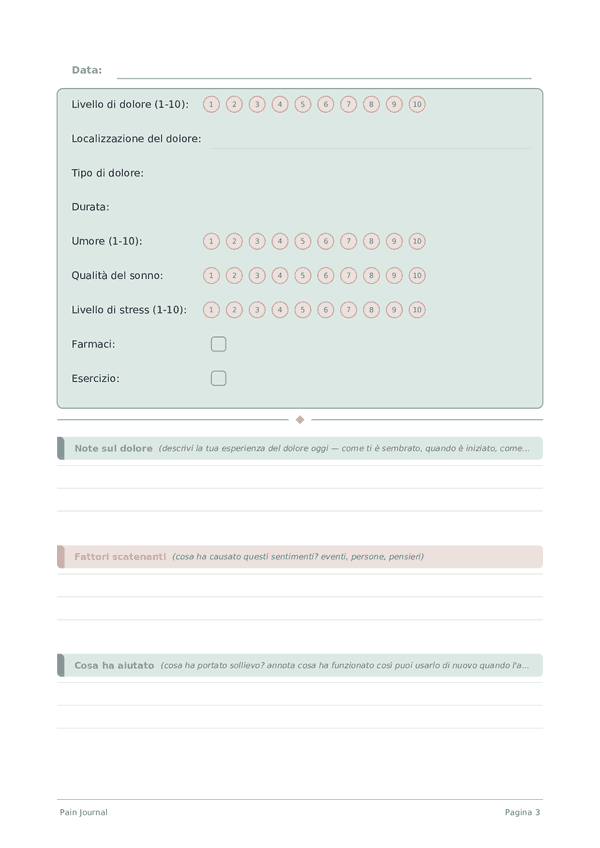
Diario del Dolore
Monitora i pattern del dolore, i trigger e le strategie di sollievo
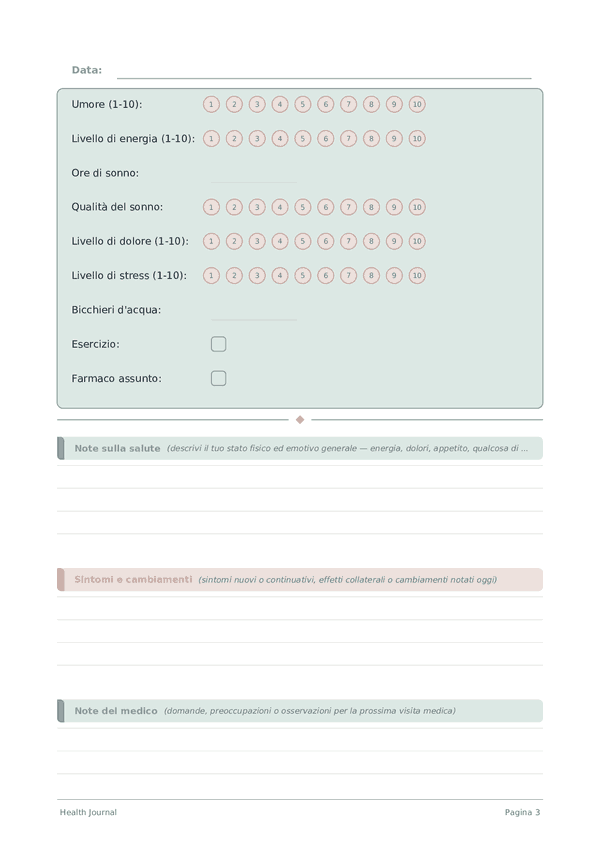
Diario della Salute
Monitora il tuo corpo, la mente e il benessere ogni giorno
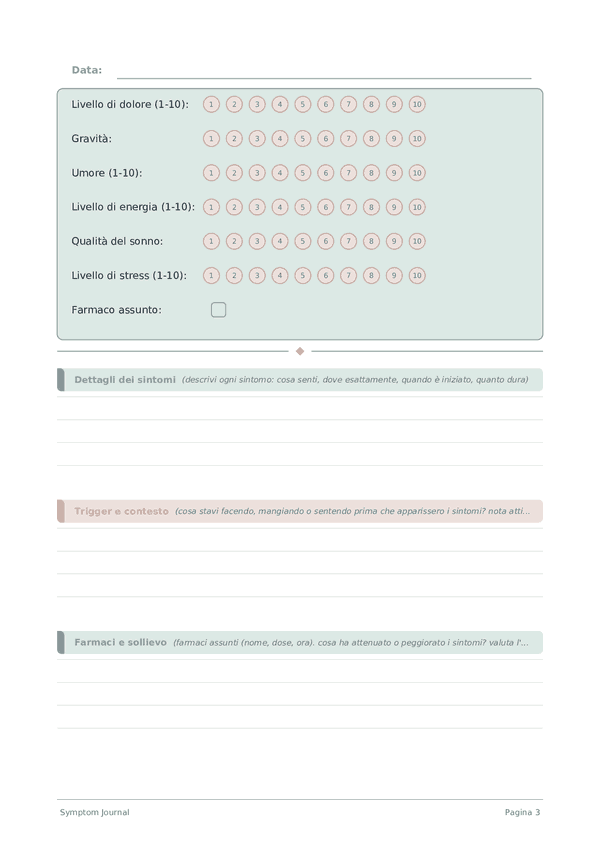
Diario dei Sintomi
Monitora sintomi, trigger e trattamenti ogni giorno
Diario delle Calorie
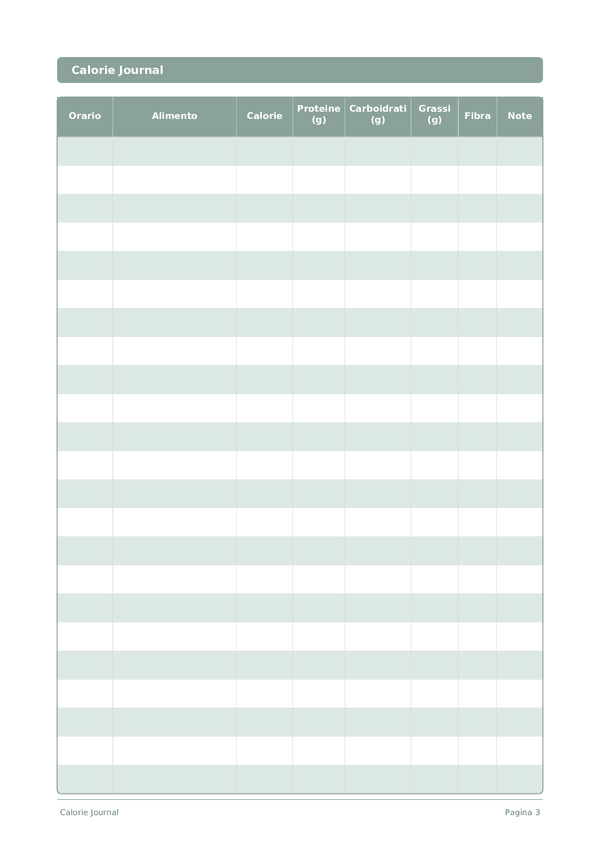
Monitora calorie e macronutrienti ad ogni pasto
Scorri per ingrandire, trascina per spostare