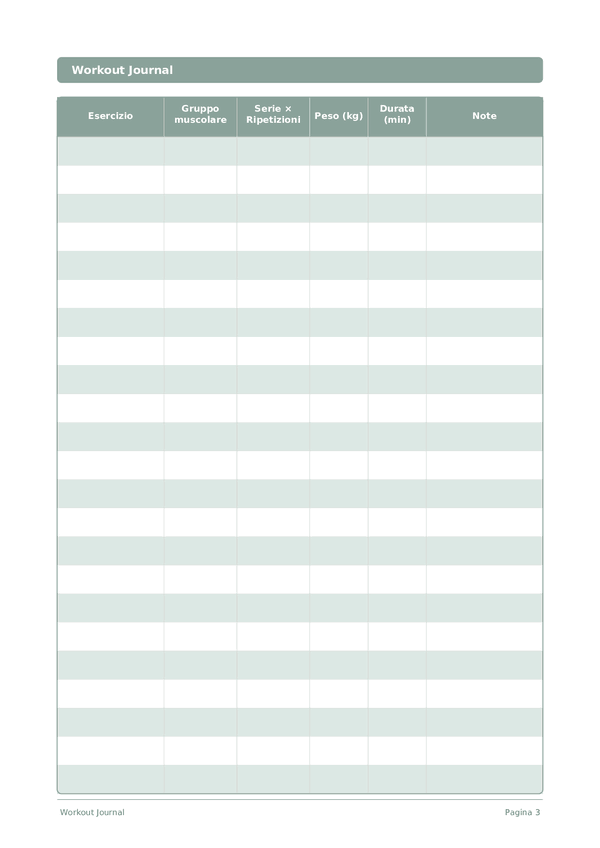
Printable Diario degli Allenamenti
Monitora ogni serie, ripetizione e peso — guarda crescere la tua forza nel tempo
Personalizza campi
Attiva o disattiva i campi. Clicca la matita per rinominare, oppure aggiungi i tuoi campi.
Cos'è questo diario?
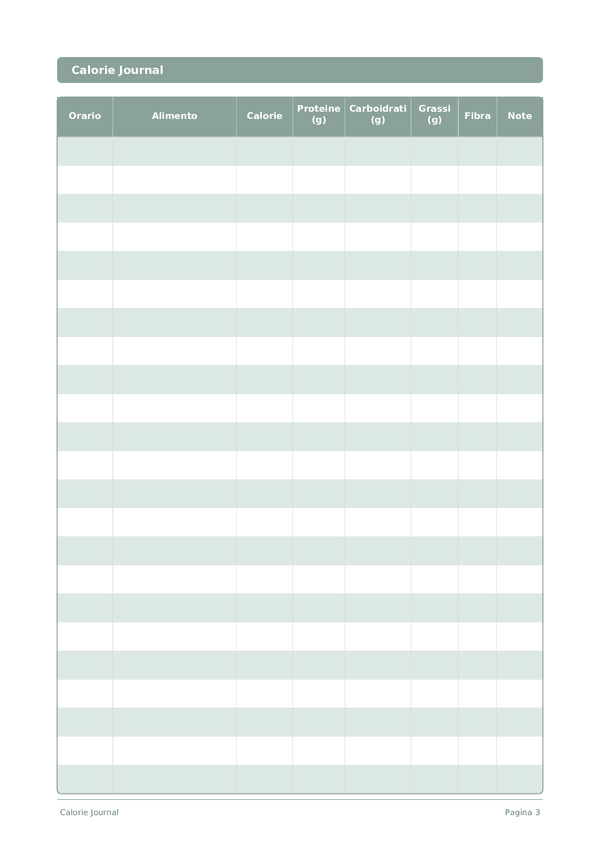
Questo è un diario a registro tabellare — ogni pagina contiene una tabella strutturata con colonne per registrare i dati. Perfetto per tenere traccia di spese, allenamenti, letture o qualsiasi attività che beneficia di voci organizzate e confrontabili.
Come compilare ogni campo
Ogni pagina è una tabella con colonne. Compila una riga per ogni voce. Ecco a cosa serve ogni colonna:
Esercizio
Scrivi che tipo di esercizio hai fatto (es. corsa, yoga, allenamento con i pesi). La varietà conta — il monitoraggio aiuta a garantire una routine equilibrata.
Gruppo muscolare
Petto, schiena, gambe, spalle, braccia, core...
Serie × Ripetizioni
Registra serie e ripetizioni (es. 3×12). Questo è il tuo registro di allenamento della forza — il sovraccarico progressivo diventa visibile nel tempo.
Peso (kg)
Registra il tuo peso se lo stai monitorando. Pesati alla stessa ora ogni giorno per dati coerenti. Concentrati sulle tendenze settimanali, non sulle fluttuazioni quotidiane.
Durata (min)
Registra per quanti minuti hai fatto esercizio o praticato. Monitorare la durata ti aiuta a vedere la tua costanza crescere e trovare la lunghezza ottimale della sessione.
Note
Aggiungi qualsiasi contesto o pensiero aggiuntivo. Questa colonna tuttofare è per tutto ciò che non si adatta altrove ma potrebbe essere utile in seguito.
Consigli per il successo
Quando e con quale frequenza scrivere
Aggiungi voci man mano che gli eventi accadono durante il giorno. Per i registri finanziari, annota ogni transazione immediatamente. Per i registri di attività, compila dopo ogni sessione. Fai una revisione settimanale o mensile per analizzare i tuoi dati ed estrarre intuizioni.
Domande frequenti
Cos'è il sovraccarico progressivo e come lo registro qui?
Il sovraccarico progressivo — aumentare gradualmente lo stimolo di allenamento — è il fattore fondamentale per la forza e l'ipertrofia, secondo l'ACSM e il British Journal of Sports Medicine (2022, 56(13)). Monitoralo tramite le colonne weight e serie × Ripetizioni: punta ad aggiungere 1–2,5 kg o una ripetizione per sessione per lo stesso esercizio. Rivedi le tendenze mensili per ogni movimento. I plateau segnalano la necessità di settimane di scarico o di cambiare programma.
Quante serie e ripetizioni dovrei fare per esercizio?
L'ACSM (2009, Medicine & Science in Sports & Exercise, 41(3)) e il consenso dell'ISSN raccomandano: 3–5 serie da 5–8 ripetizioni all'75–85% dell'1RM per la forza; 3–4 serie da 8–12 ripetizioni al 65–75% per l'ipertrofia; 2–3 serie da 12–20 ripetizioni per la resistenza. Registra tutte le serie nella colonna serie × Ripetizioni (es. '4x8'). Il volume settimanale totale per gruppo muscolare — serie per ripetizioni per peso — guida l'adattamento più di qualsiasi singola sessione.
Perché registrare il peso corporeo nella parte superiore di ogni pagina?
Il contesto del peso corporeo interpreta i cambiamenti di forza — guadagnare forza perdendo peso indica un vero miglioramento delle prestazioni, mentre i guadagni di forza durante l'aumento di peso possono riflettere in parte la massa. L'ACSM e le revisioni di Sports Medicine sottolineano l'importanza di monitorare entrambi. Il campo peso corporeo (kg) nell'intestazione della pagina fornisce un'istantanea settimanale senza richiedere pesature quotidiane, utile nelle fasi di cutting, bulking o mantenimento.
Come registro esercizi come le trazioni o i piegamenti senza peso esterno?
Inserisci 0 nella colonna weight e il contesto del peso corporeo completo dall'intestazione della pagina. L'ACSM accetta la progressione a corpo libero tramite aumento delle ripetizioni, delle serie o del tempo sotto tensione. Per le varianti con peso aggiuntivo (es. trazioni con zavorra), inserisci solo il peso aggiunto. La colonna Note può specificare le assunzioni sul peso corporeo. Monitora la progressione tramite le ripetizioni e il volume totale piuttosto che solo il carico.
In cosa si differenzia da app come Strong, Jefit o Hevy?
Le app automatizzano i calcoli e i timer di recupero; i diari cartacei favoriscono la riflessione e la pianificazione intenzionale. La ricerca sul cambiamento comportamentale del NIH NCCIH (2022) mostra che la programmazione scritta a mano migliora l'aderenza e la consapevolezza di sé. La colonna note cattura dati qualitativi — livello di fatica, indicazioni sulla forma, feedback sulle articolazioni — che le app spesso scartano. Molti atleti usano entrambi: l'app per il log in-session, il diario per la pianificazione settimanale e la revisione del programma.
Con quale frequenza dovrei cambiare gli esercizi o il programma?
L'ACSM raccomanda cambiamenti di programma ogni 4–8 settimane per prevenire la stagnazione. La colonna note è il posto giusto per segnalare esercizi in cui la progressione si è bloccata per 2–3 sessioni consecutive. Sports Medicine (2018, 48(4)) suggerisce settimane di scarico (50–70% del volume) ogni 4–8 settimane per gestire la fatica. Monitora la durata totale della sessione insieme al peso per individuare un costo di fatica crescente per allenamento.
Come dovrebbero usare questo diario i principianti?
Secondo le linee guida per principianti dell'ACSM, concentrati su 2–3 sessioni full-body settimanali con 6–8 esercizi composti. Registra ogni serie per le prime 8–12 settimane per costruire consapevolezza tecnica e una baseline di progressione. Il NIH NIA nota che l'allenamento di resistenza riduce il rischio di mortalità per tutte le cause; la costanza conta più dell'intensità inizialmente. Usa la colonna note per gli indicazioni sulla forma da un trainer o da un riferimento video.
Quali segnali indicano che sto facendo overtraining?
Segnali d'allarme del British Journal of Sports Medicine (2013, 47(8)) e dell'ACSM: calo delle prestazioni per 2 o più settimane, dolori muscolari persistenti oltre le 72 ore, disturbi del sonno, frequenza cardiaca a riposo elevata, calo dell'umore, piccole malattie frequenti. Registra questi segnali nella colonna note. Il recupero richiede 1–2 settimane al 50–70% del volume, non un riposo completo. Consulta un medico specializzato in medicina dello sport se i sintomi persistono.
Potrebbe piacerti anche
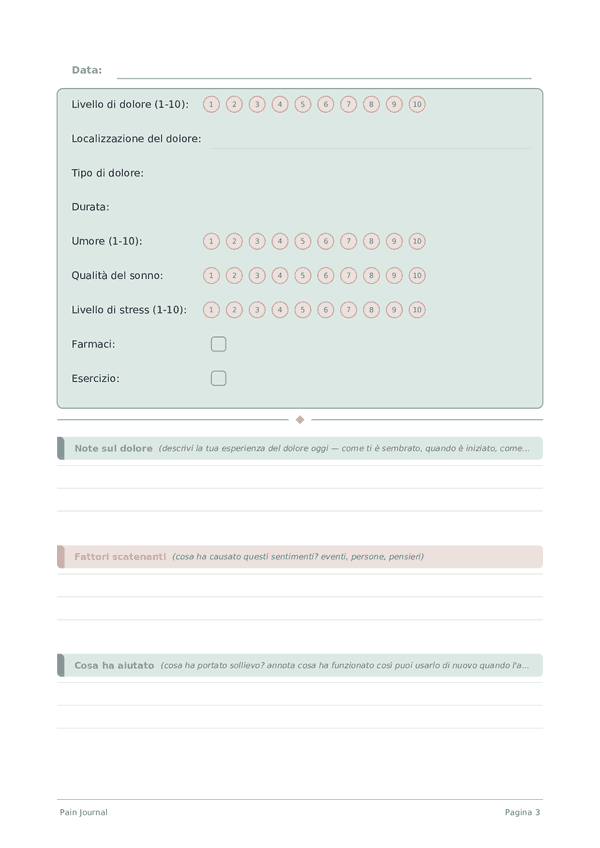
Diario del Dolore
Monitora i pattern del dolore, i trigger e le strategie di sollievo
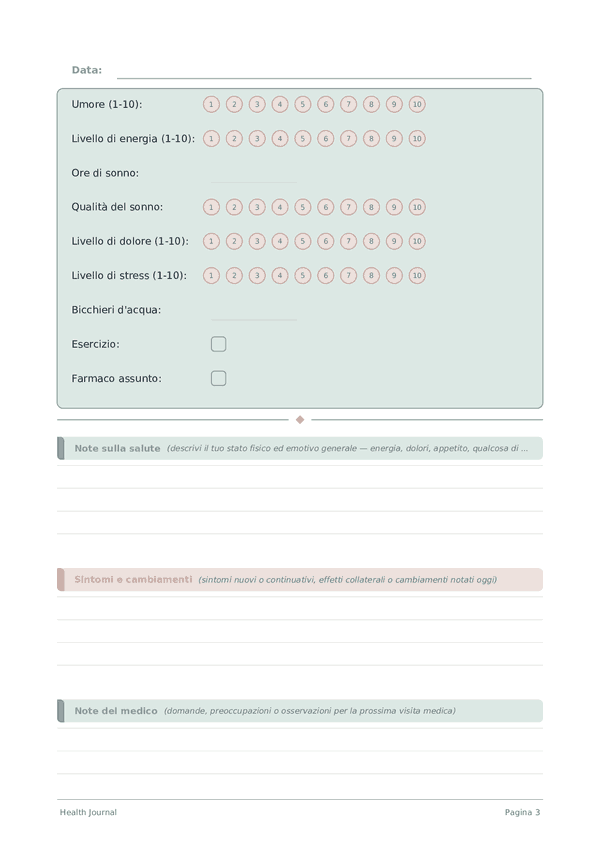
Diario della Salute
Monitora il tuo corpo, la mente e il benessere ogni giorno
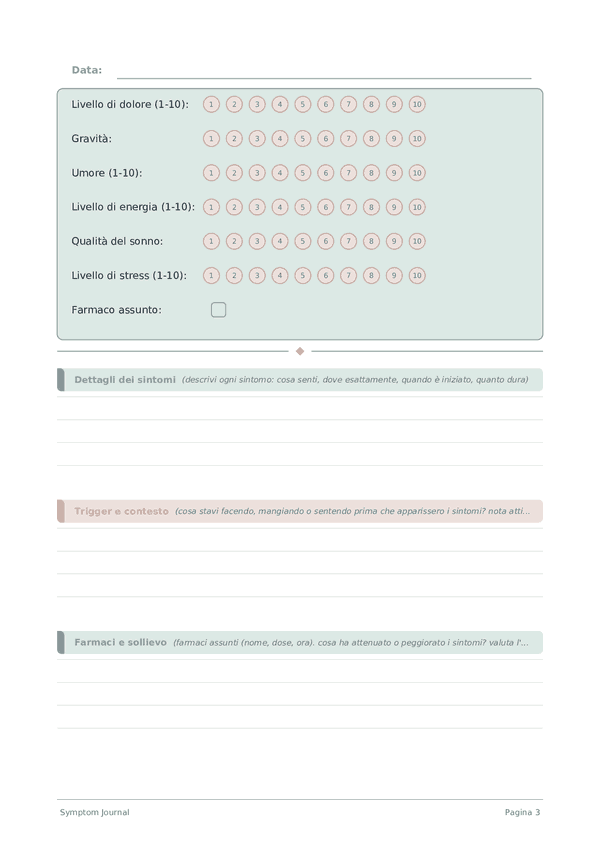
Diario dei Sintomi
Monitora sintomi, trigger e trattamenti ogni giorno
Diario delle Calorie
Monitora calorie e macronutrienti ad ogni pasto
Scorri per ingrandire, trascina per spostare