Printable Biertagebuch
Jedes Craft-Bier verfolgen und bewerten
A structured tasting log to record every craft beer you encounter — brewery, beer name, style, ABV, aroma, flavor notes, mouthfeel, and your personal rating. Build a personal database of beers you love, discover patterns in your taste preferences, and always remember what you ordered at that amazing taproom.
Felder anpassen
Schalten Sie Felder ein oder aus. Klicken Sie auf den Stift zum Umbenennen oder fügen Sie eigene Felder hinzu.
Vorteile
Anleitung
Was ist dieses Journal?
A beer journal is a tasting log for documenting your explorations of craft beer and beyond. By recording brewery, style, ABV, and detailed notes on aroma, flavor, and mouthfeel, you develop your palate and build a personal reference that guides you toward the styles and breweries you love most.
This journal is for beer enthusiasts who want to be more intentional about their tasting — from craft beer newcomers exploring IPA styles to experienced tasters pursuing rare barrel-aged stouts. It is also valuable for homebrewers who want to study what makes their favorite commercial beers exceptional.
Beer appreciation, like wine, deepens through deliberate tasting and recording. The Cicerone certification program emphasizes that writing tasting notes is the single most effective way to train your palate. By tracking aroma, flavor, and mouthfeel separately, you learn to isolate and identify the individual components that make a beer memorable or forgettable.
Ausgefülltes Beispiel
So sieht ein typischer Eintrag aus, wenn er ausgefüllt ist:
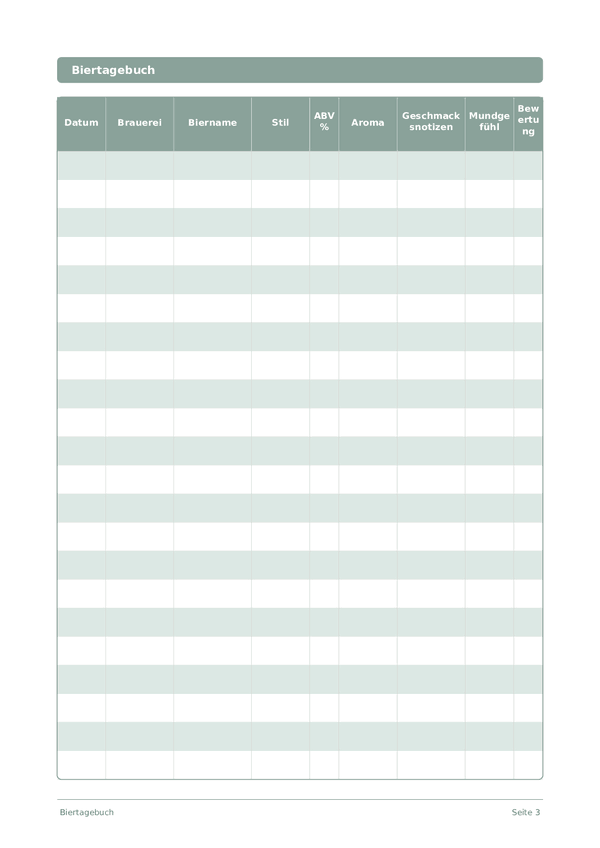
| Datum | Brauerei | Biername | Stil | ABV % | Aroma | Geschmacksnotizen | Mundgefühl | Bewertung |
|---|---|---|---|---|---|---|---|---|
| 2025-03-04 | Tree House Brewing | Julius | New England IPA | 6.8 | Tropical fruit explosion — mango, passion fruit, tangerine peel. Slight pine resin. | Juicy mango and peach dominate. Soft citrus bitterness that does not linger. Slight dank hop character in the background. Finishes clean and fruity. | Pillowy soft, medium body, moderate carbonation, creamy | 9 |
| 2025-03-04 | Weihenstephan | Hefe Weissbier | Hefeweizen | 5.4 | Classic banana and clove. Fresh bread dough. Hint of vanilla. | Banana bread with clove spice. Light wheat sweetness. Refreshing and balanced with a clean, dry finish. Effervescent. | Light-medium body, high carbonation, refreshing, slightly creamy from the wheat | 8 |
| 2025-03-04 | Founders Brewing | KBS (Kentucky Breakfast Stout) | Imperial Stout (Bourbon Barrel-Aged) | 12.2 | Rich dark chocolate, espresso, bourbon vanilla, oak, faint maple sweetness. | Decadent — dark chocolate truffle, espresso, caramel, bourbon warmth. Roasted malt backbone. Dried fruit in the background. Long, warming finish. | Full, viscous, low carbonation, warming alcohol, velvety | 9 |
Wie Sie jedes Feld ausfüllen
Jede Seite ist eine Tabelle mit Spalten. Füllen Sie pro Eintrag eine Zeile aus. Hier erfahren Sie, wofür jede Spalte gedacht ist:
Datum
Schreiben Sie das heutige Datum. Dies verankert Ihren Eintrag in der Zeit und hilft beim späteren Durchsehen der Einträge.
Brauerei
Biername
Stil
ABV %
Aroma
Geschmacksnotizen
Mundgefühl
Bewertung
Gesamtbewertung des Erlebnisses
Tipps für den Erfolg
Wann und wie oft schreiben
Log each new beer you try — the table format makes it fast enough to fill in at the bar or brewery. For homebrewers, log every batch with detailed recipe parameters. Aim for 2-4 entries per week if you are actively exploring styles. During brewery visits or festivals, jot quick ratings and expand notes afterward. Monthly, review your entries to map which styles, regions, and breweries consistently score highest on your personal scale.
Häufig gestellte Fragen
Wie beschreibe ich den Stil eines Bieres genau — was, wenn ich die BJCP-Kategorie nicht kenne?
Beginnen Sie mit der Stilangabe auf dem Etikett, dann gleichen Sie mit den Beer Judge Certification Program (BJCP) Style Guidelines (aktuelle Ausgabe, 2021) ab, die nahezu 100 Kategorien von American IPA bis Berliner Weisse organisieren. Die Brewers Association veröffentlicht ebenfalls jährliche Beer Style Guidelines, genutzt beim Great American Beer Festival. Bei Unsicherheit notieren Sie die nächste Übereinstimmung plus Fragezeichen — mit der Zeit wächst Stilkompetenz, und Fehlidentifikations-Muster werden selbst nützliche Lernsignale. Deutsche Untergär-Tradition prägt zudem das berühmte Reinheitsgebot von 1516.
Wie notiere ich Aroma, Geschmacksnoten und Mundgefühl getrennt richtig?
BJCP-Bewertungsbögen evaluieren Aroma, Aussehen, Geschmack, Mundgefühl und Gesamteindruck als eigene Dimensionen — sie verschieben sich unabhängig. Aroma: Hopfen (Kiefer, Zitrus, tropisch), Malz (Brot, Karamell, Schokolade), Gärung (Banane, Nelke, pfeffrig). Geschmack: Bitterkeitsintensität, Malzsüße, Fehlaromen (Diacetyl, DMS). Mundgefühl: Körpergewicht, Karbonisierung, Alkoholwärme, Trockenheit. Das Cicerone Certification Program schult Verkoster in genau dieser Trennung; Vermischung verwässert den Datenwert.
Wie lese und notiere ich ABV — und was sagt es über das Bier voraus?
ABV (Alkohol nach Volumen) ist auf den meisten US-Craft-Etiketten gemäß Bundesvorschriften gedruckt. BJCP Style Guidelines (2021) verankern Stile in ABV-Bereichen: Session unter 4,5%, Standard 4,5-6%, stark 6-9%, sehr stark 9%+. ABV gegen Ihre Bewertung zu tracken offenbart Toleranzmuster — viele bevorzugen konstant 5-7% und finden höheren ABV gaumenermüdend. ABV korreliert auch mit Körper- und Süße-Wahrnehmung über Restzucker, nützlich beim stilübergreifenden Vergleich.
Wie trenne ich eine geliebte Brauerei von einem geliebten Bier?
Protokollieren Sie Brauerei und biername bewusst in getrennten Spalten. Nach 30-50 Einträgen sortieren Sie mental nach Brauerei: schafft Brauerei X konstant 8+, oder nur eine Flagship-Veröffentlichung? Die Brewers Association zählt über 9.000 US-Craft-Brauereien, sodass Brauereitreue ohne biespezifische Daten Kaufchancen verschwendet. Umgekehrt ist eine Brauerei, deren gesamtes Sortiment gut bewertet wird, außergewöhnlich wertvoll — ein Signal für konsistente Hefe, Wasserprofil und Prozessdisziplin.
Wie steht dieses Papierjournal zu Apps wie Untappd?
Untappd eignet sich exzellent für soziale Entdeckung und schnelle Check-ins, beeinflusst aber Bewertungen durch sichtbare Community-Durchschnitte vor dem Verkosten. BJCP- und Cicerone-Bewertung verlangt bewusste, unvoreingenommene sensorische Analyse — auf Papier ohne Notification-Pings leichter. Apps fördern auch Einzeiler, während getrennte Aroma-/Geschmacks-/Mundgefühl-Spalten zur vollen Bewertung zwingen. Nutzen Sie beides: App für Keller-Inventar und Soziales, Journal für die analytische Aufzeichnung, die Ihren Gaumen über Jahre formt.
Eignet sich dieses Journal für Industriebier, Cider, Met oder alkoholfreies Bier?
Ja. Die Spalten — Brauerei, Name, Stil, ABV, Aroma, Geschmack, Mundgefühl, Bewertung — funktionieren für jedes gegorene Getränk. BJCP-Richtlinien enthalten Cider- und Met-Kategorien mit eigenen Deskriptoren. Alkoholfreies Craft-Bier ist laut Jahresberichten der Brewers Association ein wachsendes Segment; protokollieren Sie identisch. Die Master Brewers Association of the Americas deckt technisch alle malzbasierten Getränke ab. Das Prinzip des Journals — wiederholbare sensorische Beobachtung — übersteigt Kategorie-Etiketten.
Wie oft sollte ich ältere Einträge erneut ansehen und worauf achten?
Monatlicher Rückblick hilft, Gaumenevolution zu erkennen. Das Cicerone Certification Program betont, dass sich Geschmackswahrnehmung mit Erfahrung ändert — Biere, die vor einem Jahr 6 erhielten, erreichen heute vielleicht 8, während Sie den Stil lernen. Sortieren Sie nach Bewertung und Stil: tendieren Sie zu hopfen-, malz- oder sauer-betonten Stilen? Brewers Association-Daten zeigen IPA-Dominanz im Craft-Volumen, doch persönliche Vorliebe weicht oft ab. Der Jahresrückblick offenbart stilistische Identität jenseits von Marketing.
Häufige Fehler, die die Verkostungsgenauigkeit untergraben?
Erstens Bewerten aus der Flasche ohne passendes Glas — Aroma-Flüchtige brauchen Oberfläche, gemäß BJCP-Bewertungsprotokoll. Zweitens scharfes oder stark gewürztes Essen unmittelbar davor. Drittens Halo-Bias durch gehypte Brauerei-Namen. Viertens nach einem Schluck bewerten — Geschmack und Abgang brauchen 2-3 Schlucke Minimum. Fünftens Fehlaromen aus Höflichkeit ignorieren; das Cicerone Off-Flavor Kit schult gezielt die Identifikation von Diacetyl, Acetaldehyd, DMS und Lichtgeschmack.
Das könnte Ihnen auch gefallen
Scrollen zum Zoomen, ziehen zum Bewegen