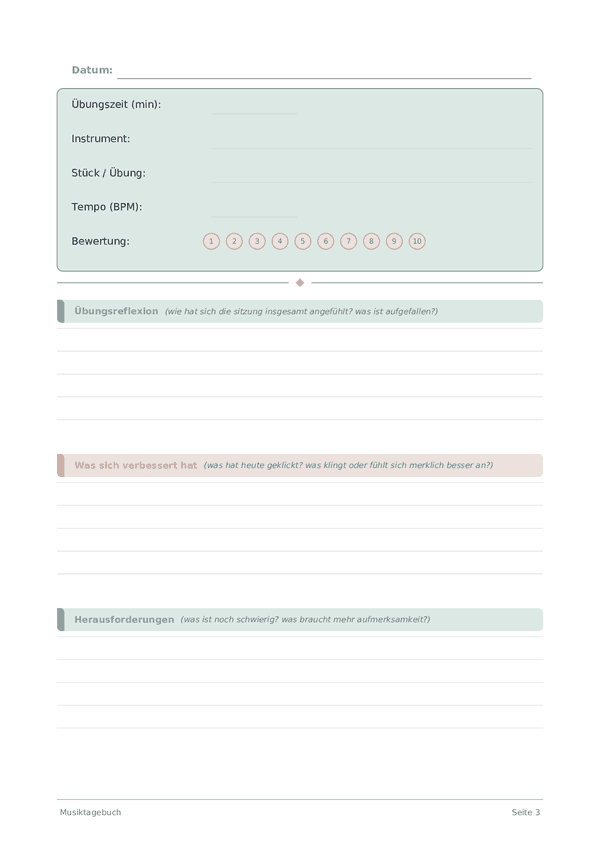
Printable Musiktagebuch
Übungssessions, Tempo und musikalisches Wachstum verfolgen
A focused music practice journal to log every session with intention. Record the instrument, piece, practice duration, tempo, and rate your overall performance. Reflect on what improved, what still challenges you, and set goals for your next session. Consistent journaling reveals your musical progress over time and sharpens your practice.
Felder anpassen
Schalten Sie Felder ein oder aus. Klicken Sie auf den Stift zum Umbenennen oder fügen Sie eigene Felder hinzu.
Vorteile
Anleitung
Was ist dieses Journal?
A music journal helps you turn every practice session into a purposeful step forward. Instead of sitting down and noodling aimlessly, you set clear intentions, track measurable progress, and reflect on what actually improved. Over time, these notes become a personal coaching log that reveals your strengths, exposes weak spots, and keeps motivation high.
The top section captures quick metrics — how long you practised, which instrument and piece you worked on, the tempo you reached, and an overall session rating. The bottom section is where the real learning happens: you write about what improved, what challenged you, and what you plan to tackle next time.
Whether you are preparing for a recital, learning a new instrument, or simply playing for the love of music, consistent journaling transforms scattered practice into deliberate progress. Fill in the tracker during or right after your session, then spend two minutes writing your reflection while the experience is vivid.
Ausgefülltes Beispiel
So sieht ein typischer Eintrag aus, wenn er ausgefüllt ist:
Wie Sie jedes Feld ausfüllen
Oben auf jeder Seite befinden sich schnell ausfüllbare Felder (Bewertungen, Kontrollkästchen, Zahlen). Darunter ist ein linierter Bereich zum Schreiben. Hier erfahren Sie, was jedes Feld bedeutet:
Übungszeit (min)
Wie viele Minuten hast du heute geübt?
Instrument
Gitarre, Klavier, Geige, Gesang, Schlagzeug...
Stück / Übung
Name des Stücks, Lieds oder der Übung, an der du gearbeitet hast
Tempo (BPM)
Ziel- oder erreichtes Tempo in BPM (Schläge pro Minute)
Bewertung
Gesamtbewertung des Erlebnisses
Übungsreflexion
Wie hat sich die Sitzung insgesamt angefühlt? Was ist aufgefallen?
Was sich verbessert hat
Was hat heute geklickt? Was klingt oder fühlt sich merklich besser an?
Herausforderungen
Was ist noch schwierig? Was braucht mehr Aufmerksamkeit?
Ziele nächste Sitzung
Worauf wirst du dich in der nächsten Übungssitzung konzentrieren?
Tipps für den Erfolg
Wann und wie oft schreiben
Write after every practice session or meaningful listening experience, even just two or three sentences. For active musicians, daily post-practice entries of five minutes each build a powerful feedback loop — you will see problem areas resolving over weeks instead of guessing. For listeners and collectors, three entries per week capture enough to build a meaningful personal archive. Monthly, read back through your entries to spot patterns in what inspires or frustrates you.
Häufig gestellte Fragen
Was verfolgt das Musik-Journal pro Übungseinheit?
Fünf Tracker-Felder plus Reflexion: Übungsdauer (bis 300 Minuten), Instrument, Stückname, Tempo (bis 300 BPM) und Bewertung (0-10). Sechs linierte Zeilen für Übungsreflexion, Verbessertes, Herausforderungen und Ziele für die nächste Sitzung. Die Struktur erzwingt bewusste, gezielte Praxis statt passiven Spielens — was die Forschung konsequent als Unterschied zwischen Musikern auf Plateau und denen, die weiter wachsen, ausweist.
Warum BPM für jede Sitzung notieren?
BPM ist der objektivste Marker technischer Beherrschung einer Passage. Sitzungsübergreifend zeigt er echten Fortschritt, den Gefühl allein nicht erkennt. Levitin (2006, This Is Your Brain on Music, Dutton) beschreibt, wie Musiker, die Tempogewinne quantifizieren, durch Plateaus motiviert bleiben. Nutze ein Metronom, notiere dein höchstes sauberes Tempo und setze das nächste Ziel +2 bis +4 BPM. Über Wochen wird die Spalte zur sichtbaren Meisterungskurve.
Wie lang sollte jede tägliche Übungseinheit sein?
30-60 Minuten fokussierter Praxis bringen mehr als 2-3 Stunden unfokussiertes Spielen. Ericsson, Krampe und Tesch-Römer (1993, Psychological Review, 100(3), 363-406) untersuchten Konservatoriums-Violinisten und fanden 3-5 Stunden deliberate practice täglich als Obergrenze nachhaltiger Qualität — und die Qualität fiel ohne Pausen scharf ab. Das Dauerfeld hilft dir, fokussierte Zeit zu messen, nicht nur Zeit am Instrument.
Was unterscheidet deliberate practice vom bloßen Spielen?
Deliberate practice zielt mit fokussierter Aufmerksamkeit und Feedback auf eine spezifische Schwäche (Ericsson, 2016, Peak, Houghton Mifflin Harcourt). Die Felder "Ziele" und "Herausforderungen" sind das Gerüst der deliberate practice: sie zwingen dich zu benennen, woran du arbeitest, statt nur durchzuspielen. Lockeres Spielen hält Können; deliberate practice baut es. Beides hat Platz, aber nur eines treibt Wachstum.
Wie nutze ich die Felder "Verbessertes" und "Herausforderungen" effektiv?
Sei taktgenau, technik- oder passagengenau — "Takte 17-24 sauber bei 100 BPM" schlägt "besser geworden". Spezifik macht das nächste Sitzungsziel konkret. Roediger und Karpicke (2006, Psychological Science, 17(3), 249-255) zeigen, dass das Artikulieren von Wissen das Behalten stärkt. Das Feld "Herausforderungen" ist genauso wertvoll: ein heute benanntes ungelöstes Problem löst sich oft binnen Tagen, ein vages "war schwer" nicht.
Macht ein Übungs-Journal mich wirklich zum besseren Musiker?
Ja — wenn Reflexion mit fokussierter Praxis verbunden ist. Der Bjork-Rahmen der "desirable difficulties" (Bjork & Bjork, 2011, Psychology and the Real World, Worth Publishers) zeigt, dass anstrengender Abruf und abwechslungsreiche Praxis dauerhafte Fertigkeit erzeugen. Die Sitzungsbewertung schafft Feedback; das Zielfeld schafft Abrufhinweise für nächstes Mal. Musiker, die journalen, identifizieren und beheben Schwächen schneller als jene, die nur spielen.
Wie unterscheidet sich das von einer Metronom-App oder einem Übungs-Timer?
Apps messen; das Journal interpretiert. Die Felder Stückname und Reflexion verbinden die heutige BPM-Zahl mit musikalischem Kontext — warum eine Passage an einem Tag schwerer wirkt, welcher Fingersatz half, bei welchem Tempo alles zusammenbrach. Laut Bjorks Forschung zur Metakognition (Bjork & Bjork, 2011) treiben Interpretation und Zielsetzung den Transfer zur Performance mehr als reine geloggte Zeit. Nutze beides — App für Daten, Journal für Bedeutung.
Ich übe mehrere Instrumente — separate Journale führen?
Ein Journal funktioniert, wenn du das Instrument-Feld jede Sitzung ausfüllst. Instrumentübergreifend zeigen sich oft geteilte Themen (Rhythmus, Dynamik, Hören) und übertragbare Erfolge. Wenn du auf einem Instrument primär unterrichtest oder auftrittst, ziehe ein eigenes Journal dafür in Betracht, dieses für Zweitinstrumente. Das Format skaliert in beide Richtungen; Konsequenz zählt mehr als Trennung.
Das könnte Ihnen auch gefallen
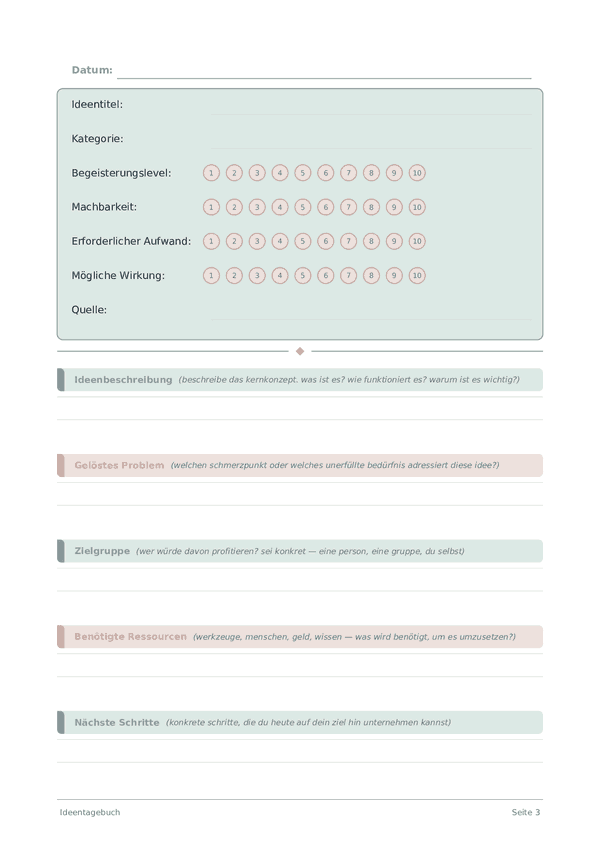
Ideentagebuch
Ihre besten Ideen festhalten, bewerten und weiterentwickeln
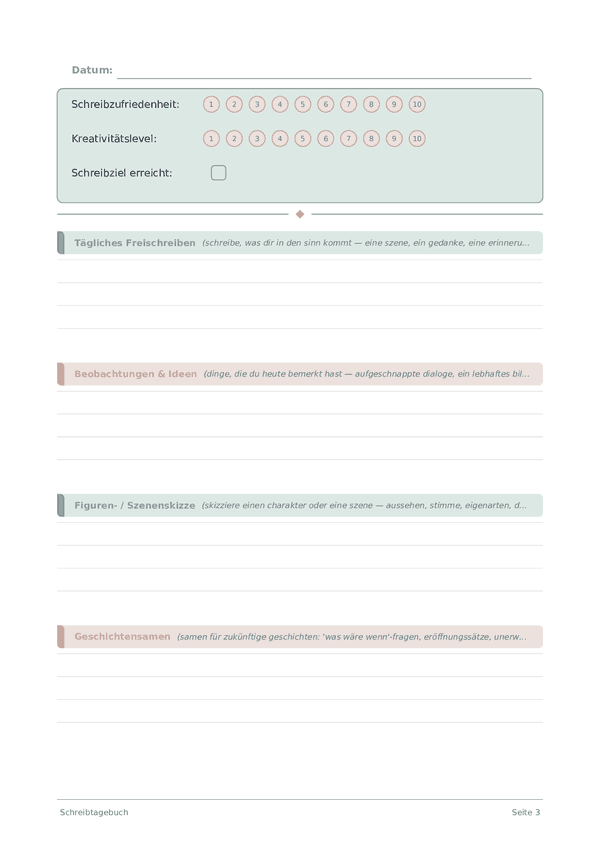
Schreibtagebuch
Tägliche kreative Schreibpraxis & Handwerksentwicklung
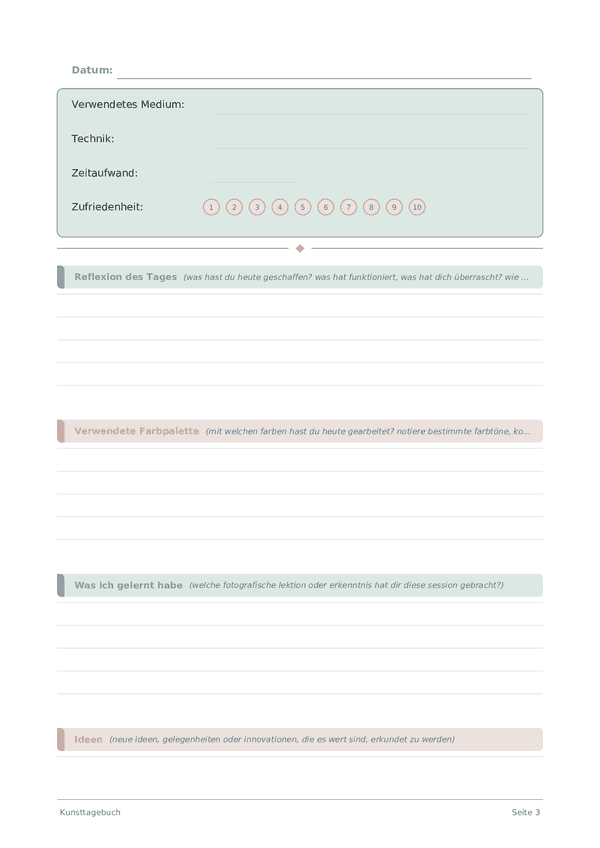
Kunsttagebuch
Dokumentieren Sie Ihren kreativen Prozess und künstlerisches Wachstum
Skizzenbuch-Tagebuch
Offene Punktraster-Seiten zum Skizzieren, Zeichnen und visuellen Entdecken
Scrollen zum Zoomen, ziehen zum Bewegen