Printable Anxiety Journal
Daily anxiety tracking and CBT-based reflection journal
Manage anxiety with evidence-based daily tracking and reflection. Identify triggers, notice body sensations, challenge anxious thoughts, and document what coping strategies actually work for you.
Customize fields
Toggle fields on or off. Click the pencil to rename, or add your own fields.
What is this journal?
An anxiety journal is a therapeutic self-monitoring tool specifically designed to help you understand, manage, and gradually reduce anxiety. By combining daily anxiety ratings with structured writing about triggers, body sensations, thought patterns, and coping strategies, you create a personal anxiety management system backed by cognitive behavioral therapy principles.
Anxiety often feels overwhelming because it operates in the background of your mind — vague, persistent, and hard to pin down. This journal brings anxiety into the light where it becomes manageable. Research shows that the simple act of writing about anxious thoughts reduces their intensity by up to 47%. Tracking your anxiety numerically also helps you see that it fluctuates — it is not permanent, even when it feels that way.
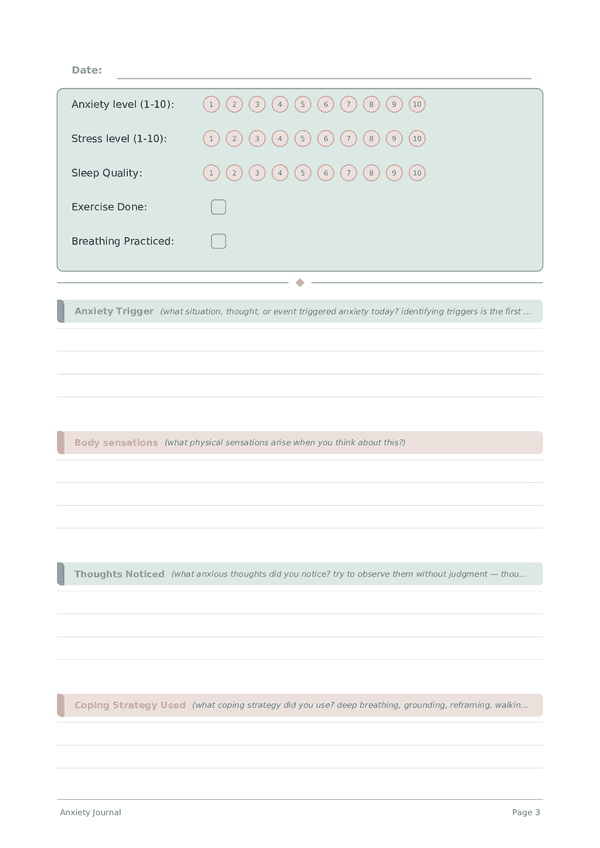
The hybrid format combines quick daily ratings (anxiety level, stress, sleep quality, exercise, breathing practice) with guided writing prompts that help you identify triggers, notice physical sensations, examine your thoughts, document what coping strategies you used, and reflect on what actually helped. Over time, this builds a personalized toolkit for managing anxiety.
Filled example
Here's what a typical entry looks like when filled in:
How to fill in each field
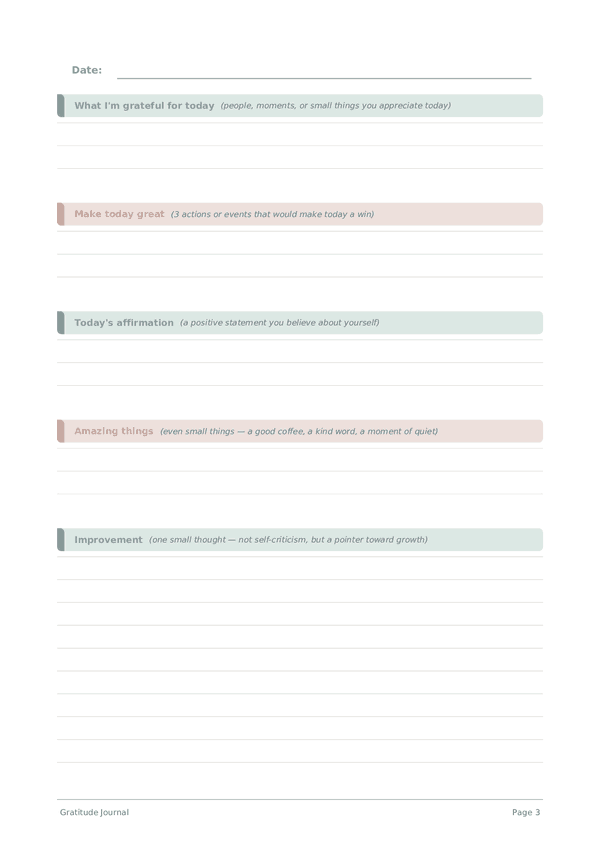
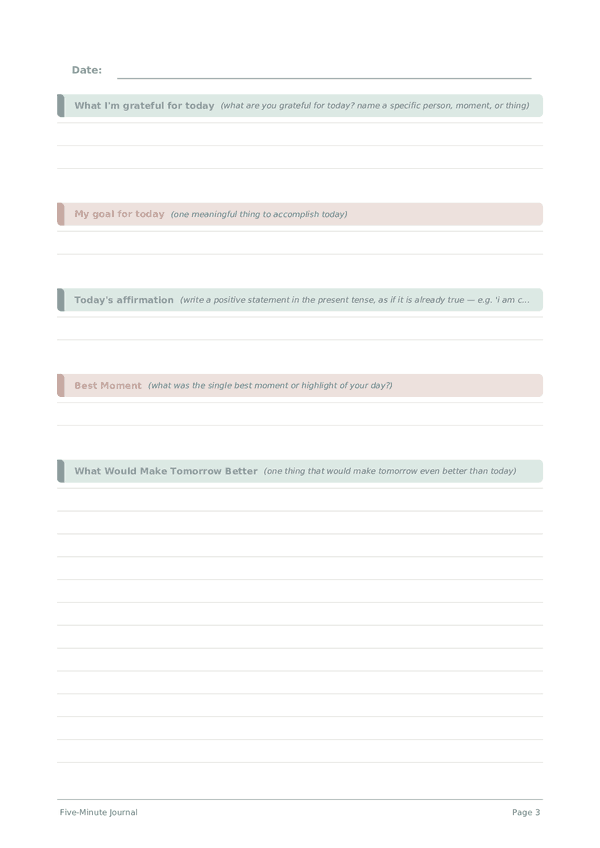
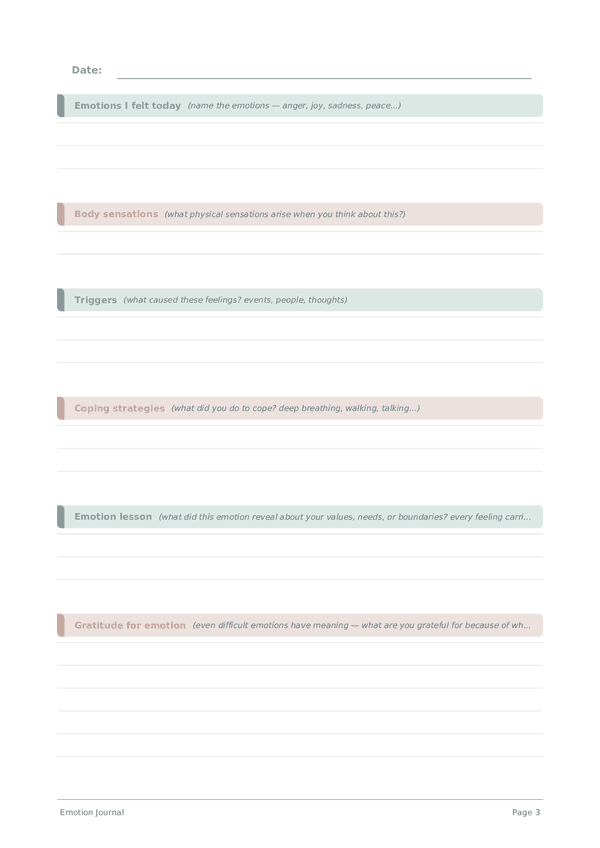
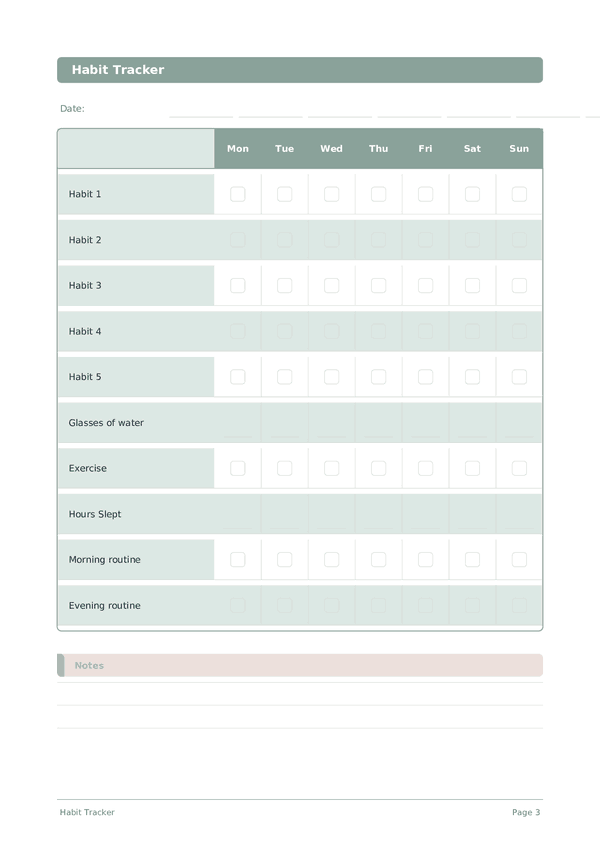
The top of each page has quick-fill fields (ratings, checkboxes, numbers). Below that is a lined section for writing. Here's what each field means:
Anxiety level (1-10)
Rate your anxiety level today. Putting a number on it makes the feeling more manageable and trackable.
Stress level (1-10)
Rate your stress on a scale of 1–10. Over time, you'll identify your stress patterns and which coping strategies work best.
Sleep Quality
Rate how restful your sleep was. 1 means terrible and restless, 5 means deep and refreshing. Quality matters as much as quantity.
Exercise Done
Did you exercise today? Even a short walk counts. Movement is one of the most effective natural anxiety reducers.
Breathing Practiced
Did you practice conscious breathing today? Diaphragmatic breathing activates the parasympathetic nervous system and calms anxiety.
Anxiety Trigger
What situation, thought, or event triggered anxiety today? Identifying triggers is the first step in CBT-based anxiety management.
Body sensations
What physical sensations arise when you think about this?
Thoughts Noticed
What anxious thoughts did you notice? Try to observe them without judgment — thoughts are not facts.
Coping Strategy Used
What coping strategy did you use? Deep breathing, grounding, reframing, walking, talking to someone — what helped?
What helped
What brought relief? Note what worked so you can use it again when anxiety rises.
Tips for success
When and how often to write
Fill in the tracker daily, even on calm days — data from low-anxiety days is just as valuable for understanding your patterns. When anxiety spikes during the day, do a quick 'thought dump' in the writing section as soon as possible. Full evening reflection should take 5–10 minutes. Over time, this journal becomes your personal CBT workbook.