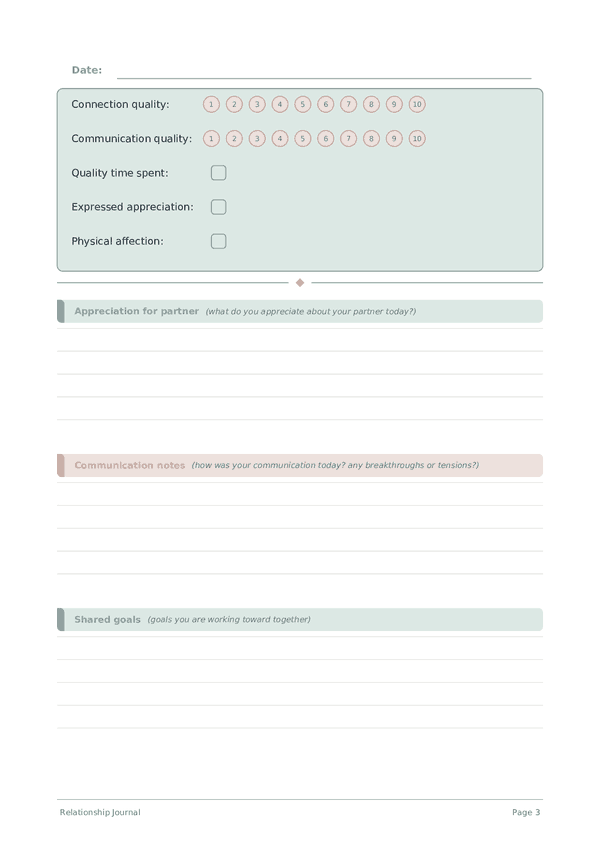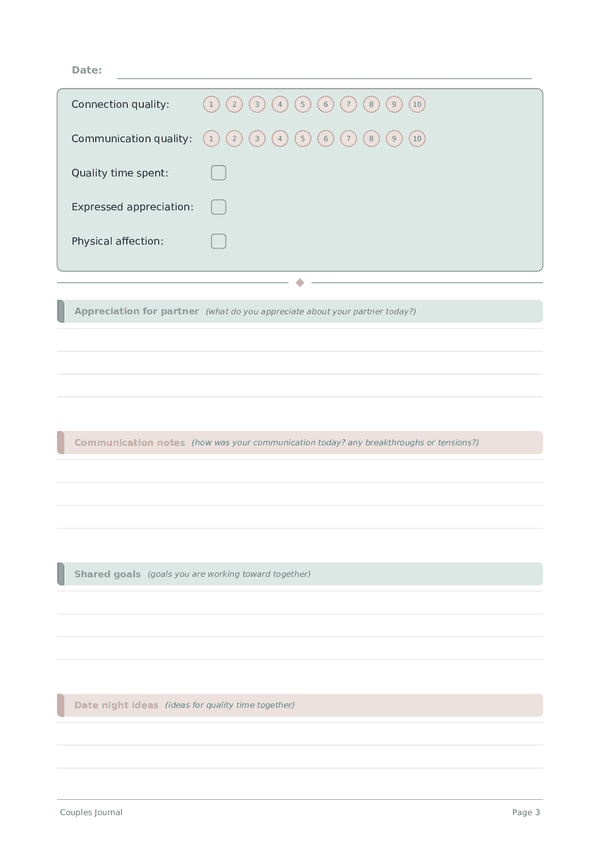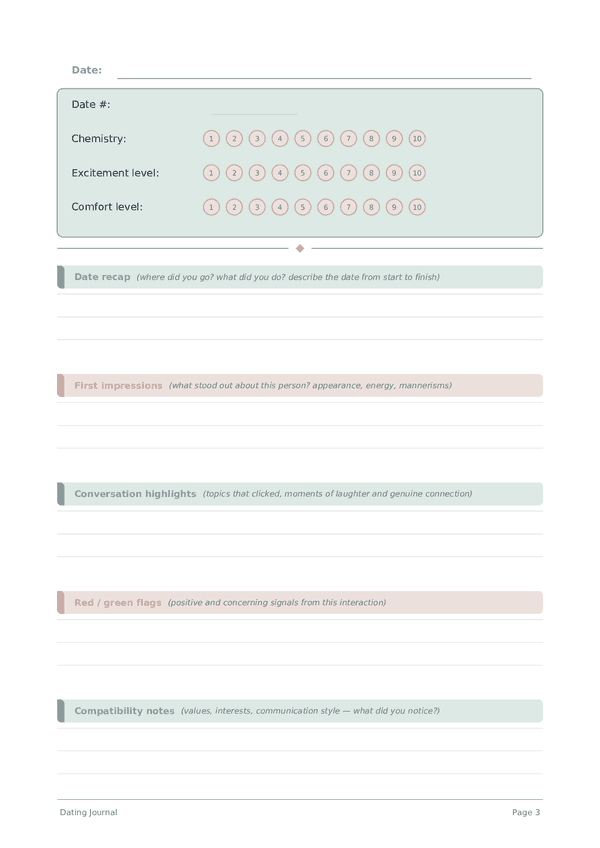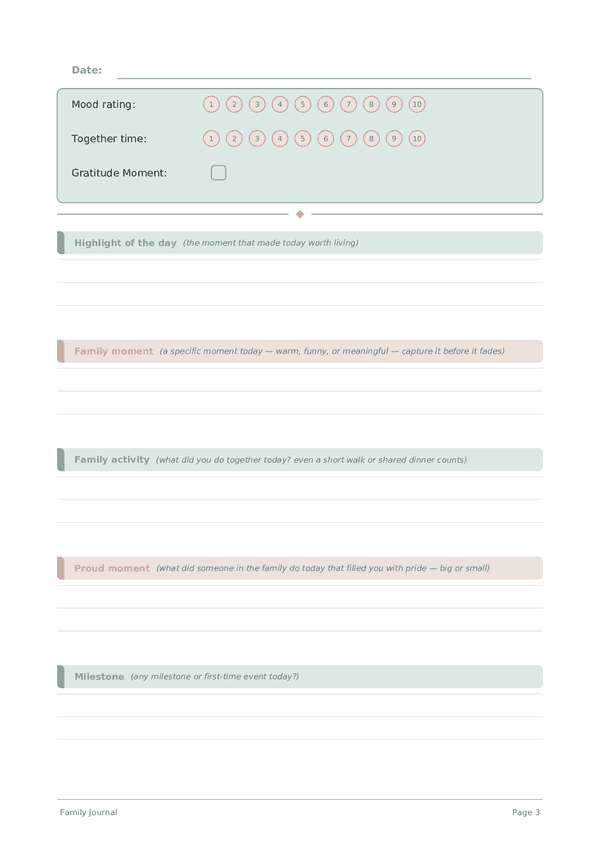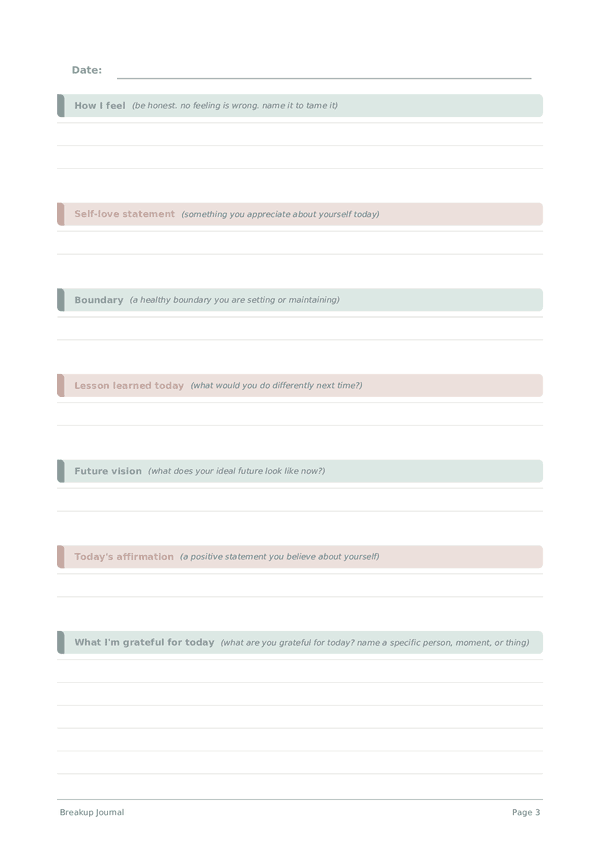
Breakup Journal — page preview

Printable Breakup Journal

Heal, grow, and rebuild yourself after heartbreak

Daily Entry Relationships & Family

Navigate the emotional journey of heartbreak with a structured daily journal rooted in self-compassion and healing psychology. Each entry guides you through naming your feelings, affirming your worth, setting protective boundaries, extracting wisdom from the experience, and building a vision of your thriving future.


Print-ready A4 / Letter 100% Free 5 downloads

days
Customize fields

Toggle fields on or off. Click the pencil to rename, or add your own fields.

Download Free PDF

Benefits

Process grief, anger, and confusion in a safe, judgment-free space
Rebuild self-worth and rediscover your identity beyond the relationship
Extract meaningful lessons to grow stronger from the experience
Set and reinforce healthy boundaries that protect your healing
Build a hopeful vision of your future, grounded in self-love

How to Use

Find a quiet moment each day — morning or evening — and write without self-editing
Start with your feelings: name every emotion honestly, even if they conflict
Move through each section in order; let each prompt build on the last
Return to your affirmation and future vision whenever doubt or sadness spikes
Re-read past entries weekly to witness your own healing in real time

What is this journal?

A breakup journal is a guided daily practice for navigating the emotional aftermath of ending a relationship. Each entry creates space for processing difficult feelings while deliberately building self-love, setting boundaries, and envisioning your future — transforming grief into growth.

This journal is for anyone going through a breakup, divorce, or the end of a significant relationship. Whether it was your decision or not, the loss of a partnership reshapes your identity and daily life. This journal provides structure during a time when everything feels unstructured.

Research on post-breakup recovery shows that expressive writing significantly reduces emotional distress and speeds healing. The key is not just venting — it is the structured reflection that combines emotional processing with forward-looking elements like self-affirmation and future visioning. People who journal through breakups report feeling "themselves again" 40% sooner than those who do not.

Filled example

Here's what a typical entry looks like when filled in:

Tuesday, March 4
How I feel
Woke up and reached for my phone to text them good morning before remembering. That split-second before the memory hits is the cruelest part. The rest of the morning was a low hum of sadness, not sharp but persistent. By evening I felt lighter — dinner with my sister helped.
Self-love statement
I am a whole person on my own. My worth was never defined by this relationship, and it is not diminished by its ending. I choose myself today, even though it hurts.
Boundary
I unfollowed their social media today. Not out of anger but out of self-preservation. I cannot heal while watching their daily life from the sidelines. This is a gift I am giving myself.
Lesson learned today
I learned that I was abandoning my own needs to keep the peace. I kept saying I was fine with things I was not fine with. In my next relationship, I will speak up earlier, even when it is uncomfortable.
Future vision
I see myself a year from now — stronger, clearer about what I want, and open to love again but never desperate for it. I see myself traveling to Portugal like I always wanted, laughing easily, and proud of how I handled this.
Today's affirmation
This ending is not a failure. It is proof that I have the courage to choose a life that is honest over one that is merely comfortable.
What I'm grateful for today
My sister who showed up with takeout and did not try to fix anything — just sat with me. Also grateful that the pain means I loved deeply, and that is never wasted.

How to fill in each field

Each day you'll find several labeled sections with lines for writing. Here's what each section is for:

How I feel

Describe how you feel right now in your own words. There are no wrong answers. Simply putting feelings on paper reduces their emotional charge.

Self-love statement

Something you appreciate about yourself today

Boundary

A healthy boundary you are setting or maintaining

Lesson learned today

Capture one insight from today's experience. Over time, these lessons become a personal wisdom library.

Future vision

What does your ideal future look like now?

Today's affirmation

Write a positive statement about yourself in the present tense, as if it's already true. For example: 'I am capable and resilient.' Repeating affirmations rewires your thinking patterns over time.

What I'm grateful for today

List 1–3 things you're grateful for today. They can be big or tiny — a good meal, a kind word, sunshine. Gratitude journaling is one of the most scientifically supported well-being practices.

Tips for success

Write what you actually feel, not what you think you should feel — breakup journals work because they give space to contradictory emotions like relief mixed with grief
Track your urges to contact your ex with timestamps and what triggered them — seeing the pattern (loneliness at night, certain songs, social media) lets you build targeted coping strategies
List what you learned from the relationship without assigning blame — extracting lessons shifts you from victim to student and speeds genuine recovery
Document your identity outside the relationship: hobbies you abandoned, friends you neglected, values you compromised — reclaiming these accelerates post-breakup growth
Write a letter you will never send expressing everything unsaid — studies on expressive writing show that processing unfinished emotional business reduces intrusive thoughts significantly

When and how often to write

Write daily during the acute phase (first 2–4 weeks), even if entries are short and raw. As the intensity fades, shift to 3–4 times per week, focusing on progress rather than pain. After 2–3 months, weekly entries help you consolidate growth and recognize how far you have come. Stop journaling about the breakup specifically when you notice entries becoming repetitive — that is a sign you have processed the core emotions and are ready to redirect your energy.