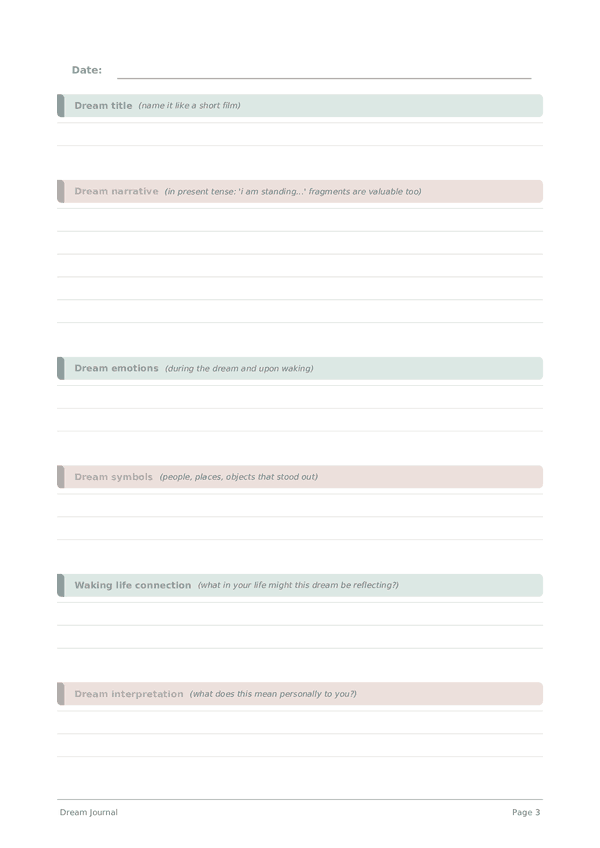
Printable Dream Journal
Record and analyze your dreams
Write down dreams immediately upon waking to capture details. Over time, patterns emerge that offer insight into your subconscious mind.
Customize fields
Toggle fields on or off. Click the pencil to rename, or add your own fields.
Benefits
How to Use
What is this journal?
A dream journal is a daily practice of recording and interpreting your dreams immediately upon waking. By capturing the narrative, emotions, symbols, and personal connections of each dream, you access a rich layer of your psyche that is usually lost within minutes of opening your eyes.
This journal is for anyone curious about their inner life — whether you approach dreams from a psychological, spiritual, or purely creative perspective. Writers, artists, and therapists have long used dream journals as a source of insight. If you rarely remember dreams, the simple act of placing this journal by your bed and intending to record signals your brain to retain more dream content.
Neuroscience research confirms that dreaming plays a crucial role in emotional processing, memory consolidation, and creative problem-solving. Carl Jung called dreams "the royal road to the unconscious." Consistent dream journaling has been shown to increase dream recall by up to 300% and provides patterns that reveal ongoing emotional themes your waking mind may be avoiding.
Filled example
Here's what a typical entry looks like when filled in:
How to fill in each field
Each day you'll find several labeled sections with lines for writing. Here's what each section is for:
Dream title
Name it like a short film
Dream narrative
In present tense: 'I am standing...' Fragments are valuable too
Dream emotions
During the dream and upon waking
Dream symbols
People, places, objects that stood out
Waking life connection
What in your life might this dream be reflecting?
Dream interpretation
What does this mean personally to you?
Tips for success
When and how often to write
Write every morning without exception, even if you only remember a fragment or a feeling. Keep your journal and pen within arm’s reach of your bed. The act of consistent recording trains your brain to retain dreams — most people notice significantly improved dream recall within 2 weeks of daily journaling. If you remember nothing, write that fact and any mood you woke with. Weekend mornings with natural waking (no alarm) often yield the richest dream material.
You Might Also Like
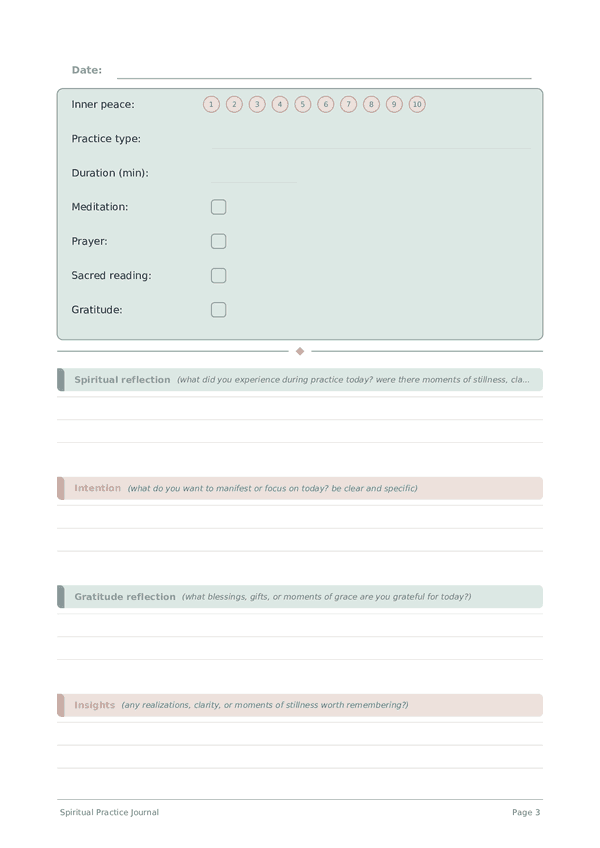
Spiritual Practice Journal
Nurture your inner life with daily practice and reflection
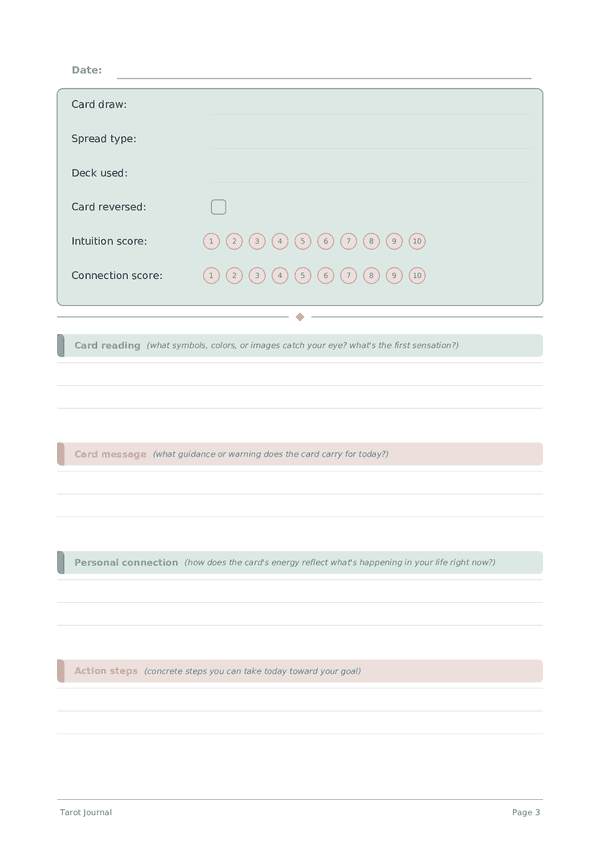
Tarot Journal
Track daily card draws, spreads, and intuitive insights
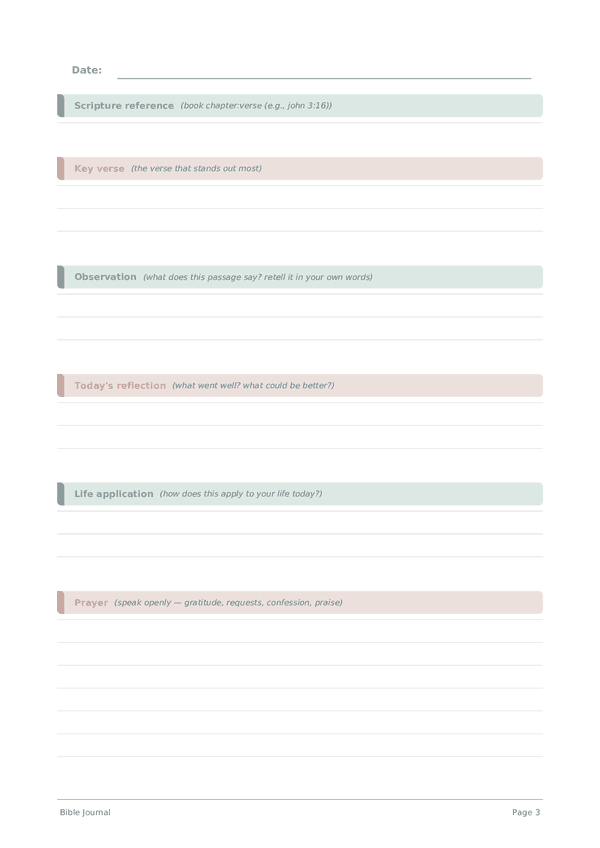
Bible Journal
Scripture, Observation, Application, Prayer — the SOAP method
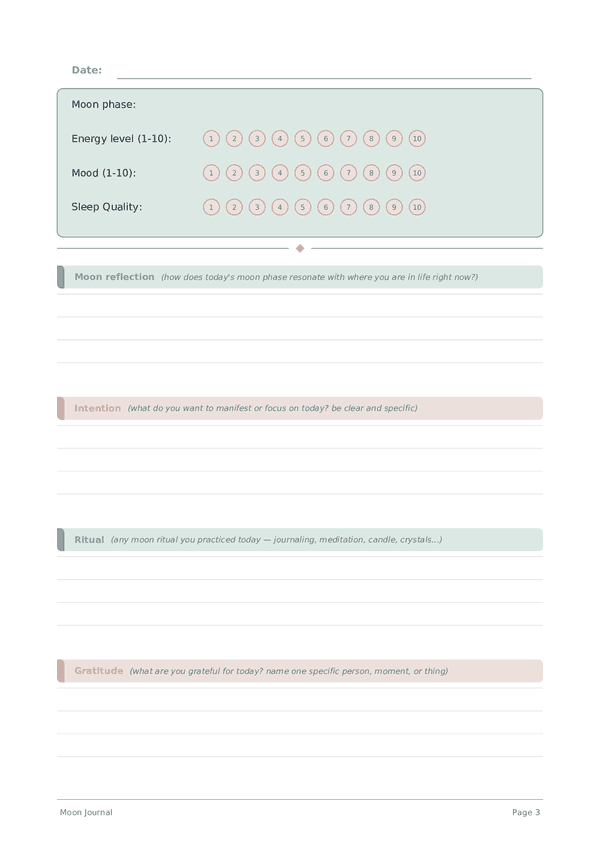
Moon Journal
Align with the lunar cycle — track, reflect, and release