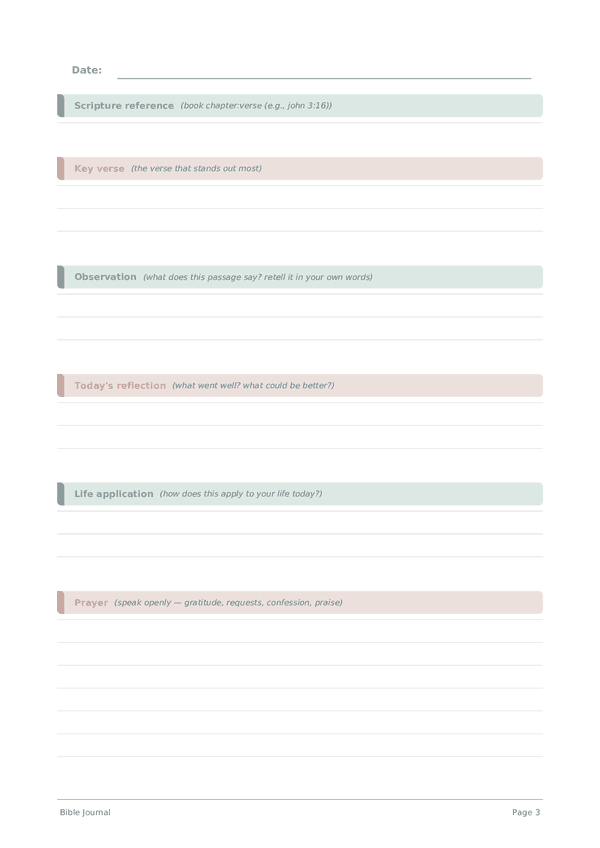
Printable Bible Journal
Scripture, Observation, Application, Prayer — the SOAP method
A structured daily Bible study journal built around the SOAP method — Scripture, Observation, Application, Prayer. Each entry guides you from reading a passage to recording its meaning, applying it to your life, and responding to God in prayer.
Customize fields
Toggle fields on or off. Click the pencil to rename, or add your own fields.
Benefits
How to Use
What is this journal?
A Bible journal is a daily devotional practice that uses the SOAP method — Scripture, Observation, Application, and Prayer — to deepen your engagement with God's Word. Each entry guides you through reading a passage, noting what stands out, reflecting on its meaning, applying it to your life, and responding in prayer.
This journal is for anyone who wants to move beyond casual Bible reading into transformative study. Whether you follow a reading plan, study a specific book, or let the Spirit guide your daily selection, the structured format ensures you are not just reading words on a page but absorbing them into your life.
Biblical scholars and pastors consistently recommend the SOAP method because it combines intellectual study with personal application and spiritual response. Research on spiritual formation shows that believers who journal about scripture report deeper understanding, better retention, and more consistent application of biblical principles in daily life.
Filled example
Here's what a typical entry looks like when filled in:
How to fill in each field
Each day you'll find several labeled sections with lines for writing. Here's what each section is for:
Scripture reference
Book chapter:verse (e.g., John 3:16)
Key verse
The verse that stands out most
Observation
What does this passage say? Retell it in your own words
Today's reflection
Look back at your day honestly. What went well? What could be better? This isn't about judgment — it's about learning and growing.
Life application
How does this apply to your life today?
Prayer
Speak openly — gratitude, requests, confession, praise
Tips for success
When and how often to write
Daily journaling aligns with the discipline of daily Scripture reading and forms a spiritual cornerstone. Morning entries pair naturally with devotional time, grounding your day in the Word. If daily feels overwhelming, commit to the same 4–5 days each week so the rhythm becomes habitual. Sunday entries that reflect on the sermon passage create continuity between corporate worship and personal study. During Advent, Lent, or other liturgical seasons, intensified daily journaling on seasonal readings can profoundly deepen the experience.
Frequently Asked Questions
What is the SOAP method this Bible Journal uses?
SOAP stands for Scripture, Observation, Application, Prayer, a study framework widely used in evangelical devotional practice and popularized in works such as Richard Foster's Celebration of Discipline (HarperOne, 1978). The template adds key verse and reflection fields, giving six guided sections that move from reading the text to responding to God, which helps prevent surface-level reading.
How should I fill in the observation section correctly?
Observation answers what the passage says, not what it means to you yet; that comes in reflection and application. Summarize the verses in your own words, and note who speaks, to whom, and the context. Three lines is enough for a single passage. Henri Nouwen and Richard Foster both emphasize this discipline of attentive reading before interpretation, which protects the text from being collapsed into personal opinion.
How is the application section different from reflection?
Reflection captures what stood out: cross-references, context, questions. Application names one concrete action for today. The distinction is deliberate: Foster (1978, Celebration of Discipline, HarperOne) argues that study without application becomes intellectualism. Limit application to a single specific step (a conversation, a habit, an attitude) so the verse moves from page to life within twenty-four hours.
How is this different from highlighting a Bible app?
Apps store highlights passively. The SOAP structure requires active engagement: you transcribe the key verse, write observation in your own words, and commit to an application. Handwriting also aids retention; research on expressive writing (Pennebaker) and on handwriting versus typing supports deeper encoding when material is written by hand rather than tapped or highlighted on a screen.
Does daily Bible journaling really build spiritual depth?
Spiritual depth is a theological category, not a scientific one, but related habits are measurable: Harold Koenig (Duke University) has documented associations between regular religious practice and well-being. Foster (1978, Celebration of Discipline, HarperOne) frames Bible study as a spiritual discipline that bears fruit through consistency rather than intensity. Daily entries over months produce more growth than occasional long sessions.
Is this template suitable for any Bible reading plan?
Yes. The scripture reference field accepts any plan: chronological, book-by-book, lectionary, or topical. The six sections work for a single verse or a chapter. Translation choice is yours; many users alternate between a literal translation and a dynamic one in the key verse line. The journal doesn't assume a denomination, though A.C.T.S.-style prayer at the end fits most Christian traditions.
What is a common mistake users make with the SOAP format?
Skipping observation and jumping straight from key verse to application. This collapses the text into whatever you already believe and misses the meaning. Foster (1978, Celebration of Discipline, HarperOne) calls disciplined observation the safeguard against eisegesis, reading into the text. Spend at least one line summarizing before you reflect or apply, even when the passage feels familiar.
How long does a single SOAP entry typically take?
Fifteen to twenty minutes is a sustainable rhythm for the six sections: one line for reference, three each for key verse, observation, reflection, application, and prayer. Beginners may take longer until the format feels natural. Henri Nouwen recommended brief daily fidelity over long irregular sessions. A weekly review of seven entries surfaces recurring themes God seems to be highlighting in your life.
You Might Also Like
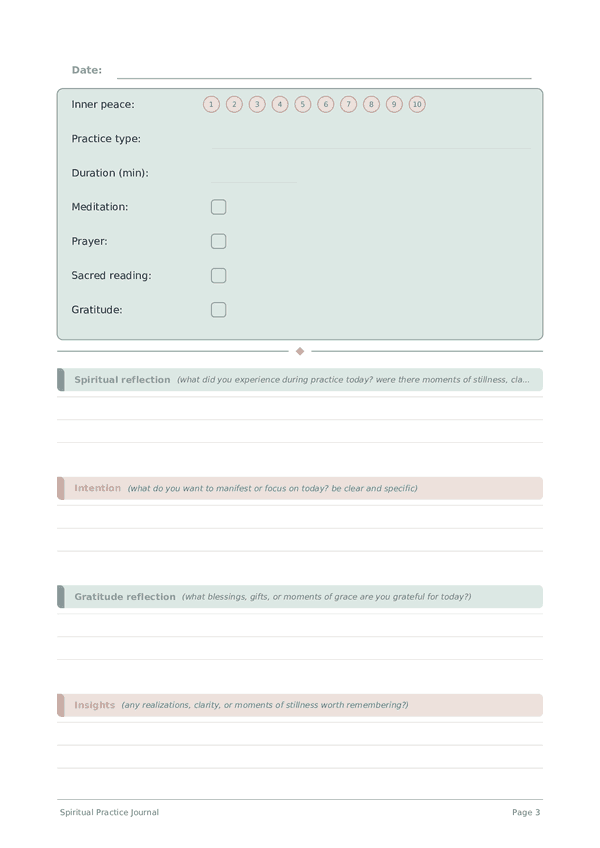
Spiritual Practice Journal
Nurture your inner life with daily practice and reflection
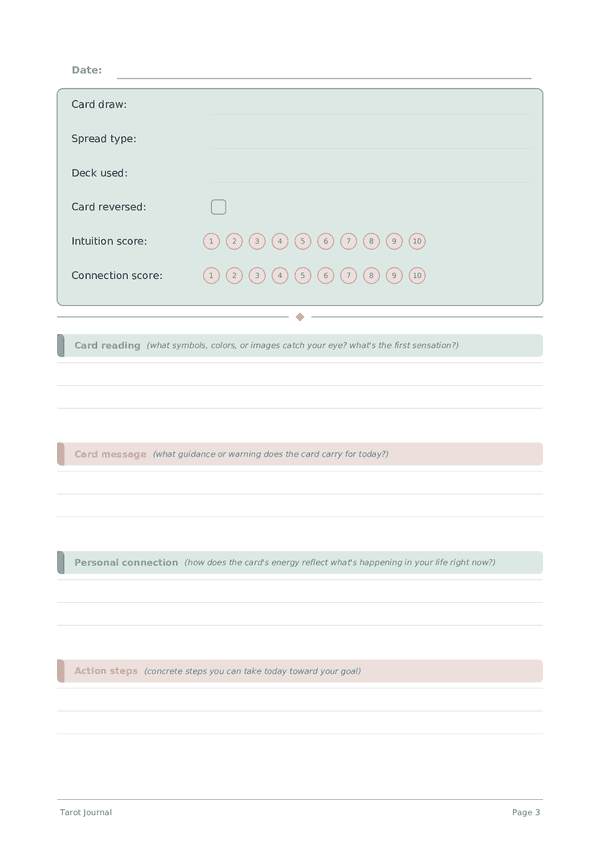
Tarot Journal
Track daily card draws, spreads, and intuitive insights
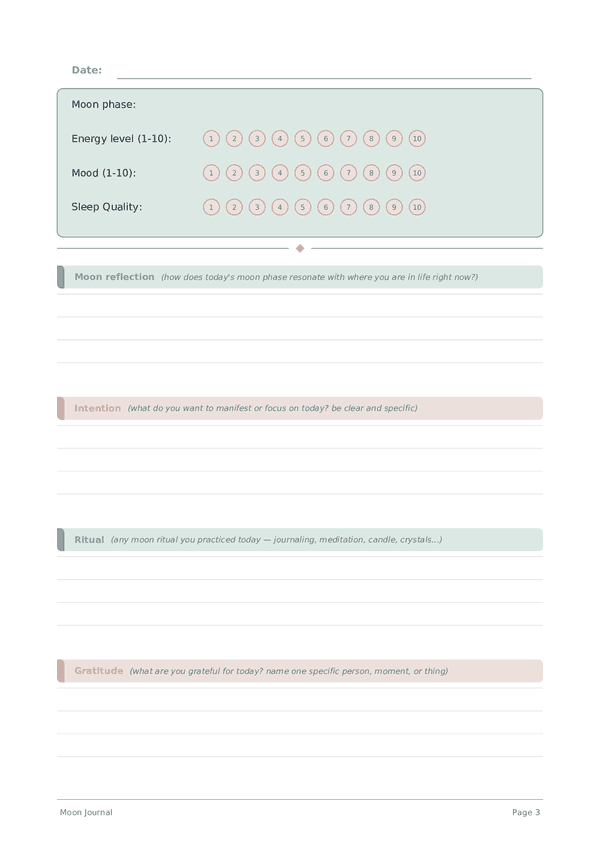
Moon Journal
Align with the lunar cycle — track, reflect, and release
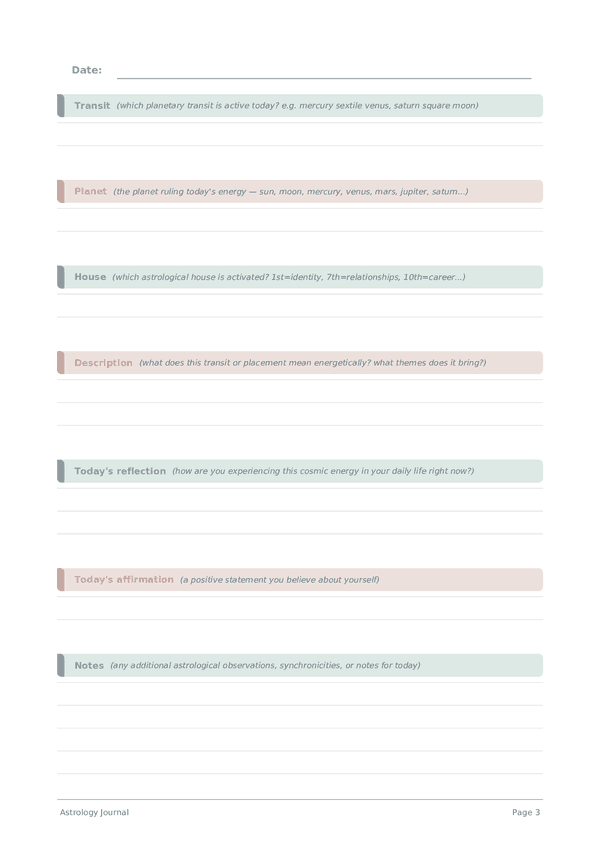
Astrology Journal
Decode the stars, track transits, and align your daily life with cosmic rhythms
Scroll to zoom, drag to move