Printable Dream Journal
Record and analyze your dreams
Write down dreams immediately upon waking to capture details. Over time, patterns emerge that offer insight into your subconscious mind.
Customize fields
Toggle fields on or off. Click the pencil to rename, or add your own fields.
Benefits
How to Use
What is this journal?
A dream journal is a daily practice of recording and interpreting your dreams immediately upon waking. By capturing the narrative, emotions, symbols, and personal connections of each dream, you access a rich layer of your psyche that is usually lost within minutes of opening your eyes.
This journal is for anyone curious about their inner life — whether you approach dreams from a psychological, spiritual, or purely creative perspective. Writers, artists, and therapists have long used dream journals as a source of insight. If you rarely remember dreams, the simple act of placing this journal by your bed and intending to record signals your brain to retain more dream content.
Neuroscience research confirms that dreaming plays a crucial role in emotional processing, memory consolidation, and creative problem-solving. Carl Jung called dreams "the royal road to the unconscious." Consistent dream journaling has been shown to increase dream recall by up to 300% and provides patterns that reveal ongoing emotional themes your waking mind may be avoiding.
Filled example
Here's what a typical entry looks like when filled in:
How to fill in each field
Each day you'll find several labeled sections with lines for writing. Here's what each section is for:
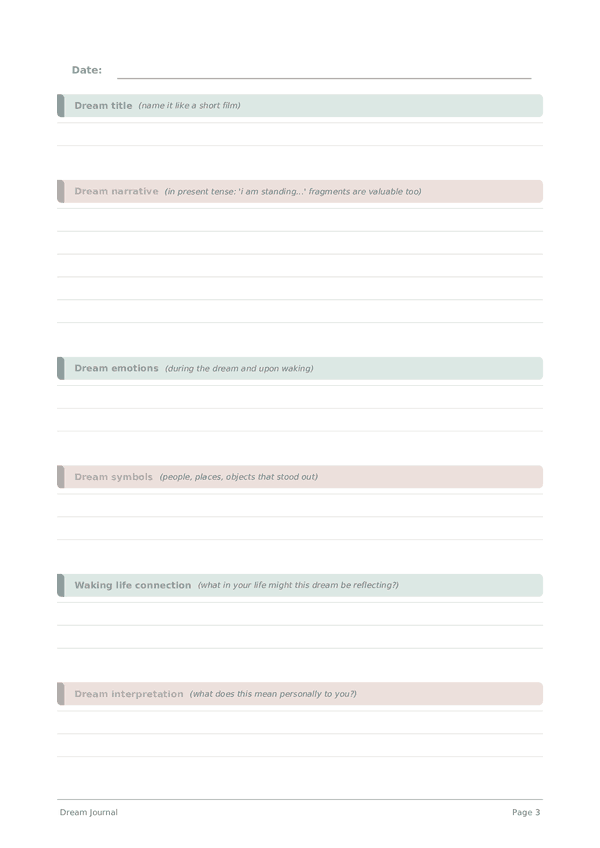
Dream title
Name it like a short film
Dream narrative
In present tense: 'I am standing...' Fragments are valuable too
Dream emotions
During the dream and upon waking
Dream symbols
People, places, objects that stood out
Waking life connection
What in your life might this dream be reflecting?
Dream interpretation
What does this mean personally to you?
Tips for success
When and how often to write
Write every morning without exception, even if you only remember a fragment or a feeling. Keep your journal and pen within arm’s reach of your bed. The act of consistent recording trains your brain to retain dreams — most people notice significantly improved dream recall within 2 weeks of daily journaling. If you remember nothing, write that fact and any mood you woke with. Weekend mornings with natural waking (no alarm) often yield the richest dream material.
Frequently Asked Questions
What does this Dream Journal capture?
Six structured sections — dream title, dream narrative (six lines), dream emotions, dream symbols, waking life connection, and dream interpretation — capture both the content of the dream and your reflection on it. Writing immediately upon waking is essential because dream recall decays within minutes of full awakening, a finding consistently observed in sleep and memory research over several decades.
Does keeping a dream journal really improve recall?
Yes. Improved dream recall through deliberate journaling is well documented in sleep research; consistent morning writing trains attention to dreams and strengthens their consolidation into memory. The dream narrative field provides six lines so even fragmentary recall can be captured. Keep the journal within reach of your bed and write before checking your phone — new stimuli displace fragile dream traces.
How do I use the dream symbols field?
Note recurring images — people, objects, places, animals — without forcing a meaning onto them. Symbol dictionaries offer generic interpretations that often miss your personal associations. Carl Jung's approach (and modern dream researchers following him) emphasizes personal amplification: ask what the symbol means in your own life, not what a book says. Record raw symbols here; save interpretation for the dream interpretation field.
Is dream interpretation scientifically reliable?
Specific interpretations are not scientifically validated — there is no peer-reviewed evidence that dreams encode universal messages decodable by any dictionary. That said, dreams reliably reflect current emotional concerns and memory processing (the continuity hypothesis, well established in dream research literature). Treat dream interpretation as personal reflection — useful for self-knowledge and spotting patterns over time, not as objective decoding of fixed messages.
How is waking life connection different from dream interpretation?
Waking life connection notes literal links — a person who appeared, a place you visited recently, a conversation or event from the day. Dream interpretation is your speculative meaning of the dream as a whole. The distinction matters: connections are observable facts that often explain a dream through day residue; interpretations are subjective and speculative. Three lines each is enough; keeping them separate prevents overreading the dream.
Can this journal help with nightmares or recurring distressing dreams?
Journaling can support self-awareness, but persistent nightmares — especially those following trauma — warrant clinical attention. Imagery Rehearsal Therapy is an evidence-based treatment for chronic nightmares, recommended by the American Academy of Sleep Medicine for PTSD-related nightmares. Use this journal alongside professional care if nightmares are regularly disturbing your sleep, not instead of it.
What's the most common mistake new dream journalers make?
Trying to remember the dream before writing anything down. Recall fades within seconds of full waking. Write the dream narrative immediately — even disjointed fragments — then fill in emotions, symbols, and connections. The dream title can be added last. Avoid checking your phone first; new stimuli overwrite fragile dream traces, and the rest of the entry will feel empty.
How long before I start seeing patterns across my dreams?
Two to four weeks of daily entries typically surface recurring symbols, settings, or emotional tones. The dream symbols field is the primary place patterns emerge — note when the same image returns. Weekly review across all six sections reveals connections between waking concerns and dream content. This is reflective practice; clinical sleep disturbances should be evaluated by a healthcare professional.
You Might Also Like
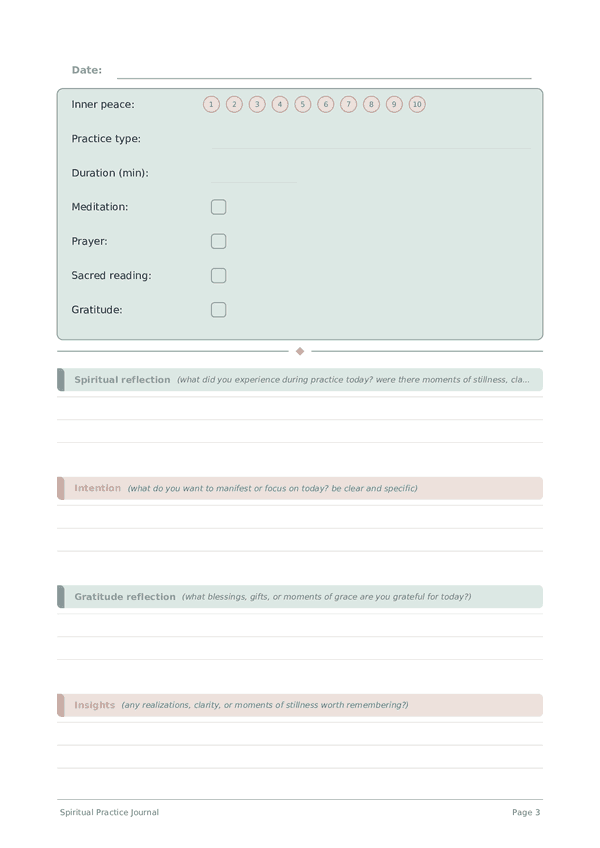
Spiritual Practice Journal
Nurture your inner life with daily practice and reflection
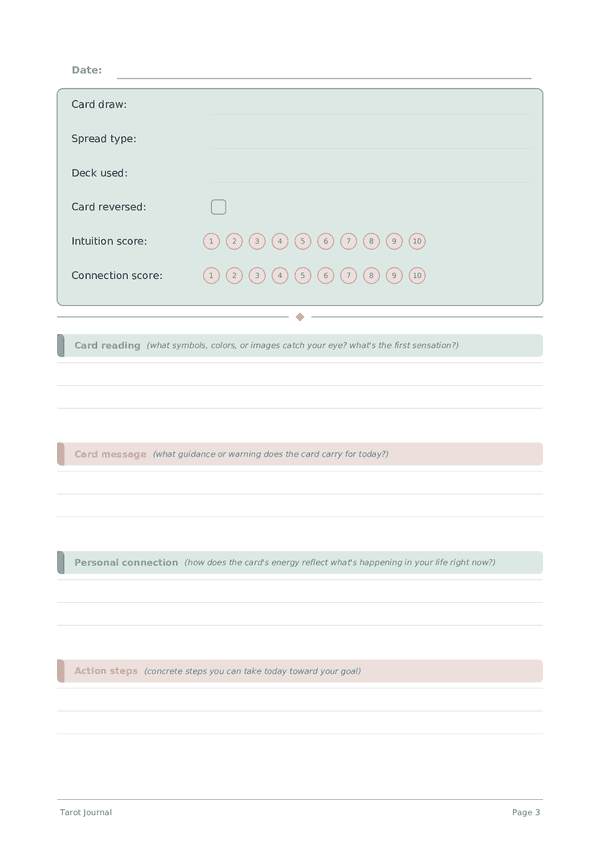
Tarot Journal
Track daily card draws, spreads, and intuitive insights
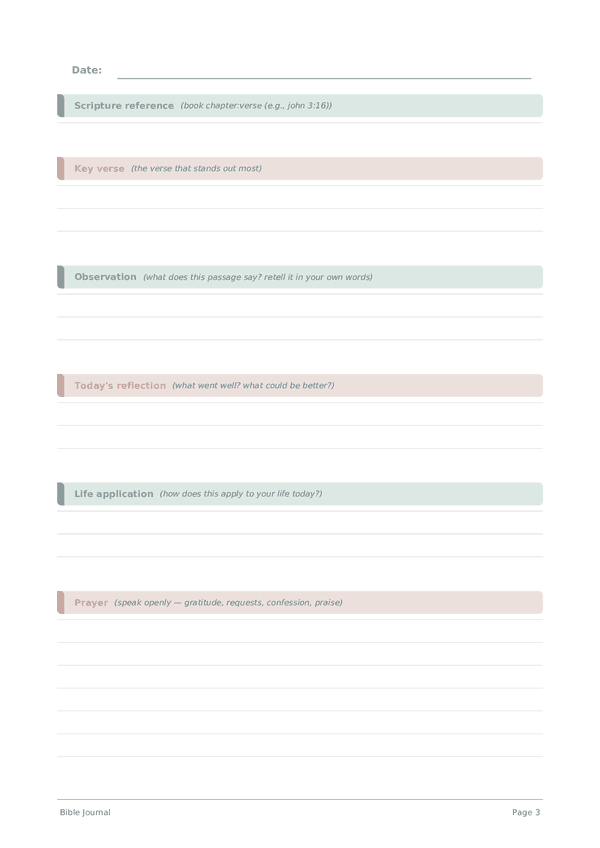
Bible Journal
Scripture, Observation, Application, Prayer — the SOAP method
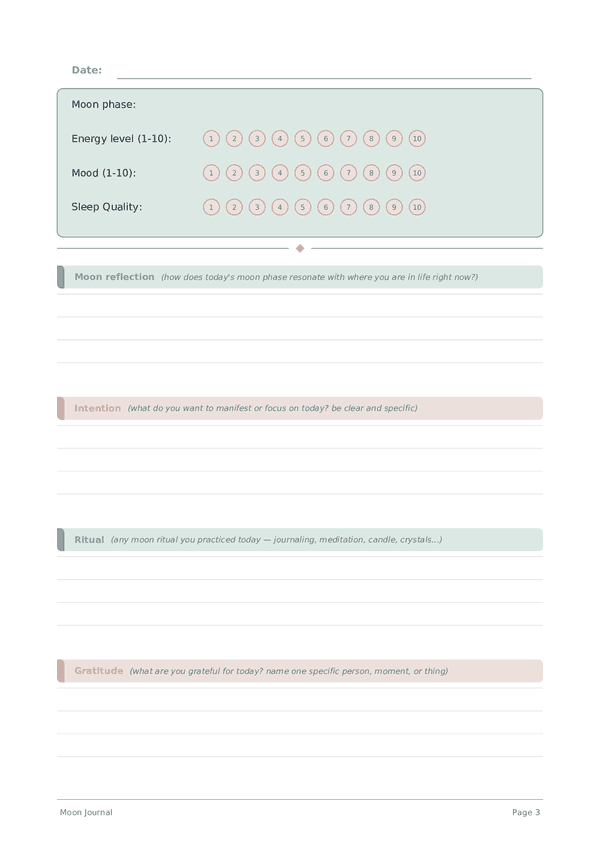
Moon Journal
Align with the lunar cycle — track, reflect, and release
Scroll to zoom, drag to move